GUADALAJARA, Mexico (AP) — When shown the number of Instagram followers he had gained after helping tiny Cape Verde hold off powerhouse Spain in his team's World Cup debut, 40-year-old goalkeeper Vozinha gasped and laughed, in shock.
He was speaking shortly after Monday's stunning 0-0 draw in Atlanta against the European champions, when he had gone from about 50,000 followers to more than 1 million. Less than 24 hours after the game, Vozinha already had nearly 10 million Instagram followers — more than NBA superstar Victor Wembanyama (6.2 million) and NFL quarterback Patrick Mahomes (6.4 million).
Click to Gallery
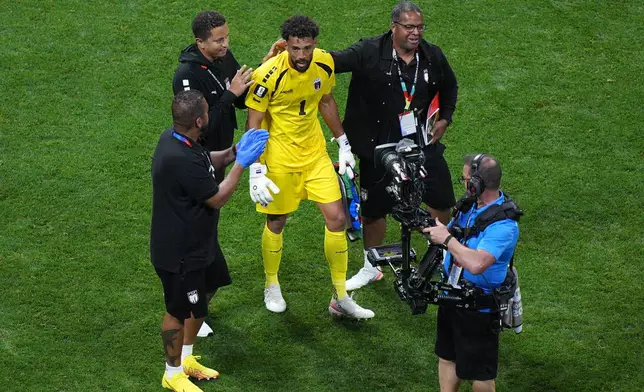
Cape Verde goalkeeper Vozinha (1) is congratulated by team staff as he walks off the pitch following a 0-0 draw during the World Cup Group H soccer match between Spain and Cape Verde in Atlanta, Monday, June 15, 2026. (AP Photo/Jacob Kupferman)
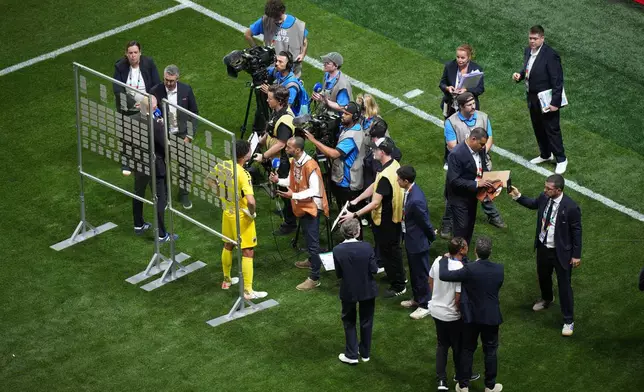
Cape Verde goalkeeper Vozinha (1) talks with the media after a tie during the World Cup Group H soccer match between Spain and Cape Verde in Atlanta, Monday, June 15, 2026. (AP Photo/Jacob Kupferman)
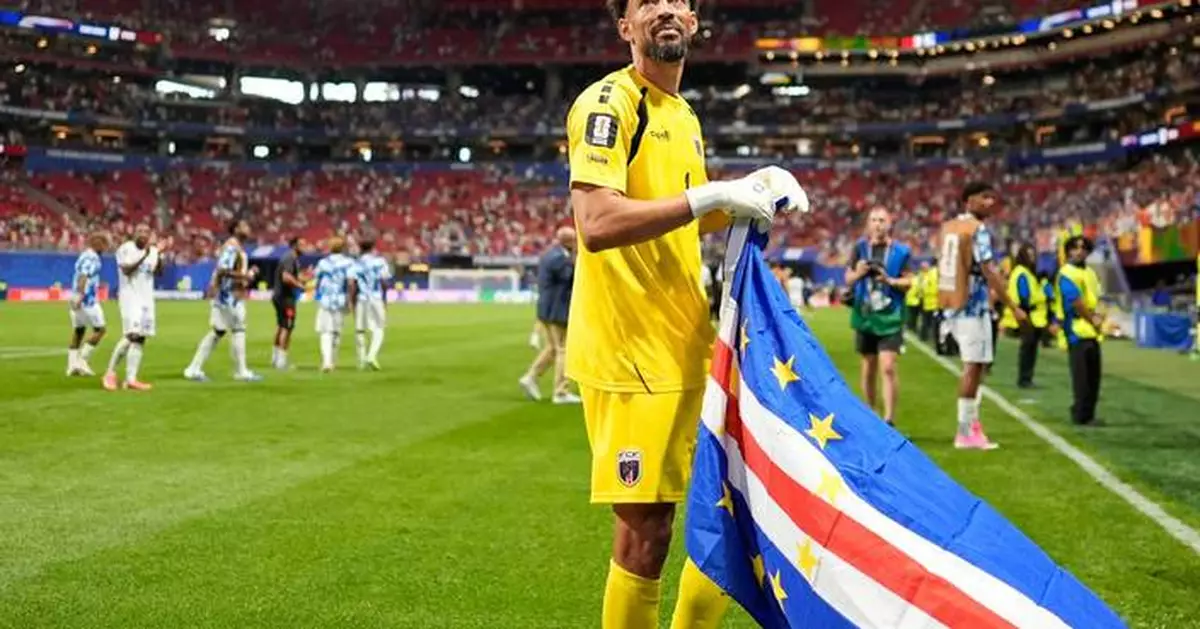
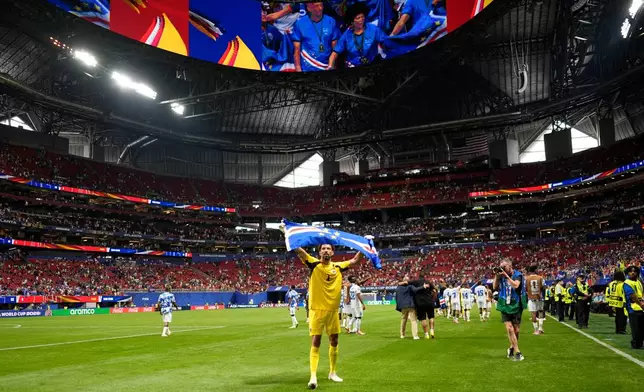
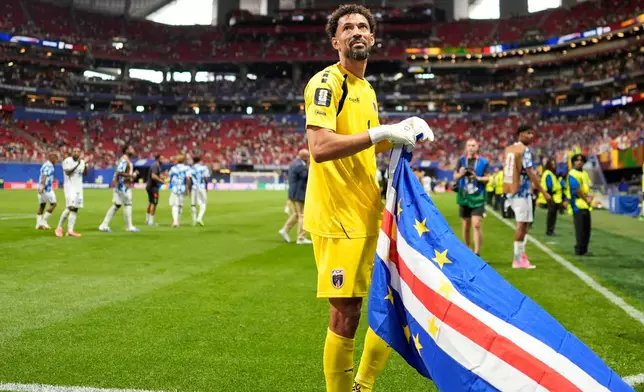
Cape Verde goalkeeper Vozinha celebrates as holds the flag of his country during the World Cup Group H soccer match between Spain and Cape Verde in Atlanta, Monday, June 15, 2026. (AP Photo/Mike Stewart)
Cape Verde goalkeeper Vozinha celebrates as holds the flag of his country after the World Cup Group H soccer match between Spain and Cape Verde in Atlanta, Monday, June 15, 2026. (AP Photo/Mike Stewart)
“Crazy, that's crazy,” Vozinha told Brazilian YouTube channel CazéTV after the match that turned him into the biggest new name of the World Cup so far. It was CazéTV, the only channel in Brazil with the rights to all 104 World Cup games, that was taking credit for the huge surge in followers.
CazéTV is anchored by the popular Brazilian streamer Casimiro Miguel, known as Cazé. The channel has more than 31 million subscribers on YouTube and is known for sports broadcasts marked by a more informal and conversational approach, with a focus on community-based fan engagement. While watching Vozinha's performance during the broadcast, Cazé realized that the goalkeeper did not have many Instagram followers and began asking his audience to start following him.
Spain, one of the World Cup favorites, was widely expected to cruise past the tournament debutants. But La Roja could not find a way past Vozinha and a stubborn defense that had an answer to everything Spain’s superstars threw at them.
“Normally we ask for subscribers,” Cazé said. “We are not going to ask for subscribers today, we are going to ask for followers. For Vozinha. He is stopping Spain. He is shocking the world. He is the standout player of the first half. Why not show him some love?”
His followers increased by a few hundred thousand shortly after that, and kept growing and growing throughout the day. Vozinha, who only began playing professionally at 25, is one of the few players 40 or older in the tournament. He made several crucial saves against Spain's powerful attack and was named the man of the match.
The result sparked celebrations in Cape Verde, the group of islands off Africa’s west coast that is home to about half a million people. Cape Verde is the third-smallest nation by population to ever qualify for the World Cup.
Vozinha said after the game that his mom was not able to make it to the United States to watch him play because of difficulties getting a visa.
In Washington, the U.S. State Department said it had no record of her ever applying for a visa, but that it was working on resolving the situation with Cape Verde authorities. The department said it had notified all players from World Cup countries affected by the $15,000 visa bond requirement that they and their families would be exempt from posting the bond.
“All relatives of players are eligible for visa bond waivers, and the department is actively reaching out to this player’s family to assist with visa services,” the department said.
A person familiar with the situation said that the State Department believes that Vozinha's mother did not apply for a visa because she did not hold a valid Cape Verde passport, but that she is now in the process of getting one.
The person spoke on condition of anonymity to discuss confidential visa deliberations. A request for comment was sent to the team Tuesday afternoon. The team's next match is Sunday.
A similar case to Vozinha's virality happened last month, with New Zealand defender Tim Payne, after an Argentine influencer called on his followers to make the little-known player a “hero” of the World Cup.
El Scarso, a soccer influencer also known as Valen Scarsini, identified the 32-year-old Payne as the least-known player at the World Cup based on his small social media following.
Payne had around 4,700 followers on Instagram before being singled out by El Scarso. That number quickly rose to more than a million. He had nearly 6 million followers on Tuesday.
FIFA has made a push to engage a new generation of fans by giving younger audiences more options to access soccer’s showcase event. For the 2026 World Cup, it reached what it described as a record number of deals with broadcast partners carrying digital-only platforms, and partnered with TikTok and YouTube to allow users to see parts of matches live.
Brazil historically has been one of the countries with the most engagement on social media and digital platforms. FIFA took notice and four years ago did a type of a test run with CazéTV after Cazé's success on Twitch. He broadcast 22 matches during the 2022 Qatar World Cup, leading to a bigger deal for this year's tournament.
“Thank you,” Vozinha told CazéTV. “The Brazilians have always supported us. We felt it during our campaign to qualify for the World Cup and now we are feeling it again at the biggest stage. We are thankful for it.”
AP Diplomatic Writer Matthew Lee contributed reporting from Washington.
AP World Cup coverage: https://apnews.com/hub/fifa-world-cup
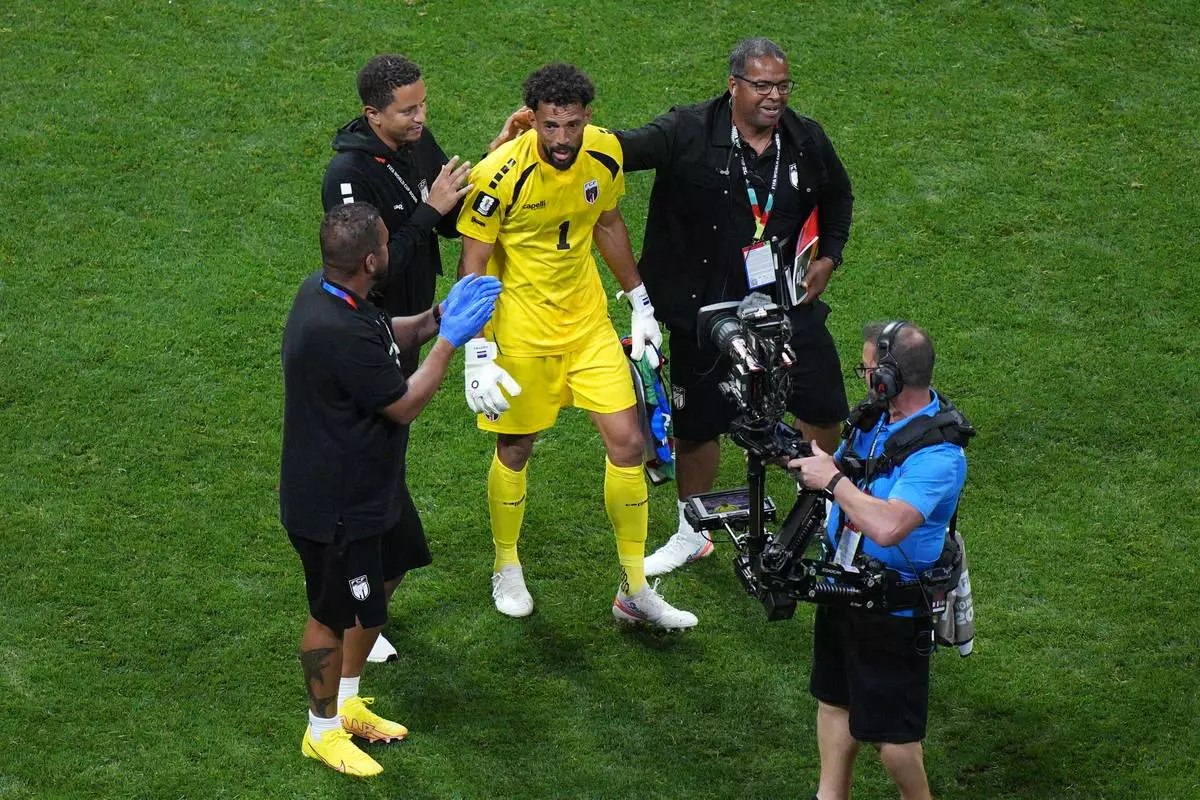
Cape Verde goalkeeper Vozinha (1) is congratulated by team staff as he walks off the pitch following a 0-0 draw during the World Cup Group H soccer match between Spain and Cape Verde in Atlanta, Monday, June 15, 2026. (AP Photo/Jacob Kupferman)
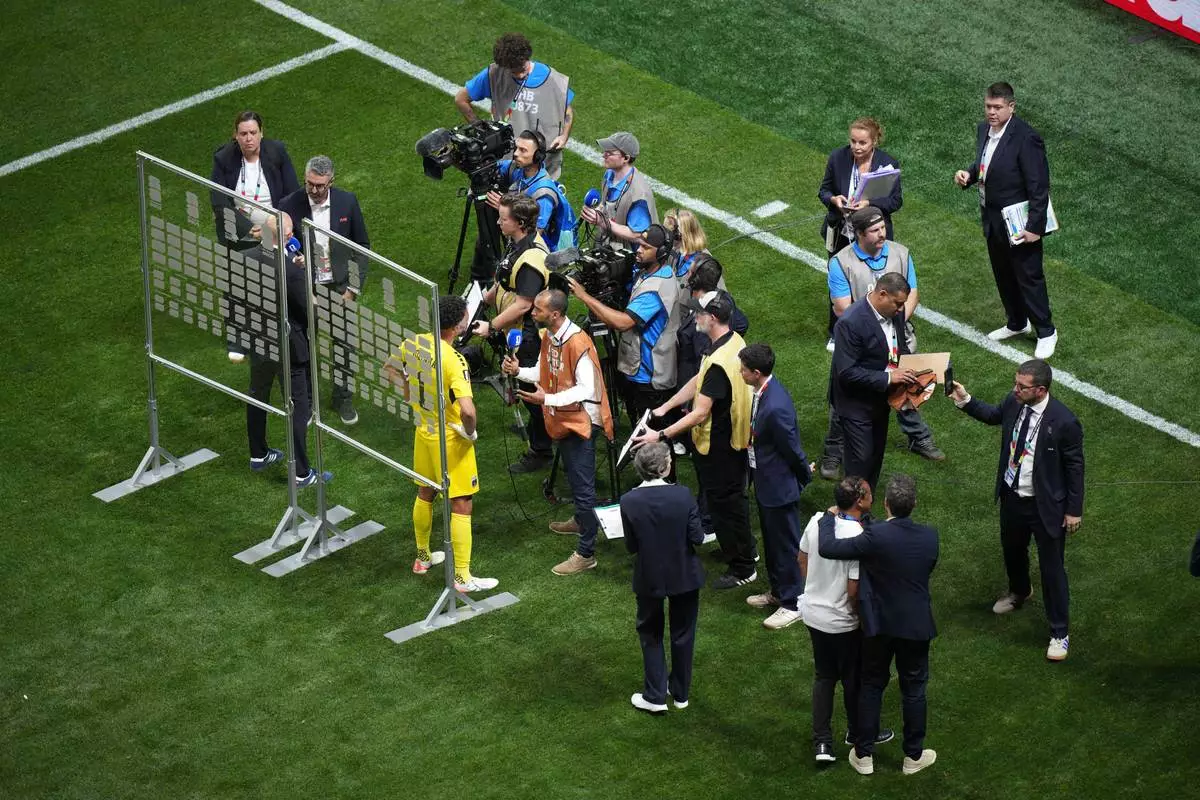
Cape Verde goalkeeper Vozinha (1) talks with the media after a tie during the World Cup Group H soccer match between Spain and Cape Verde in Atlanta, Monday, June 15, 2026. (AP Photo/Jacob Kupferman)
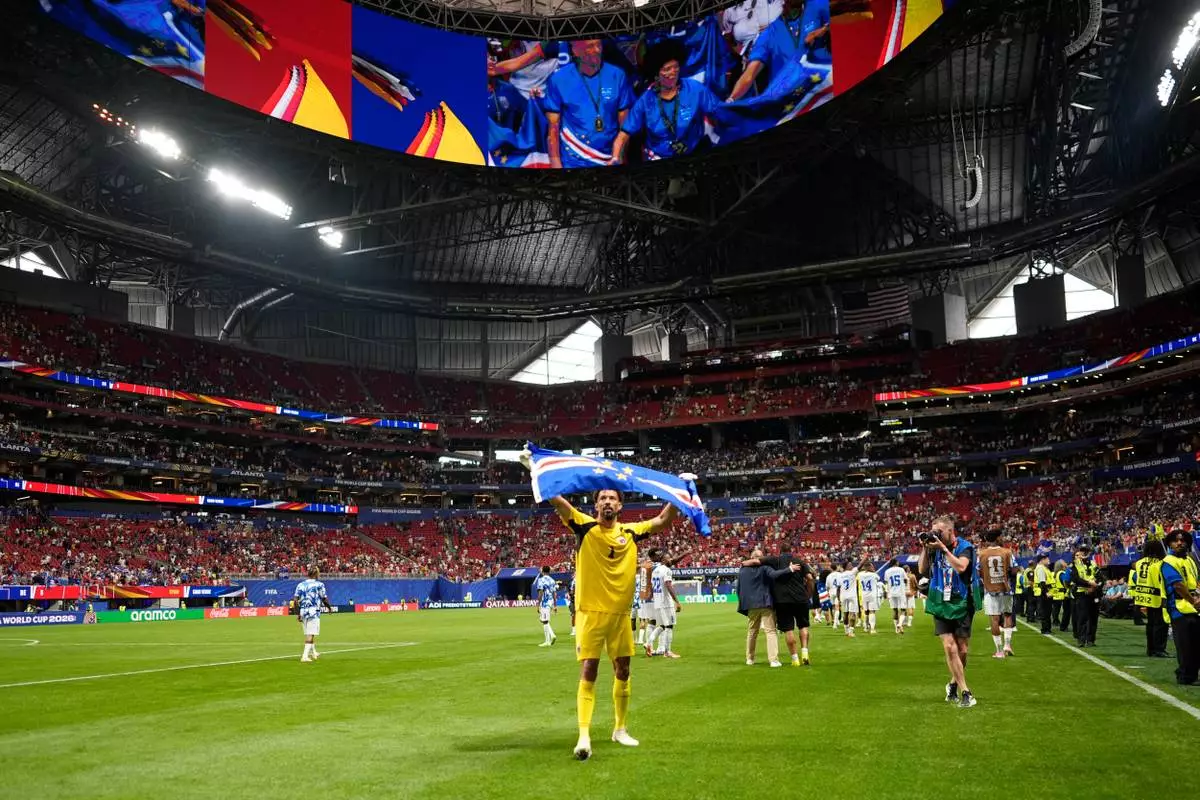
Cape Verde goalkeeper Vozinha celebrates as holds the flag of his country during the World Cup Group H soccer match between Spain and Cape Verde in Atlanta, Monday, June 15, 2026. (AP Photo/Mike Stewart)
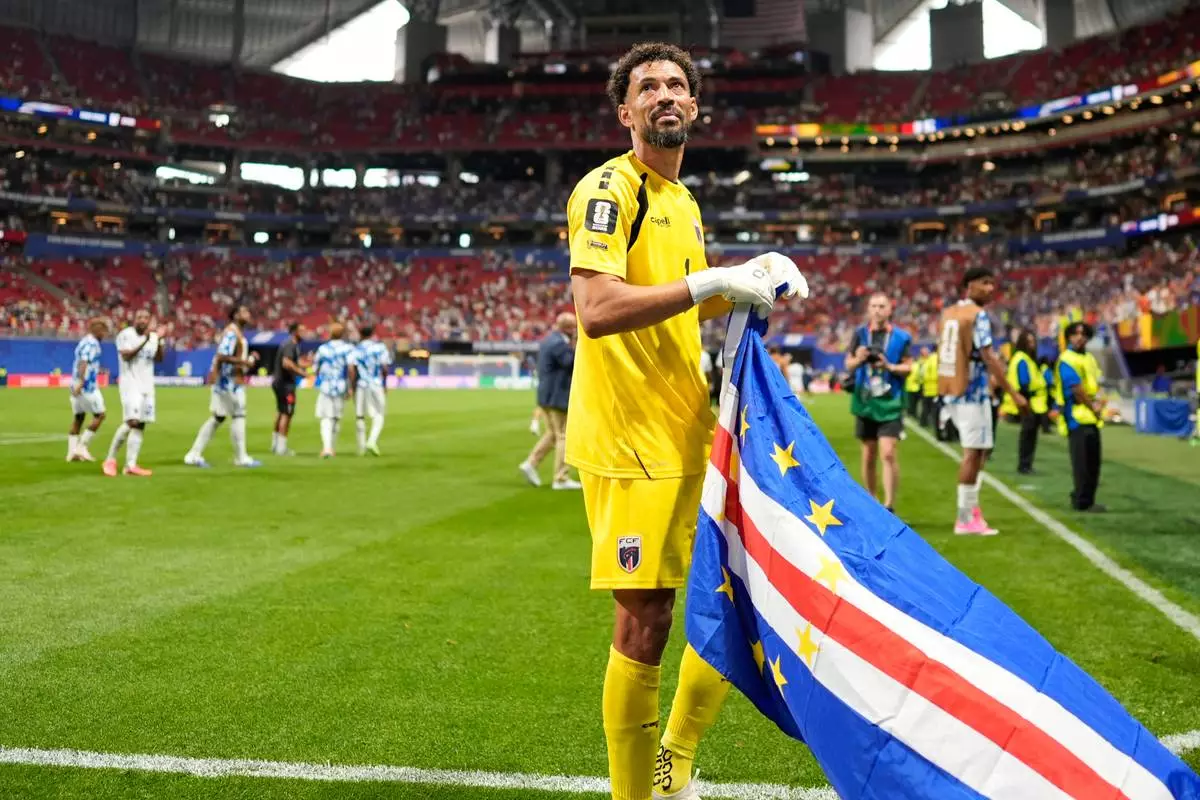
Cape Verde goalkeeper Vozinha celebrates as holds the flag of his country after the World Cup Group H soccer match between Spain and Cape Verde in Atlanta, Monday, June 15, 2026. (AP Photo/Mike Stewart)
CASABLANCA, Morocco (AP) — Their red jerseys stood out against the green pitch. Most were teenage girls. Some had fled war. Others had never played in an organized soccer league or set foot in a major stadium before.
Yet when they took the field at Larbi Zaouli Stadium in Casablanca, Morocco, they marked Sudan’s first appearance in international women’s soccer since a civil war erupted in a country where women’s participation in sports has long been controversial.
“My goal is to lift up soccer in my country,” Nura Mohamed, the 17-year-old team captain, told The Associated Press.
“It’s a beautiful, unique feeling because, at the end of the day, I just love playing.”
Sudan’s under-17 women’s national team traveled to Morocco last week for qualifying matches on the road to the 2028 Los Angeles Olympics. The inexperienced squad suffered heavy defeats against Comoros, conceding 30 goals in two matches. Many of the players broke down in tears after the final whistle in front of a dozen cheering fans.
They faced an older, fitter, and more experienced opponent. Unable to assemble a senior women’s squad in time, Sudan’s soccer federation entered a younger team to avoid forfeiting its place in the qualifiers. They only started training weeks ago.
“The difference between us and the others is huge. We cannot yet compete at the highest level," Burhan Tia, a veteran Sudanese soccer coach who oversees all of Sudan’s women’s national teams, said after the first match, a 17–0 defeat.
“Comoros has many players competing in Europe, our team is mainly made up of schoolgirls."
Sudan’s women’s soccer collapsed when civil war erupted in 2023. For federation officials, debuting this young squad in Casablanca after years of conflict marks an important step in keeping women's soccer alive in Sudan.
“Some traveled long distances just to attend training. Many are separated from their families, yet they continue to work hard and pursue their dream," Manal Ali Bushra, a businesswoman who heads the women’s soccer committee, told the AP.
To support that vision, Ali Bushra said the federation is working on infrastructure projects, including a planned sports city and the renovation of key stadiums in safer parts of the country. She declined to answer questions about the women’s program budget and funds.
Tia knew the magnitude of the challenge when he accepted the job of rebuilding a shattered team.
“First, I had to find girls who played soccer. Then, once I found girls who played, I had to make sure they were the right age,” he said. “Then I needed to convince their parents to let them miss classes for training.”
With the league suspended, his scouting trips took him to schools across Sudan and to neighboring Egypt, where many families had fled the war. He recruited 10 players from teams and academies in Cairo, with the rest drawn from Sudanese cities.
Tia would have liked to recruit from conflict-hit areas like Darfur or Kordofan, a region known for producing Sudan’s top athletes. But many girls had lost their identification documents, making it impossible to verify their ages under international regulations. The war has also shattered transportation, turning journeys between cities that once took hours into perilous trips lasting days.
On the field, the players’ lack of experience was evident. Several struggled with basic positioning, failing to hold the offside line or maintain tactical discipline. Throughout the matches, they repeatedly looked to the sidelines for instructions from the coach and his assistant.
The United Nations has described the war in Sudan as the world’s worst humanitarian crisis. It began in 2023 when a power struggle between the military and the paramilitary Rapid Support Forces erupted into fighting marked by mass killings, rape and ethnic violence. More than 40,000 people have been killed, according to U.N. figures, and over 14 million have been displaced, with famine and disease spreading across parts of the country.
The war halted every sports activity, including the women’s soccer league, which was officially established after the 2019 progressive revolution that ousted President Omar al-Bashir. His three-decade Islamist rule was marked by Public Order Laws that rights groups said restricted women’s freedoms. Even after the revolution, prominent Sudanese preacher Abdulhay Yousif said the establishment of a women’s football league was aimed at undermining religion.
“The idea of women running, jumping, sweating, and even something as simple as their bodies being visible in motion, was seen by Bashir’s Islamist regime as producing fitna, which in a Sudanese context was understood as sexual or moral chaos,” Liv Tønnessen, a political scientist researching gender politics in Sudan, told the AP.
“So when women step onto a soccer pitch, they are directly confronting that entire logic. They are not just present in a male-dominated sports arena, they are moving freely in it, on their own terms,” Tønnessen, a former guest researcher in a women-only university in Sudan, added.
Beyond institutional hurdles, players also faced a wave of sexist abuse online. On the national team’s social media accounts, many commenters mocked them for big defeats. Others posted the phrase “go back to the kitchen,” in multiple languages.
While Gen. Abdel Fattah al-Burhan’s military government has allowed international soccer trips for teenage girls, the U.N. has documented sexual and gender-based violence by the Sudanese Armed Forces, which he commands.
Tønnessen sees the state backing as a calculated effort by the military to project legitimacy. By sponsoring the team, she said, the army attempts to signal that the state is functioning normally and to align itself with the spirit of the 2019 revolution.
Hala Al-Karib, a prominent Sudanese women’s rights activist, dismissed critics who say the team is being used to portray a more progressive image on women’s rights.
“The main challenge for me is a reform of the federation,” she told the AP, citing a lack of investment in and support for women’s soccer in Sudan.
Back on the field in Casablanca, the politics, war and debate faded away, leaving only a group of teenagers chasing a ball.
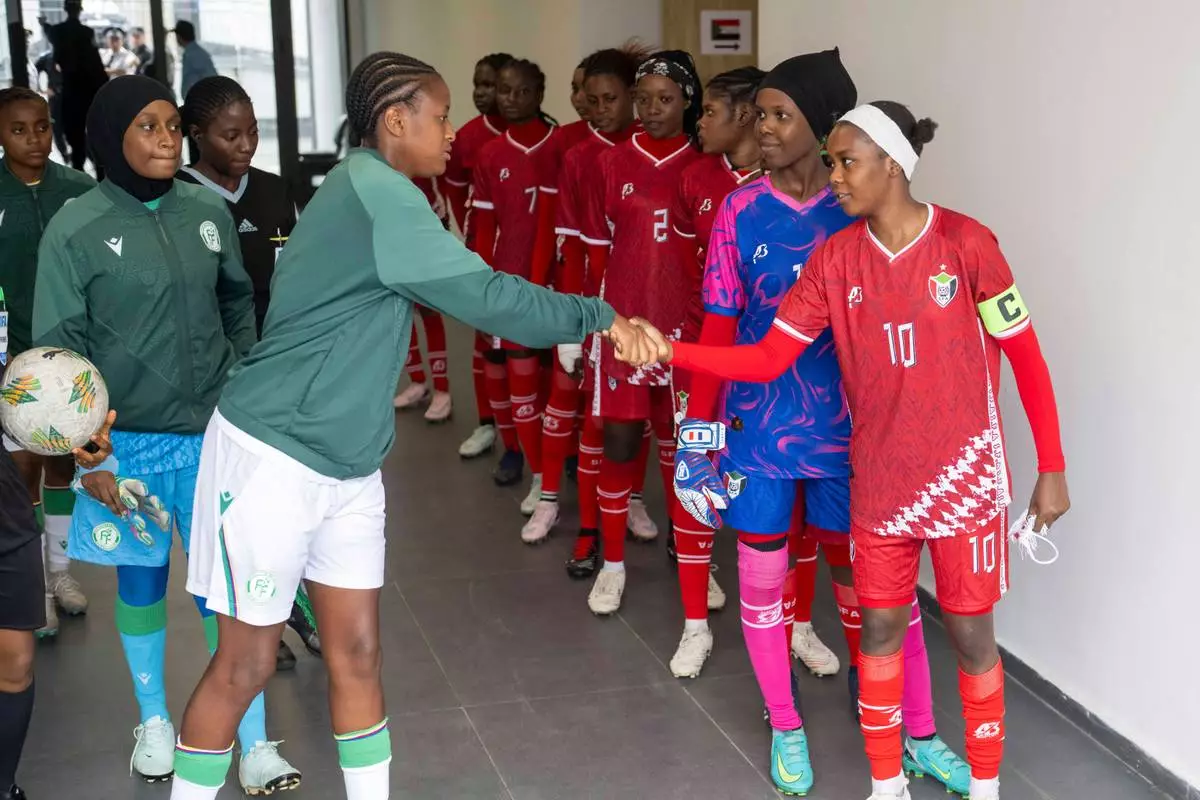
Sudan's U-17 women's national team, left, shakes hand with Comorros women's national team, ahead of their soccer match during qualifiers for the 2028 Los Angeles Summer Olympics, in Casablanca, Morocco, Monday, June 8, 2026. (AP Photo)
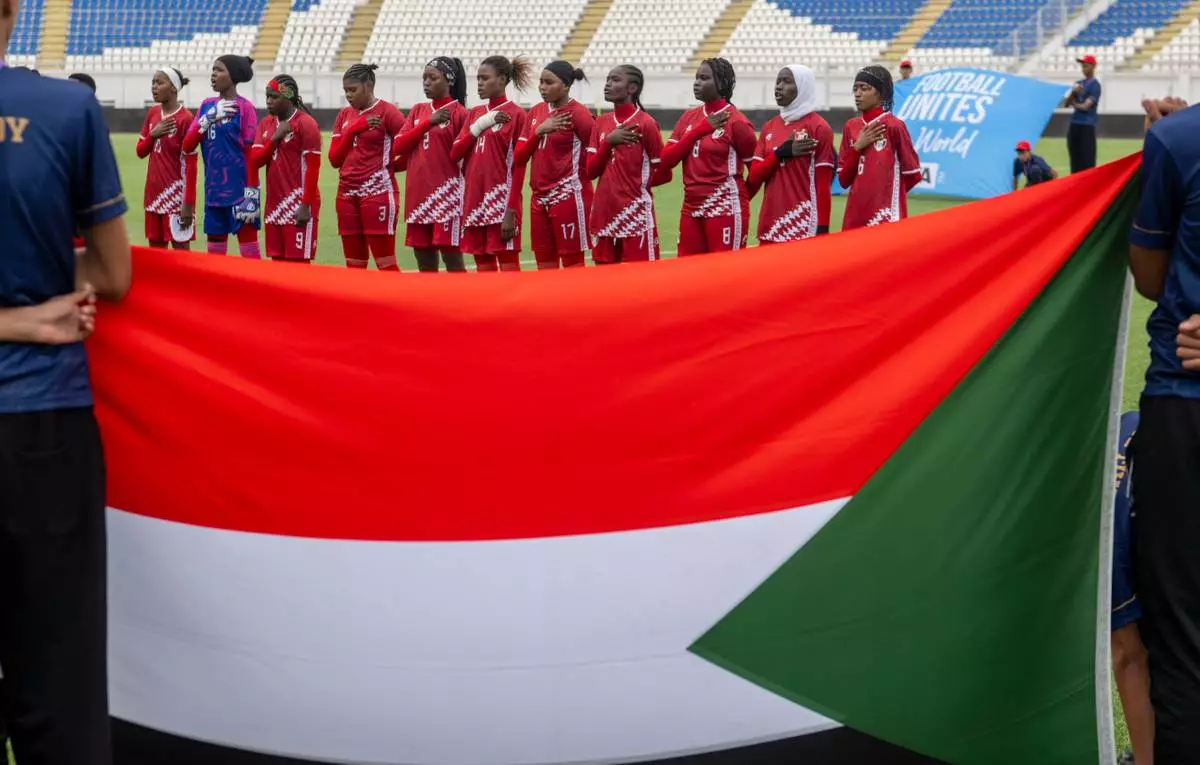
Sudan's U-17 women's national team players sing the national anthem before a soccer match against Comoros, during qualifiers for the 2028 Los Angeles Summer Olympics, in Casablanca, Morocco, Monday, June 8, 2026. (AP Photo)
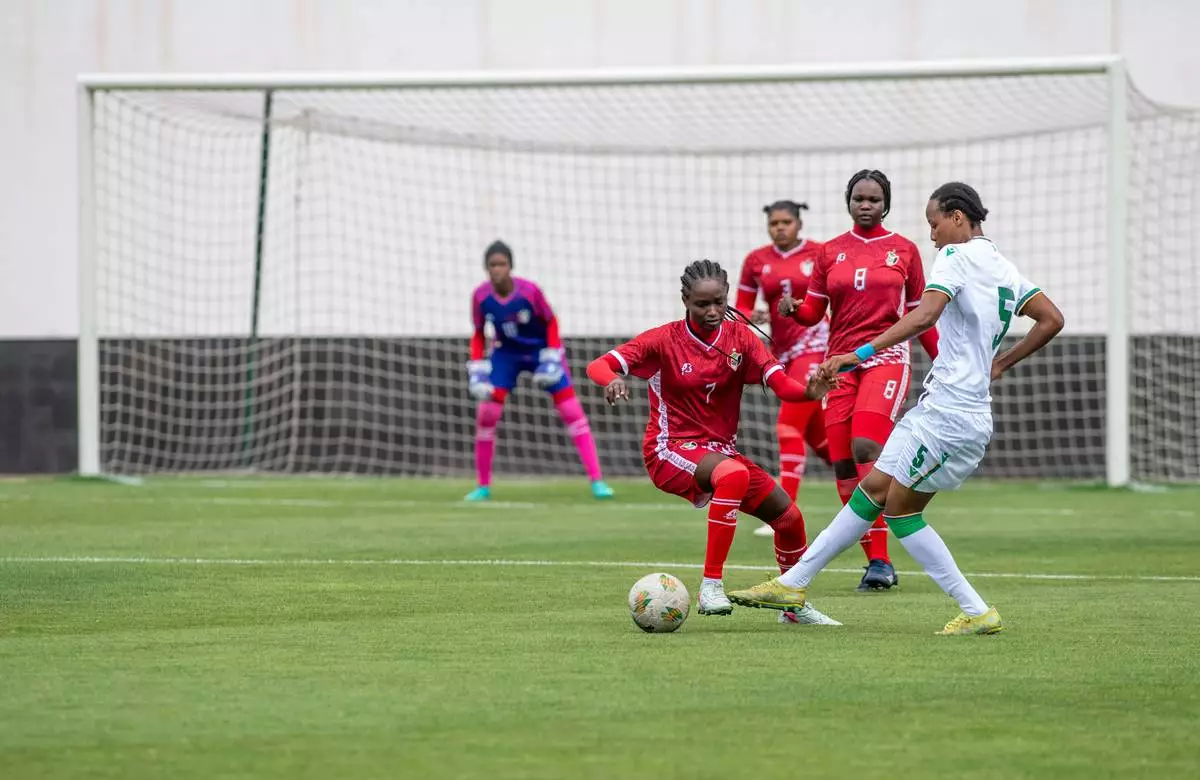
Sudan's U-17 women's national team, in red, plays a soccer match against Comoros, during qualifiers for the 2028 Los Angeles Summer Olympics, in Casablanca, Morocco, Monday, June 8, 2026. (AP Photo)
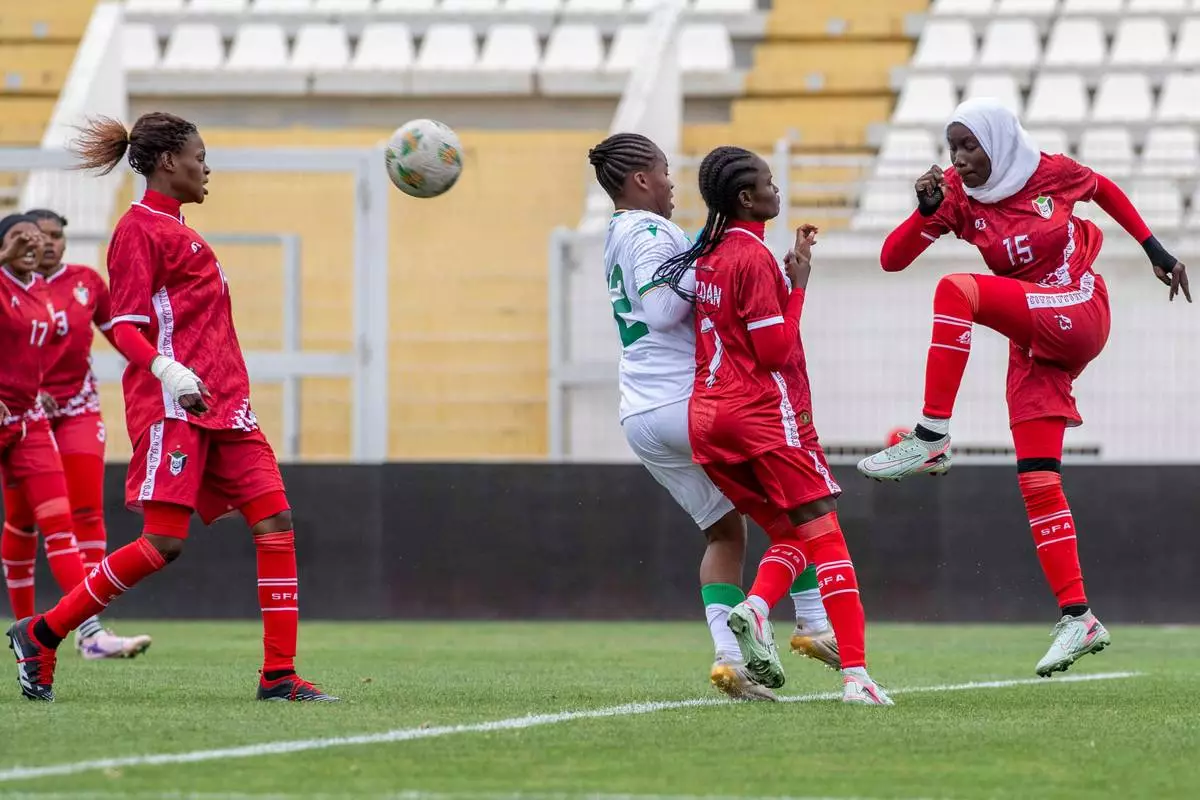
Sudan's U-17 women's national team players, in red, defend the ball during a soccer match against Comoros, during qualifiers for the 2028 Los Angeles Summer Olympics, in Casablanca, Morocco, Monday, June 8, 2026. (AP Photo)
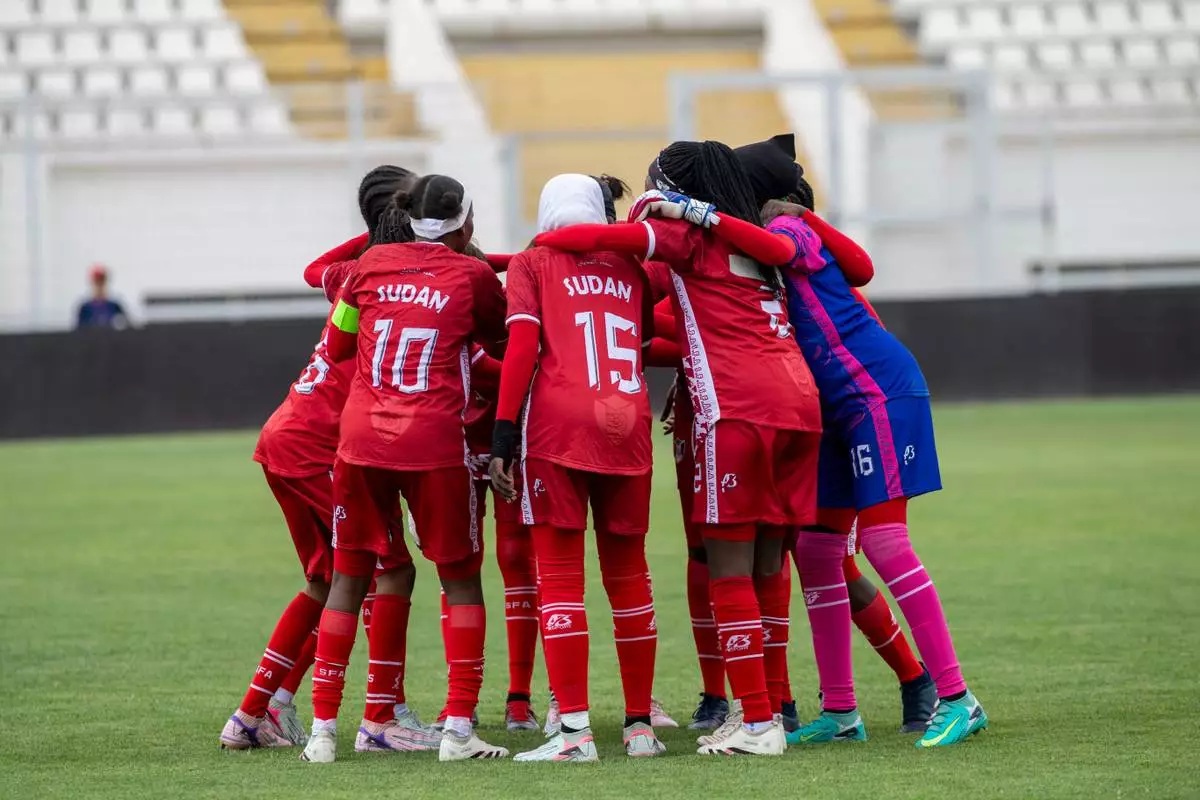
Sudan's U-17 women's national team warms up before a soccer match against Comoros, during qualifiers for the 2028 Los Angeles Summer Olympics, in Casablanca, Morocco, Monday, June 8, 2026. (AP Photo)