The European Parliament on Tuesday approved a legislation on implementing the EU-U.S. trade deal, marking the final parliamentary step before the agreement formally takes effect.
The legislation removes most tariffs on industrial and agricultural goods from the United States and adds safeguard mechanisms, stipulating that the agreement will remain in force until the end of 2029 unless it is renewed. It also allows the European Union (EU) to suspend the agreement if Washington fails to honor its commitments or takes measures that disrupt trade and investment.
U.S. President Donald Trump has threatened to sharply raise tariffs on EU exports if the bloc fails to implement the trade agreement by July 4.
As a next step, the legislation will be submitted to the Council of the EU for approval. Once formally adopted, it will enter into force on the day following its publication in the EU's Official Journal.
The EU and the United States reached a trade agreement in July 2025. Its approval within the EU was delayed for months amid strained transatlantic relations, including tensions over Trump's demands regarding Greenland and legal uncertainty surrounding the administration's sweeping tariff policy.
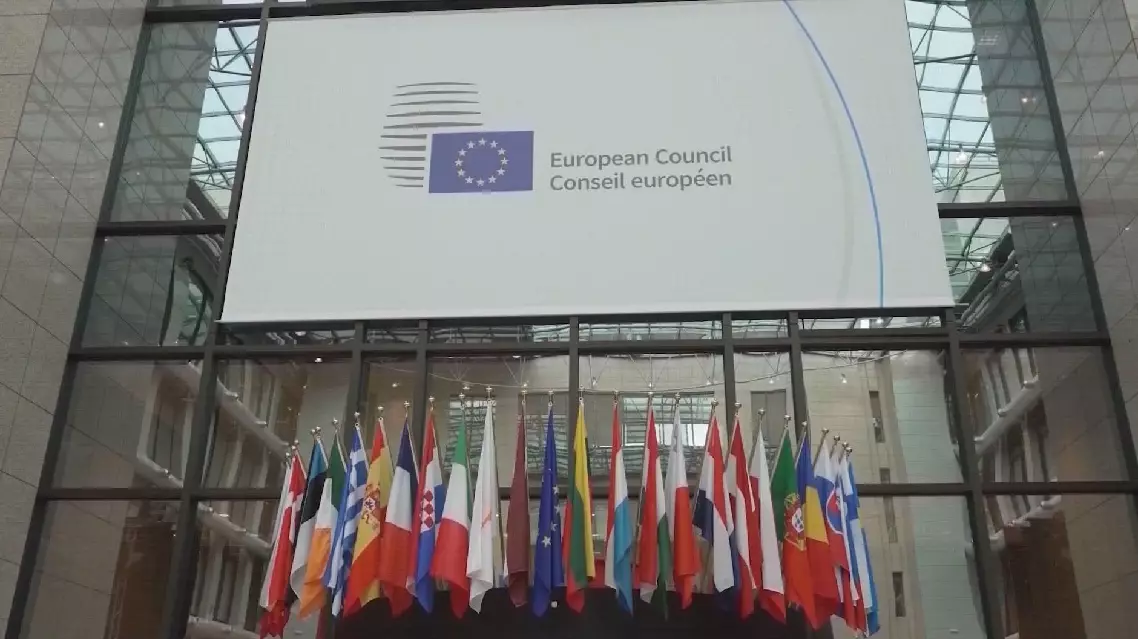
EU Parliament approves EU-US trade deal legislation
The first 5,000-tonne-class intelligent eco-friendly vessel is set to begin trial navigation on Wednesday on the Pinglu Canal in south China's Guangxi Zhuang Autonomous Region, a landmark waterway that stands as the country's first digitalized smart canal linking rivers with the sea.
The vessel, named "Beigang Yunhe 002," is a dual-purpose carrier designed for both container and bulk cargo. Tailor-made to maximize single-lock throughput on the Pinglu Canal, it is equipped with intelligent features such as route planning, collision alert systems, and remote-sensing monitoring. A single canal lock can accommodate up to six such ships at a time.
The first batch of four such intelligent vessels has already been completed at a shipyard in Guigang City of Guangxi. Trial navigations will be rolled out successively for each unit, with final delivery slated for this August.
Stretching 134.2 kilometers from the Pingtang River in Guangxi's Hengzhou City to the Beibu Gulf in the South China Sea, the Pinglu Canal is the backbone of the country's New International Land-Sea Trade Corridor, a key initiative that enhances global trade connectivity for China's western inland regions.
The waterway is expected to open to full navigation this September. Once it becomes fully operational, the Pinglu Canal will facilitate the direct shipment of goods from Guangxi and the neighboring Yunnan and Guizhou provinces through the Xijiang river system to ports in the Beibu Gulf of Guangxi, rather than routing them through Guangdong in south China. This strategic shift is projected to significantly reduce the shipping distance by approximately 560 kilometers.
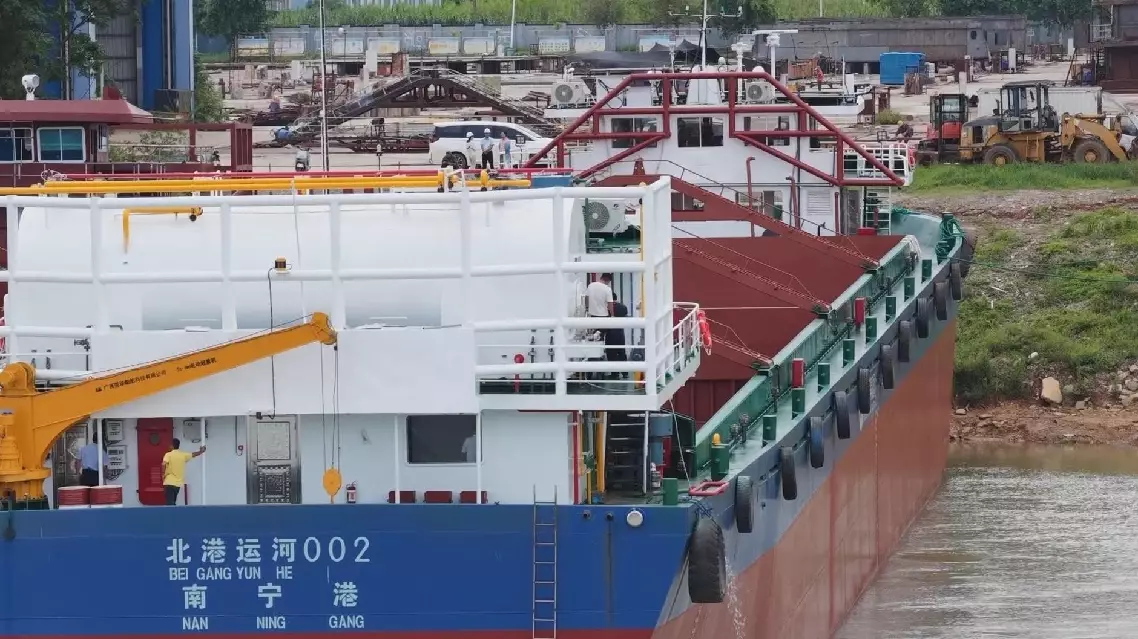
First smart ship for China's flagship Pinglu Canal project set for trial voyage