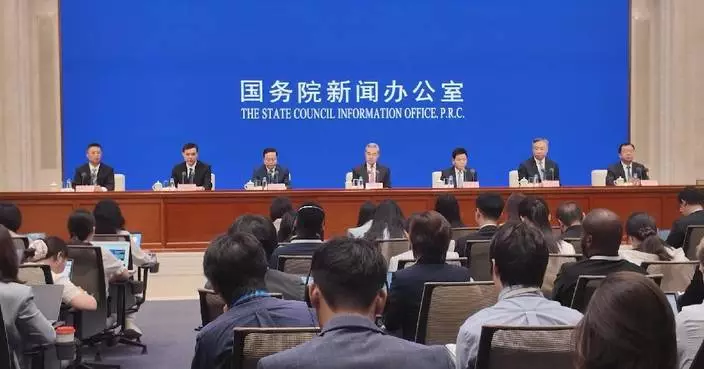
The Global Governance Initiative (GGI), proposed by China, responds to challenges of the times, said a white paper released by the country's State Council Information Office on Wednesday.
According to the white paper titled "More Just and Equitable Global Governance: China's Principles, Proposals and Actions", the world today faces severe and complex challenges with the law of the jungle seriously undermining the international rule of law.
Growing challenges call for more effective governance and efforts to shore up the governance system and to enable more Global South voices to be heard, the report said.
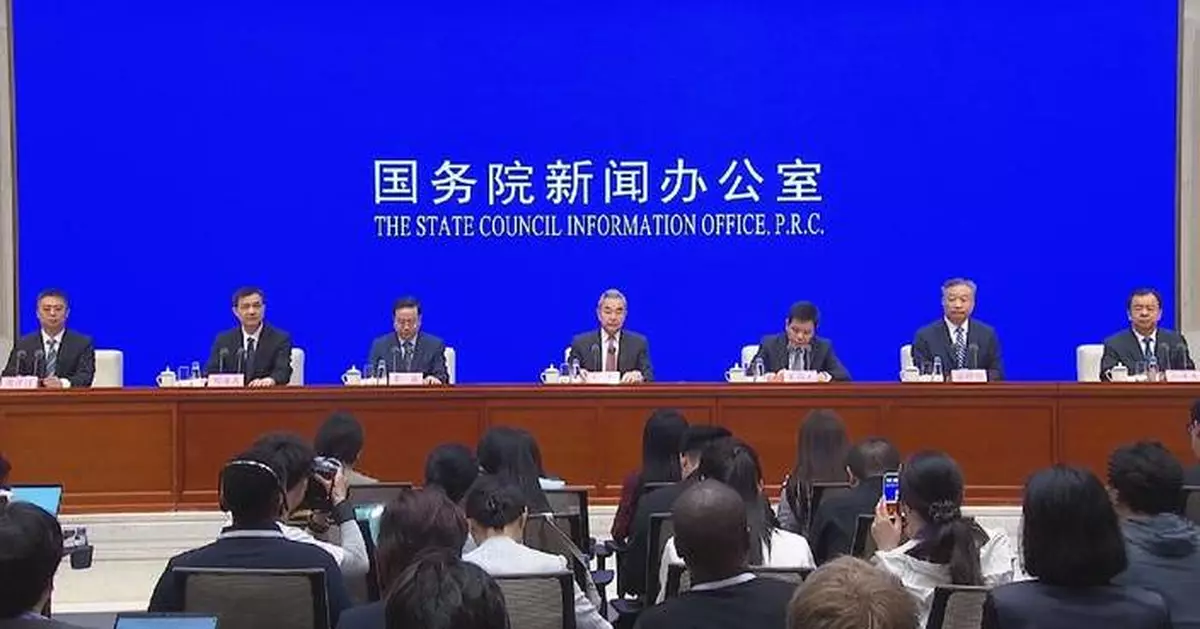
"This major initiative answers the common call of countries for better global governance. The five core concepts put forward by Chinese President Xi Jinping in the initiative -- adhering to sovereign equality, abiding by international rule of law, practicing multilateralism, advocating the people-centered approach, and focusing on taking real actions -- articulate the principles and pathways for reforming and improving global governance. They also represent the strong call of the international community for fairness over hegemony, rule of law over disorder, cooperation over confrontation, and action over empty talk," said Wan Yi, Chinese Foreign Minister and a member of the Political Bureau of the Communist Party of China Central Committee, when elaborating on the white paper at a press conference in Beijing.
The GGI upholds the purposes and principles of the UN Charter and embraces a global governance vision characterized by extensive consultation, joint contribution, and shared benefits, the report said.
By addressing the crux and root causes of crises and challenges, the initiative provides sound guidance for building a more just and equitable global governance system, it added.
According to the white paper, the GGI is built on five core concepts: sovereign equality, the international rule of law, multilateralism, a people-centered approach, and real actions.
Sovereign equality is enshrined in the UN Charter as the first among all principles and the supreme norm regulating state-to-state relations. Countries, whether large or small, strong or weak, developed or developing, are equal members of the international community. Every nation's sovereignty and dignity must be respected, and all countries are equally entitled to participate in, deliberate on, and benefit from global governance, the white paper said.
The international rule of law is the fundamental safeguard for global governance. Only a global governance system that is grounded in the rule of law can provide all countries with a fair and just environment for development, achieve a balance between rights and obligations, and make international order more just and equitable, according to the white paper.
"The GGI is committed to advancing the democratization and law-based governance of international relations, and to charting a new course for global governance underpinned by extensive consultation, joint contribution and shared benefits. In doing so, it moves beyond the outdated 'center-periphery' mindset that has long defined traditional international relations and rejects the 'law of the jungle' logic that equates power with right. It offers a deeper grasp of the underlying dynamics of human social development and breaks new ground in both the theory and practice of international political civilization," said Wang.
Multilateralism emerged for the cause of peace and development, and multilateral mechanisms are vital for addressing global issues. No country can achieve development outside the global governance system, nor can it secure a future without participating in international cooperation. "It is not a matter of whether we choose it or not, multilateralism is the only viable path forward," the white paper said.
People's wellbeing is a core concern of global governance. The people of every country across the world are the essential participants and direct beneficiaries of global governance. Only by serving public interests, boosting public confidence, and meeting public expectations can the global governance system win extensive support and function effectively, it said.
Global governance finds its source of vitality in practice, hinges on action, and is verified by its effectiveness. A vision is realized only through concrete action. It falls on the international community to turn this vision into reality -- setting common goals, embracing a problem-oriented approach, and acting in concert, it added.
China's Global Governance Initiative responds to challenges of times: white paper