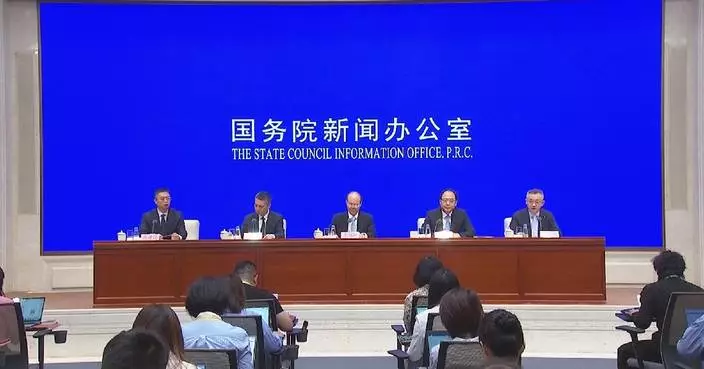
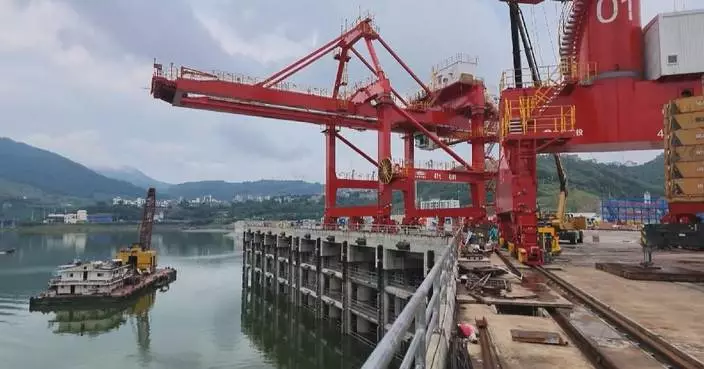
China and the United States have maintained close communication and practical cooperation in counter-narcotics efforts and achieved significant results since the two heads of state met in Busan of the Republic of Korea last October, a Chinese anti-drug official said on Wednesday.
At a press conference held by the Office of the China National Narcotics Control Commission, Wei Xiaojun, executive deputy director of the office and head of the Ministry of Public Security's narcotics control bureau, said the two countries have continued to advance cooperation in areas including substance scheduling, chemical control, intelligence exchange, joint investigation, removal of illegal online information, capture and transfer of fugitives, drug-related anti-money laundering, and drug testing technology exchange.
"Both sides have carried out a great deal of institutional exchanges and practical cooperation. We maintain communication with U.S. policy departments such as the Office of National Drug Control Policy, regularly brief each other on work progress, and discuss priorities for next-step cooperation. With U.S. law enforcement agencies such as the Drug Enforcement Administration, the Federal Bureau of Investigation, and Immigration and Customs Enforcement, we have jointly handled multiple cases and cooperated on the repatriation of drug-related fugitives," Wei said.
China has also taken active steps to address problems involving the diversion of non-scheduled precursor chemicals into illicit drug manufacturing channels in North America.
In November 2025, China added 13 types of precursors of fentanyl-related substances to the export control list, and added the United States, Mexico and Canada to the Catalogue of Specific Countries (Regions), Wei said. In May this year, three types of precursors of fentanyl-related substances were added to the list regarding the three aforementioned countries.
Chinese customs authorities have strengthened export supervision and risk assessments of relevant chemical products.
To combat the trafficking of controlled and non-scheduled precursor chemicals, new psychoactive substances, and other sensitive chemicals, China has carried out multiple nationwide enforcement campaigns targeting illegal smuggling of such materials overseas, Wei added.
The U.S. side has spoken positively about bilateral counter-narcotics cooperation on several occasions, according to the official, adding that China has also investigated a number of cases based on information and leads provided by the U.S. side.
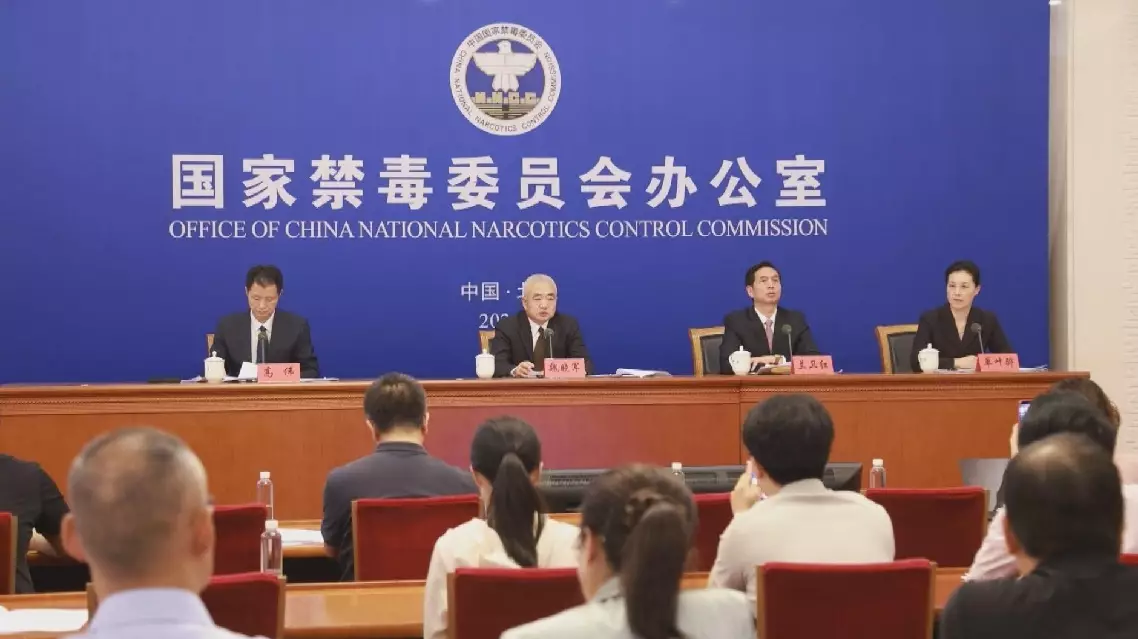
China, U.S. maintain close counter-narcotics communication, cooperation
With the Pinglu Canal in the Guangxi Zhuang Autonomous Region officially open to shipping, Yangpu Port in south China's Hainan Province will fully leverage the policy and geographical advantages of the Hainan Free Trade Port (FTP) to accelerate its development into an international shipping hub, further connecting the New International Land-Sea Trade Corridor with global markets.
The canal stretches along the New International Land-Sea Trade Corridor, a strategic trade route connecting China's inland regions with ASEAN and other global markets. It is the first river-to-sea canal project planned and coordinated at the national level since the founding of the People's Republic of China in 1949.
Located in the northwest of the island province, Yangpu Port is the deep-water port closest to the main international shipping routes in the Beibu Gulf, and is also one of the maritime outlets of the New International Land-Sea Trade Corridor.
The opening of the Pinglu Canal to navigation has opened up a new sea-river intermodal transport corridor for goods entering and leaving the southwestern region, and has also brought new opportunities to some enterprises.
At a petrochemical enterprise in Danzhou City, robotic arms are bagging and packaging chemical products on a conveyor belt, and these goods will be shipped to southwest China's Guizhou Province and other places.
Most of this enterprise's customers in the Chinese mainland are concentrated in the southwestern Chinese provinces of Yunnan, Sichuan and Guizhou. At present, the enterprise is adjusting its future shipping plans in response to the logistics changes brought by the opening of the Pinglu Canal to navigation.
"We plan to shift about 70 percent of our goods to this new sea-river intermodal transport corridor, and overall logistics costs are expected to drop by 30 to 40 percent. Next year we also plan to build another plant in Hainan, which will allow us to take advantage of the free trade port's policies, import raw materials from places like Indonesia, and after processing, sell the products to the southwestern region or re-export them. This is expected to add about 200,000 tons of production capacity," said Wei Jianqiang, head of Hainan Oxiranchem Co., Ltd.
Behind the enterprises' expansion of production and the busier flow of goods, there is also the upgraded service support made possible by the opening of the Pinglu Canal to navigation. In this regard, the relevant authorities have also made full preparations.
"After the Pinglu Canal opens to navigation, we will strengthen safeguard measures in areas such as facilitating the entry and exit of container ships on fixed routes, credit-based regulation, and cross-regional coordination," said Jiang Yufeng, head of the Xiaochantan Maritime Patrol and Law Enforcement Brigade, Yangpu Maritime Safety Administration.
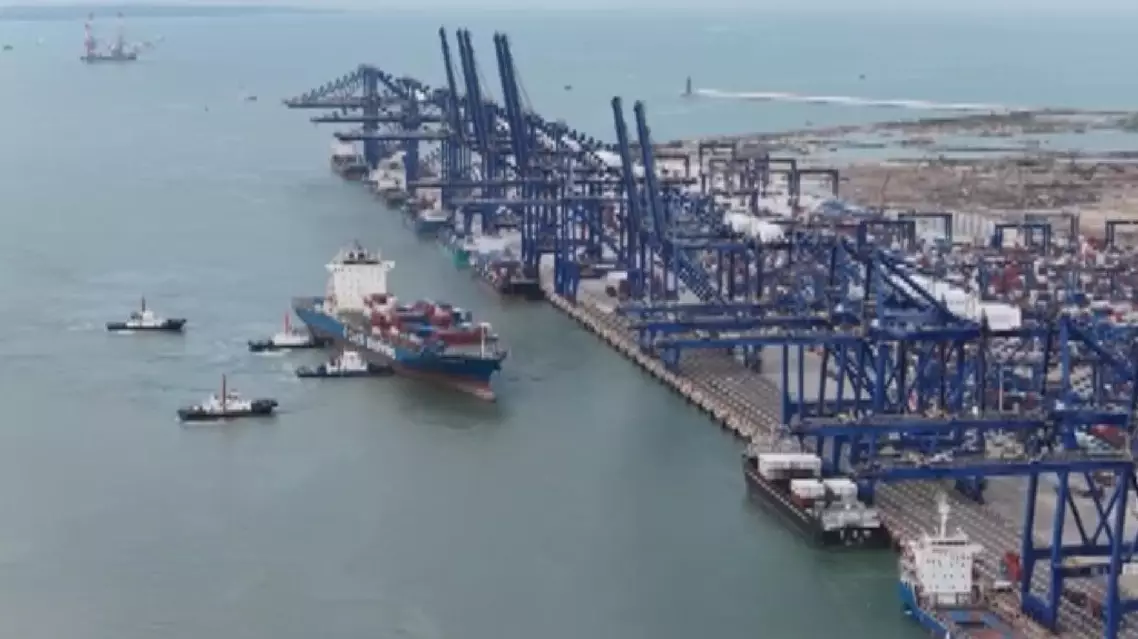
Pinglu Canal underscores growing role of Yangpu Port as int'l shipping hub