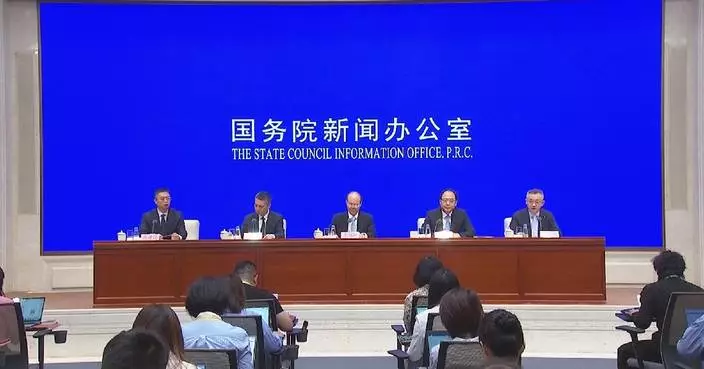
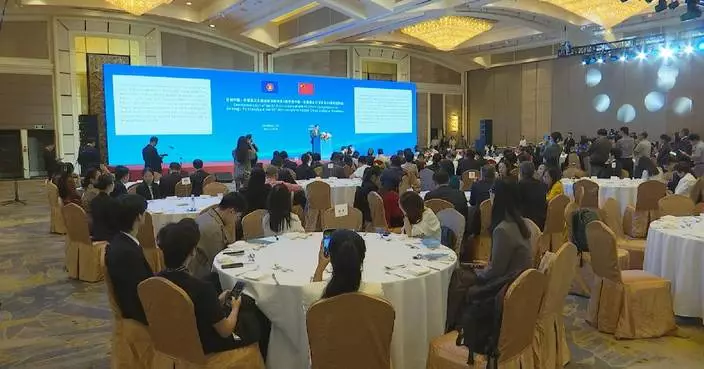
China has surpassed its freeze-phase compliance targets under the Kigali Amendment to the Montreal Protocol, making significant contributions to global environmental governance, it was announced Tuesday at a commemorative conference marking the 10th anniversary of the amendment's adoption and the 2026 International Day for the Preservation of the Ozone Layer.
Since joining the Montreal Protocol, China has cumulatively phased out the production and use of approximately 720,000 tonnes of ozone-depleting substances, accounting for more than half of all developing countries' reductions.
China accepted the Kigali Amendment to the Montreal Protocol in 2021. The amendment aims to phase down hydrofluorocarbons (HFCs), potent greenhouse gases widely used in refrigeration and air conditioning. Since 2024, the country has strictly controlled the production and use of HFCs. So far, the total production of HFCs has cumulatively decreased by more than 1.185 billion tonnes of carbon dioxide equivalent compared to the national compliance target, while the total amount used has cumulatively reduced by more than 759 million tonnes of carbon dioxide equivalent compared to the national compliance target, exceeding the phased compliance target.
"We could have used more HFCs, but by adopting low-GWP (Global Warming Potential) refrigerants, we've reduced HFC production and use. The gap between the control target and our actual use is nearly 1.2 billion tonnes. [For example,] if a hydropower station like the Three Gorges reduces 100 million tonnes of carbon dioxide-equivalent annually compared with coal-fired power, then our three-year reduction is equivalent to 12 years of the Three Gorges hydropower station's emission reductions," said Hu Jianxin, a professor with the College of Environmental Sciences and Engineering of the Peking University.
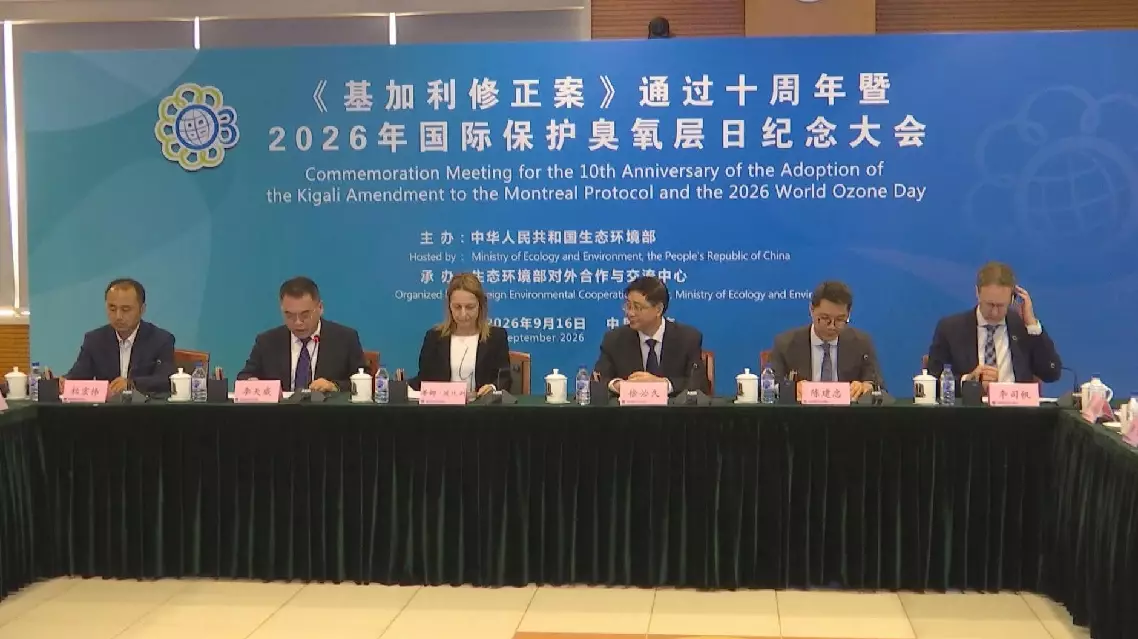
China completes phased compliance targets on ozone protection
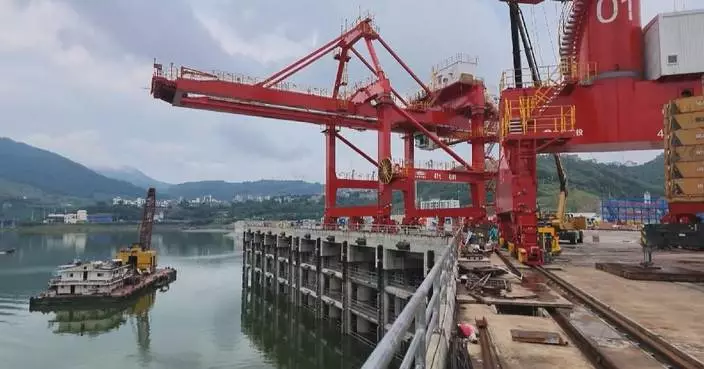
With the Pinglu Canal in the Guangxi Zhuang Autonomous Region officially open to shipping, Yangpu Port in south China's Hainan Province will fully leverage the policy and geographical advantages of the Hainan Free Trade Port (FTP) to accelerate its development into an international shipping hub, further connecting the New International Land-Sea Trade Corridor with global markets.
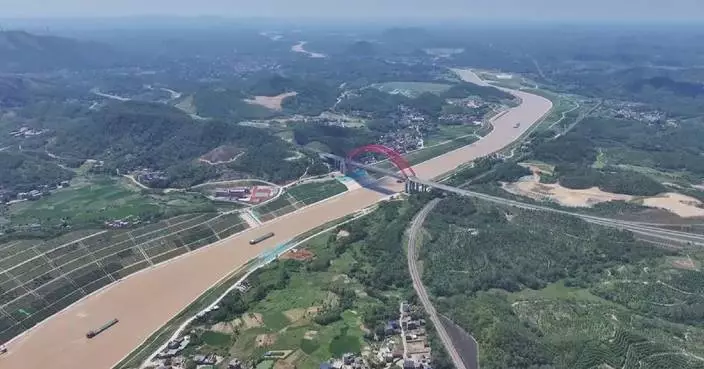
The canal stretches along the New International Land-Sea Trade Corridor, a strategic trade route connecting China's inland regions with ASEAN and other global markets. It is the first river-to-sea canal project planned and coordinated at the national level since the founding of the People's Republic of China in 1949.
Located in the northwest of the island province, Yangpu Port is the deep-water port closest to the main international shipping routes in the Beibu Gulf, and is also one of the maritime outlets of the New International Land-Sea Trade Corridor.
The opening of the Pinglu Canal to navigation has opened up a new sea-river intermodal transport corridor for goods entering and leaving the southwestern region, and has also brought new opportunities to some enterprises.
At a petrochemical enterprise in Danzhou City, robotic arms are bagging and packaging chemical products on a conveyor belt, and these goods will be shipped to southwest China's Guizhou Province and other places.
Most of this enterprise's customers in the Chinese mainland are concentrated in the southwestern Chinese provinces of Yunnan, Sichuan and Guizhou. At present, the enterprise is adjusting its future shipping plans in response to the logistics changes brought by the opening of the Pinglu Canal to navigation.
"We plan to shift about 70 percent of our goods to this new sea-river intermodal transport corridor, and overall logistics costs are expected to drop by 30 to 40 percent. Next year we also plan to build another plant in Hainan, which will allow us to take advantage of the free trade port's policies, import raw materials from places like Indonesia, and after processing, sell the products to the southwestern region or re-export them. This is expected to add about 200,000 tons of production capacity," said Wei Jianqiang, head of Hainan Oxiranchem Co., Ltd.
Behind the enterprises' expansion of production and the busier flow of goods, there is also the upgraded service support made possible by the opening of the Pinglu Canal to navigation. In this regard, the relevant authorities have also made full preparations.
"After the Pinglu Canal opens to navigation, we will strengthen safeguard measures in areas such as facilitating the entry and exit of container ships on fixed routes, credit-based regulation, and cross-regional coordination," said Jiang Yufeng, head of the Xiaochantan Maritime Patrol and Law Enforcement Brigade, Yangpu Maritime Safety Administration.
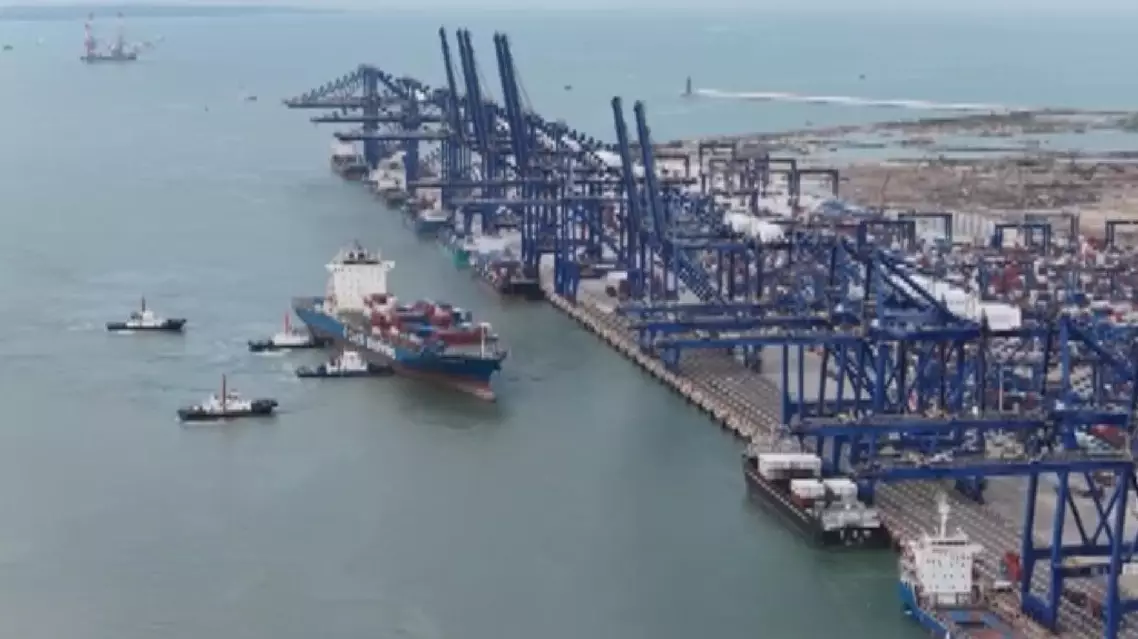
Pinglu Canal underscores growing role of Yangpu Port as int'l shipping hub