Airbus on Wednesday delivered the first aircraft assembled at its new Final Assembly Line (FAL) for the A320 family aircraft in the northern Chinese port city of Tianjin, the second of its kind in both China and Asia.
The completion represents a major milestone in Airbus' industrial footprint expansion in China and across its global industrial system, the company said.
China Eastern Airlines took delivery of the A320neo aircraft. Currently operating the largest Airbus fleet in the Chinese mainland, the airline also commissioned China's first Airbus aircraft, an A310, in 1985.
Since the inauguration of the first FAL in Tianjin in 2008, Airbus' first commercial aircraft assembly line outside Europe, the facility has assembled and delivered over 800 A320 Family aircraft.
Chinese airlines now operate over 2,300 Airbus aircraft, about one-third assembled and delivered in Tianjin. The second FAL in China, also in Tianjin, was put into operation last October and has quickly become a critical facilitator for Airbus' global A320 Family ramp-up toward a production rate of 75 aircraft per month.
"Tianjin is a perfect site, next to Hamburg, Toulouse, and Mobile in the U.S., building singular aircraft. Tianjin is a very reliable plant building aircraft at good quality on time. So it's a very resilient, very stable plant," said Erik Buschmann, chief operating officer of Airbus China.
According to Airbus' latest Global Market Forecast, China's demand for new passenger aircraft is expected to reach 8,830 units over the next two decades, accounting for more than 20 percent of the estimated global total of 42,060 units.
At the same time, the well-developed supply chain and innovation ecosystem in the country makes it ideal for aircraft production and development.
"We see a very strong resilience in the Chinese system to take part in this immense Chinese speed, as we call it, and see what innovation we can take, we can work with and maybe put on the aircraft later on," Buschmann said.
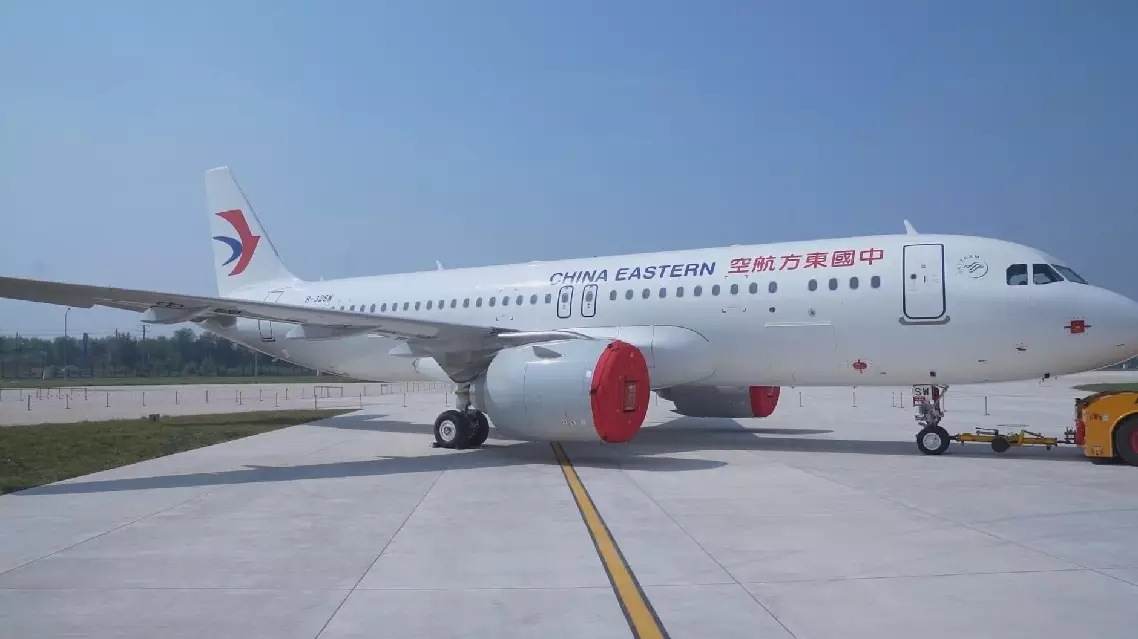
Airbus delivers first aircraft from its new assembly line in China
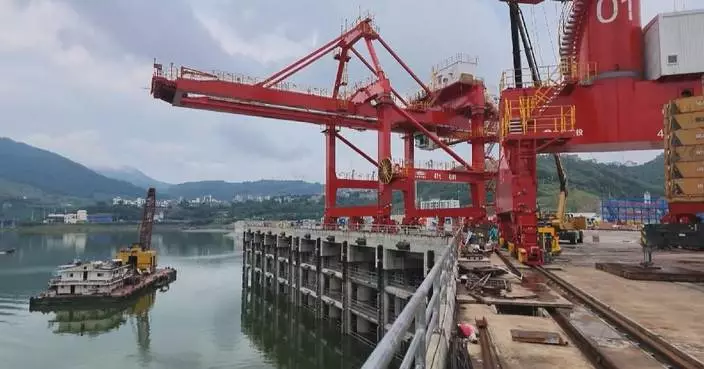
With the Pinglu Canal in the Guangxi Zhuang Autonomous Region officially open to shipping, Yangpu Port in south China's Hainan Province will fully leverage the policy and geographical advantages of the Hainan Free Trade Port (FTP) to accelerate its development into an international shipping hub, further connecting the New International Land-Sea Trade Corridor with global markets.
The canal stretches along the New International Land-Sea Trade Corridor, a strategic trade route connecting China's inland regions with ASEAN and other global markets. It is the first river-to-sea canal project planned and coordinated at the national level since the founding of the People's Republic of China in 1949.
Located in the northwest of the island province, Yangpu Port is the deep-water port closest to the main international shipping routes in the Beibu Gulf, and is also one of the maritime outlets of the New International Land-Sea Trade Corridor.
The opening of the Pinglu Canal to navigation has opened up a new sea-river intermodal transport corridor for goods entering and leaving the southwestern region, and has also brought new opportunities to some enterprises.
At a petrochemical enterprise in Danzhou City, robotic arms are bagging and packaging chemical products on a conveyor belt, and these goods will be shipped to southwest China's Guizhou Province and other places.
Most of this enterprise's customers in the Chinese mainland are concentrated in the southwestern Chinese provinces of Yunnan, Sichuan and Guizhou. At present, the enterprise is adjusting its future shipping plans in response to the logistics changes brought by the opening of the Pinglu Canal to navigation.
"We plan to shift about 70 percent of our goods to this new sea-river intermodal transport corridor, and overall logistics costs are expected to drop by 30 to 40 percent. Next year we also plan to build another plant in Hainan, which will allow us to take advantage of the free trade port's policies, import raw materials from places like Indonesia, and after processing, sell the products to the southwestern region or re-export them. This is expected to add about 200,000 tons of production capacity," said Wei Jianqiang, head of Hainan Oxiranchem Co., Ltd.
Behind the enterprises' expansion of production and the busier flow of goods, there is also the upgraded service support made possible by the opening of the Pinglu Canal to navigation. In this regard, the relevant authorities have also made full preparations.
"After the Pinglu Canal opens to navigation, we will strengthen safeguard measures in areas such as facilitating the entry and exit of container ships on fixed routes, credit-based regulation, and cross-regional coordination," said Jiang Yufeng, head of the Xiaochantan Maritime Patrol and Law Enforcement Brigade, Yangpu Maritime Safety Administration.
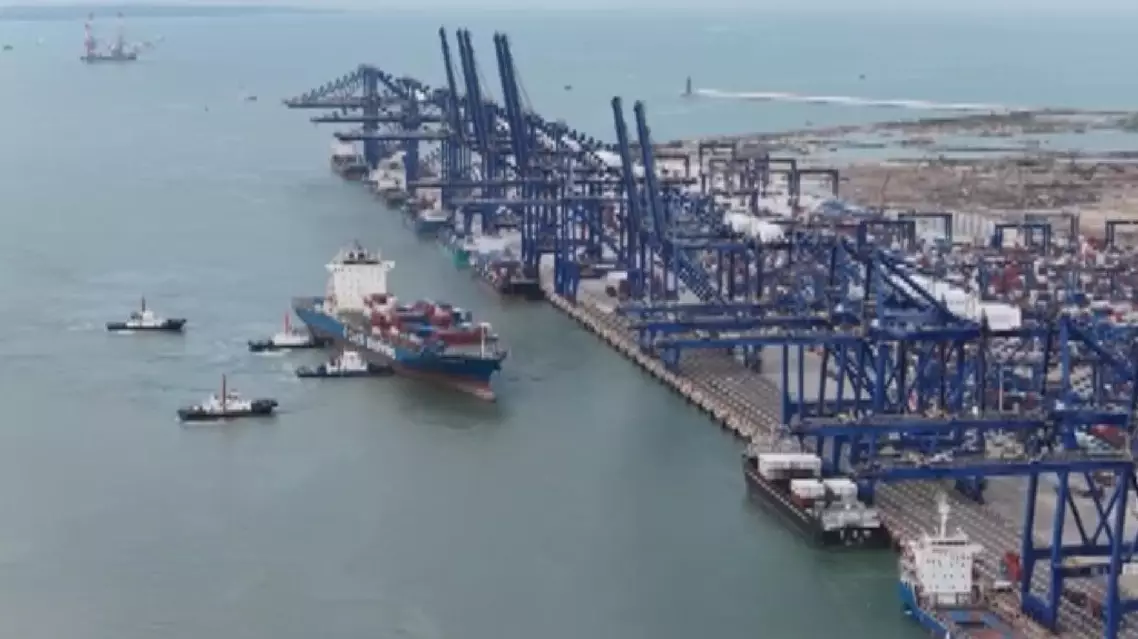
Pinglu Canal underscores growing role of Yangpu Port as int'l shipping hub