A 29-year-old village chief from east China's Fujian Province has been revitalizing her home village by prompting local culture and agricultural produce, successfully bringing in tourists and expanding sales through online channels.
Zhu Binbin, chief of Yanxiang Village that has a history of over 1,000 years, is known by local villagers as the "New Keeper of an Ancient Village".
In the ancient Hakka village where the average age tops 60, Zhu is the only one of her generation who decided to return. She came back to the ancient village at the age of 24.
"We have a history of 1,000 years, and two items of intangible cultural heritage. Our ancient buildings are our most precious resources," said Zhu.
Preserving the village's 18 rare houses that date back to the Ming and Qing dynasties (1368-1911) was her first mission as village chief.
"I grew up running around in these old houses. When I first took office, it broke my heart to see so many of them leaking rain, with their beams hollowed out by termites. First, people needed safe homes," she said.
After six months of efforts and a long trip that took her from the deep mountains to Beijing, Zhu eventually secured over 4 million yuan (about 550,000 U.S. dollars) to fund the restoration.
However, raising the money was only one part of the challenge; convincing elderly villagers proved even harder.
Unlike sealed-off tourist parks, these ancient houses are still home to six local families, who feared change and destruction.
To address their concerns, Zhu made a promise -- the buildings will remain traditional on the outside, and the heritage will be restored exactly as it was.
At the same time, Zhu upgraded their kitchens, plumbing, and wiring, allowing residents to live with greater convenience.
"She's doing a wonderful job. Zhu has really done a wonderful job," said an elderly villager.
After the village has been restored, Zhu shared the results online. Her short videos quickly went viral, sparking a sudden wave of tourists heading into the mountains.
"Especially this lane we're standing in now, it's called Wanfu Lane. It's a must-visit spot for tourists, also known as an internet-famous check-in point," said Zhu.
However, the village struggles to accommodate and retain tourists after they arrive.
"They come to the village, look around, but there's nowhere to eat, nowhere to stay, nothing to do, nothing to buy. So we can't keep them here," said Zhu.
"Over the past few years, we've been constantly restoring ancient buildings and continuously improving the village environment. But when it comes to rural cultural tourism, we still have a very long way to go," she added.
In response, Zhu has decided to adapt to local conditions and leverage the village's strengths.
She has been promoting local agricultural legacy, including Tribute Tea -- a top-tier luxury that was once exclusively handpicked and sent straight to emperors in ancient times.
"You'll notice these little holes on our tea leaves, which are marks left by bug bites," said Zhu.
The tea's distinct qualities come from the village's high altitude and large differences in temperature between day and night, which give it a natural orchid-like fragrance and an exceptionally smooth flavor.
"We can sell our raw tea for 150 yuan per jin (about 43 U.S. dollars per kilogram)," said Yang Taojie, head of the local tribute tea cooperative.
To help the mountain products reach a wider audience, Zhu turned to livestreaming for promotion, and the village committee has been transformed into a bustling trading post ever since.
"When they have some fresh farm specialties to sell, they'll come to tell me what they have and ask if anyone wants it. Usually, I'll post it on my [Wechat] Moments and do livestreaming. The goods we're sending out today were sold through our livestreaming room," said Zhu.
However, the village's isolated infrastructure remains a stubborn barrier, along with limited supply.
"Take your tea, for example. As the village chief mentioned, she said you only produce 2,000 jin (1,000 kilograms). If you want to take it to the online market, the amount is simply not enough," said Cai Dengqiu, professor of Sanming University.
"First, you need volume, and second, cultural and creative development," he added.
Cai has spent 30 years studying Hakka ancient villages and has helped dozens of villages get out of similar predicaments.
"Look at these carvings on the old houses -- various flowers, birds, and figures. These can all be developed into cultural products," said Cai.
In a hyper-connected world that demands the fast, the sturdy, and the mass-produced, Zhu still holds on to the slow, the fragile, and the human touch in this ancient village.
"We are given two choices in life: to chase our dreams, or to return to our roots. I chose to come back, because my home deserves to be noticed," said Zhu.
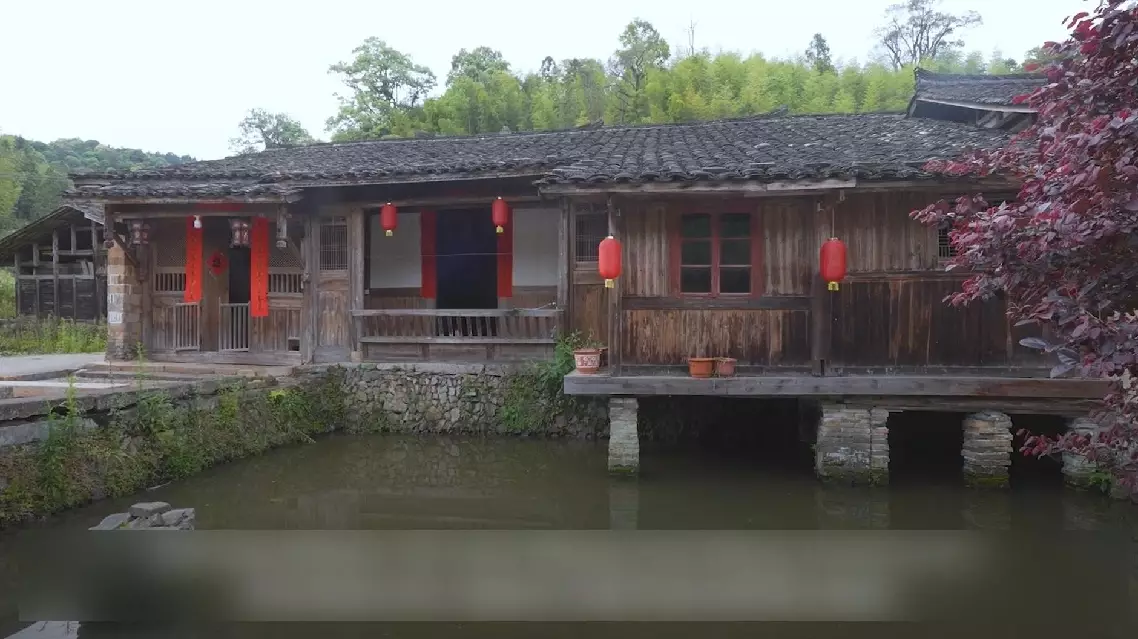
Young village chief strives to revitalize hometown by promoting local culture, products