An advanced casting 3D printing enterprise from northwest China’s Ningxia Hui Autonomous Region has successfully landed in Nan'an City in east China's Fujian Province, showcasing a model of deep industrial synergy under the Fujian-Ningxia collaboration program.
Fujian and Ningxia are marking the 30th anniversary of their pairing-up program, an initiative launched in 1996 to boost common development through shared resources and expertise.
At a workshop of a smart casting factory in Nan'an, a county-level city under the administration of Quanzhou City, eight 3D printing machines from Ningxia's Kocel Company have been deployed to boost local machinery and equipment manufacturing.
Headquartered in Yinchuan City of Ningxia, Kocel operates one of China's leading intelligent foundry factories using full-process 3D printing technology. Over 2,000 km down the south, Quanzhou boasts a complete machinery and equipment industrial chain with an annual output value exceeding 100 billion yuan.
In 2023, under the collaboration mechanism between the two regions, Kocel established its latest-generation of casting 3D printing smart factory in Quanzhou's Nan'an City, fully leveraging the advanced high-end manufacturing expertise from Ningxia and the whole industrial chain in Fujian.
"The casting 3D printing smart factory of Kocel has filled the technological gap in casting 3D printing in Nan'an City. Meanwhile, the project leverages Fujian's industrial resources to improve the downstream supporting industries for Ningxia's equipment manufacturing sector, so that the two regions have achieved mutual access to each other's industrial resources, supporting and strengthening industrial chains for both sides," said Huang Ziya, director of the Industry and Information Technology Bureau of Nan'an City.
Meanwhile, Fujian's well-developed machinery and equipment industrial chain has not only brought substantial orders for the high-tech company from Ningxia, but also offered diverse application scenarios to drive continuous technological advancement and application innovation.
"Many of the parts ordered by local enterprises [in Quanzhou] are quite complex, which places much higher requirements for our production and drives us to continuously improve. By relying on the local industrial chain, we now not only sell products but also provide entire production lines. Since we started production here in 2023, our output value has been growing steadily," said Shi Qingming, assistant general manager of Quanzhou Kocel Intelligent Foundry Industry Innovation Center.
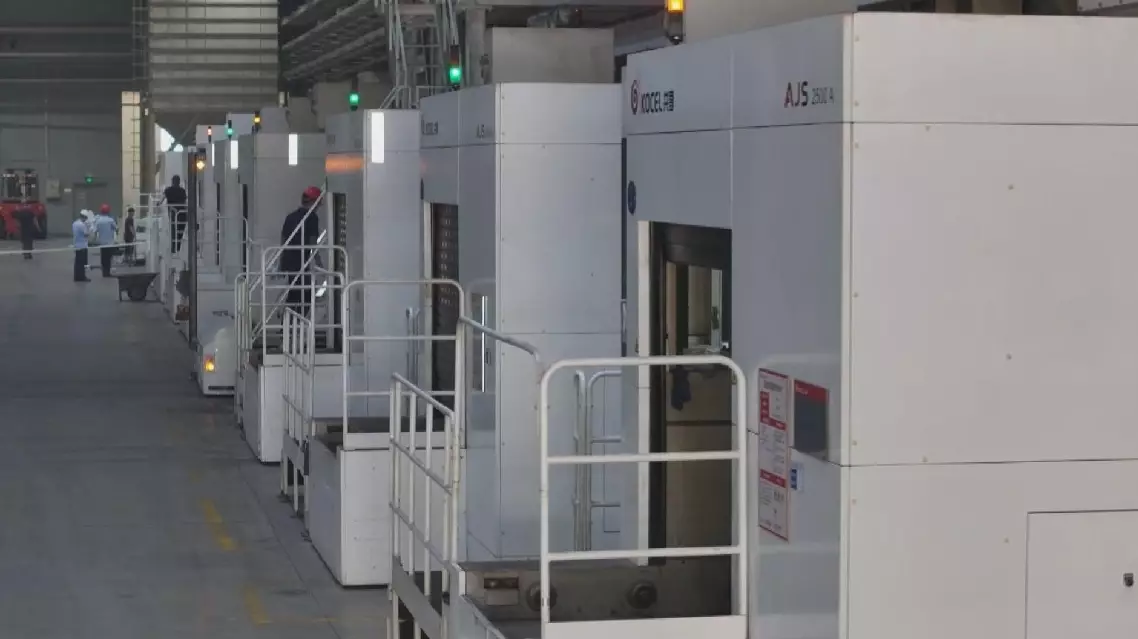
Ningxia’s 3D printing casting technology takes root in Fujian
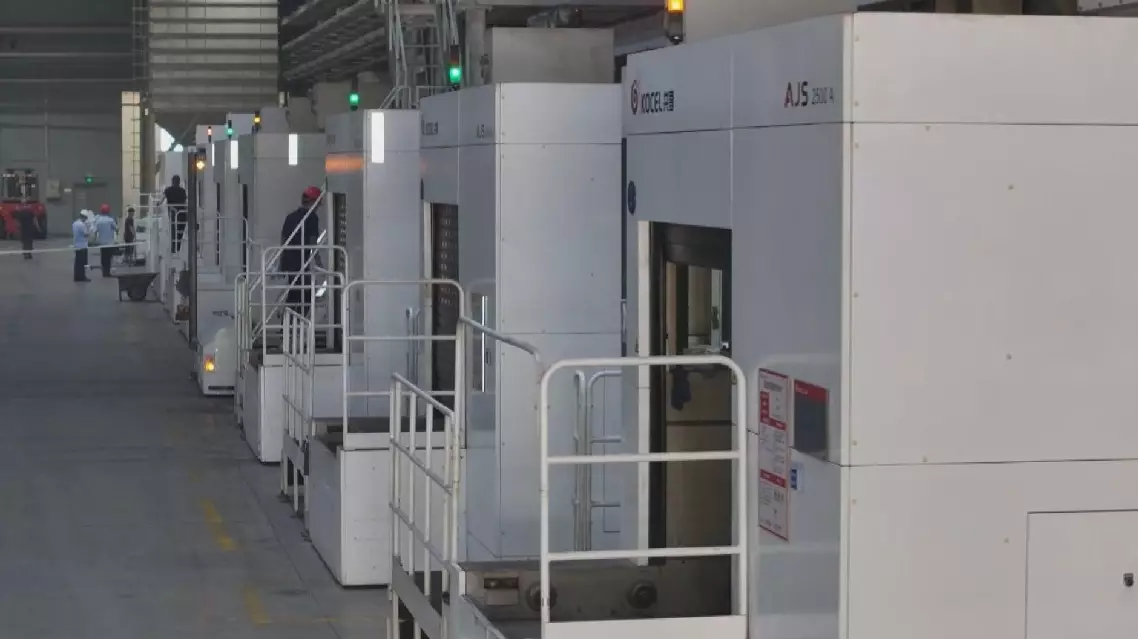
Ningxia’s 3D printing casting technology takes root in Fujian
This Dragon Boat Festival, tradition met innovation in southwest China's Sichuan Province as humanoid robots from Beijing not only paddled alongside human rowers in dragon boat races but also learned to make glutinous rice cakes and dumplings, infusing the traditional celebration with fresh excitement and new elements.
An "energy relay event" for the upcoming 2026 World Humanoid Robot Games made its second domestic stop in Bazhong, Sichuan Province, where the humanoid robots stepped out of the laboratory and into real-world festive scenes.
At Bazhong's Enyang Dragon Boat Sports Park, a human-robot collaborative boat carried two "Tiangong" robots from the Beijing Innovation Center of Humanoid Robotics, alongside six young local paddlers. These robotic athletes had undergone more than two weeks of adaptive training, first on Beijing's Shichahai Lake and then on the rivers of Bazhong, learning to sync their mechanical movements with the rhythms of human teamwork.
The robots looked a bit clumsy at first. But after several rounds of fine-tuning, they began to get the hang of it. Their paddle control became increasingly sophisticated, and their coordination with the human crew improved markedly.
To truly test their capabilities, the human racers stopped rowing altogether and let the robots take over entirely. The boat kept moving forward -- slowly but steadily.
Rowing a dragon boat isn't just about swinging arms back and forth. It demands a continuous, rapid sequence of lifting, dipping, pulling, and releasing the oar, which requires strength, timing, and precision. To replicate this, engineers optimized the robots' waist movements, making their motions far more human-like and fluid.
Using similar principles, the robots also joined in the traditional activity of pounding glutinous rice into ciba cakes. It's a true test of their dynamic balance and anti-disturbance capabilities.
The robots even tried their hand at making zongzi, the iconic glutinous rice dumplings of the festival. They rinsed rice and prepared ingredients with their dexterous hands, and by soaking and handling the materials, they achieved a significant breakthrough in water resistance. It's a small step that points toward a much larger future: household robots capable of working safely and effectively in kitchens, bathrooms, and other wet environments.
As the first international sports games dedicated exclusively to humanoid robots, the World Humanoid Robot Games will hold its second edition from August 22 to 26 in Beijing. Featuring more than 30 events, the competition will showcase the latest advancements in embodied intelligence and fine manipulation capabilities.
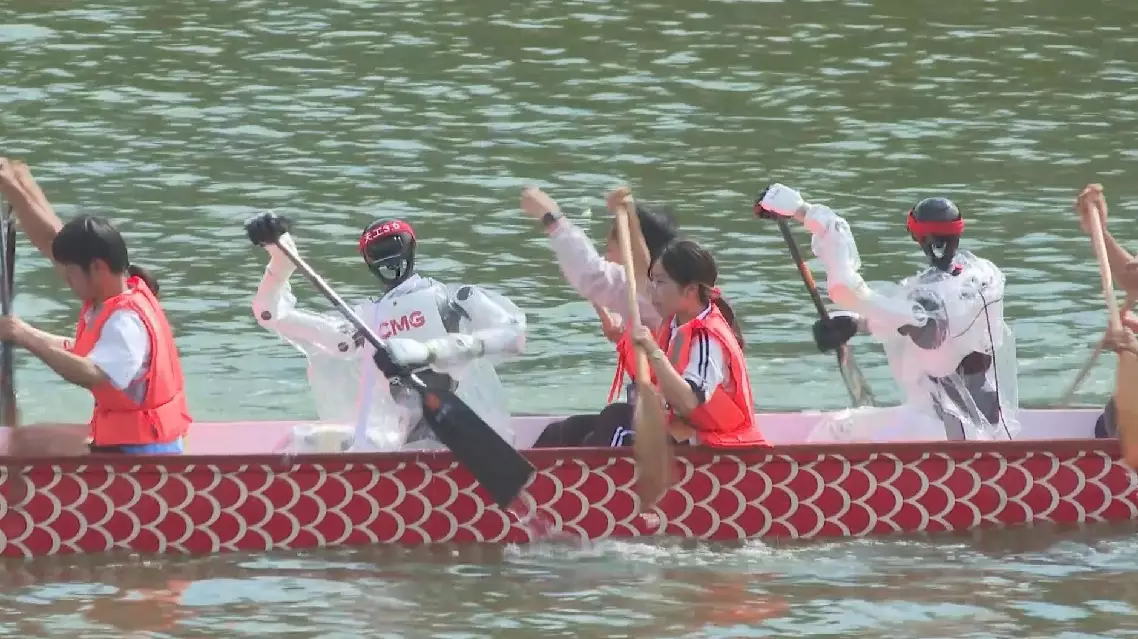
Robots join human paddlers as Dragon Boat Festival traditions go high-tech