Skip to Content Facebook Feature Image

Robots join human paddlers as Dragon Boat Festival traditions go high-tech

China

China

China

Robots join human paddlers as Dragon Boat Festival traditions go high-tech

2026-06-19 21:18 Last Updated At:06-21 15:22

This Dragon Boat Festival, tradition met innovation in southwest China's Sichuan Province as humanoid robots from Beijing not only paddled alongside human rowers in dragon boat races but also learned to make glutinous rice cakes and dumplings, infusing the traditional celebration with fresh excitement and new elements.

An "energy relay event" for the upcoming 2026 World Humanoid Robot Games made its second domestic stop in Bazhong, Sichuan Province, where the humanoid robots stepped out of the laboratory and into real-world festive scenes.

At Bazhong's Enyang Dragon Boat Sports Park, a human-robot collaborative boat carried two "Tiangong" robots from the Beijing Innovation Center of Humanoid Robotics, alongside six young local paddlers. These robotic athletes had undergone more than two weeks of adaptive training, first on Beijing's Shichahai Lake and then on the rivers of Bazhong, learning to sync their mechanical movements with the rhythms of human teamwork.

The robots looked a bit clumsy at first. But after several rounds of fine-tuning, they began to get the hang of it. Their paddle control became increasingly sophisticated, and their coordination with the human crew improved markedly.

To truly test their capabilities, the human racers stopped rowing altogether and let the robots take over entirely. The boat kept moving forward -- slowly but steadily.

Rowing a dragon boat isn't just about swinging arms back and forth. It demands a continuous, rapid sequence of lifting, dipping, pulling, and releasing the oar, which requires strength, timing, and precision. To replicate this, engineers optimized the robots' waist movements, making their motions far more human-like and fluid.

Using similar principles, the robots also joined in the traditional activity of pounding glutinous rice into ciba cakes. It's a true test of their dynamic balance and anti-disturbance capabilities.

The robots even tried their hand at making zongzi, the iconic glutinous rice dumplings of the festival. They rinsed rice and prepared ingredients with their dexterous hands, and by soaking and handling the materials, they achieved a significant breakthrough in water resistance. It's a small step that points toward a much larger future: household robots capable of working safely and effectively in kitchens, bathrooms, and other wet environments.

As the first international sports games dedicated exclusively to humanoid robots, the World Humanoid Robot Games will hold its second edition from August 22 to 26 in Beijing. Featuring more than 30 events, the competition will showcase the latest advancements in embodied intelligence and fine manipulation capabilities.

Robots join human paddlers as Dragon Boat Festival traditions go high-tech

Robots join human paddlers as Dragon Boat Festival traditions go high-tech
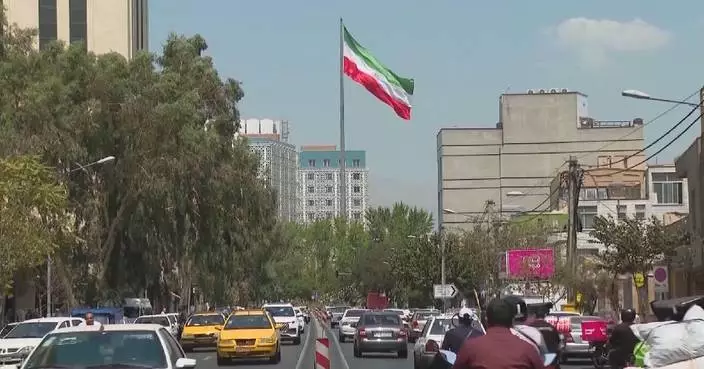
A series of new policies introduced this year are fueling the expansion and upgrading of China's auto consumption, spanning new vehicle purchases, aftermarket services, used-car circulation and streamlined registration processes.

In June, the Ministry of Commerce and seven other government departments selected 40 pilot cities for auto circulation and consumption reform, covering new vehicle sales, used-car circulation, end-of-life vehicle recycling and aftermarket sectors such as auto modification, RV camping and motorsports. Separately, the ministry and eight other departments issued 17 measures to boost auto aftermarket consumption.

In Hefei, east China's Anhui Province, these policies are delivering tangible results.

At a new energy vehicle delivery center, local resident Lu Qinyun completed her vehicle inspection and registration via a mobile app in just half an hour, a process that previously required lengthy visits to multiple departments.

"Previously, after picking up the car, I had to get an invoice, buy insurance, and then take the documents to the tax bureau, the vehicle management office, and queue up for inspection. Even taking half a day off wasn't enough to get it done smoothly, and the license plate took several days to arrive. This time, it took half an hour to finish everything. The experience was excellent," said Lu. Many automakers in Hefei now conduct standardized pre-inspections on the assembly line, uploading vehicle identification numbers and photos before the cars leave the factory.

"Manufacturers complete vehicle inspections during the production process, so there is no need to inspect the car again when registering it. The 12123 App automatically verifies information such as invoices, purchase taxes, and insurance. The service window only reviews the information without manual entry, achieving a fully electronic and paperless process," said Tao Yubao, a staff member at the Hefei Public Security Bureau's Vehicle and Driver Management Office.

Beyond streamlining new vehicle registration, China has also designated 40 pilot cities for auto circulation and consumption reform, backing local initiatives in areas such as used-car circulation and vehicle use.

Experts say the policies rolled out this year continue to drive the expansion and upgrading of auto consumption.

New policies fuel China's auto consumption expansion

New policies fuel China's auto consumption expansion

Recommended Articles