A rare baby Chinese pangolin, a species under China's top-level state protection, was discovered by a villager in Yongxin County of east China's Jiangxi Province in the early hours of Friday and has since been successfully released back into nature following a swift rescue operation.
A local couple found the small, curled-up creature covered in scales along the roadside. Unable to identify the animal and concerned for its safety, they immediately reported the discovery to the authorities.
Upon receiving the report, staff from the local forestry bureau rushed to the scene to conduct an identification and health assessment.
"We identified it as a Chinese pangolin, a first-class nationally protected wildlife species. It is a female juvenile, approximately four to five months old, measuring 60 centimeters in length and weighing 1.77 kilograms. It is in very good physical condition and perfectly healthy, fully meeting the criteria for survival in the wild." said Wang Chunxiang, a staff member at the Yongxin County Forestry Bureau.
The Chinese pangolin is a mammal belonging to the order Pholidota. It feeds primarily on termites and ants. A single adult can consume about 7 million termites a year, earning it the nickname "guardian of the forest."
Pangolins have an exceptionally low reproductive rate, typically giving birth to only one offspring per litter, which makes the recovery of wild populations extremely slow.
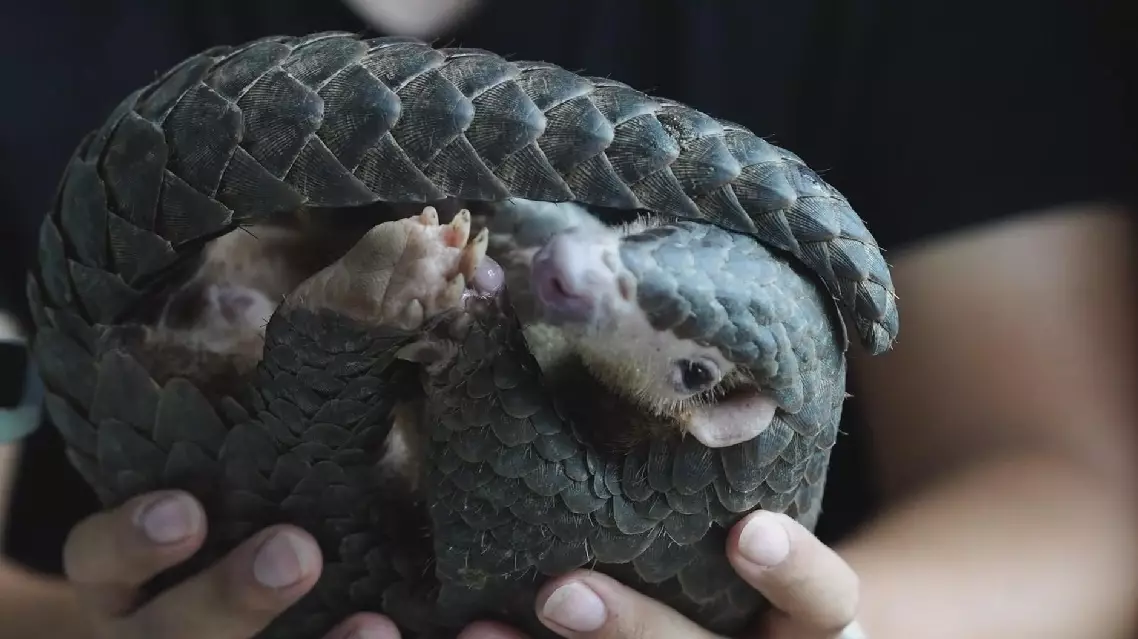
Rare baby Chinese pangolin rescued, released by villagers
Chinese robotics firms have made significant breakthroughs in the development and manufacturing of core components, as highlighted at the 2026 World Robot Conference (WRC), which wrapped up on Sunday in Beijing.
The 2026 World Robot Conference, which ran from Wednesday to Sunday, drew more than 300 exhibitors from 26 countries, with over 3,000 products on display, including more than 300 debuts.
One of the highlights of this year's WRC was the considerable presence of dexterous-hand sensor makers, joint module suppliers and chip manufacturers. These component suppliers, once supporters behind finished robots, have now also taken center stage in their own niche sectors -- a sign that China's robotics industry is maturing into a more sophisticated ecosystem.
"Now regarding the market demand for embodied AI, expectations for joint module intelligence and sensory capabilities are growing higher and higher. We will integrate more sensors into the joint modules to make them much smarter," said Weng Jinxian, an exhibitor.
Many robots on display have been rapidly moving past exhibition displays and stepping into real-world operational roles. A company showcased three- and five-fingered robotic hands tailored for logistics sorting, pharmacies, and industrial manufacturing. Exhibitors pointed out that the vast majority of parts for these hands are now domestically produced, significantly lowering production costs and boosting safety and reliability.
"We don't just view it [the robotic hand] as a single piece of hardware. We hope the hand comes with 'brain' capabilities, treating the software ecosystem as a very important part of our product. This includes planning, decision-making, control, and other AI algorithms to accelerate its rapid deployment across thousands of industries," said Wang Peng, another exhibitor.
Beyond commercial applications, the maturation of these core components is enabling robots to build the "hard skills" needed to adapt to extreme environments, including firefighting, mine surveying, and power grid inspections.
Driving these robots as to continuously challenge environmental limits are homegrown core components that have steadily achieved independent breakthroughs.
"When we first started making power grid robots, parts like motors and drivers still had to be imported. Now, the core components of these new models are entirely homegrown and fully self-controlled," Guo Rui, an exhibitor.
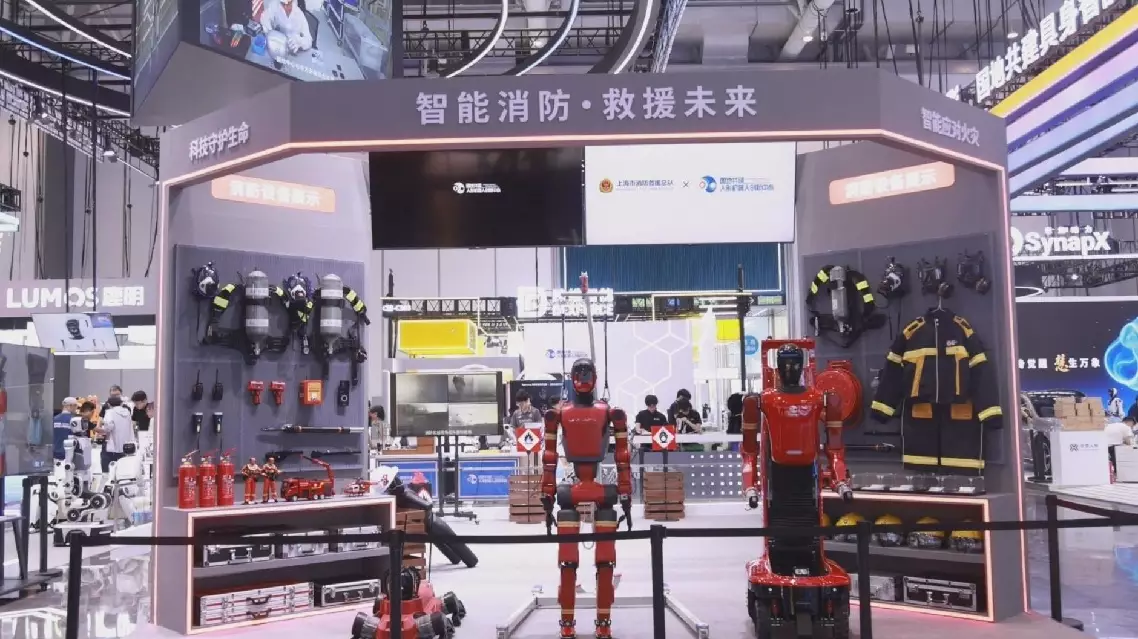
Core component breakthroughs take center stage at World Robot Conference