Europe's prolonged heat wave has turned an ordinary household product from Zhongshan City, a manufacturing hub is south China's Guangdong Province, into a surprise summer hit, with makers of ceiling fan lights working around the clock to keep up with surging demand.
Manufacturers say the boom began as early as June, when the product, a cost-effective cooling fixture combining a ceiling fan with a light, suddenly went viral in European markets. Inventory on cross-border e-commerce platforms sold out within days.
"Europe is quite hot this year, so our ceiling fan lights sold explosively. Around the end of June, I suddenly found that the stock on our cross-border e-commerce backend was cleared out in a single day. Now we are working around the clock for orders from Europe. The container being loaded downstairs just now is also headed entirely to Germany," said Shi Xiaohong, general manager of an electric appliance manufacturer in Zhongshan.
The sales surge quickly rippled upstream to production. In previous years, cross-border restocking peaked by around June, while this year, lines have kept running at full capacity into August.
"Our June output doubled from last year. We normally produce about 45,000 units a month, but this June we made more than 80,000. European orders alone added 20 containers. We had to run two shifts in June to meet the demand, and July and August were still a rush," said Luo Wen, head of the home appliance maker.
Logistics and warehousing are also under pressure, forcing workers to speed up in every procedure.
"Fans and other cooling equipment saw remarkable demand across Europe in July. Our orders increased significantly, and the warehouse had to operate 18 hours a day just to basically meet customer needs," said Zhang Mao, a Europe-route manager at a Shenzhen-based international logistics company.
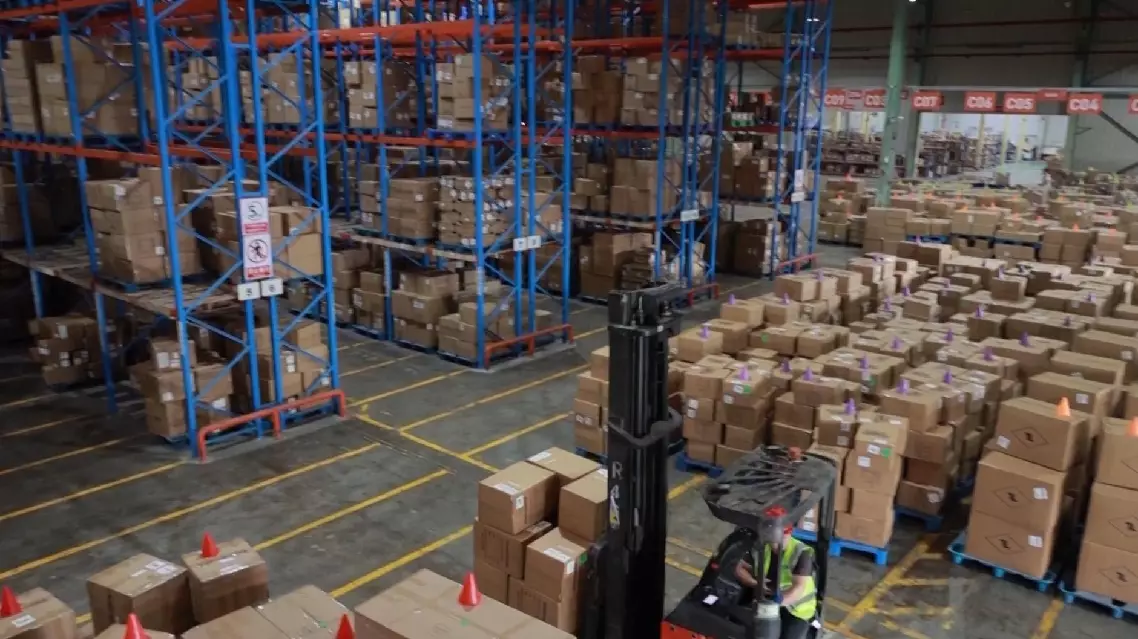
Chinese ceiling fan lights get popular in Europe amid scorching summer
Chinese robotics firms have made significant breakthroughs in the development and manufacturing of core components, as highlighted at the 2026 World Robot Conference (WRC), which wrapped up on Sunday in Beijing.
The 2026 World Robot Conference, which ran from Wednesday to Sunday, drew more than 300 exhibitors from 26 countries, with over 3,000 products on display, including more than 300 debuts.
One of the highlights of this year's WRC was the considerable presence of dexterous-hand sensor makers, joint module suppliers and chip manufacturers. These component suppliers, once supporters behind finished robots, have now also taken center stage in their own niche sectors -- a sign that China's robotics industry is maturing into a more sophisticated ecosystem.
"Now regarding the market demand for embodied AI, expectations for joint module intelligence and sensory capabilities are growing higher and higher. We will integrate more sensors into the joint modules to make them much smarter," said Weng Jinxian, an exhibitor.
Many robots on display have been rapidly moving past exhibition displays and stepping into real-world operational roles. A company showcased three- and five-fingered robotic hands tailored for logistics sorting, pharmacies, and industrial manufacturing. Exhibitors pointed out that the vast majority of parts for these hands are now domestically produced, significantly lowering production costs and boosting safety and reliability.
"We don't just view it [the robotic hand] as a single piece of hardware. We hope the hand comes with 'brain' capabilities, treating the software ecosystem as a very important part of our product. This includes planning, decision-making, control, and other AI algorithms to accelerate its rapid deployment across thousands of industries," said Wang Peng, another exhibitor.
Beyond commercial applications, the maturation of these core components is enabling robots to build the "hard skills" needed to adapt to extreme environments, including firefighting, mine surveying, and power grid inspections.
Driving these robots as to continuously challenge environmental limits are homegrown core components that have steadily achieved independent breakthroughs.
"When we first started making power grid robots, parts like motors and drivers still had to be imported. Now, the core components of these new models are entirely homegrown and fully self-controlled," Guo Rui, an exhibitor.
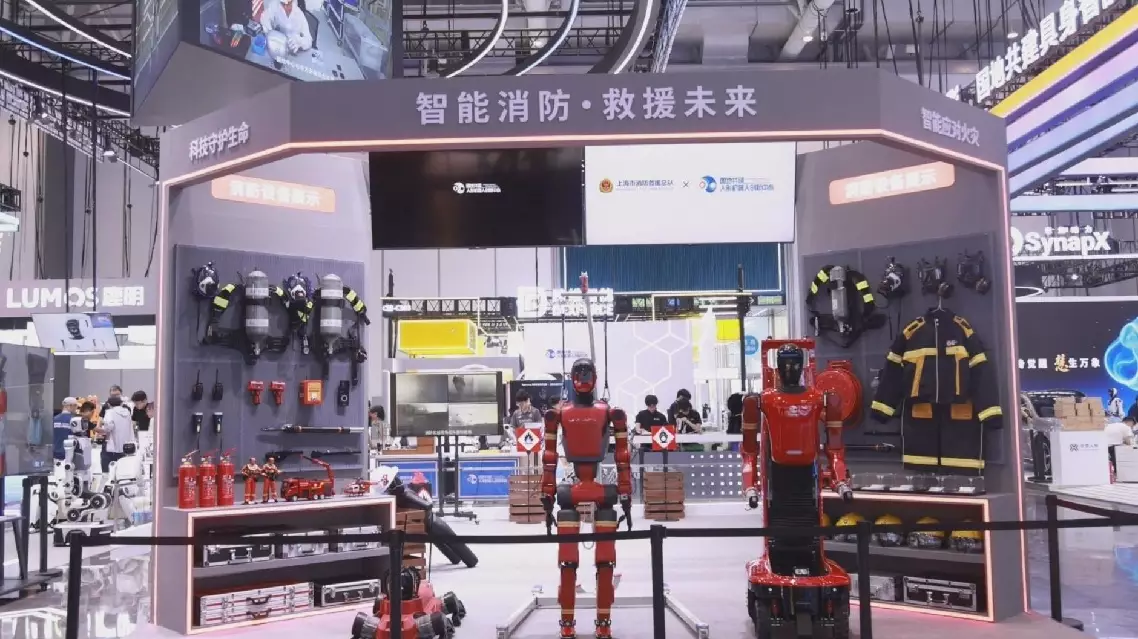
Core component breakthroughs take center stage at World Robot Conference