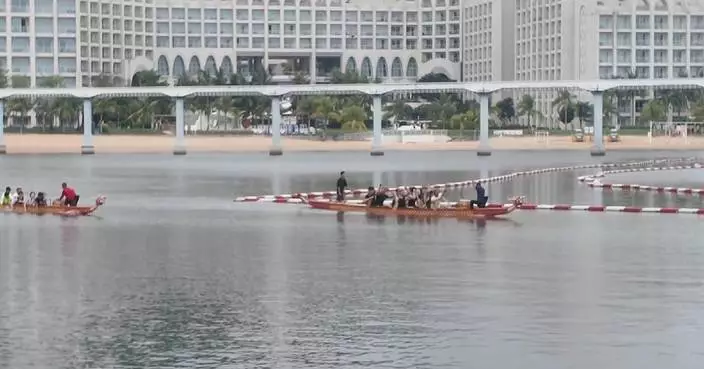
An intensive dragon boat race was held on Friday in Ili Kazak Autonomous Prefecture, northwest China's Xinjiang Uygur Autonomous to mark the Dragon Boat Festival, perfectly blending the charm of tradition with the colorful folk customs.
Celebrated on the fifth day of the fifth month of the Chinese lunar calendar, the Dragon Boat Festival fell on June 19 this year.
The festival is marked by customs such as eating zongzi, a glutinous rice dumpling wrapped with bamboo or reed leaves, wearing protective sachets and five-colored bracelets, and watching dragon boat races.
After two days of qualifying rounds that began on Wednesday, 24 teams emerged from an initial field of 40 to compete in Friday's finals.
Each team is composed of 18 members, including a drummer, a steersman, and 16 paddlers, all local residents of Han, Uyghur, Kazakh, Xibe, and other ethnic groups.
At the starting whistle, paddlers surged forward, driving their boats toward the finish line on the Ili River. The air was thick with rhythmic drumbeats and shouts. Each paddler had to keep pace with their team's rhythm, channeling individual strength into a collective force that propelled the boats swiftly across the water.
The customs of celebrating the Dragon Boat Festival among its various ethnic groups have been passed down for generations in Ili Kazak Autonomous Prefecture. Many areas still retain the traditions of dry-land dragon boat race and burning mugwort to ward off illness.
Unlike inland still-water dragon boat races, the Ili River features a slight lateral current, requiring paddlers to counteract the sideways thrust of the water, which adds a unique competitive challenge to the dragon boat competitions here.
Beyond the thrilling racing, the riverbanks came alive with a festive cultural fair.
Visitors tried their hands at making zongzi in a variety of regional flavors. Others competed in traditional Chinese games such as touhu, or pitch-pot, and cuju, an ancient Chinese ball game. Meanwhile, exhibitions showcasing intangible cultural heritage items were also held, integrating traditional Chinese culture more deeply into the daily lives of the people.
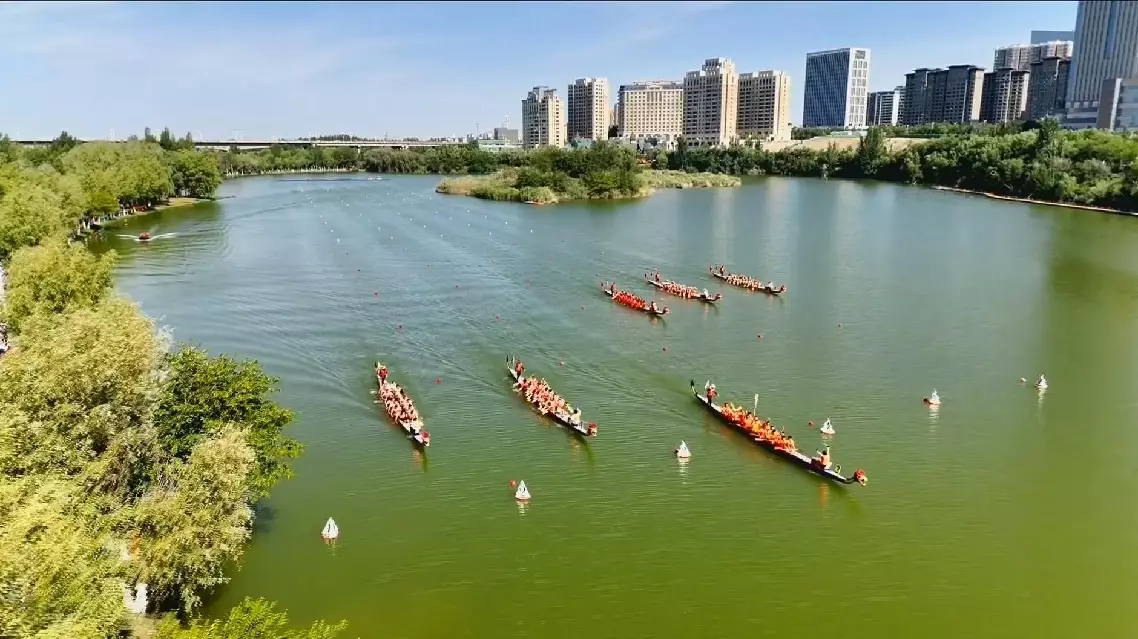
Xinjiang holds dragon boat race, blending traditions, ethnic cultures
Multinational companies are deepening roots in China, striving to become partners in co-creation and innovation with Chinese industry amid new development opportunities.
At the just concluded 7th Qingdao Multinationals Summit, over 300 global executives gathered to discuss closer cooperation and future plans in line with China's 15th Five-Year Plan (2026-2030), with the key theme of "co-creation" resonating throughout the event.
"We are not simply bringing in technologies for application in China. In today's environment, we need to innovate together with local partners, ensuring innovations stay in China, while also seeking ways to internationalize," said Geng Ming, president of Alstom China.
Early approaches saw China as a sales market, but that view is evolving quickly, noted Cao Yang, global vice-president of Baker Hughes and president of Baker Hughes China.
"When we first talked about development in Shandong Province, or China, we saw it as an end market. However, we realized that the manufacturing capabilities of Chinese partners are rising rapidly. Both sides must take Chinese-made products and technologies abroad together," said Cao.
Companies highlighted how research and development in China now powers their global portfolios.
"When we first came, we saw immense potential in the Chinese market. Over time, we have seen the industrial ecosystem mature. Products developed in China are now exported to Southeast Asia and other markets. We are very optimistic about China and consider it a global innovation hub," said Yang Lan, senior director of public affairs of Herbalife China.
The evolving role of multinationals in China is synchronized with local growth, moving from "entering China" to "rooting in China" and now "co-creating" with China. Firms said the 15th Five-Year Plan will be their action guide for future investment and innovation.
"I think the 15th Five-Year Plan is quite important. China has to keep modernizing the old economy and in the same time making the best out of new sectors, be it healthcare, be it artificial intelligence, be it electric mobility and you name it," said Denis Depoux, global managing director at Germany's strategy consulting firm Roland Berger.
"We went from participating in China's rail transit development to becoming a part of its growth and progress," said Geng.
"The 15th Five-Year Plan provides very clear policy and industry support for development and innovation in biomedicine. Standing on this foundation, Revvity has a clear position in China, and we aim to become a partner in Chinese innovation," said Liu Jiang, vice president and general manager of Greater China at Revvity.
The three-day Qingdao Multinationals Summit, which drew 357 multinational companies from 44 countries and regions, concluded Wednesday in east China's Shandong Province.
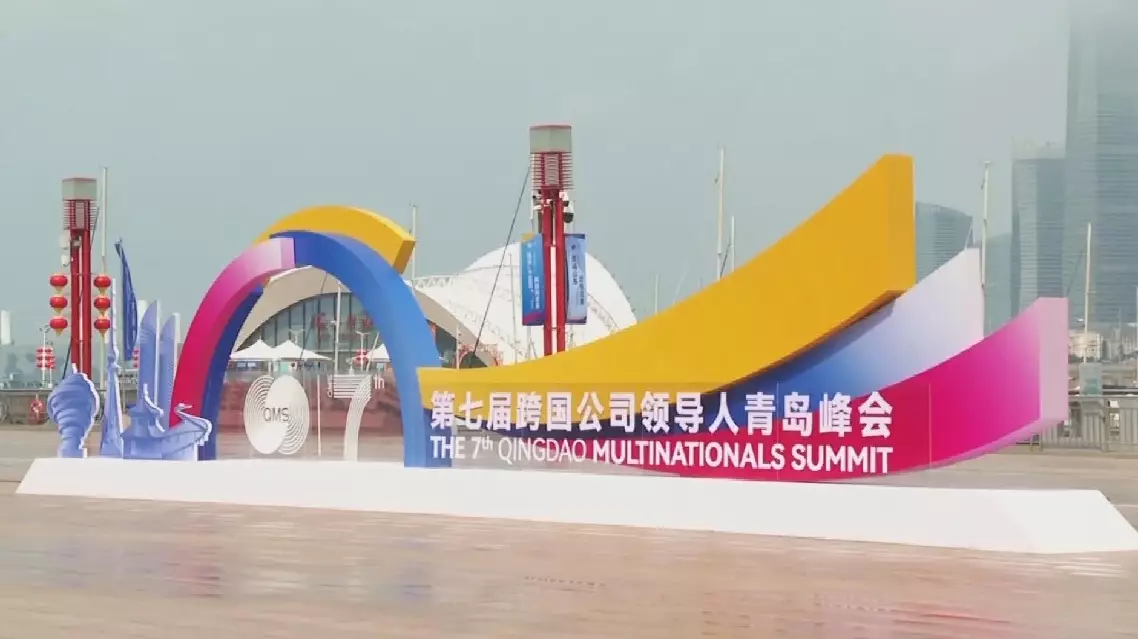
Global firms root deeper in China's innovation drive