Israel and Hezbollah in Lebanon had agreed to a ceasefire with effect from 16:00 local time, yet strikes continued after the time point, according to reports on Friday.
According to a statement released by Lebanon's health authorities on the same day, Israeli attacks on Lebanon had resulted in a total of 3,980 deaths and 12,001 injuries since Israel and Hezbollah entered a new round of clashes on March 2.
Lebanon's National News Agency (NNA) reported that two people riding a motorcycle were killed in an Israeli drone strike on the road between Zebdine and Nabatieh in southern Lebanon on Friday.
The strike came after the reported ceasefire between Lebanon and Israel that took effect that day.
Meanwhile, the Times of Israel reported on Friday, citing a senior U.S. official, that the ceasefire was facilitated through separate communications by the United States and Qatar with Israel and Iran, respectively.
An Israel Defense Forces (IDF) spokesperson issued a statement on Friday, saying the IDF would continue to respond to any "violations of the ceasefire agreement" by Hezbollah in Lebanon.
The spokesperson also accused Hezbollah of repeatedly violating the ceasefire agreement for weeks, saying that this was the reason the IDF continued its operations in southern Lebanon.
Ibrahim Al Moussawi, a Hezbollah member of parliament in Lebanon, told media that Hezbollah would continue to abide by the ceasefire agreement as long as Israel adheres to it.
However, Hezbollah reserves the right to respond to any Israeli violation of the ceasefire agreement, he said.

Strikes continue amid reported ceasefire between Israel, Hezbollah

Strikes continue amid reported ceasefire between Israel, Hezbollah
Multinational companies are deepening roots in China, striving to become partners in co-creation and innovation with Chinese industry amid new development opportunities.
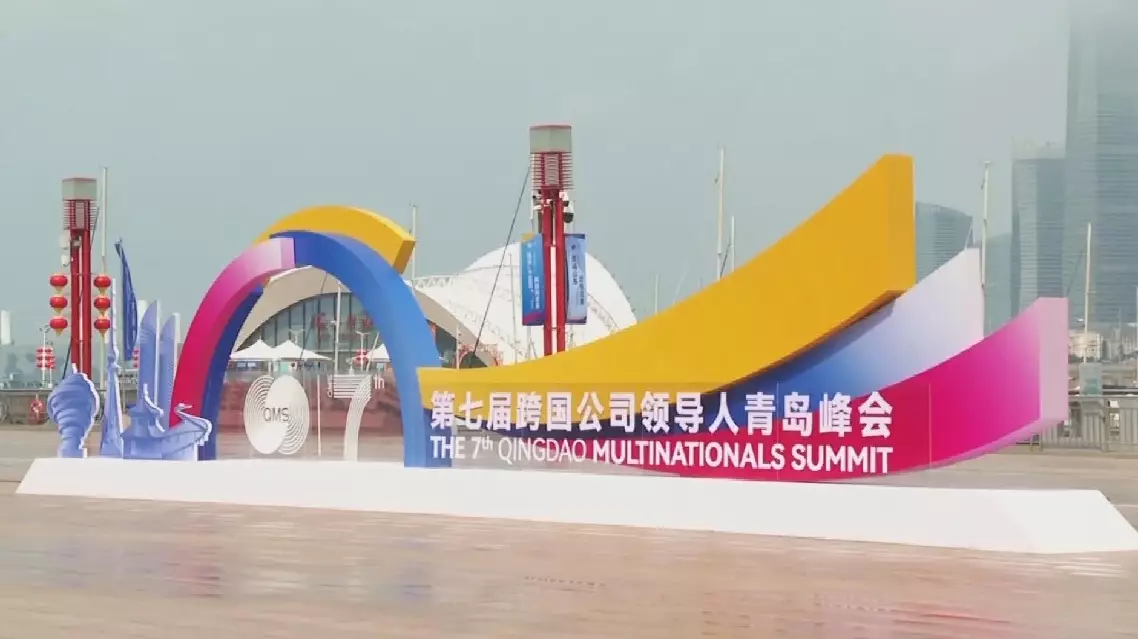
At the just concluded 7th Qingdao Multinationals Summit, over 300 global executives gathered to discuss closer cooperation and future plans in line with China's 15th Five-Year Plan (2026-2030), with the key theme of "co-creation" resonating throughout the event.
"We are not simply bringing in technologies for application in China. In today's environment, we need to innovate together with local partners, ensuring innovations stay in China, while also seeking ways to internationalize," said Geng Ming, president of Alstom China.
Early approaches saw China as a sales market, but that view is evolving quickly, noted Cao Yang, global vice-president of Baker Hughes and president of Baker Hughes China.
"When we first talked about development in Shandong Province, or China, we saw it as an end market. However, we realized that the manufacturing capabilities of Chinese partners are rising rapidly. Both sides must take Chinese-made products and technologies abroad together," said Cao.
Companies highlighted how research and development in China now powers their global portfolios.
"When we first came, we saw immense potential in the Chinese market. Over time, we have seen the industrial ecosystem mature. Products developed in China are now exported to Southeast Asia and other markets. We are very optimistic about China and consider it a global innovation hub," said Yang Lan, senior director of public affairs of Herbalife China.
The evolving role of multinationals in China is synchronized with local growth, moving from "entering China" to "rooting in China" and now "co-creating" with China. Firms said the 15th Five-Year Plan will be their action guide for future investment and innovation.
"I think the 15th Five-Year Plan is quite important. China has to keep modernizing the old economy and in the same time making the best out of new sectors, be it healthcare, be it artificial intelligence, be it electric mobility and you name it," said Denis Depoux, global managing director at Germany's strategy consulting firm Roland Berger.
"We went from participating in China's rail transit development to becoming a part of its growth and progress," said Geng.
"The 15th Five-Year Plan provides very clear policy and industry support for development and innovation in biomedicine. Standing on this foundation, Revvity has a clear position in China, and we aim to become a partner in Chinese innovation," said Liu Jiang, vice president and general manager of Greater China at Revvity.
The three-day Qingdao Multinationals Summit, which drew 357 multinational companies from 44 countries and regions, concluded Wednesday in east China's Shandong Province.
Global firms root deeper in China's innovation drive