At least 265 Palestinian children have been killed in the Gaza Strip since the first phase of a ceasefire agreement took effect in October 2025, United Nations Children's Fund (UNICEF) spokesperson James Elder said on Friday.
Briefing reporters in Geneva via video from Amman, the UNICEF aid veteran called the death toll "absurd and devastating".
"Since the ceasefire was announced in October last year, 265 Palestinian children have been killed across Gaza. That is an absurd, devastating figure. During a period supposedly defined by restraint and protection, a child has been killed, on average, every single day for more than eight months," said Elder.
Elder also said that the children were not killed in a warzone but rather in their homes, schools while playing football or fishing. He also said that the Israeli forces are responsible for more than 90 percent of those deaths.
The disclosure comes amid growing international alarm over the dire humanitarian situation in Gaza.
On Thursday, Tom Fletcher, the UN Under-Secretary-General for Humanitarian Affairs and Emergency Relief Coordinator, briefed the UN Security Council on the humanitarian situation in the Gaza Strip.
Fletcher demanded the immediate protection of aid workers and civilians, the safe, unimpeded humanitarian access to Gaza, the immediate and full restoration of operations at all Gaza border crossings, and the freedom of movement in Gaza.
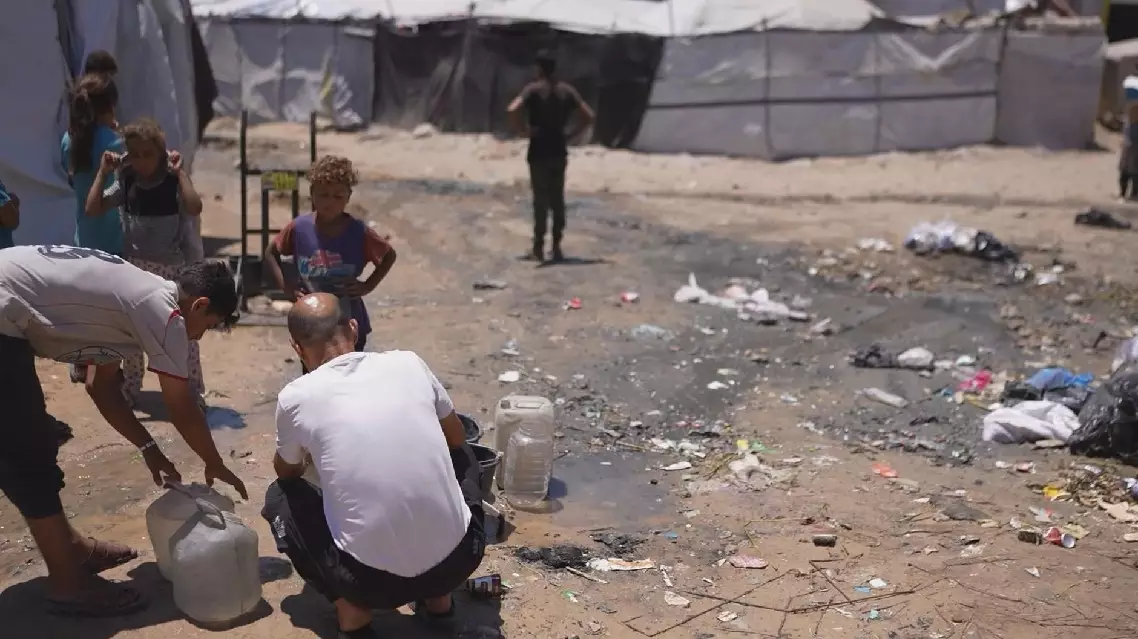
At least 265 Palestinian children killed in Gaza despite ceasefire: UNICEF
Multinational companies are deepening roots in China, striving to become partners in co-creation and innovation with Chinese industry amid new development opportunities.
At the just concluded 7th Qingdao Multinationals Summit, over 300 global executives gathered to discuss closer cooperation and future plans in line with China's 15th Five-Year Plan (2026-2030), with the key theme of "co-creation" resonating throughout the event.
"We are not simply bringing in technologies for application in China. In today's environment, we need to innovate together with local partners, ensuring innovations stay in China, while also seeking ways to internationalize," said Geng Ming, president of Alstom China.
Early approaches saw China as a sales market, but that view is evolving quickly, noted Cao Yang, global vice-president of Baker Hughes and president of Baker Hughes China.
"When we first talked about development in Shandong Province, or China, we saw it as an end market. However, we realized that the manufacturing capabilities of Chinese partners are rising rapidly. Both sides must take Chinese-made products and technologies abroad together," said Cao.
Companies highlighted how research and development in China now powers their global portfolios.
"When we first came, we saw immense potential in the Chinese market. Over time, we have seen the industrial ecosystem mature. Products developed in China are now exported to Southeast Asia and other markets. We are very optimistic about China and consider it a global innovation hub," said Yang Lan, senior director of public affairs of Herbalife China.
The evolving role of multinationals in China is synchronized with local growth, moving from "entering China" to "rooting in China" and now "co-creating" with China. Firms said the 15th Five-Year Plan will be their action guide for future investment and innovation.
"I think the 15th Five-Year Plan is quite important. China has to keep modernizing the old economy and in the same time making the best out of new sectors, be it healthcare, be it artificial intelligence, be it electric mobility and you name it," said Denis Depoux, global managing director at Germany's strategy consulting firm Roland Berger.
"We went from participating in China's rail transit development to becoming a part of its growth and progress," said Geng.
"The 15th Five-Year Plan provides very clear policy and industry support for development and innovation in biomedicine. Standing on this foundation, Revvity has a clear position in China, and we aim to become a partner in Chinese innovation," said Liu Jiang, vice president and general manager of Greater China at Revvity.
The three-day Qingdao Multinationals Summit, which drew 357 multinational companies from 44 countries and regions, concluded Wednesday in east China's Shandong Province.
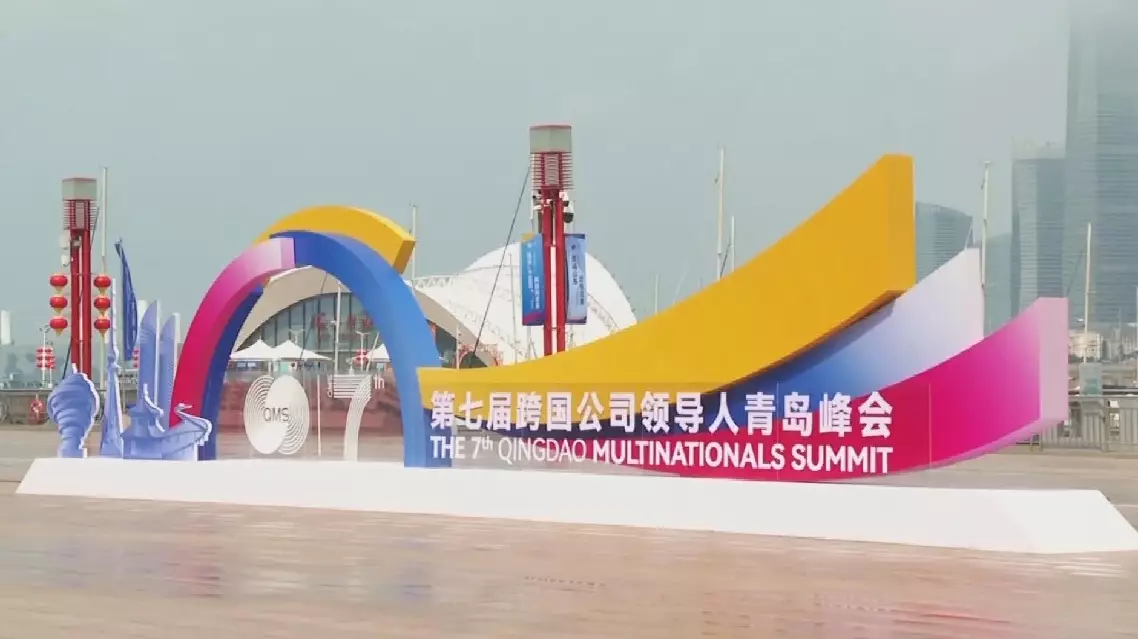
Global firms root deeper in China's innovation drive