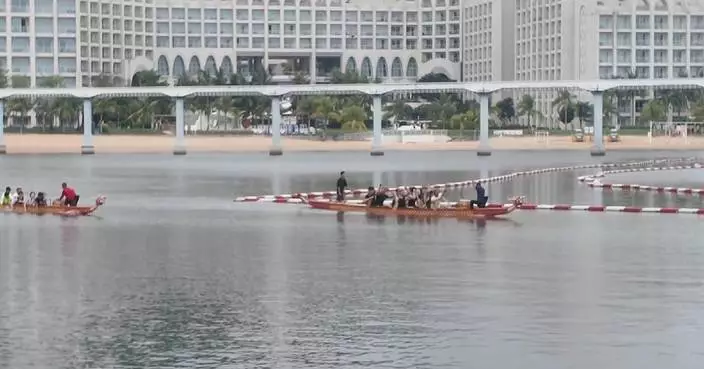
Special competitions including a dragon boat race and an indigenous yak-leather boat race were held on Friday to mark the Duanwu Festival (Dragon Boat Festival) in Lhasa, capital city of southwest China's Xizang Autonomous Region, referred to as the "roof of the world."
Held at an altitude of over 3,600 meters, the traditional dragon boat race brought together 10 teams from multiple places including Beijing and provinces of Yunnan, Hubei, Hunan and Jiangsu. The team members came from various circles including students, teachers, doctors, engineers and farmers.
Twenty teams competed in the racing with local yak-leather boats.
A folk-culture zone and a zone on intangible cultural heritage inheritance were set up for visitors to experience activities including making zongzi, or sticky rice dumplings wrapped with bamboo or reed leaves.
Celebrated on the fifth day of the fifth month of the Chinese lunar calendar, the Dragon Boat Festival fell on Friday this year.
The festival is best known for holding dragon boat races, eating zongzi, and hanging mugwort and calamus as symbol of health and protection.
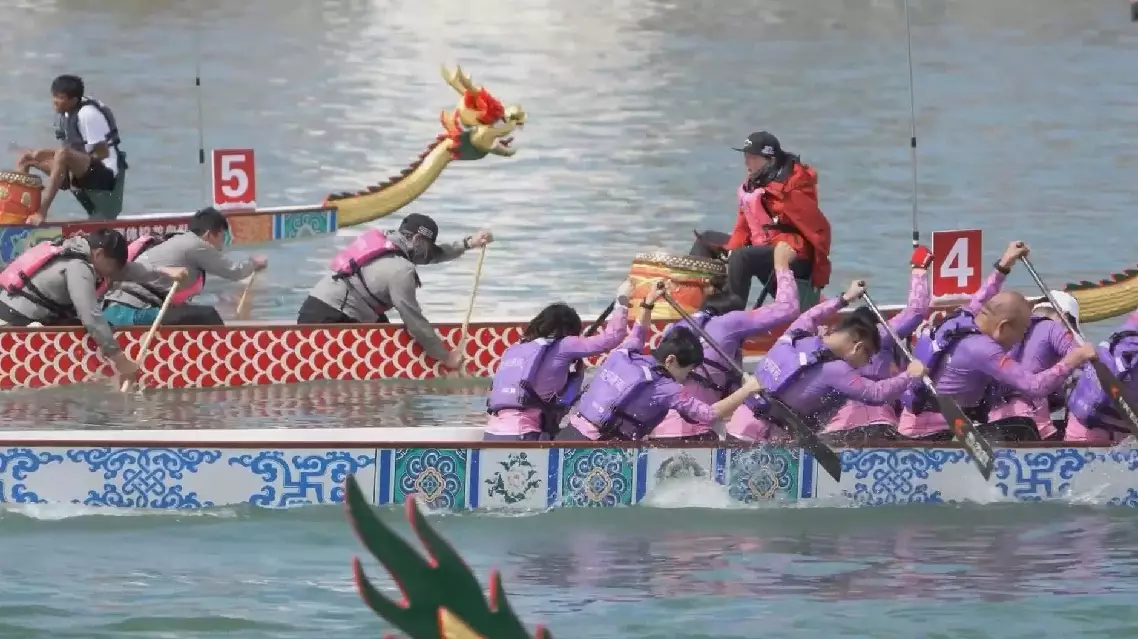
Dragon boat racing on 'roof of the world' marks Duanwu Festival
Spokesperson for the UN Refugee Agency (UNHCR) Babar Baloch warned that millions of internally displaced persons remain unable to return home due to stalled peace efforts, urging stronger global support as the crisis threatens to affect everyone.
At the end of 2025, 68.7 million people remained internally displaced due to conflict and violence, a 7 percent decrease from the end of 2024, according to the latest Global Trends report published this month.
In an interview with China Global Television Network (CGTN), Baloch referred to two countries in severe situations -- Sudan, which remains the largest internal displacement globally with 9.1 million people still displaced at the end of 2025, and the Democratic Republic of the Congo, which faces severe humanitarian crisis amid both violence and the Ebola outbreak.
Baloch said many displaced people remain near their homes hoping for a quick return, but warned that ongoing conflict and stalled peace efforts often dash those expectations and leave lives in danger.
"The problem is, as this report showed us, that once you become displaced, then it's not easy for people to go back to their places of origin because there are no efforts to bring back peace, or the efforts which continue, they don't bring results. And also if people stay closer to homes, and if there's a conflict, and if there are reasons that they may not become safe, so, also, their lives are in danger," he said.
With few solutions in sight, Baloch warned that the plight of internally displaced persons must become a global concern, as new conflicts continue to erupt and leave millions at risk.
"The trends are consistent in a way that there are not many solutions to be found for these displaced population. And then we see more and new theaters of war and conflict, or opening up. In terms of people when they become displaced, we are telling the world that you need to take care. It should be of everyone's concern because it affects all of us, all around the world alike," he said.
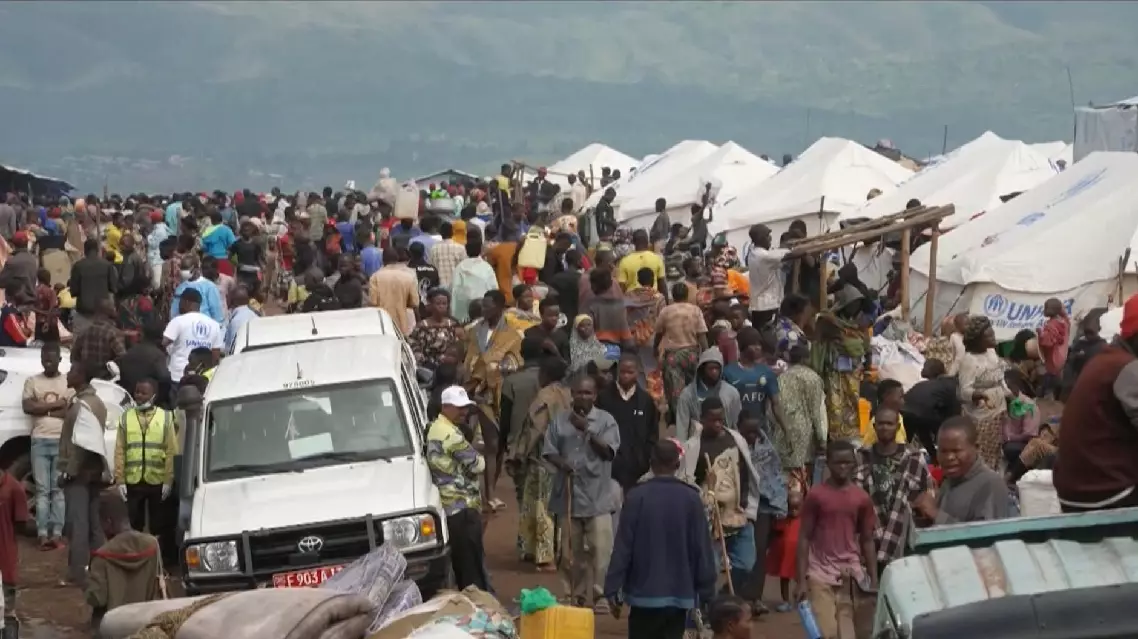
UNHCR warns global displacement crisis puts lives at risk