REDWOOD CITY, Calif.--(BUSINESS WIRE)--Jun 22, 2026--
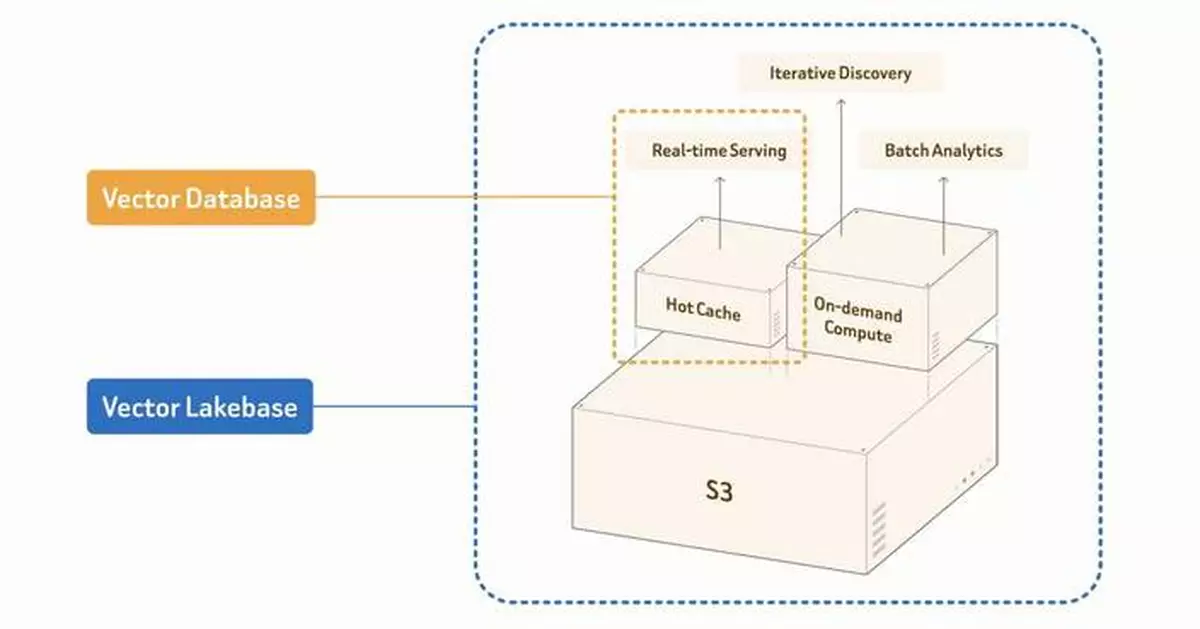
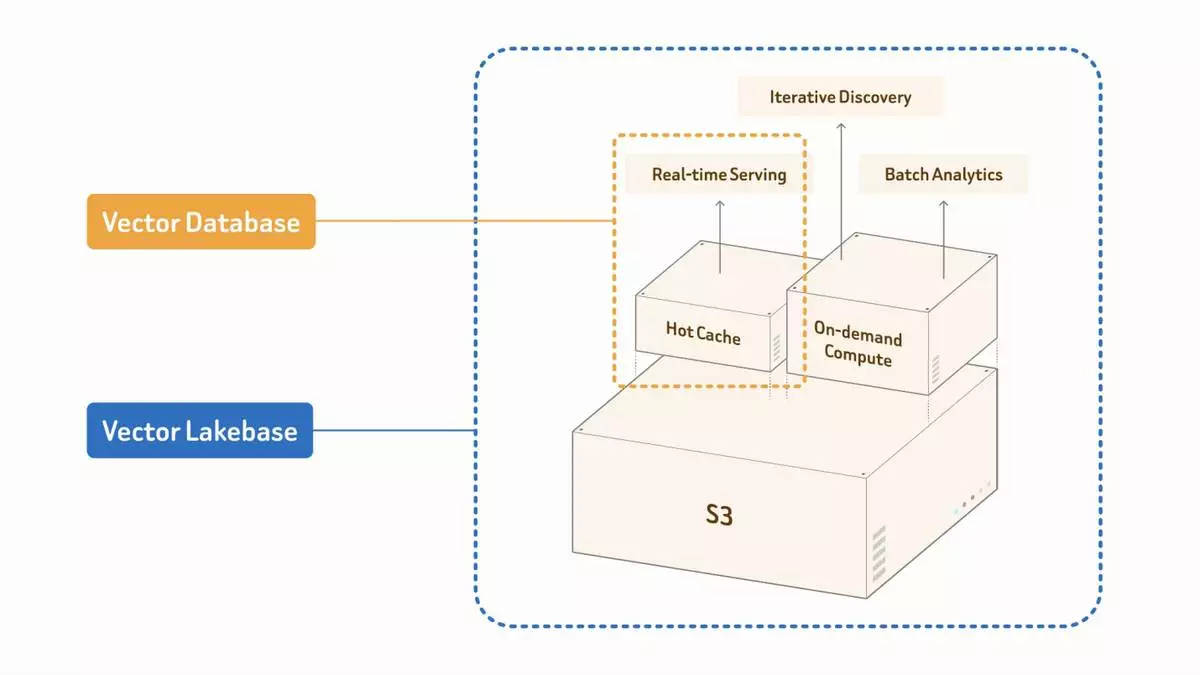
Zilliz, the company behind Milvus, the world's most widely adopted open-source vector database, today announced the public preview of Zilliz Vector Lakebase, a major Zilliz Cloud release that pairs the production vector database with a shared, lake-native data foundation.
This press release features multimedia. View the full release here: https://www.businesswire.com/news/home/20260621822926/en/
Vector Lakebase keeps Zilliz Cloud's real-time vector search at the core — the engine Zillow, OpenEvidence, Exa, Filevine, MiniMax, and more than 10,000 enterprises and AI teams already rely on — and extends it with three new ways to operate on the same data: interactive discovery, large-scale batch analytics, and search directly on external data lakes. The result is a single data foundation in which every workload runs against a single logical copy of the data, with on-demand and batch jobs billed only when compute is active.
"Production vector search is and will remain at the heart of what Zilliz does — it's why thousands of teams choose Milvus and Zilliz Cloud, and it's getting faster and more cost-efficient every release," said Charles Xie, Founder and CEO of Zilliz. "Vector Lakebase is what we believe comes next: one data foundation where the same vectors can serve a production query, anchor a discovery session, and power a multi-petabyte training-data pipeline — without copies, migration, or a parallel stack."
Why a Single Data Foundation Matters
AI systems are no longer a single-query retrieval problem. They run as a continuous loop — serve, learn from feedback, mine and prepare better data, then serve again — and each turn typically requires separate systems for serving, exploration, and large-scale processing. Moving billions of vectors between those systems can take days. The cost and complexity are so high that many teams skip the loop altogether, leaving valuable data retrievable but never improved.
Vector Lakebase closes that gap with a zero-copy semantic data plane on shared lake-native storage: real-time serving, interactive discovery, and batch analytics all run against one logical copy of the data, scaling from gigabytes to petabytes.
"Teams asked for a way to keep their data in one place and run very different workloads against it — from real-time agent memory to overnight semantic deduplication," said Robert Guo, VP of Product at Zilliz and one of the architects behind Milvus. "Vector Lakebase delivers that through a unified storage layer on Vortex, tiered serving for the production path, and on-demand compute for everything else."
Five Capabilities on One Foundation
Together, these capabilities let AI teams consolidate what previously required parallel always-on serving clusters and separate batch systems onto one platform — with consistent indexes, versioned data, and compute that scales to zero between jobs.
Availability
Zilliz Vector Lakebase is available now in public preview on Zilliz Cloud, alongside Serverless, Dedicated, and BYOC deployment options across more than 30 regions on AWS, Google Cloud, and Microsoft Azure. New work email signups receive $100 in free credits at zilliz.com. Teams running serving, discovery, and analytics on separate stacks can contact the Zilliz team for a tailored walkthrough.
About Zilliz
Zilliz is a leading AI data infrastructure company and the creator of Milvus, the world's most widely adopted open-source vector database, with 44,000+ GitHub stars and over 100 million Docker pulls. Zilliz helps enterprises and AI startups make their unstructured data searchable, analyzable, and governable — turning text, images, audio, video, and more into a strategic asset for production AI.
Zilliz's technology centers on Milvus and Zilliz Cloud. Milvus is an open-source vector database purpose-built for 100-billion-scale vector search. Zilliz Cloud extends that foundation into a fully managed Vector Lakebase platform, combining the high-throughput, low-latency serving capabilities of vector databases with the openness, scalability, and economics of multimodal data lakes. Zilliz powers more than 10,000 enterprises and AI-native startups worldwide, including MiniMax, OpenEvidence, Filevine, Exa, Salesforce, and Read AI.
Headquartered in Redwood Shores, California, Zilliz is backed by leading investors, including Aramco's Prosperity 7 Ventures, Temasek's Pavilion Capital, Hillhouse Capital, 5Y Capital, Yunqi Partners, and Trustbridge Partners. Learn more at Zilliz.com.
Zilliz Launches Vector Lakebase, Extending the World's Most Adopted Vector Database into a Unified Data Platform for AI
LONDON (AP) — Simon Boyd’s firm makes prefabricated steel structures on the south coast of England and ships them to customers as far away as Ghana and Barbados. Mike Hawes represents Britain’s carmakers as the head of the Society of Motor Manufacturers and Traders.
The business leaders were on different sides of the debate when Britain voted to leave the European Union in 2016. But 10 years later they are both frustrated by Brexit.
A decade ago, backers promised that Brexit would be the key to a bright new future where, freed from the edicts of EU bureaucrats, Britain would regain control of its laws and its borders and the economy would boom. But the reality failed to live up to the hype as Britain struggled to adjust to life without unfettered access to the 27-nation free trade bloc and its market of 450 million people.
Economic growth is anemic, taxes are high, public services are creaking and successive governments have been unable to stem the flow of migrants who wash up on the English Channel coast in inflatable boats. As a result, it's not exactly a happy anniversary.
“No, it’s not delivered everything that was said it would deliver on the tin, but it is delivering,” Boyd told The Associated Press. “It’s very sluggish. You only need to look at the statistics to see that.”
Boyd, the managing director of REIDSteel, which employs about 130 people at a plant in Christchurch, England, still stands behind his decision to support Brexit, but blames lackluster results on politicians who weren’t committed to delivering. Britain has also experienced unexpected challenges over the past 10 years, from the COVID-19 pandemic to the wars in Ukraine and the Middle East, Boyd said.
The Brexit vote quickly increased costs for businesses as they prepared for an uncertain future during years of negotiation over the U.K.’s new relationship with the EU. Then, when Britain finally left the bloc on Jan. 31, 2020, new rules governing trade in goods and services made it more expensive and time-consuming to do business with European partners.
Creon Butler, who leads the global economy and finance program at Chatham House, a London-based think tank, said there were long-term consequences to leaving the European single market.
“Whatever was promised, whatever one hoped for, (you have) to accept that it has been a major loss of wealth and prosperity for us through the choice we made to leave,” he said.
“That’s a decision the British public have made, and they’re entitled to make it, but it does make us poorer,” he added.
By most measures, the British economy today is weaker than it would have been without Brexit, according to a recent report published by the National Bureau of Economic Research in Cambridge, Massachusetts. The report, compiled by researchers in Britain, Germany and the U.S., compares the performance of the U.K. economy to 33 other countries, including its European neighbors, the U.S., Canada and Japan.
Brexit has reduced Britain’s gross domestic product, a broad measure of economic output, by 6% to 8%, investment by 12% to 13% and productivity by 3% to 4%, the researchers concluded.
Britain’s carmakers were early and outspoken opponents of Brexit, arguing that increased red tape surrounding shipments of parts and finished vehicles would damage an industry built on a network of interlinked factories in multiple European countries.
Those concerns reduced investment in the U.K. auto industry because international carmakers were less likely to see Britain as an attractive way into the European market. As a result, the industry is hoping that international trade deals will help boost demand for its products.
“We have been able to move with the times, so to speak, but undoubtedly it’s putting us at more cost into the industry, more pressure,” Hawes said.
Brexit supporters trumpeted the freedom to negotiate its own trade agreements as one of the primary benefits of leaving the EU, and Britain has since signed dozens of deals with countries ranging from Australia to India to the United States.
But EU countries still account for 41% of Britain’s exports and half its imports, according to the latest government figures.
During more than 50 years as a member of the EU and its predecessors, many British businesses also came to rely on Europe as a source of cheap labor, especially after the bloc’s eastward expansion in 2004.
That pipeline dried up after Brexit ended the free movement of labor, one of the bloc’s founding principals.
The owners of Britain’s curry restaurants, an integral part of communities from Aberdeen in Scotland to Aberystwyth in Wales, have been especially hard hit by the loss of Eastern European workers who went home rather than deal with burdensome new visa requirements. And they’re furious because the industry backed Brexit after assurances it would lead to more visas for South Asian cooks, something that hasn’t happened.
“We feel betrayed,″ said Oli Khan, president of the Bangladesh Caterers Association UK, who serves up tandoori lamb chops, vegetable biryani and chili paneer at his restaurant in Stevenage, north of London.
In an effort to mitigate some of the problems caused by Brexit, Prime Minister Keir Starmer has begun talks with the EU about rebuilding a closer relationship as he seeks to energize the country’s stagnant economy.
Starmer’s move comes as a survey by the Ipsos polling firm, the Policy Institute at King’s College London and the think tank UK in a Changing Europe suggests that frustration with Brexit is growing.
The survey of 2,245 Britons aged 18 and older carried out in May, found that 48% said Brexit was going worse than they expected, up from 28% in March 2021. Some 9% said it was going better than expected and about one in three said it was going as expected.
But Boyd said the most important survey is still the one that took place on June 23, 2016, when 51.9% of those who cast ballots — or 17.4 million people — voted to leave EU.
He continues to believe that Britain has a brighter future outside the EU.
Brexit hasn’t delivered on its promise because politicians, large corporations and other entrenched interests worked to thwart the will of the people, Boyd said. This resulted in a Brexit deal that kept Britain too closely tied to the EU and unable to realize its potential as an entrepreneurial nation filled with creative, hardworking people, he said.
And there's no going back, he said.
“Imagine if we were to rejoin ... today. The conditions upon which we would be allowed back in would be akin to us re-boarding the Titanic on the condition that we surrender our life vests first,″ he said. “Need I say any more?”
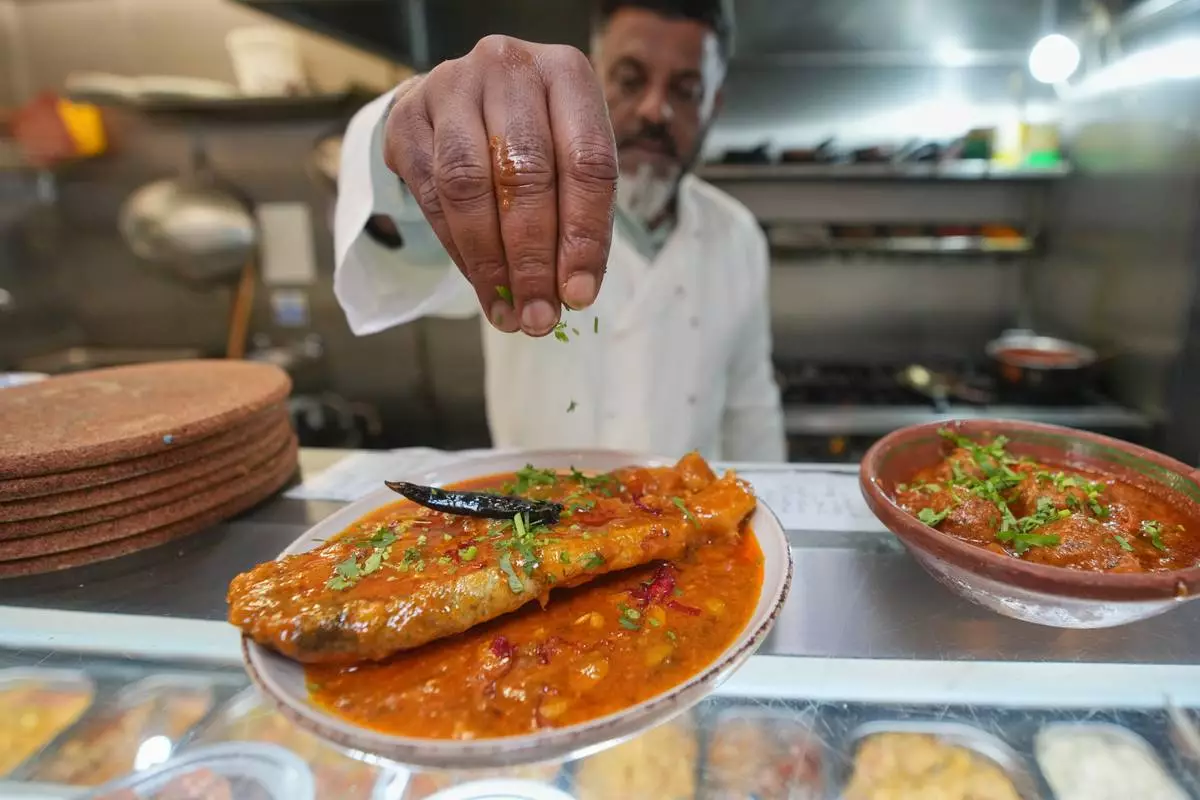
Chef Mohammed Shanoor Ali prepares food at a Bangladeshi restaurant in London, Thursday, June 18, 2026. (AP Photo/Kin Cheung)
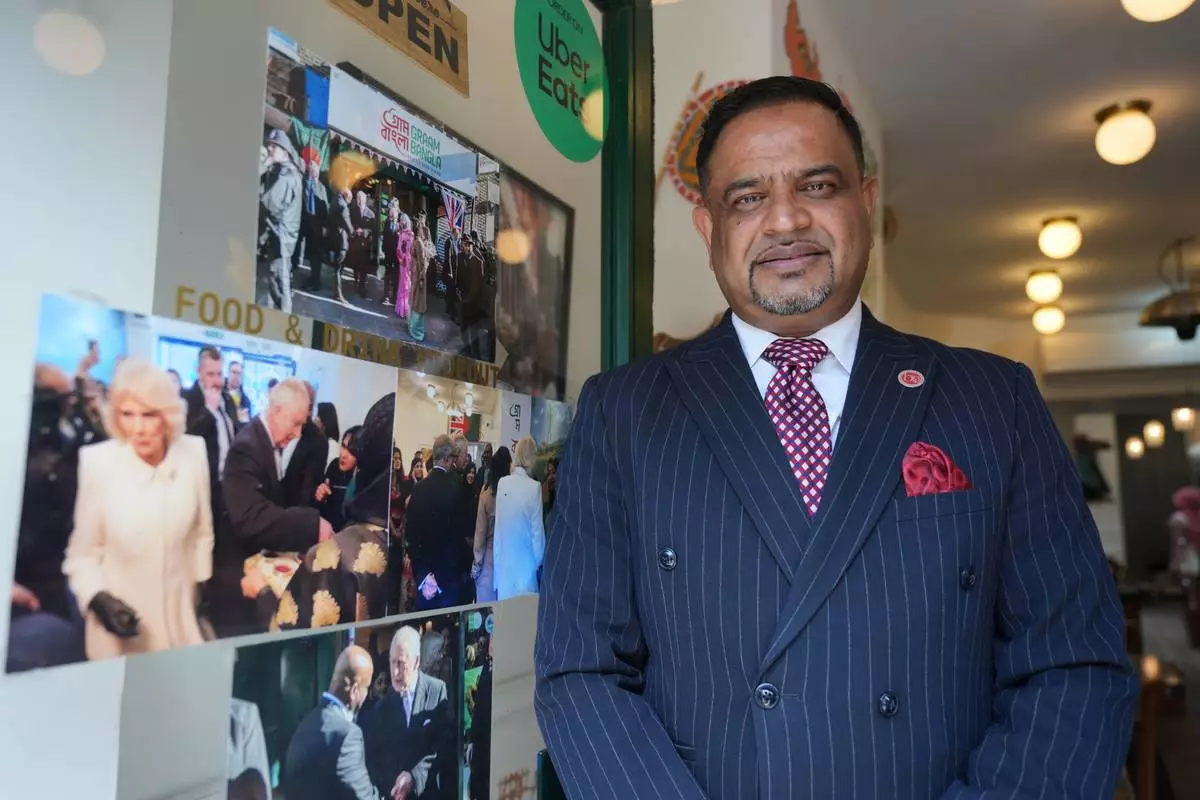
Oli Khan, the senior vice president of the Bangladesh Caterers Association UK, poses for a portrait at a Bangladeshi restaurant in London, Thursday, June 18, 2026. (AP Photo/Kin Cheung)

Chef Mohammed Shanoor Ali prepares food at a Bangladeshi restaurant in London, Thursday, June 18, 2026. (AP Photo/Kin Cheung)
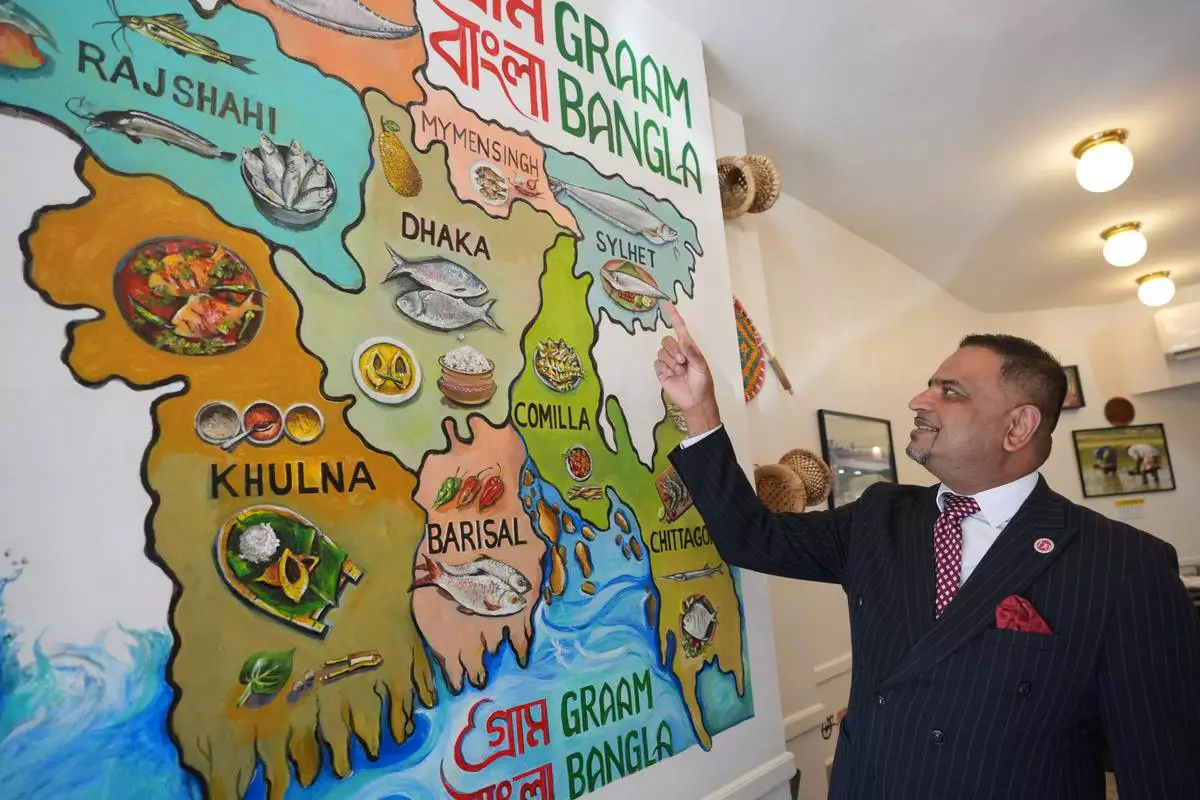
Oli Khan, the senior vice president of the Bangladesh Caterers Association UK, shows a map at a Bangladeshi restaurant in London, Thursday, June 18, 2026. (AP Photo/Kin Cheung)

Chef Mohammed Shanoor Ali cooks at a Bangladeshi restaurant in London, Thursday, June 18, 2026. (AP Photo/Kin Cheung)