The World Economic Forum's Annual Meeting of the New Champions, also known as the Summer Davos forum, will be held in the port city of Dalian, in northeast China's Liaoning Province, from Tuesday to Thursday.
More than 1,700 participants from over 90 countries and regions will attend the forum.
This year's Summer Davos forum is expected to run over 100 sessions, focusing on cutting-edge fields such as AI, biomedicine, and quantum technology, with more than 50 sessions being streamed online.
A dedicated session will be organized on some of China's hottest tech trends, including the setting up and training of personal AI agents, the rise of one-person companies (OPCs), and the growing adoption of humanoid robots in factories.
"So, the theme of this year's Annual Meeting of the New Champions is "Innovating at Scale," and that's what we're trying to capture through the exhibition that you see here behind me and the space all around me as well. We're trying to look at innovation as something that is not abstract, something that is tangible, concrete. And more importantly, we are trying to really help explore the questions for leaders across sectors and industries that all of us are asking ourselves about innovation and technology in our everyday lives," said Jessica Wanger, head of the Tech, Science and Immersive Programme of the World Economic Forum.
Beyond innovation, green development is another keyword at the forum. That commitment is visible throughout the forum's operations.
New energy vehicles will account for more than 80 percent of the forum's transportation fleet, while the Dalian International Conference Center, the main venue, will run entirely on green electricity.
Its air-conditioning system will also employ seawater-source heat pump technology, helping cut energy consumption by more than 30 percent.
Established by the World Economic Forum in 2007, the Summer Davos forum is held annually in China, alternating between the two port cities of Tianjin and Dalian.
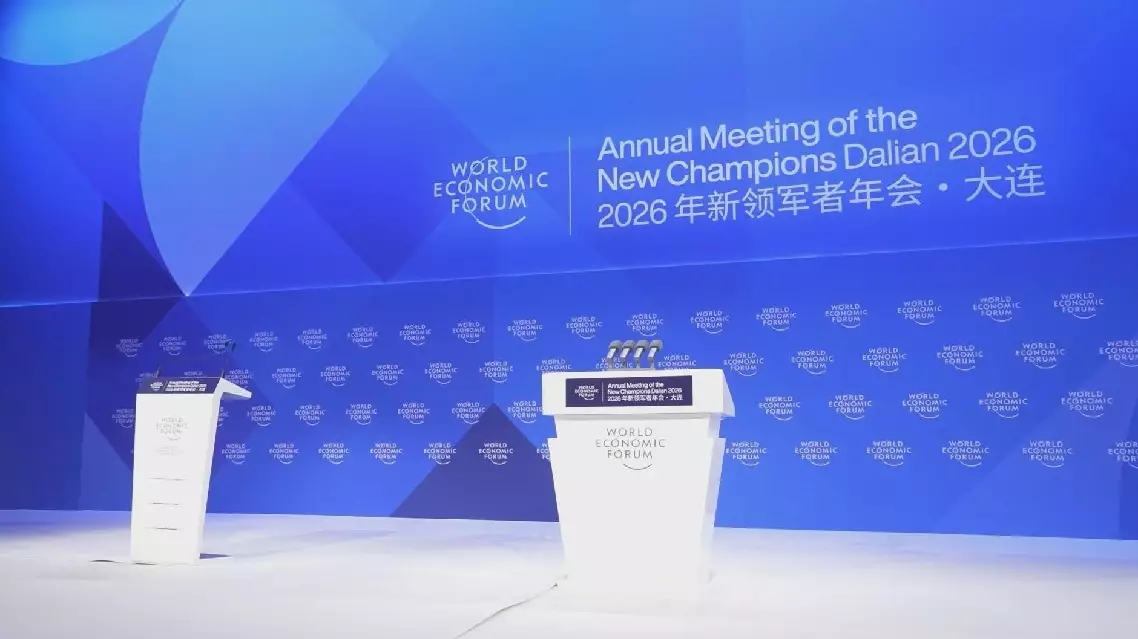
2026 Summer Davos to open in Dalian
New energy vehicles (NEVs) accounted for 56.9 percent of all new car sales in China in May, against 50.8 percent in 2025 and 40.9 percent in 2024, according to the latest data from the China Association of Automobile Manufacturers (CAAM).
With nearly 1.5 million units sold last month, the country's NEV market is growing at a pace that continues to outstrip global expectations.
Chen Shihua, deputy secretary-general of CAAM, attributed the momentum to a combination of falling costs, rapid technological upgrades and a fundamental change in consumer preferences. Even as traditional gasoline car sales soften, NEVs have carved out an independent growth trajectory.
For Chinese buyers, the appeal of NEVs goes far beyond cost savings. The battleground has shifted to the software-defined cabin. Domestic AI models are increasingly being integrated into vehicles, transforming the driving experience from a mechanical task into something highly intuitive.
Some models now use sensors and facial recognition to detect a driver's mood, automatically adjusting ambient lighting, music and even cabin fragrances. As a dealership manager in Chongqing noted, consumers are no longer obsessing over horsepower; they are prioritizing smart features and the overall user experience.
This tech-heavy push is happening alongside a dramatic drop in prices. As battery material costs stabilize and advanced manufacturing techniques, such as integrated die-casting, become standard, automakers are passing the savings directly to consumers.
Brands like BYD and Leapmotor are now offering vehicles with advanced driver-assistance systems for under 100,000 yuan, with some entry-level NEVs priced around 80,000 yuan.
Charging infrastructure, long cited as a potential bottleneck, is also keeping pace with demand. According to the National Energy Administration, China had deployed nearly 22 million charging facilities nationwide as of April.
The network now spans from urban centers to remote rural areas, making the promise of charging as convenient as refueling a tangible reality for millions of drivers. Government incentives, including trade-in subsidies, are further fueling this momentum.
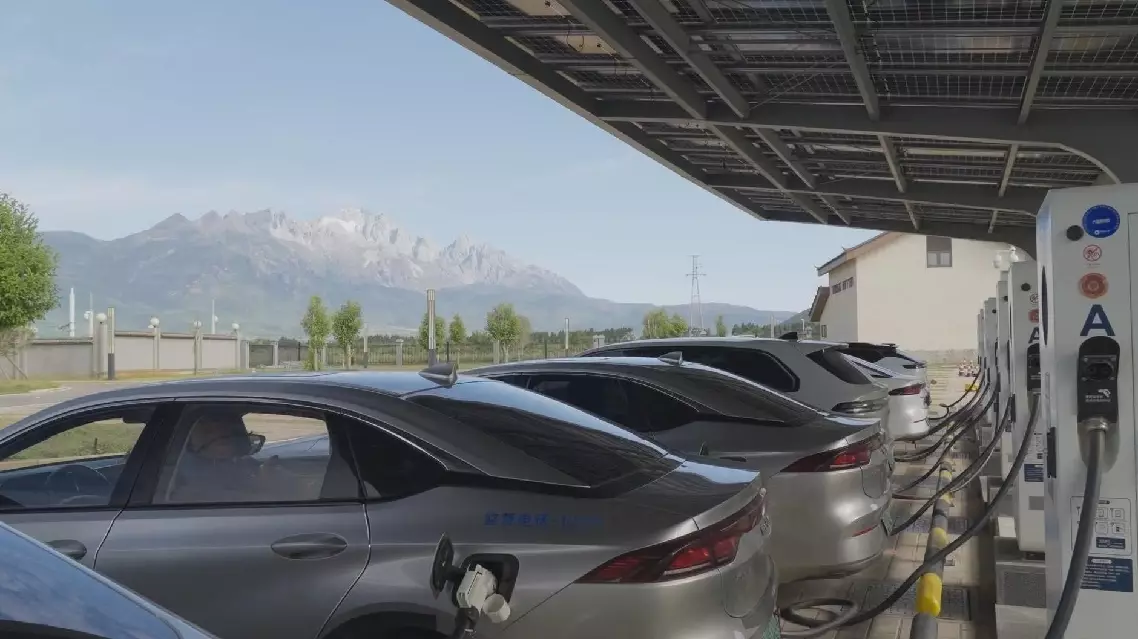
Chinese consumers embrace NEVs