Skip to Content Facebook Feature Image

Global youth conclude five-day exchange at Jackie Chan stunt base

China

China

China

Global youth conclude five-day exchange at Jackie Chan stunt base

2026-06-22 17:38 Last Updated At:20:37

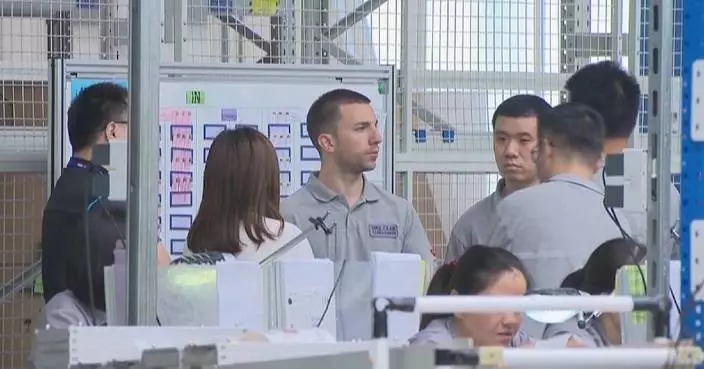
Young action film enthusiasts from around the world recently concluded a five day cultural exchange at the Jackie Chan Stunt Team Training Base in Beijing, immersing themselves in martial arts and action filmmaking under the guidance of one of cinema’s most renowned stunt teams.

Led by kung fu movie icon Jackie Chan, the stunt team is regarded as one of the world’s most accomplished, having trained and nurtured generations of outstanding action actors for the film industry.

"In Wushu, the most important thing you learn is culture, discipline, respect. Keep these three words in your mind. Go to your whole life," said Chan.

The Jackie Chan Stunt Team coaches also designed a series of tailored courses for them. Many parents who accompanied their children witnessed their hard work and growing confidence, and spoke highly of the program's cultural depth and hands-on experience.

"It's her confidence level and her excitement of doing the skills and just growing in strength and stamina. It's so fun to watch her grow and to just see how excited she is and to be able to kind of show off some of her skills that she's been learning," said a parent of the student.

"He trained hard. When he would come home at night he would tell the things that he had practiced and learned and show the bruises on his arms as he did the bodywork and the forms that he learned. I had noticed that he stands taller. And he walks a little bit more proud because of what he's learned here at the training," said another parent of the student.

For the program's coaching team, it's about more than just training -- it's about inspiring passion and showing young filmmakers how to channel traditional martial arts into their own work.

"The focus of our courses is all about keeping it fun and engaging. But of course, we include Chinese martial arts -- we have them try many forms, from Bajiquan and Tai Chi to Baguazhang," said Gang Yinxuan, head coach of the International Youth Action Film Cultural Exchange Program.

"Really, what we're trying to do is teach them how to take what they've learned here and apply it to what they love doing," said Han Guanhua, lead coach of the program.

Global youth conclude five-day exchange at Jackie Chan stunt base

Global youth conclude five-day exchange at Jackie Chan stunt base

New energy vehicles (NEVs) accounted for 56.9 percent of all new car sales in China in May, against 50.8 percent in 2025 and 40.9 percent in 2024, according to the latest data from the China Association of Automobile Manufacturers (CAAM).

With nearly 1.5 million units sold last month, the country's NEV market is growing at a pace that continues to outstrip global expectations.

Chen Shihua, deputy secretary-general of CAAM, attributed the momentum to a combination of falling costs, rapid technological upgrades and a fundamental change in consumer preferences. Even as traditional gasoline car sales soften, NEVs have carved out an independent growth trajectory.

For Chinese buyers, the appeal of NEVs goes far beyond cost savings. The battleground has shifted to the software-defined cabin. Domestic AI models are increasingly being integrated into vehicles, transforming the driving experience from a mechanical task into something highly intuitive.

Some models now use sensors and facial recognition to detect a driver's mood, automatically adjusting ambient lighting, music and even cabin fragrances. As a dealership manager in Chongqing noted, consumers are no longer obsessing over horsepower; they are prioritizing smart features and the overall user experience.

This tech-heavy push is happening alongside a dramatic drop in prices. As battery material costs stabilize and advanced manufacturing techniques, such as integrated die-casting, become standard, automakers are passing the savings directly to consumers.

Brands like BYD and Leapmotor are now offering vehicles with advanced driver-assistance systems for under 100,000 yuan, with some entry-level NEVs priced around 80,000 yuan.

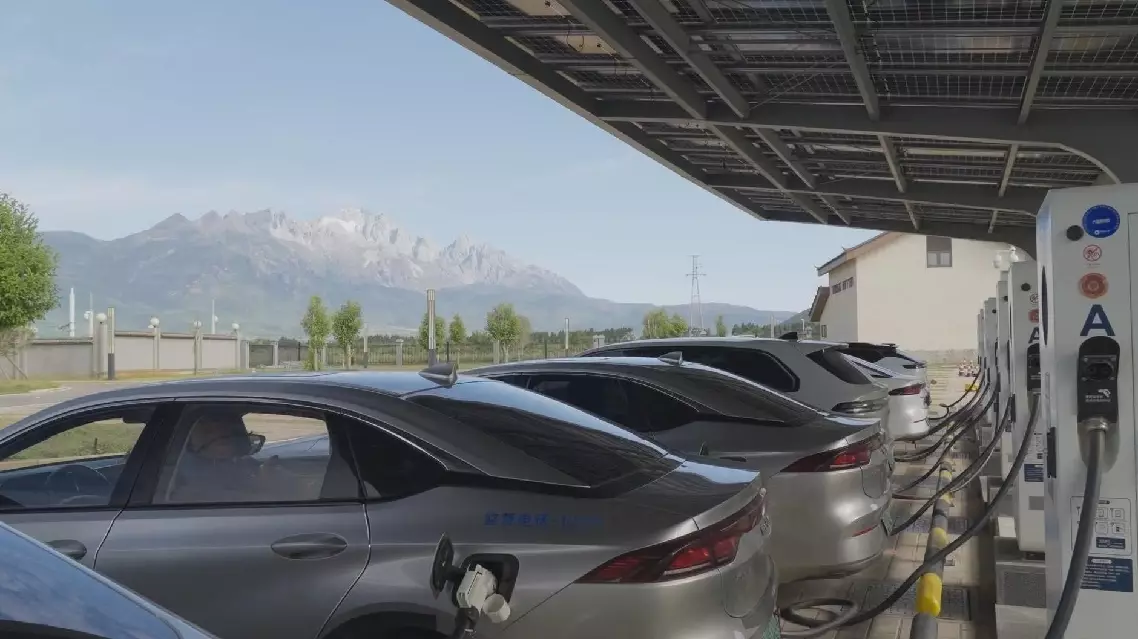
Charging infrastructure, long cited as a potential bottleneck, is also keeping pace with demand. According to the National Energy Administration, China had deployed nearly 22 million charging facilities nationwide as of April.

The network now spans from urban centers to remote rural areas, making the promise of charging as convenient as refueling a tangible reality for millions of drivers. Government incentives, including trade-in subsidies, are further fueling this momentum.

Chinese consumers embrace NEVs

Chinese consumers embrace NEVs

Recommended Articles