U.S. stocks ended lower on Tuesday, dragged down by sharp declines in memory chip and semiconductor stocks amid broader concerns over the AI sector.
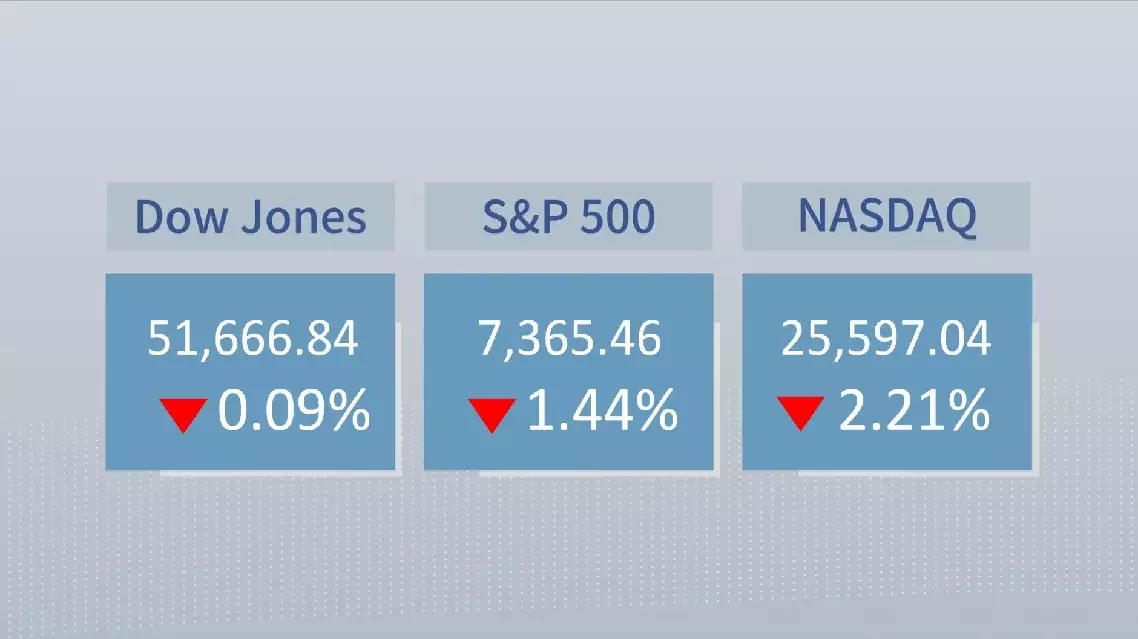
The Dow Jones Industrial Average fell by 45.87 points, or 0.09 percent, to 51,666.84. The S and P 500 sank 107.33 points, or 1.44 percent, to 7,365.46. The Nasdaq Composite Index shed 579.56 points, or 2.21 percent, to 25,587.04.
Six of the 11 primary S and P 500 sectors ended in the green, with consumer staples and health leading the gainers by rising 1.78 percent and 1.37 percent, respectively. Meanwhile, technology and industrials led the laggards by dropping 3.66 percent and 2.03 percent, respectively.
Micron Technology plunged 13.18 percent one day ahead of widely awaited earnings results, SanDisk fell 13.64 percent, and Seagate Technology Holdings lost more than 5 percent. The shares of Intel, Advanced Micro Devices and Qualcomm all fell more than 5 percent on Tuesday.
Alphabet continued its recent weakness, slipping 0.77 percent after an about 5 percent drop on Monday linked to concerns over high-profile AI talent departures.
On the economic front, the U.S. composite purchasing managers' index (PMI) unexpectedly rose to 52.2 in June from 51.5 in May, beating the consensus forecast of 51.2, according to preliminary data released by S and P Global.
"Brighter news out of the Middle East has helped restore some confidence among U.S. businesses in June, though the overall rate of economic growth signalled by the flash PMI survey remains relatively sluggish compared to that seen earlier in the year in the lead up to the conflict," said Chris Williamson, chief business economist at S&P Global Market Intelligence.
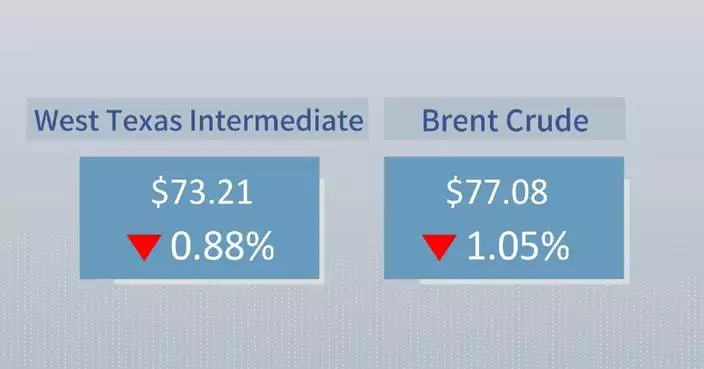
Oil prices continued to fall on Tuesday. West Texas Intermediate crude for August delivery decreased by 0.65 U.S. dollars, or 0.88 percent, to settle at 73.21 dollars per barrel on the New York Mercantile Exchange. Brent crude for August delivery lost 0.82 dollars, or 1.05 percent, to settle at 77.08 dollars per barrel on the London ICE Futures Exchange.
U.S. stocks close lower on chips sell-off
China's summer grain procurement has entered its peak season, with cumulative purchases exceeding 30 million tons nationwide, the National Food and Strategic Reserves Administration said on Tuesday.
During this year's peak season, the country's wheat procurement volume is expected to reach about 100 million tons, the same level as last year.
Procurement is progressing across all regions. Premium wheat varieties are selling well at higher prices than standard wheat, reflecting demand for high-quality commodities, the administration said.
"Currently, the average purchase price of wheat in major producing areas stands at 1.21 yuan per jin (about 0.36 U.S. dollars per kg), while the purchase price for high-quality varieties can fetch an additional 0.1 yuan more per jin. This additional pricing for high-quality grain has effectively motivated farmers to grow and sell better-quality grain," said Luo Shouquan, head of the grain reserves department under the National Food and Strategic Reserves Administration.
Major grain purchasing depots across China are stepping up their application of intelligent equipment to expedite the handling and storage of newly harvested grain.
In central China's Henan Province, a China Grain Reserves Group (Sinograin) depot has adopted a hydraulic unloading system that allows the grain to flow smoothly from the transport truck onto the conveyor belt by gravity.
For a group of four warehouse workers, the new system reduces the grain unloading labor time from nearly two hours to about 20 minutes.
"The grain quality inspection process is fully automated and very quick. We can make several more grain transportation trips in one day, which increases our income," said Liu Xiaofei, a local farmer.
This year, the peak summer grain purchasing period is expected to run through the end of September, and various regions have prepared storage capacity totaling 110 million tons in preparation. The Agricultural Development Bank of China has initially allocated 150 billion yuan (about 22 billion U.S dollars) in dedicated credit funds.
"Next, we will coordinate efforts to ensure market-based procurement and policy-driven storage, continuously strengthen market monitoring and early warning mechanisms, improve contingency plans for extreme weather, and enhance post-harvest services such as grain drying and cleaning to ensure stable market operations and smooth channels for farmers to sell their grain," said Luo.

China's summer grain procurement surpasses 30 mln tons