The recent meeting between Chinese and U.S. presidents has restored confidence and laid the groundwork for a "genuine recovery" in soybean trade, the CEO of the U.S. Soybean Export Council (USSEC) said on Tuesday.
U.S. President Donald Trump paid a state visit to China last month. During the visit, Chinese President Xi Jinping and Trump agreed on a new vision for building constructive China-U.S. relations of strategic stability.
On the sidelines of the ongoing fourth China International Supply Chain Expo (CISCE) in Beijing, USSEC CEO Jim Sutter said in an interview with China Media Group (CMG) that he was pleased to see the positive interaction between the two presidents.
"We look forward to this as a real, genuine recovery. I'm so pleased to see the positive interaction between the presidents. When it comes to agriculture, people think of soybeans may be top of the list. So I think as people want to demonstrate, as our governments want to demonstrate that they're working together again, I think soybeans will be one of the things that they make sure that the trade is kind of getting back to normal," he said.
Sutter was adamant that the latest summit has helped restore confidence among U.S. exporters.
"Absolutely, I think it restored and is helping to build the confidence back. I know there's concern that there's not exactly a written agreement. But in my viewpoint, when two people at that level get together and talk about things and make a commitment to one another, that means a lot," the soy trade advocate said.
He highlighted that the previous meeting between the two presidents resulted in commitments that were subsequently met in full.
"If we just look at the example of the Busan Summit, there was a commitment for 12 million tons of purchases by China from the United States. And if you look at the statistics published by USDA (U.S. Department of Agriculture) today, China has shipped 12 million tons of soybeans after that time up to now," he added.
Soy has long been a staple in the Chinese diet, keeping demand stable. However, the USSEC chief suggested that several new drivers could soon emerge as primary uses for the bean shift toward industrial applications.
"China is the biggest producer of swine in the world, the biggest layer production in the world, biggest aquaculture producer, biggest in many things. So I think probably for the foreseeable future, the biggest thing China will do with U.S. soybeans is crush them and turn them into meal for all those important livestock and aquaculture industries," said Sutter.
"In the United States, we're using more and more bio-fuels. And soybean oil is a good raw material to turn into either renewable diesel or bio-diesel -- similar but slightly different products. So I think that could happen (in China as well)," he said.
Soy trade between the U.S. and China saw a sharp drop off in 2025 following the implementation of the Trump administration's sweeping tariffs. The recent high level agreements have sparked optimism among both U.S sellers and Chinese buyers that trade will again stabilize.
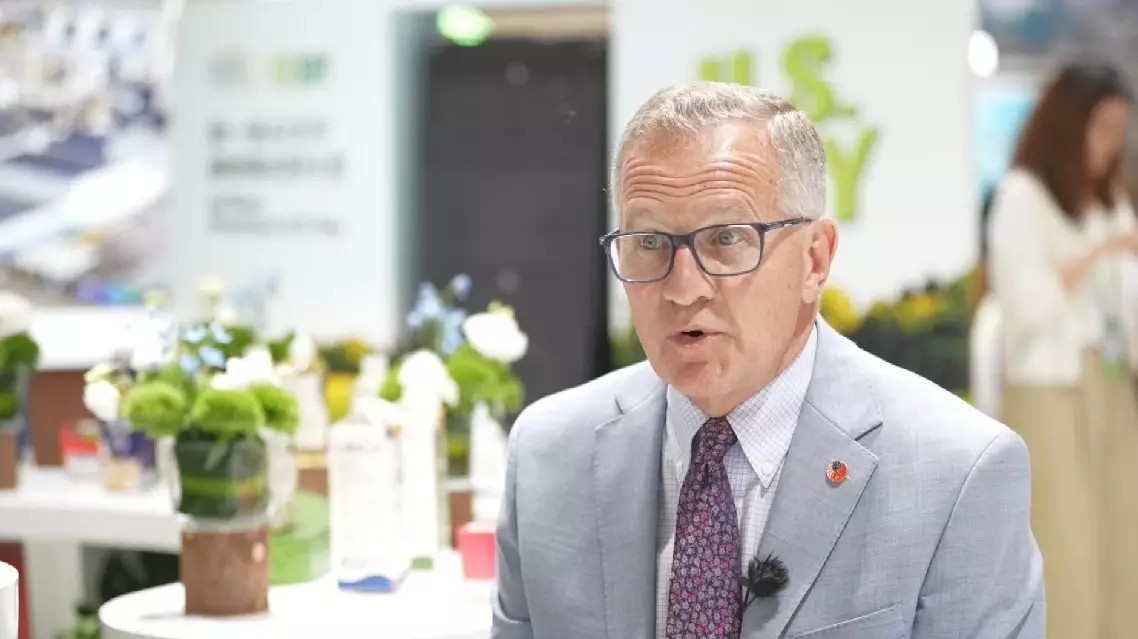
US Soybean Export Council CEO foresees "genuine recovery" in China trade following leaders' summit