TOKYO--(BUSINESS WIRE)--Jun 24, 2026--
ACCESS CO., LTD. (Headquarters: Chiyoda-ku, Tokyo; President and CEO Kiyo Oishi; hereinafter “ACCESS”) today announced that it has been awarded a contract from the Ministry of Internal Affairs and Communications (MIC) for a “Research Project on Development of All-Photonics Network Technologies in Overseas AI Data Centers.” ACCESS will conduct the project in collaboration with its U.S. subsidiary, IP Infusion (Headquarters: Santa Clara, California), a global leader in open networking solutions. The project will leverage IP Infusion’s expertise in optical communication technologies and open network operating systems (OS), as well as its strong relationships with telecom operators worldwide.
This press release features multimedia. View the full release here: https://www.businesswire.com/news/home/20260624584469/en/
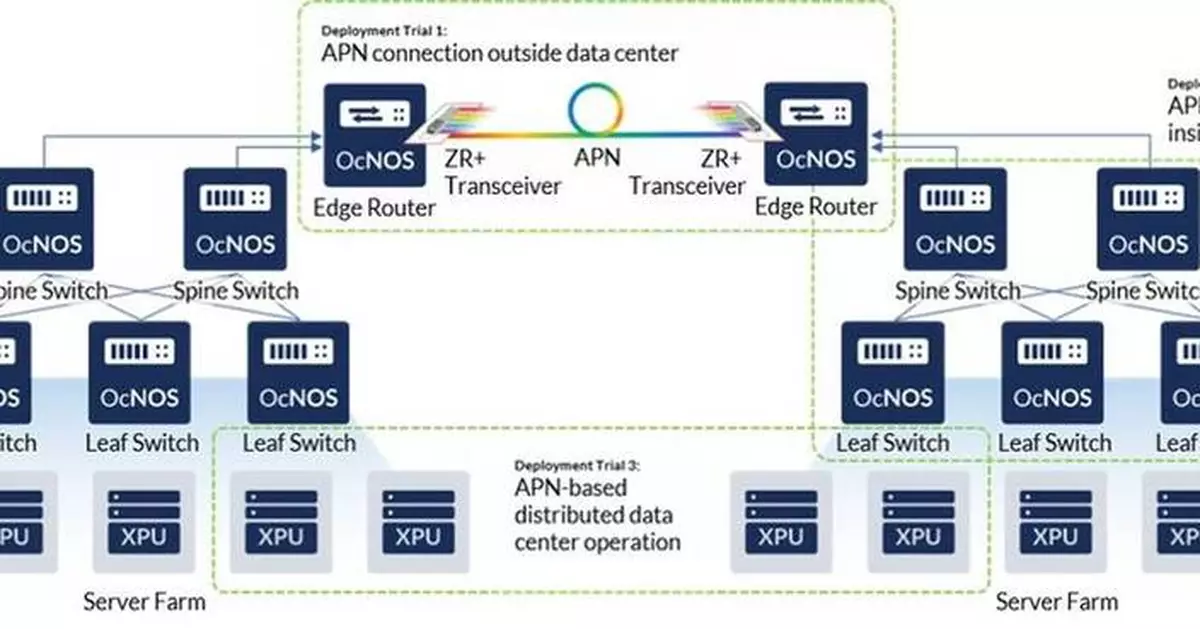
The following three use cases will be verified through this project. They are important use cases for AI data centers, and this verification will accelerate adoption of All-Photonics Networks (APNs) in the AI data center market. An All-Photonics Network (APN) is an advanced optical architecture that utilizes end-to-end light paths to transmit and route data in the optical domain, bypassing high-power-consuming electronic processing to deliver massive bandwidth and near-zero latency.
1. External connections for AI data centers
2. Internal connections at AI data centers
3. Distributed AI data center solutions
MIC announced a ‘ Comprehensive Strategy for Digital Overseas Expansion 2030 ’ in June 2025, positioning APNs as core infrastructure for supporting the coming AI era and aiming for Japanese companies to rank among the top three in global market share for high-end optical transmission equipment by around 2030.
Meanwhile, as investment in AI data centers surges globally due to growing demand for generative AI and cloud services, the market for AI data center communications equipment has become effectively oligopolistic, with increasing reliance on proprietary solutions from specific GPU vendors. Consequently, the market structure makes it difficult for Japanese companies with strengths in the optical transmission field to enter the AI data center market, and their current involvement is limited to low-value-added areas such as optical cables and the provision of land and power.
To break through this structure, ACCESS and IP Infusion aim to use this project to facilitate the adoption of open network operating systems and promote the use of APNs in AI data centers, thereby eliminating vendor lock-in, diversifying the supply chain, fostering an open ecosystem, and creating opportunities for market entry. Distributed AI data centers that leverage the high capacity, low latency, and low power consumption of APNs will also serve as a model for addressing Japan-specific land constraints, power, natural-disaster, and renewable-energy challenges, and as a stepping stone to global expansion.
ACCESS and IP Infusion will contribute to the global deployment of Japan’s all-photonics networks through this project.
* “Open networking” refers to open specifications and functions of the disaggregated hardware and software that build a network, enabling the freedom of multi-vendor equipment, choice of services, and interoperability.
About ACCESS
Since 1984, ACCESS CO., LTD. (TSE Prime Market: 4813) has been providing advanced IT solutions centered on mobile and network software technologies to telecom carriers, consumer electronics manufacturers, broadcasting, the automotive industry and energy infrastructure providers around the world. Utilizing its network virtualization technology expertise and knowledge, the company is currently focusing on the development and commercialization of DX/IoT solutions that combine embedded and cloud technology. Headquartered in Tokyo, Japan, the company maintains subsidiaries and affiliates in Asia, Europe and the United States to support and expand its business globally.
For more information, visit https://www.access-company.com/en/
About IP Infusion
IP Infusion develops open network software for carriers, service providers, and data centers. Its flagship OcNOS® platform powers disaggregated networks worldwide, allowing operators to reduce TCO and avoid vendor lock-in. Headquartered in Santa Clara, Calif., IP Infusion is a wholly owned subsidiary of ACCESS CO., LTD.
For more information, visit https://www.ipinfusion.com/
IP Infusion and OcNOS are trademarks or registered trademarks of IP Infusion. ACCESS is a registered trademarks or trademarks of ACCESS CO., LTD. in the United States, Japan and/or other countries. All other trademarks, service marks, registered trademarks, or registered service marks mentioned are the property of their respective owners.
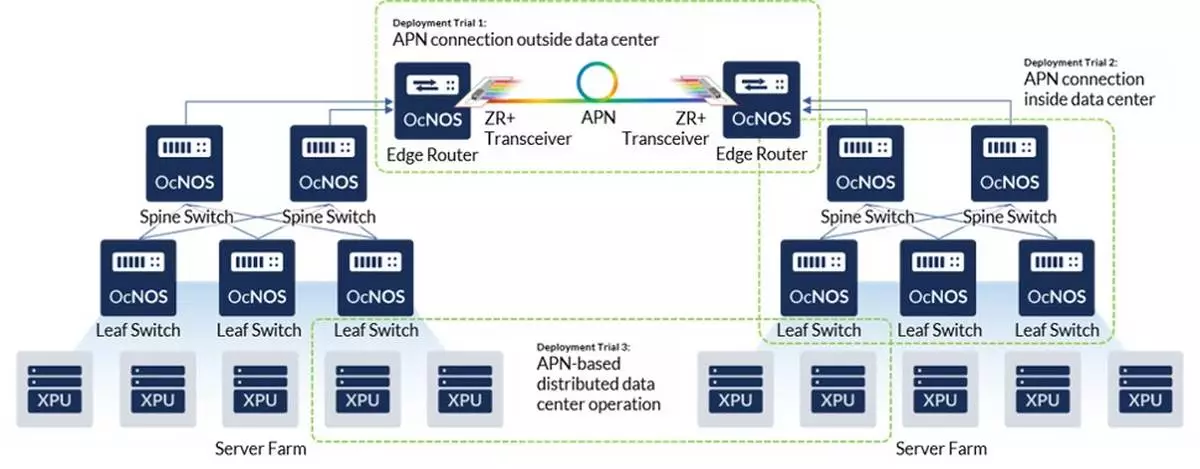
Announcement of Contract Award for Ministry of Internal Affairs and Communications ‘Research Project on Deployment of All-Photonics Network Technologies in Overseas AI Data Centers’
WASHINGTON (AP) — The Trump administration on Wednesday reached a multi-state settlement with chemical giant Chemours Co. over years-long, illegal discharges of synthetic “forever chemicals” used to make products resistant to water, grease and stains. The settlement is the first by the federal government to resolve enforcement claims against a manufacturer of harmful chemicals known as PFAS.
Under the agreement, filed in federal court in West Virginia, Chemours will pay a civil penalty of $22.5 million for alleged violations and spend $90 million over 15 years to mitigate PFAS discharges in three states: West Virginia, North Carolina and New Jersey.
Chemours, a spin-off of chemical maker DuPont, also agreed to install PFAS pollution controls for and surface water discharges and air emissions at a West Virginia facility at an estimated cost of $60 million, supply clean drinking water to communities near its West Virginia and New Jersey sites at an estimated cost of $280 million, and implement controls to reduce releases of PFAS and other toxic chemicals from its facility in North Carolina.
Combined, the penalties and relief programs are estimated to cost about $450 million, the Justice Department said.
The settlement allows Chemours to continue manufacturing PFAS for commercial and military applications while preventing future contamination and protecting communities from existing pollution, said Adam Gustafson, principal deputy assistant Attorney General for the Environment and Natural Resources Division.
“The Trump administration recognizes the important role of Chemours for it commercial and military obligations,'' Gustafson said in an interview. “The settlement protects public health while preserving that important balance.”
The settlement against a major PFAS manufacturer “delivers on the Trump administration’s promise to make polluters pay and stop PFAS contamination at the source,” said Jeffrey Hall, assistant EPA administrator for enforcement and compliance assurance.
The agreement will greatly reduce PFAS contamination of water, land and air and even begin to mitigate past harm, Hall said. “This settlement brings Chemours into compliance with the law and holds it fully accountable,” he said.
The settlement comes as the Trump administration is expected to propose softening Biden-era limits on “forever chemicals” in drinking water, while delaying but keeping tough standards for two common types of the substance.
The proposal will start the formal process of rolling back parts of the first-ever limits on PFAS in drinking water finalized during former President Joe Biden’s administration. Officials at the time found they increased the risk of cardiovascular disease, certain cancers and babies being born with low birth weight.
The agency is committed to addressing Per- and Polyfluoroalkyl substances (PFAS) in drinking water while following the law and ensuring that regulatory compliance is achievable for drinking water systems, EPA Administrator Lee Zeldin said.
The settlement determined that facilities Chemours operates in the three states have discharged PFAS into the Ohio River, Cape Fear River and Delaware River, respectively, in violation of permits required by the Clean Water Act and state laws. Chemours also violated legal requirements under the federal Toxic Substances Control Act at all three facilities.
As a result of the alleged violations, people living near the facilities were exposed to illegal PFAS, officials said. PFAS are widely used and found around the world, with scientific studies showing that exposure to some PFAS in the environment may be linked to harmful health effects in humans and animals.
The violations continued for over a decade, the Justice Department said. The facilities were previously owned for many decades by DuPont. The settlement announced Wednesday does not resolve DuPont’s liability for past PFAS violations, officials said.
A federal judge last year ordered Chemours to stop discharging unlawful levels of cancer-causing chemicals into the Ohio River from the company’s Washington Works plant in West Virginia. The pollutants endanger the environment, aquatic life and human health, U.S. District Judge Joseph Goodwin wrote in the August 2025 order.
The West Virginia Rivers Coalition had asked Goodwin to require the company to immediately comply with its permit limits after violating them for more than five years.
DuPont, Chemours and another company, Corteva, agreed to pay New Jersey up to $2 billion last year to settle environmental claims stemming from PFAS. The federal settlement does not affect the state case.
The federal consent decree calls for 14 specific treatment systems to reduce PFAS in wastewater, stormwater and groundwater from the West Virginia plant. Chemours will test drinking water near the West Virginia and New Jersey sites and provide treated or alternative clean water.

FILE - The U.S. Department of Justice logo is seen on a podium before a news conference, May 4, 2026, in Washington. (AP Photo/Julia Demaree Nikhinson, File)

FILE - Environmental Protection Agency administrator Lee Zeldin, testifies to the Senate Appropriations subcommittee on Interior, Environment and related agencies, on Capitol Hill, May 13, 2026, in Washington. (AP Photo/Manuel Balce Ceneta, File)
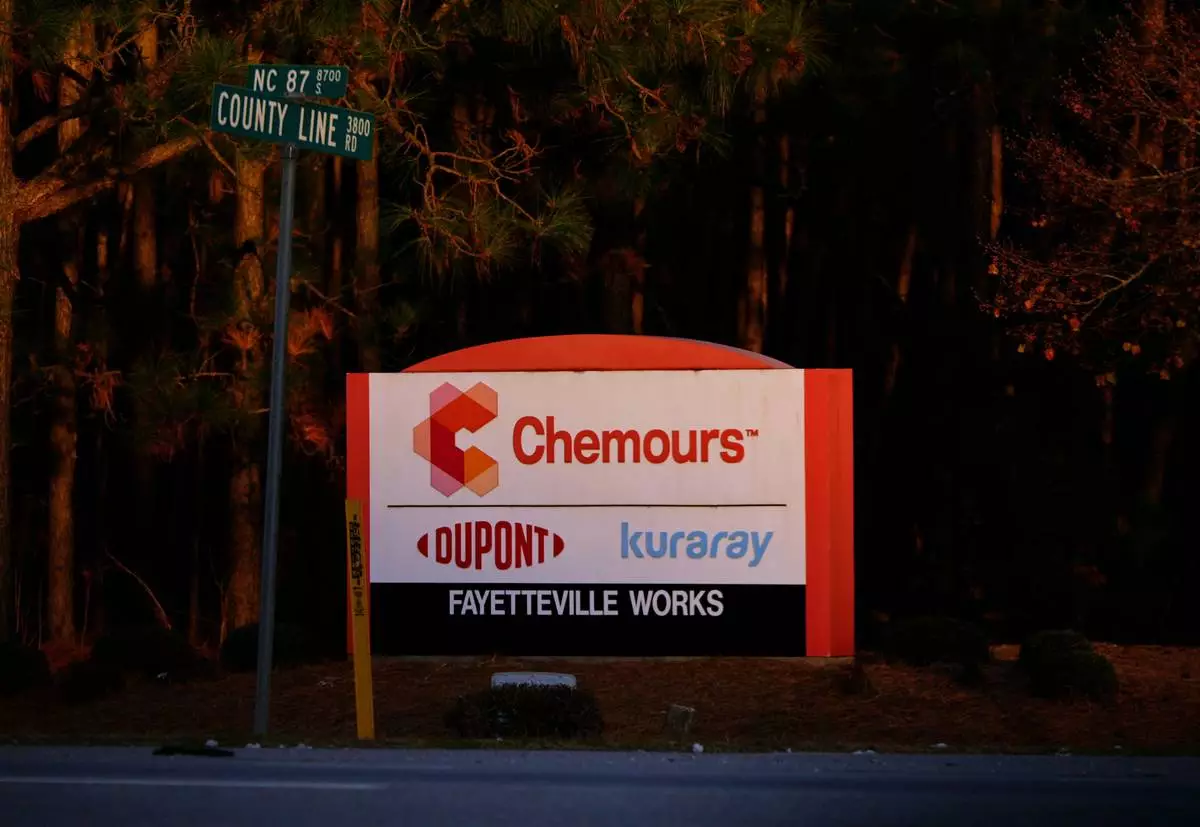
FILE - A sign is displayed at the entrance of Chemours Company, Fayetteville Works in White Oak, N.C., Dec. 9, 2025. (AP Photo/Carolyn Kaster, File)
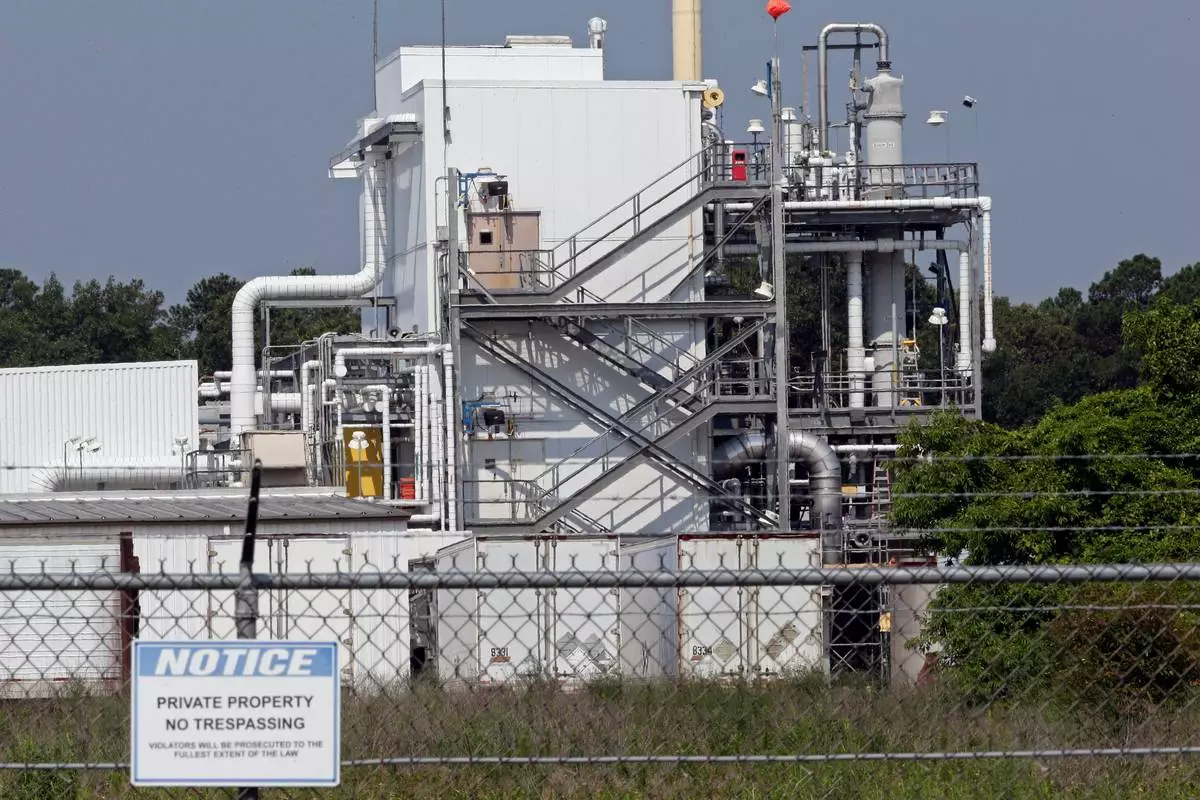
FILE - The Chemours Company's PPA facility at the Fayetteville Works plant near Fayetteville, N.C., June 15, 2018. (AP Photo/Gerry Broome, File)