TEL AVIV, Israel--(BUSINESS WIRE)--Jun 24, 2026--
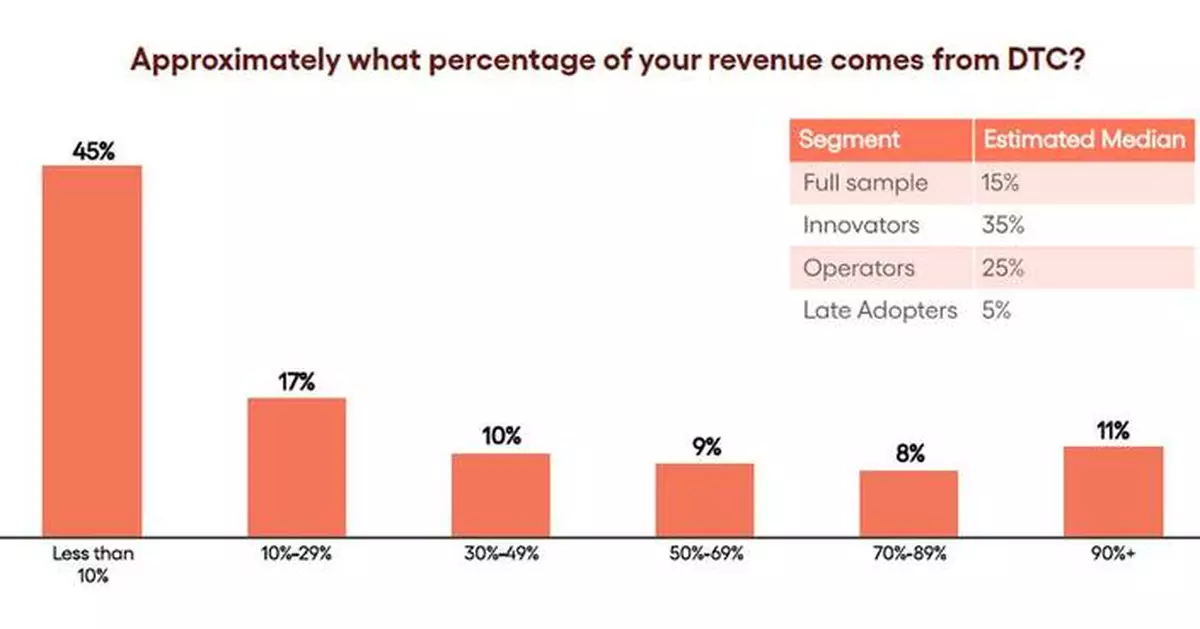
Direct-to-consumer (DTC) monetisation in mobile gaming is already a $17Bn market – around 15% of the $113.3Bn mobile gaming in-app purchase market 1 – and is expected to grow substantially through 2026, according to new research published today by GDC Festival of Gaming and Appcharge, the leading DTC payments infrastructure platform for mobile games.
Click to Gallery
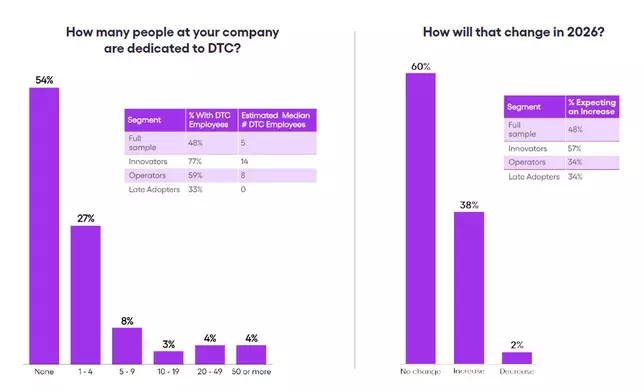
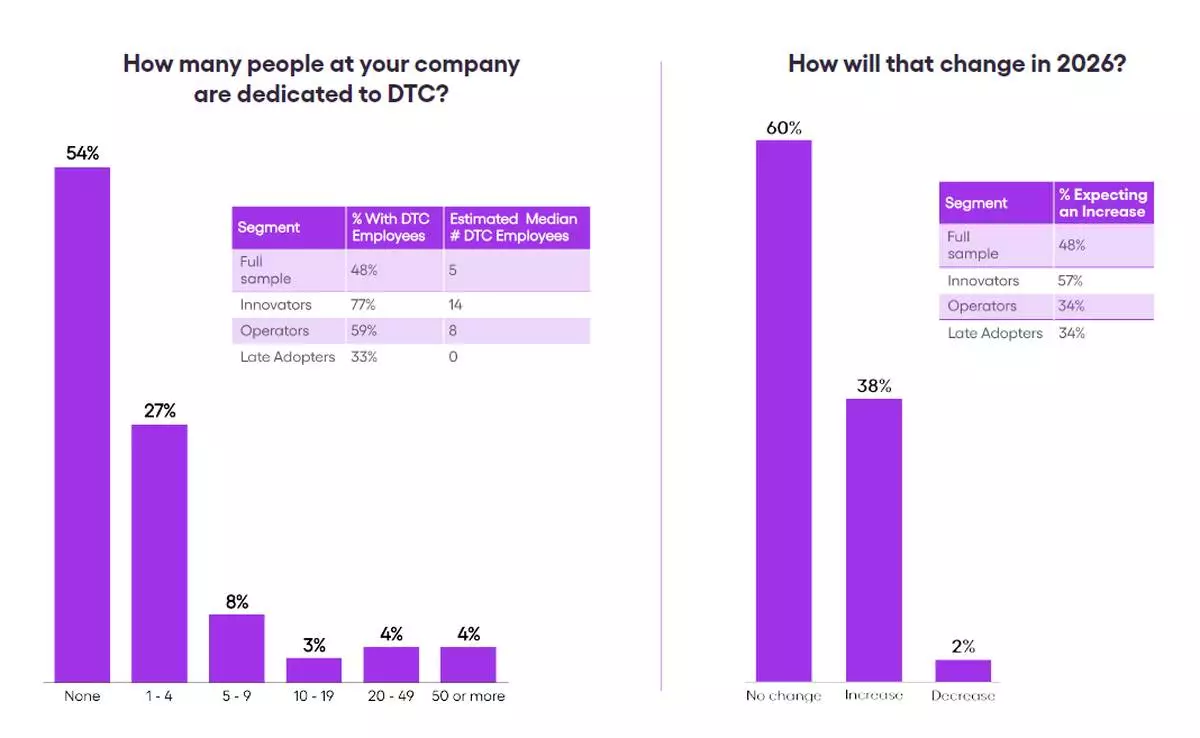
People Dedicated To DTC Chart
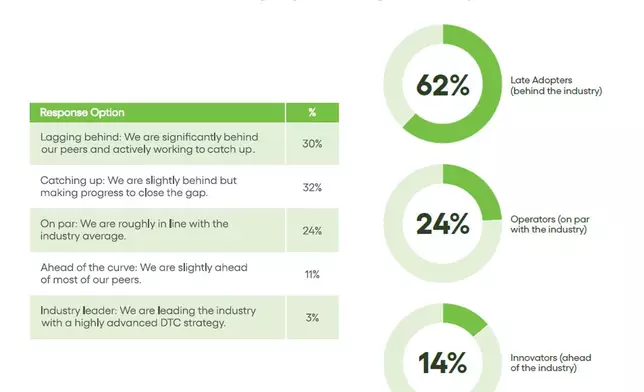
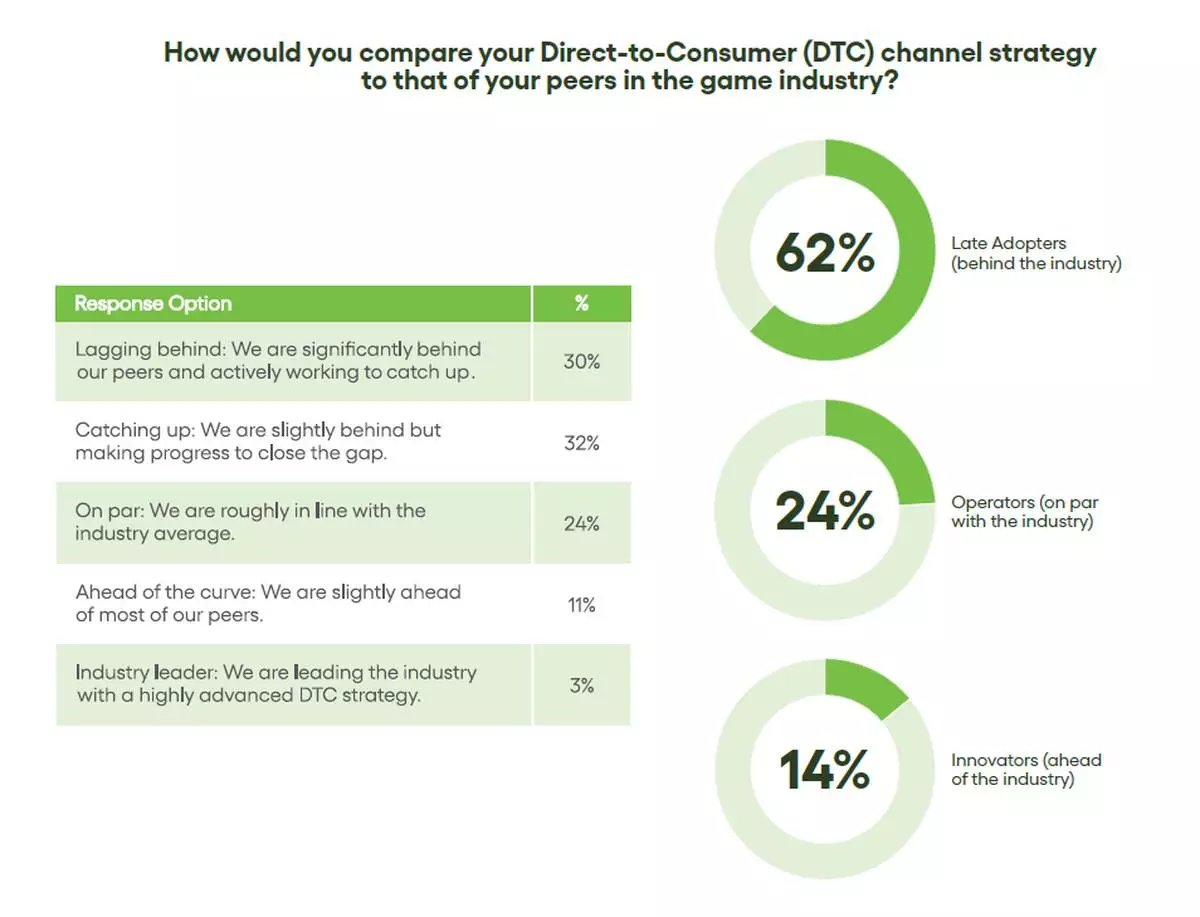
DTC Channel Strategy Comparison Chart
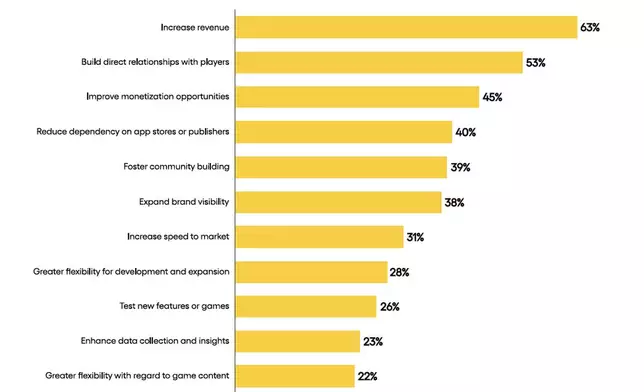
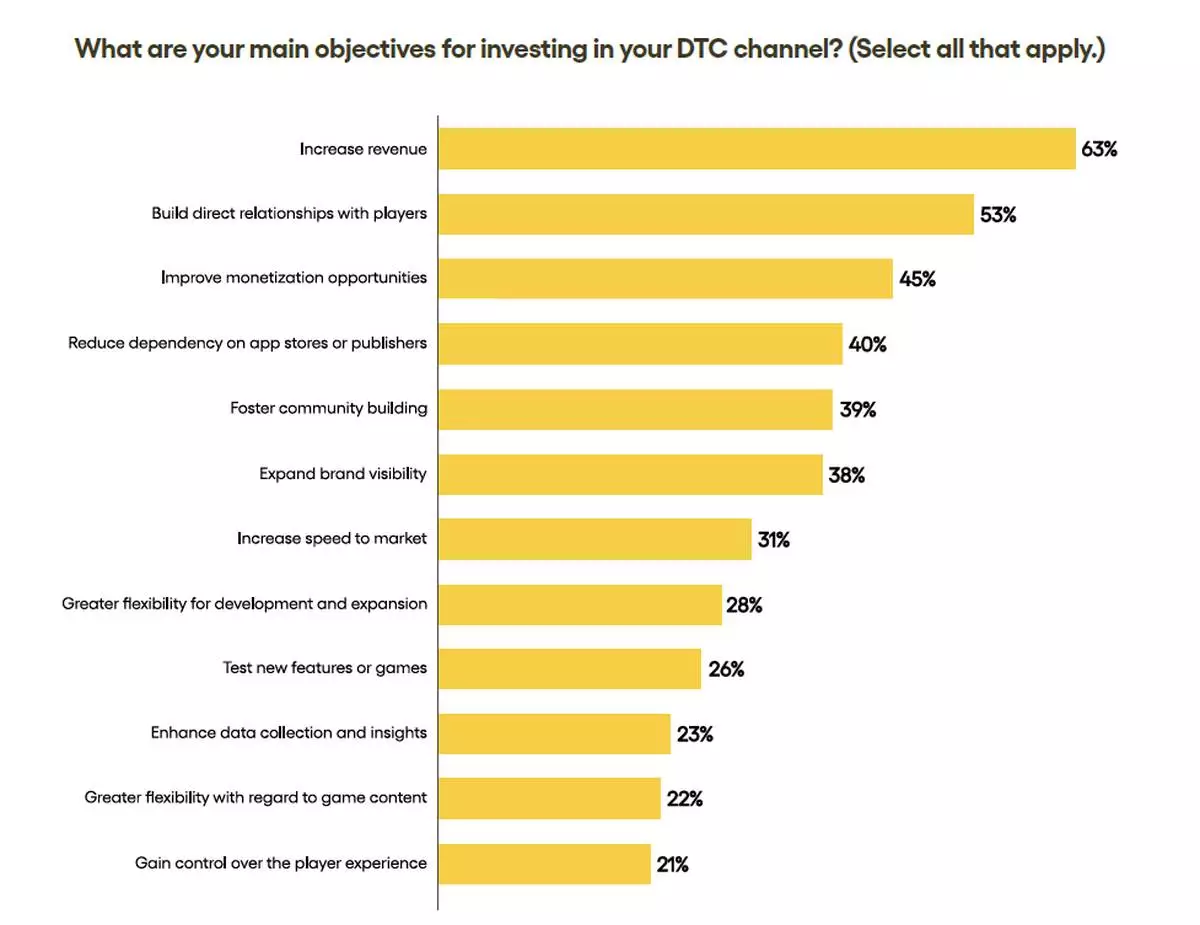
DTC Investing Objectives Chart
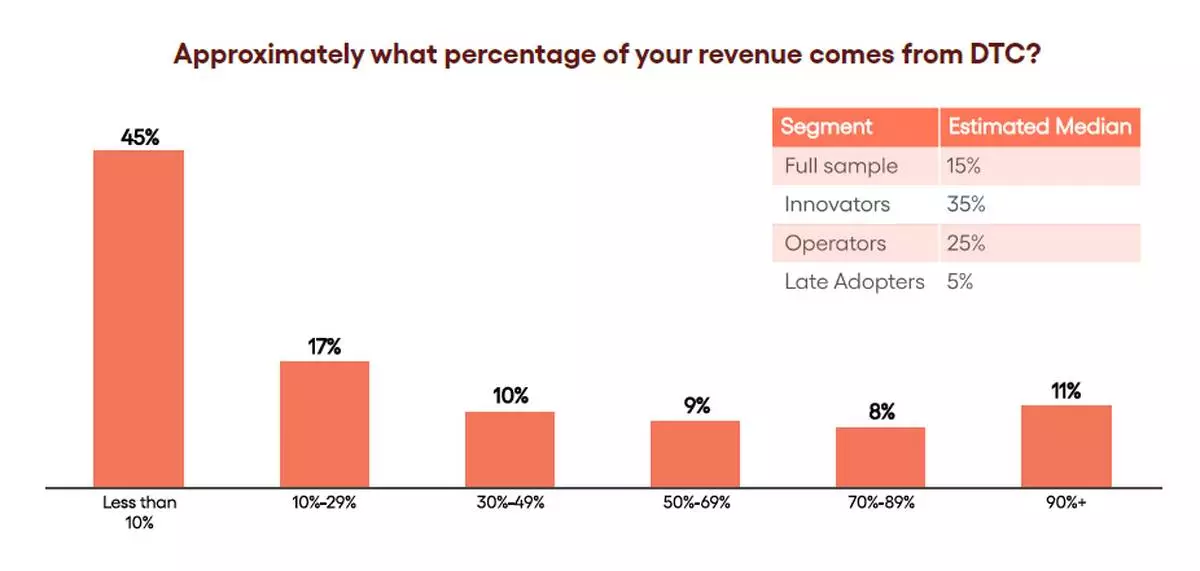
DTC Revenue Percentage Chart
This press release features multimedia. View the full release here: https://www.businesswire.com/news/home/20260624293221/en/
Based on a survey of more than 1,200 professional game developers conducted between January and February 2026, the report captures how publishers are responding less than 12 months on from the April 2025 Epic vs. Apple ruling and the subsequent policy changes from Apple and Google. It provides the first detailed picture of how the DTC channel is reshaping the economics of mobile gaming – 92% of publishers surveyed expect their DTC revenues to grow this year, with 41% expecting double-digit growth and 18% expecting growth of 30% or more.
Higher margins are just the beginning
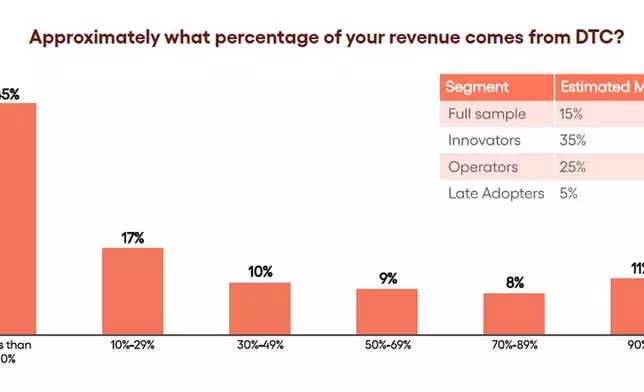
While the original opportunity was driven by avoiding 30% app store fees, the research shows the value publishers are capturing has expanded well beyond margin improvement. Median DTC revenue uplift is 15% across the full sample, rising to 35% for leading adopters. More than three-quarters (77%) of publishers say DTC monetisation now performs at least as well as their app store channels, and 63% of leading adopters say it is doing better.
The deeper story is structural. Publishers report that DTC is enabling direct ownership of player relationships, richer first-party data, faster experimentation, and the ability to design offers and experiences that were not possible inside app store billing. Top objectives for investing in DTC include increasing revenue (63%), building direct relationships with players (53%), improving monetisation (45%), and reducing dependency on app stores (40%).
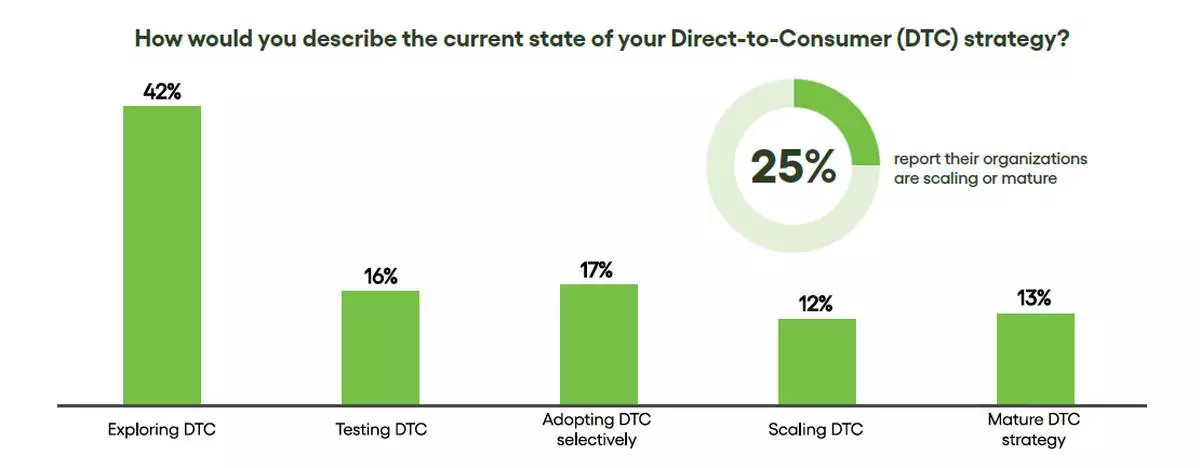
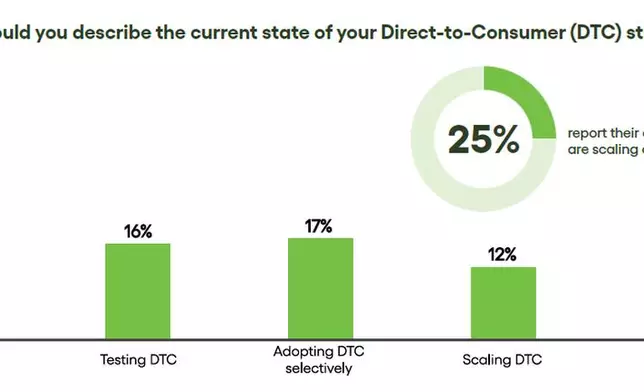
A clear gap is opening between DTC leaders and the rest of the industry. 62% of publishers describe themselves as behind their peers on DTC, while only 14% consider themselves innovators and 25% say their DTC programs are scaling or mature. The window to catch up is narrowing as leaders compound their advantage.
“The real story isn’t the fee. It’s what happens when publishers finally own the relationship with their players – direct access to data, control over pricing and offers, and the ability to pass real value back to players,” said Maor Sason, CEO and co-founder of Appcharge. “The publishers who committed to this early aren’t just ahead on revenue. They know their players better, they retain them longer, and they have more control over where the business goes next. In a few years, we won’t think of DTC as an alternative – it will simply be how the most successful games operate.”
Gaming as the proving ground for the wider app economy
The implications extend well beyond gaming. The report argues that mobile games – with their high-frequency transactions, complex virtual economies, and global player bases – represent the most demanding stress test for DTC infrastructure, and that the playbook now emerging is directly applicable to other consumer app categories.
“The shift toward direct-to-consumer payments will not remain limited to mobile games,” said Eric Liaw, General Partner at IVP, contributing to the report. “Many other consumer apps operate under similar platform fee structures and face similar constraints when attempting to build direct relationships with users. Gaming has historically been one of, if not the, first large-scale proving ground for direct-to-consumer apps. Developers in categories such as AI creation, fitness, education, lifestyle, entertainment, and other subscription services will see the same economic benefits, and the shift could extend across the broader app economy.”
The mobile gaming in-app purchase market is projected to approach $121.1Bn by the end of 2026 (according to Newzoo), while the global IAP market across all consumer apps is estimated at $190Bn in 2025 and projected to reach $290Bn by 2030. This points to a DTC opportunity that could ultimately run into the tens of billions across the app economy.
Scale is the next frontier
The report identifies player awareness (50%) and player acquisition (41%) as the biggest challenges to scaling DTC. Leading adopters are addressing these through greater use of content creators and influencers, in-game messaging, and partnerships with specialist DTC infrastructure providers. 83% of companies now assign DTC accountability to director-level or above, and 43% to a C-level leader – evidence that DTC is being treated as a strategic priority rather than a side project.
The full report, Direct-to-Consumer is a $17 Billion Market for Mobile Gaming, is available here.
About Appcharge
Appcharge is the leading direct-to-consumer platform for mobile games – built for game makers, by game makers. Appcharge helps publishers sell directly to their players, boosting profits by 35% and strengthening player relationships and loyalty. As an all-in-one platform, Appcharge provides everything publishers need to go direct: fully branded web stores, gamified offers, global payments checkout, mobile in-app payments SDKs, and more. Appcharge is the fastest-growing mobile game payments platform, powering stores for over one-third of the top-grossing mobile games.
Headquartered in Tel Aviv, Appcharge is funded by IVP, Playrix, Creandum, Smilegate, Play Ventures, and Gillot Capital Partners, and is led by veterans from Rovio, Playtika, and Playstudios. For more information, visit www.appcharge.com.
About GDC Festival of Gaming
The GDC Festival of Gaming is where the entire B2B games industry comes together. From design and code to publishing, marketing, and investment, it’s a place to learn, connect, collaborate, and shape the future of games. For decades, GDC has been the trusted gathering place where games get made. Now, the GDC Festival of Gaming expands that foundation to welcome the entire games business ecosystem – from development tools and middleware to marketing services and distribution platforms.
People Dedicated To DTC Chart
DTC Channel Strategy Comparison Chart
DTC Investing Objectives Chart
DTC Strategy Chart
DTC Revenue Percentage Chart

LONDON (AP) — Much of western Europe baked under a “heat dome” Wednesday as temperatures soared toward 40 degrees Celsius (104 Fahrenheit) in places, and weather agencies warned that the extreme conditions could endanger lives across countries, many of which have limited air conditioning.
France recorded its hottest-ever day for the second day running. The Meteo France weather agency said the country's national thermal indicator — an average of temperatures measured at 30 weather stations — hit a new record of 30 C (86 F), the latest in a series of never-before-registered highs.
Meanwhile, the U.K. recorded its hottest June day, with 35.8 C (96.4 F) reported in Wiggonholt in southern England. The national weather forecaster issued a "red heat health” alert for much of central and southern England, as well as Wales. In northwest France, tens of thousands of homes sweltered after the heat knocked out electricity.
Authorities warned people to take extra care when swimming in unsupervised areas, such as rivers or lakes, following the deaths of around 40 people in France over the past week.
In the U.K., which has a reputation for being gray and drizzly even in summer, the heat was particularly uncomfortable, not least because so much of the country's infrastructure, such as buildings and transportation systems, was built for cooler weather.
The heat dome — a stationary high-pressure system that traps heat and humidity — took shape at a time when human-caused climate change fuels increasingly extreme weather. The U.N. climate agency projects that the next five years will likely shatter more heat records.
“Heat waves are becoming more frequent, longer and hotter with climate change, as a direct result of the fossil fuels we are releasing as a society,” said Hayley Fowler, a professor at the Centre for Climate and Environmental Resilience at Newcastle University in the northeast of England. “We can expect to have to cope with more and more of these types of events in the years to come.”
More than 1,000 schools in England have closed due to the heat, and many train services have been canceled, with passengers being urged to avoid nonessential travel in areas covered by the warning.
The red heat warning was only the second issued by U.K. authorities following July 2022, when temperatures exceeded 40 C (104 F) for the first time. The temperature is set to fall short of 40 C on Wednesday but could breach that level — considered almost unimaginable not long ago — on Thursday.
“Red warnings are reserved for the most severe events," said Mark Sidaway, deputy chief forecaster for the Met Office, the U.K. weather agency. He said officials expected the effects to extend "beyond those who are normally more vulnerable to the heat.”
It's been so hot that male journalists covering the U.K.’s tradition-bound Parliament were allowed to remove their jackets Wednesday in the press gallery of the House of Commons.
In France, Italy and Spain, more than 100 million people were warned to be extra vigilant about the dangers of the heat wave.
With the mercury rising, many of France's major attractions, including the Eiffel Tower and the Louvre museum in Paris, have restricted visiting hours. Schools and transportation schedules were also upended.
Tens of thousands of homes in northwest France were without power after two electrical transformers in Brittany were taken out of service late Tuesday following an explosion apparently linked to the heat wave. Around 68,000 households were still affected by the power outage on Wednesday.
In Italy, 16 cities, including Rome, Milan, Florence and Turin, were under heat alerts. The “bollino rosso” signals that the risks are not restricted to the elderly.
Temperatures were predicted to climb toward 41 C (105 F) in Florence and 38 C (104 F) in Milan, while Rome and Naples were forecast to stay below 36 C (96.8 F).
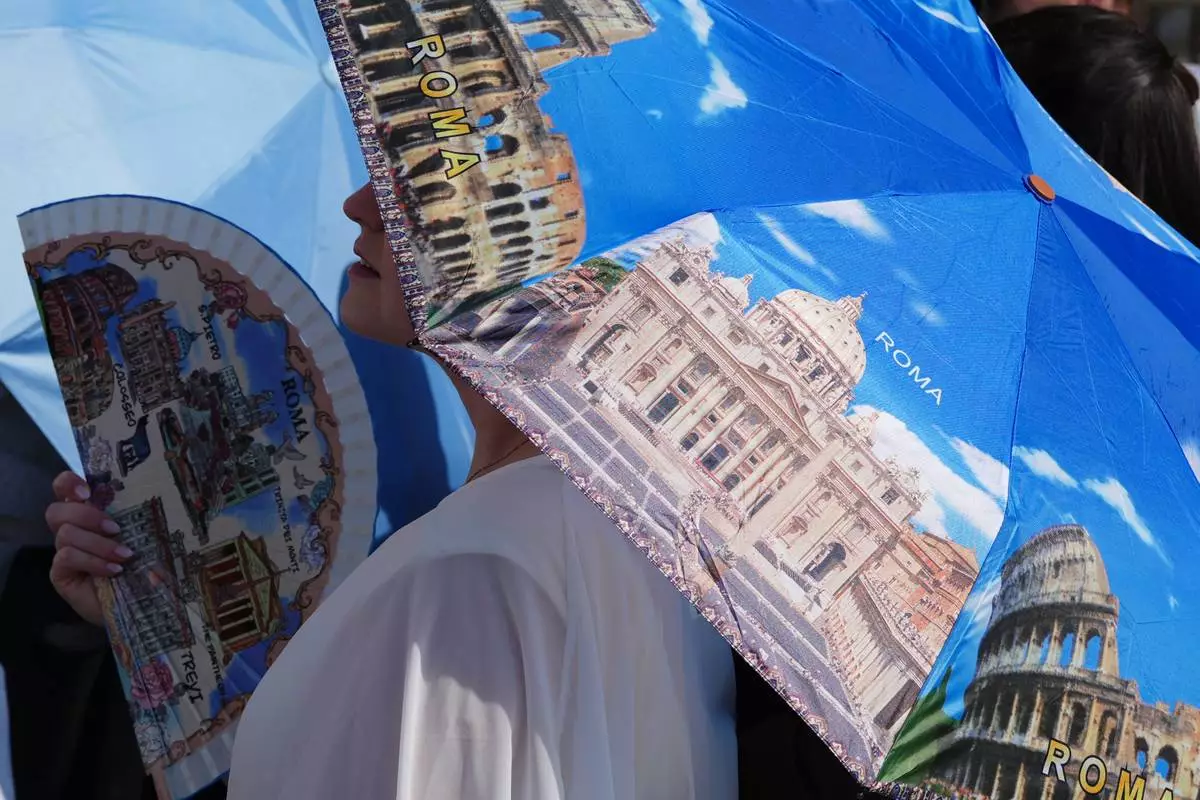
In Vatican City, the faithful fanned themselves and huddled under umbrellas in St. Peter’s Square to attend Pope Leo XIV’s weekly audience.
“We did not feel any heat at all, only great love for the pope,” said Monica Ruiz, a 52-year-old pilgrim from Spain.
One remedy being touted came from soccer's World Cup, which is currently taking place in the U.S., Canada and Mexico. The European Trade Union Confederation said employers should offer the same cooling breaks used at the World Cup and grant all workers paid breaks to help keep them safe in intense heat.
“Taking a break in high temperatures is a commonsense precaution, but too many employers are refusing to put these and other necessary measures in place or even discuss them with trade unions, leading to a rising number of avoidable deaths in European workplaces,” ETUC General Secretary Esther Lynch said.
Businesses across Europe have heeded that advice.
At a major building project spanning Paris’ busy ring road, construction workers have shifted to earlier hours. Managers at the site have introduced staggered schedules, with most workers now starting at 6 a.m. and finishing around 1 p.m.
“As soon as the sun comes out, the workers are really going to take time to take breaks every hour and cool down,” deputy site manager Travis Demarque said.
Associated Press writers Danica Kirka and Jill Lawless in London, Colleen Barry in Milan, Samuel Petrequin and Alexander Turnbull in Paris and Giada Zampano in Rome contributed to this report.
People cool off at the Piscina Romano as a heat wave is predicted across Italy, in Milan, Italy, Wednesday, June 24, 2026. (AP Photo/Luca Bruno)
Tourists with an umbrella take a photo in Paris, as France is enduring a grueling heat wave with temperatures soaring above 40 degrees Celsius (104 Fahrenheit), Monday, June 22, 2026. (AP Photo/Christophe Ena )
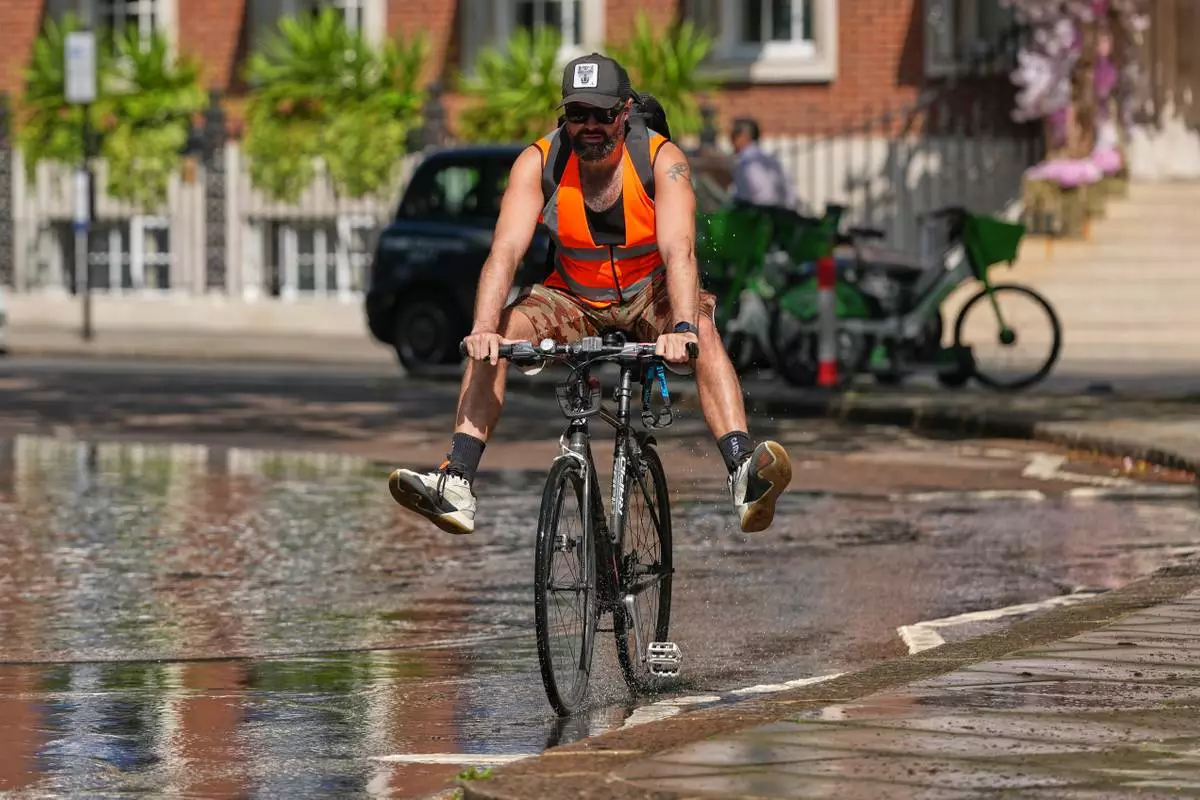
A man keeps his legs dry as he cycles through standing water in London, as a heat wave is predicted Tuesday, June 23, 2026. (AP Photo/Kirsty Wigglesworth)
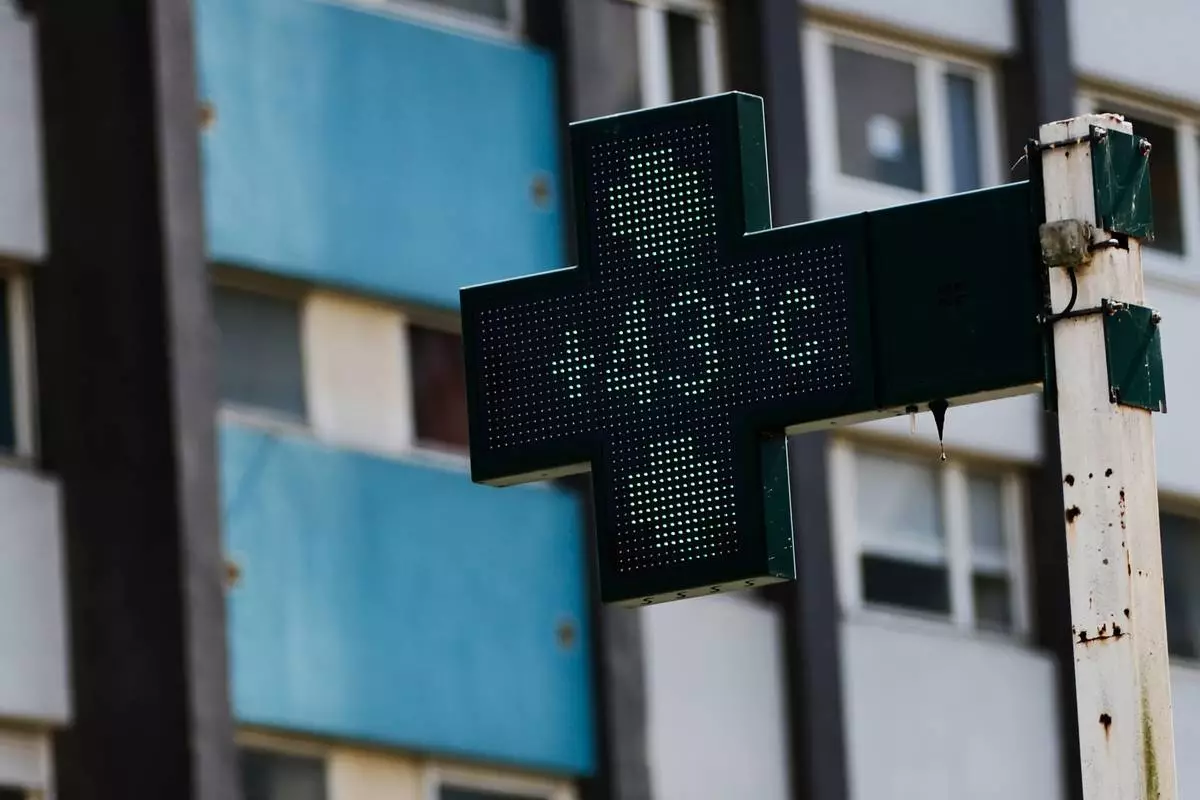
A drugstore sign shows the temperature 43 degrees Celsius (109,4 degrees Fahrenheit) in Rennes, western France, Monday, June 22, 2026. (AP Photo/Jeremias Gonzalez)
Parisians bath in the Canal Saint-Martin in Paris, as the national weather service, Meteo France, placed 54 departments, about half the country, under a red heat wave alert, Tuesday, June 23, 2026. (AP Photo/Christophe Ena )
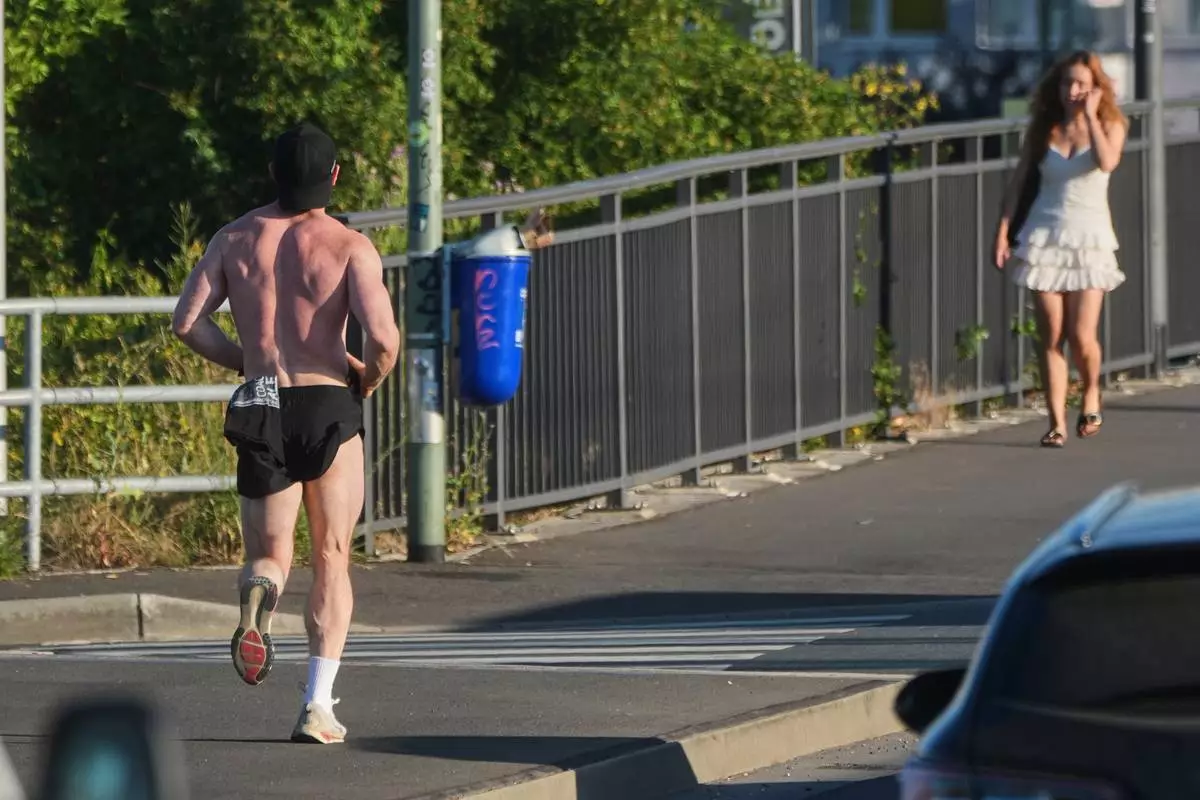
A man runs over a bridge in Frankfurt, Germany, Wednesday, June 24, 2026. (AP Photo/Michael Probst)
Faithful shelter for the hot sun as they wait for Pope Leo's XIV weekly general audience in St. Peter's Square at The Vatican, Wednesday, June 24, 2026. (AP Photo/Alessandra Tarantino)
A faithful cools off as they wait for Pope Leo's XIV weekly general audience in St. Peter's Square at The Vatican, Wednesday, June 24, 2026. (AP Photo/Alessandra Tarantino)