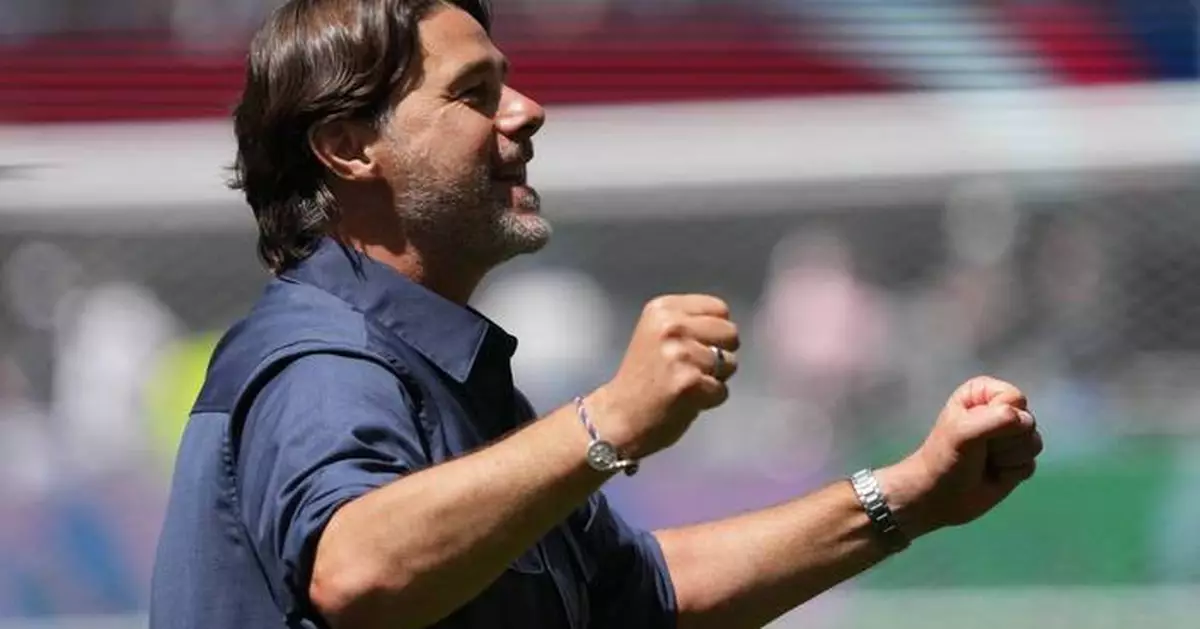
DANA POINT, Calif. (AP) — Mauricio Pochettino's office during the World Cup has a terracotta-tiled terrace with a spectacular view of an iconic Orange County beach and a vast stretch of the Pacific. Surfers are constantly bobbing at the popular break below the clifftop hotel in which the coach and his U.S. team have spent the past few weeks.
“It’s a little bit boring, no?” Pochettino said with a bemused grin. "They’re waiting for the perfect wave, and it never arrives.”
Pochettino is not a man who understands why anybody would want to wait. He would rather make the wave.
His energy and hunger propelled him out of Argentina to a successful playing career in Europe, followed by a swift transition to management at top clubs in England, France and Spain. He has spent his adult life in high-stakes situations, learning to thrive in the constant urgency demanded at soccer's highest levels.
So when this lifelong high-energy striver took over the U.S. team nearly two years ago, he expected to find a roster and a country that shared his desperate hunger for success leading up to their home World Cup.
Pochettino and his coaching team were stunned to learn otherwise.
“We were so naive when we signed our contract,” Pochettino said Tuesday night during a media roundtable in his office. “I think what we find after we sign, we misjudged the situation. It was worse than we really believed.”
Pochettino had never coached a national team before he took over the U.S. While he understood the obstacles inherent in a job featuring limited contact with his players, he didn't anticipate the scope of the rebuild that would be necessary in a program that had enjoyed only erratic success on the international stage.
The Americans had recently been eliminated from the 2024 Copa America in the group stage despite playing on home turf, leading to coach Gregg Berhalter's firing. Pochettino says he inherited a program saturated by complacency that didn't match his urgency.
“When we arrived here, we received a big punch, and we were knocked out for a while," Pochettino said. "Because we were so excited about that. It’s so close, the World Cup. Everyone is going to want to be involved and want to come to the national team, and it was the opposite.”
But after Pochettino understood the full scope of the job he had taken, he went to work on creating the culture he needed to see. He identified the players who would be most important to the Americans' success, and he sold them on giving their all to the project that is finally bearing fruit at this World Cup.
Pochettino's team has opened the tournament with back-to-back victories over Paraguay and Australia by a combined 6-1 score. That's a historic achievement for the U.S., which had never started 2-0 and has won only one knockout-stage match in its entire World Cup history.
The U.S. concludes group play Thursday night against Turkey in Southern California before hosting a round of 32 match in Northern California next week. The tactical savvy they've shown under Pochettino, along with a theoretically manageable draw, clearly indicate the Americans have a golden opportunity to make their most impressive World Cup finish since reaching the semifinals at the inaugural tournament in 1930.
But it took hard work over the past 20 months to make it happen, Pochettino says. The U.S. lost twice in the CONCACAF Nations League in March 2025, but Pochettino saw progress on building the culture and style necessary for the Americans to thrive on a bigger stage.
He persevered in his plans after the U.S. didn't win the Gold Cup without Christian Pulisic in the summer of 2025, and he agrees with his players who have cited the fall of 2025 as a turning point for the American squad.
That stretch included a famously pugnacious friendly with Australia in which Pochettino challenged his players at halftime to raise their level of competitiveness. It also included a team talk last November in which he first used the phrase that has become one of the team's slogans: “Why not us?”
“And then they were ..." Pochettino says while making a shocked face. "'Why not us?' It was like a motto for us to say, ‘We can. If we believe we can, we can do. If we work hard, we can do. If we change our mindset, we can do.’”
“Why not us?” is emblazoned on the back wall of Pochettino's office, along with numerous additional quotes and sayings hand-written on the wall by the coach: “Heart turns effort into belief, and when everything hurts, heart keeps us fighting together," and “When people believe in each other, impossible dreams become possible.”
Pochettino's American chapter has changed him in small ways. He has been surprised by both ends of the American palate, from Chick-Fil-A to Whole Foods grocery stores, and he has developed an appreciation for country and soul music — everyone from Lainey Wilson and Ella Langley to Teddy Swims.
The soccer world doesn't expect Pochettino to stay with the U.S. team forever, and he has already been linked with European club jobs leading up to this tournament. Pochettino says his coaching team hasn't ruled out staying with the U.S. past the World Cup, but those discussions will wait until they see just how far this team can go.
“It’s difficult to describe or know your future,” Pochettino said. “But when you are here, I think it’s difficult now to see yourself living in another place, because for sure, we will miss it if one day we don’t stay here in this country."
AP World Cup: https://apnews.com/FIFA-World-Cup
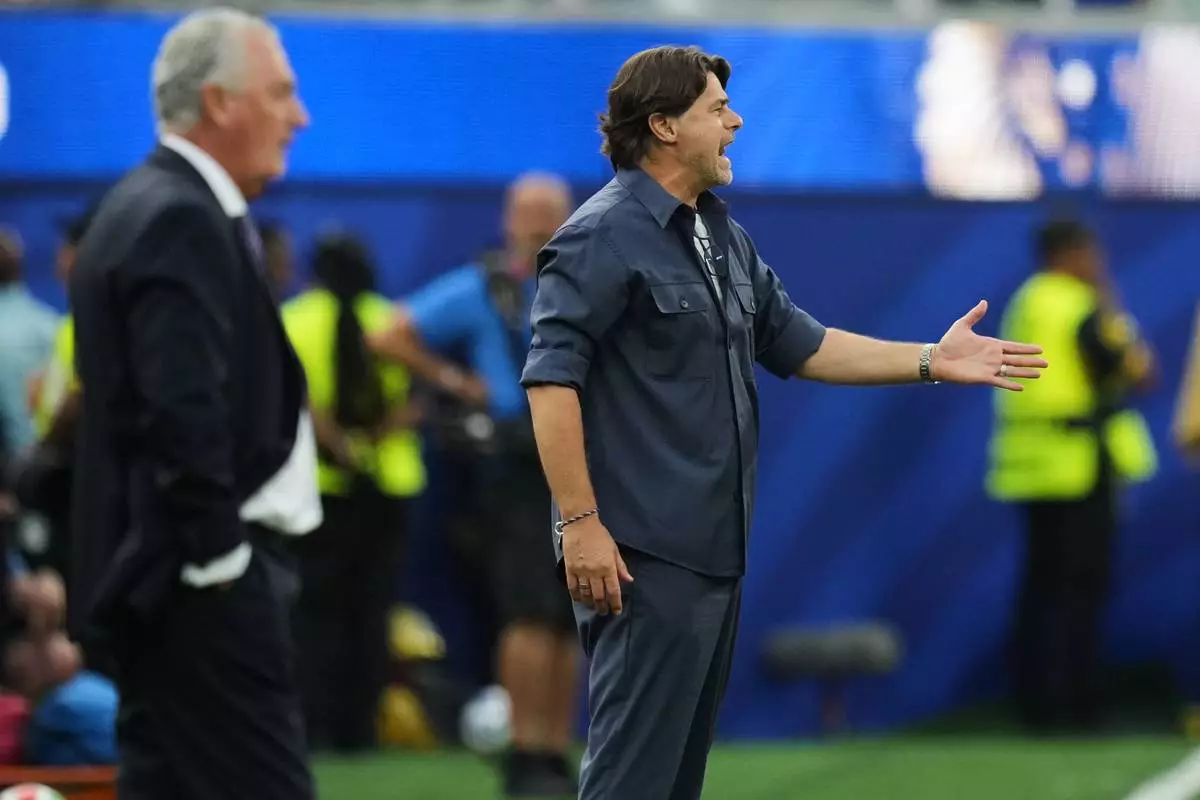
United States's head coach Mauricio Pochettino reacts during the World Cup Group D soccer match against Paraguay in Inglewood, Calif., near Los Angeles, Friday, June 12, 2026. (AP Photo/Andre Penner)
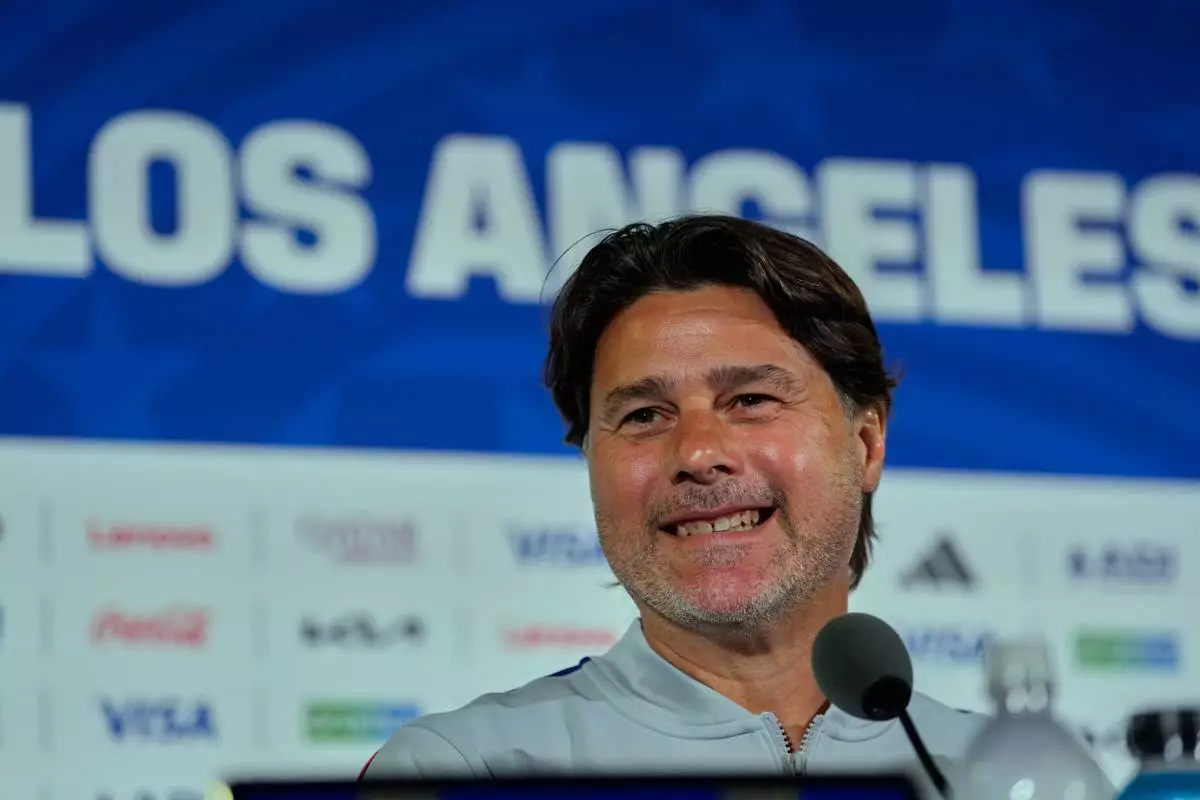
United States head coach Mauricio Pochettino smiles during a press conference ahead of his FIFA World Cup match against Paraguay at SoFi Stadium in Inglewood, Calif., Thursday, June 11, 2026. (AP Photo/Andre Penner)
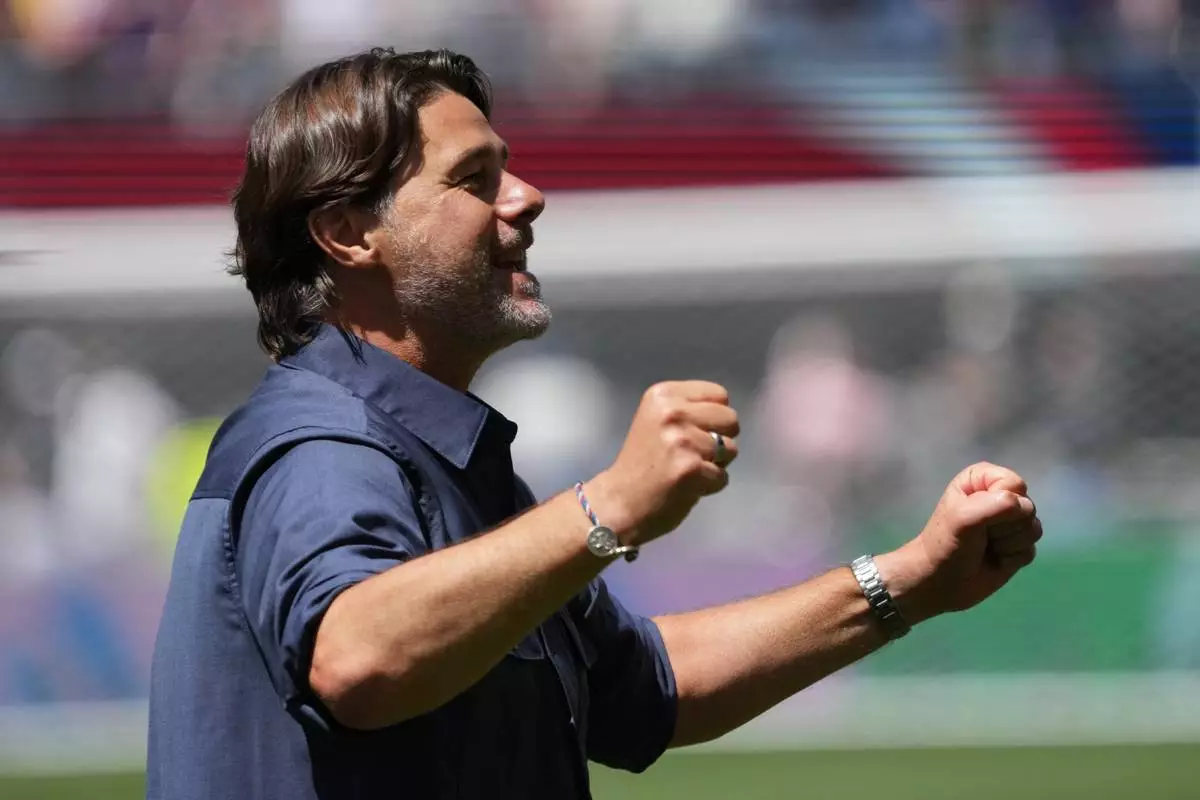
United States head coach Mauricio Pochettino reacts after the World Cup Group D soccer match between the United States and Australia in Seattle, Friday, June 19, 2026. (AP Photo/Ted S. Warren)