SUNNYVALE, Calif.--(BUSINESS WIRE)--Jun 25, 2026--
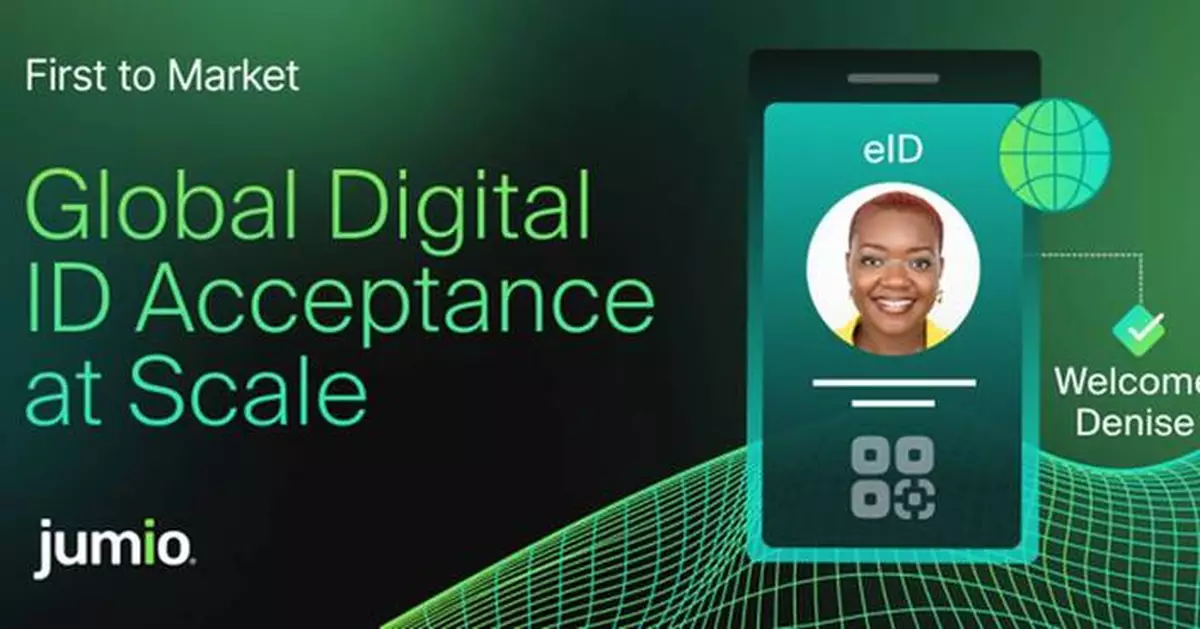
Jumio, the leading provider of AI-powered identity intelligence, today announced that it has significantly expanded support for digital IDs across the globe, allowing Jumio customers to accept digital IDs in more than 60 countries and territories when onboarding new users, helping customers drive conversions and meet compliance mandates.
This press release features multimedia. View the full release here: https://www.businesswire.com/news/home/20260625046687/en/
Digital IDs are rapidly moving from an emerging concept to a mainstream expectation. Driven by global initiatives like mobile driver's licenses (mDL), European eIDAS 2.0, Singapore’s widely adopted Singpass ecosystem, and major wallet integrations from Apple and Google, digital IDs are increasingly coexisting with, and in some markets beginning to replace, traditional physical IDs.
Jumio has been at the forefront of this evolution for years, managing accreditation on behalf of customers and enabling them to seamlessly verify eIDAS-compliant eIDs across nearly 20 EU countries. Jumio was also one of the first global identity intelligence providers to support Brazil's digital driver's license, adopted by over 60 million citizens, through both QR code validation and biometric verification against government database selfie records. Since launching acceptance in early 2025, Jumio has processed more than one million Brazil CNH Digital verifications, demonstrating that digital credentials, properly implemented, perform at scale.
Now, Jumio is further expanding its digital ID offering through its integration with leading digital ID gateway Trinsic. Jumio customers will be able to onboard new users with digital IDs in more countries than ever before. Jumio's Trinsic integration enables rapid support for new credential formats as they emerge without customers bearing the accreditation burden. But where other providers offer only basic credential checks, Jumio delivers true identity intelligence by enriching digital ID verification with biometric authentication, liveness detection, multiple risk signals and Jumio’s Identity Graph, powered by global cross-customer data — all through the same platform customers already use for physical document verification. There is no need for additional vendor relationships or fragmented workflows, just a single integration that supports every credential format.
“Jumio is the first identity intelligence provider that meets users wherever their identity lives, whether it’s in a physical document, mobile wallet, or government-issued digital credential — all through a single, trusted integration,” explained Philipp Pointner, Jumio’s chief of digital identity. “The credential landscape is shifting faster than most organizations can track. Our job is to make sure our customers are always ahead of the curve with each new government mandate, wallet format, or fraud vector. That's what identity intelligence at scale looks like.”
“The future of identity verification isn't a sharper photo of a plastic card, it's accepting the digital IDs people already carry,” said Riley Hughes, CEO and co-founder of Trinsic. “By integrating Trinsic's acceptance network, Jumio's customers can now instantly verify customers through mobile driver's licenses, eIDs, EUDI, and reusable credentials across more than 60 countries and territories, alongside the biometric and document checks its customers already trust. We're proud to help one of the most recognized names in identity intelligence meet users where the world is heading.”
To learn more or schedule a demo, visit jumio.com.
About Jumio
Jumio helps organizations to know and trust their customers online. From account opening to ongoing monitoring, the Jumio Platform provides AI-powered identity intelligence anchored in biometric authentication, automation and data-driven insights to accurately establish, maintain and reassert trust.
Leveraging powerful automated technology including biometric screening, AI/machine learning, liveness detection and no-code orchestration with hundreds of data sources, Jumio helps to fight fraud and financial crime, onboard customers faster and meet regulatory compliance including KYC and AML. Jumio has processed more than 1 billion transactions spanning over 200 countries and territories from real-time web and mobile transactions.
Based in Sunnyvale, California, Jumio operates globally with offices and representation in North America, Latin America, Europe, Asia Pacific, and the Middle East, and has been the recipient of numerous awards for innovation. Jumio is backed by Centana Growth Partners, Great Hill Partners and Millennium Technology Value Partners.
For more information, please visit www.jumio.com.
About Trinsic
Trinsic is the first and most expansive identity acceptance network, built for a world moving from photos of plastic IDs to digital identity. Through a single API, Trinsic lets businesses verify identity up to 10x faster across more than 60 countries and territories by accepting mobile driver's licenses, European eIDs (eIDAS/EUDI), bank IDs, reusable IDs, and government digital ID wallets. It draws on more than 40 integrated ID providers and a network of nearly two billion pre-verified users.
Founded in 2019, Trinsic offers the complete digital ID operating system, handling the integrations, certifications, compliance, and market intelligence required to accept trusted digital IDs across borders. Security and privacy are foundational: Trinsic is built with zero-access encryption and certifies to standards including SOC 2 Type II and GDPR. The company's mission is a "one tap" future in which anyone can prove who they are with a single tap. Learn more at trinsic.id.
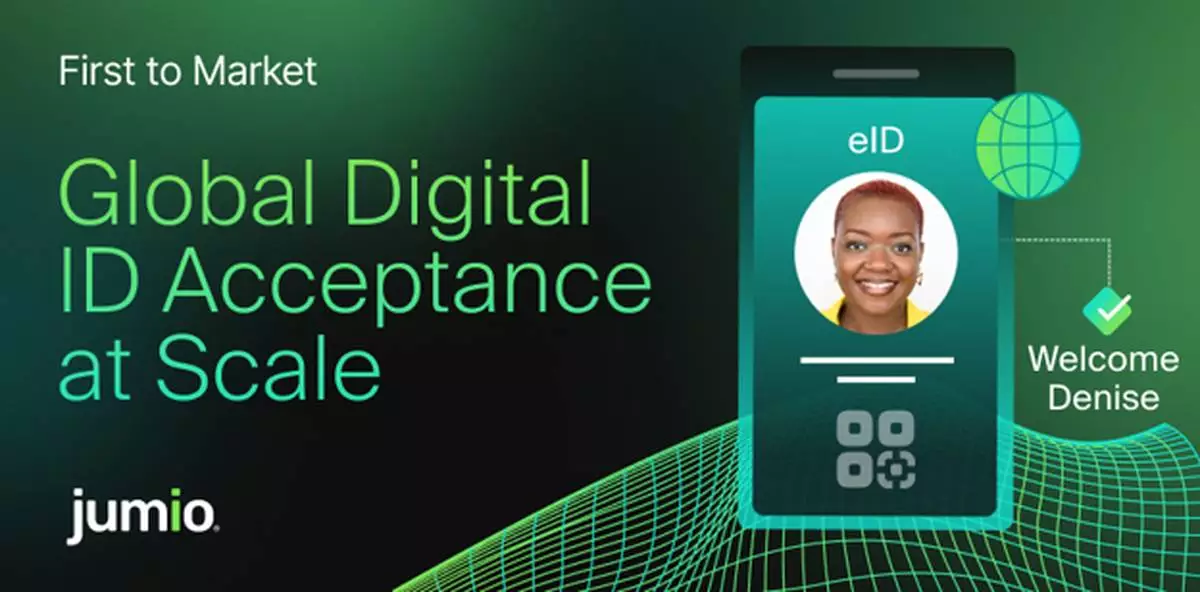
Jumio Is the First Identity Intelligence Provider to Offer Global Digital ID Acceptance at Scale
CARACAS, Venezuela (AP) — Rescue teams raced Thursday to the areas hardest hit by a pair of powerful earthquakes that rocked Venezuela, killing at least 164 people, injuring nearly 1,000 and trapping many beneath collapsed buildings.
Wednesday evening’s 7.2- and 7.5-magnitude earthquakes were among the strongest to strike Venezuela in more than a century and could be felt throughout the region. The country's main airport was damaged and closed, while buildings were evacuated in places as far away as Brazil’s Amazon, about 1,700 kilometers (1,050 miles) from Venezuela’s capital, Caracas.
Television broadcasts Thursday showed rescue workers using power tools to work their way into piles of rubble where buildings once stood. Panicked residents of the capital were sent pouring into the streets, and after the quakes many people walked among the debris searching for the missing among collapsed buildings and toppled electric poles.
Acting President Delcy Rodríguez, who gave the latest death toll early Thursday, said authorities were shifting rescue teams from other parts of the country to La Guaira, which sits north of Caracas on the coast. Officials were trying to make the most of the daylight hours to speed up efforts to rescue people believed to remain trapped under the rubble, she said.
Footage on state TV showed three children, covered in dust but alive, pulled from the rubble in La Guaira state, which Rodríguez described as a “disaster zone” and one of the areas hardest hit by the quakes because of the large number of collapsed buildings.
“Dozens of buildings have collapsed there ... and we are currently carrying out intensive rescue operations to save lives,” Rodríguez said.
Video shared online appeared to show dozens of people, some lying on the ground and others on hospital beds, being treated outside a hospital in La Guaira.
While Venezuela sits near multiple fault lines, its position straddling the South American and Caribbean plates makes strong earthquakes much less common than in other parts of Latin America.
Rodríguez appealed to businesses to make heavy construction equipment available for rescue operations, adding that search and rescue teams certified by the United Nations were on their way to Venezuela.
During the quakes, people ran from swaying buildings in Caracas, many visibly shocked when they turned back to see destroyed walls that left furniture visible from the street. Columns of dust rose in two typically busy neighborhoods in the capital.
“It started off gently and then gradually grew, and in the end, we all had to leave our houses, go outside and gather together,” Caracas resident Hector Ricci said.
The U.S. Geological Survey said the first earthquake, with a magnitude of 7.2, hit west of Moron on the Caribbean coast, about 170 kilometers (105 miles) west of Caracas. It had a depth of 22 kilometers (about 14 miles). Just a minute later, USGS reported a second 7.5 magnitude earthquake, with a depth of 10 kilometers (about 6 miles) and an epicenter 16 kilometers (10 miles) southwest of Moron.
Interior Minister Diosdado Cabello urged people to remain outside as aftershocks could further damage structures, and many people stayed on the streets for hours, some sitting on the ground hugging pets as dust gathered around them. In downtown Caracas, hundreds of people spent the night huddled around parks, parking lots and other open spaces. Authorities warned against returning to homes with structural damage.
“We were afraid the buildings would collapse on us,” said María Cristina Díaz, a 41-year-old janitor. “My mother, my daughter and I were cold. We didn’t sleep a wink; but I didn’t want to spend the night alone at home after that terrible earthquake.”
“It was awful. We cried, we screamed. Thankfully, we’re alive,” she added.
Díaz and her family rushed to Plaza Candelaria in downtown Caracas because it’s one of the few open areas near her home.
Parts of the capital lost power and cellphone coverage, and the earthquakes damaged and closed Simón Bolívar International Airport, the country’s main airport, Rodríguez said.
In Caracas, subway services were suspended and natural gas shut off, she said. Classes will also be canceled for several days, and the Ministry of Education said some school buildings would be used as shelters and donation centers.
On Thursday morning, scores of people in Venezuela and abroad struggled to contact family members. Families began posting missing-person fliers with photos of loved ones, while others shared handwritten lists of names as they searched for those still unaccounted for.
Also on Thursday, the U.N. human rights mission in Venezuela called on the government to lift local restrictions on social media.
“In the coming hours and days, timely access to reliable information and communication channels will be essential for the protection of the lives, safety, and well-being of the population,” the mission said in a statement.
In August 2024, then President Nicolás Maduro ordered X blocked in an attempt to suppress the exchange of information among those who rejected his claim of victory in the July presidential elections.
Rodríguez declared a state of emergency in an address to the nation late Wednesday. She said the government was creating a $200 million reconstruction fund for hospitals and homes damaged by the earthquakes, and had instructed the economy and finance ministers to oversee the effort.
Offers of help poured in from countries around the world.
U.S. Secretary of State Marco Rubio said the United States is “immediately deploying search and rescue teams, medical resources, and humanitarian assistance to Venezuela.”
“We will have a whole government response,” Rubio said Thursday in Bahrain. “It will be big. It will be fast. It will be effective.”
He added that one of the runways at Caracas’ international airport was cracked in the earthquake, making landing aircraft there difficult.
Rodríguez — who became acting president after an American military operation captured her predecessor, Nicolás and brought him to the U.S. to stand trial — thanked U.S. President Donald Trump. She said in an X post later that she spoke with Rubio by phone without sharing details. She also expressed thanks to the leaders of various nations who have sent messages of support and offers of help.
Ecuador ordered the delivery of humanitarian aid, and Rodríguez said Qatar, Mexico and El Salvador had already sent rescue personnel.
“We send you all our solidarity and our prayers. Stay strong, Venezuela,” El Salvador President Nayib Bukele, once diametrically opposed to Venezuela’s government, wrote in a post on X.
Garcia Cano reported from Bogota, Colombia. Associated Press writers Megan Janetsky and Anna-Catherine Brigida in Mexico City, Danica Coto and San Juan, Clara Preve in Buenos Aires; Astrid Suarez in Bogota, Colombia; Mauricio Savarese in Sao Paulo; Cristina Fuentes in Madrid; and Maria Teresa Hernandez in Beijing contributed to this report.
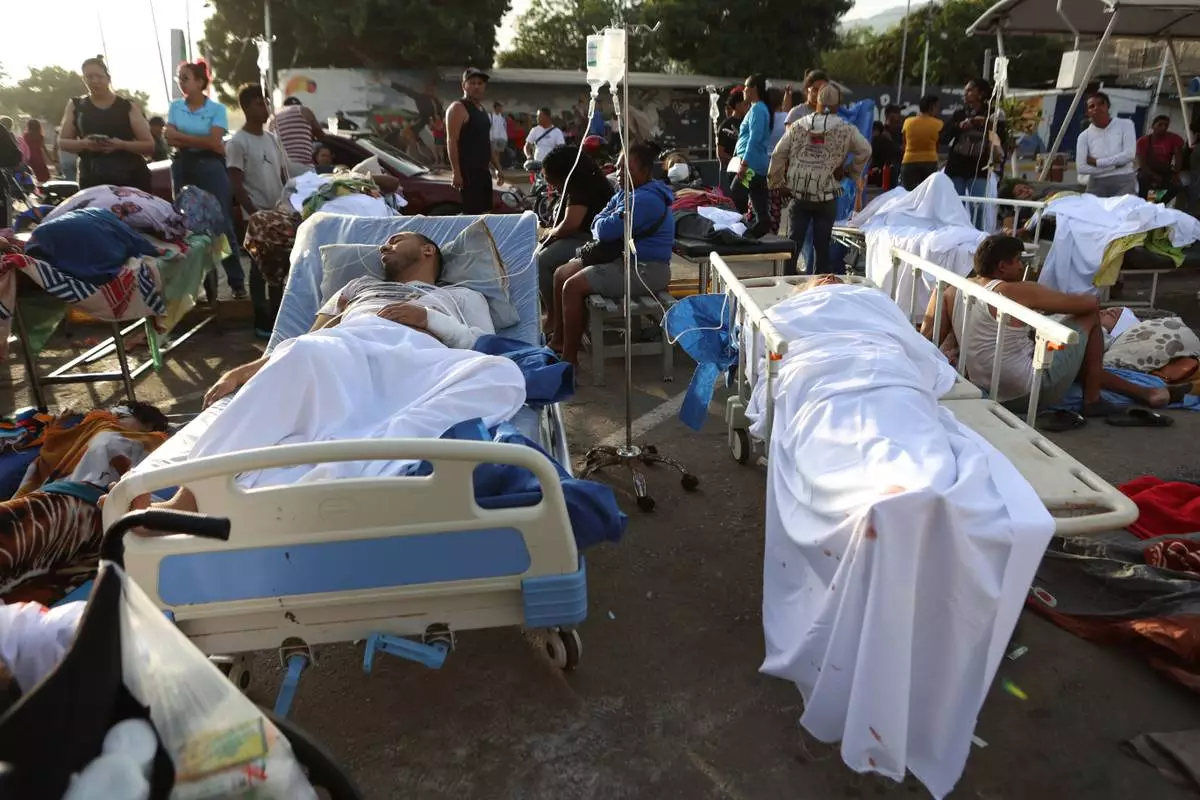
Patients lie outside a hospital evacuated after it was damaged in an earthquake in Catia La Mar, Venezuela, Thursday, June 25, 2026. (AP Photo/Pedro Mattey)
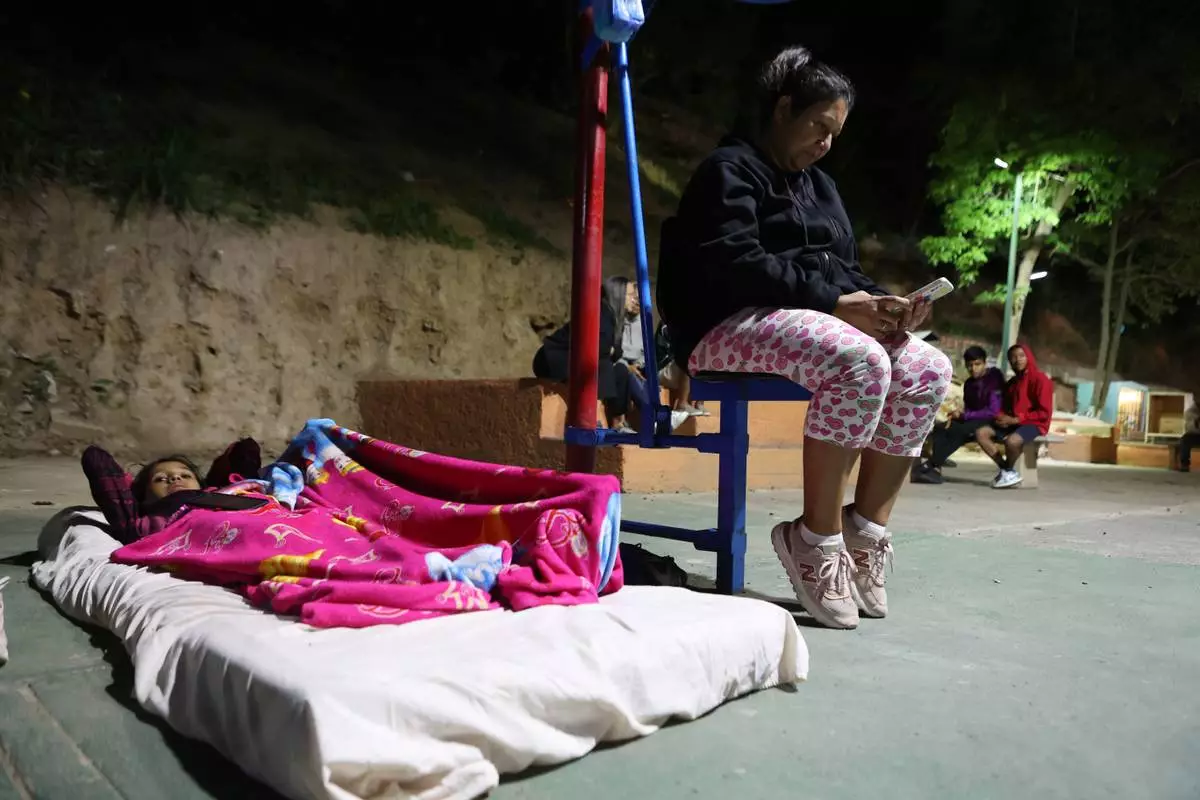
People camp on a sports court following an earthquake in Caracas, Venezuela, Thursday, June 25, 2026 (AP Photo/Pedro Mattey)
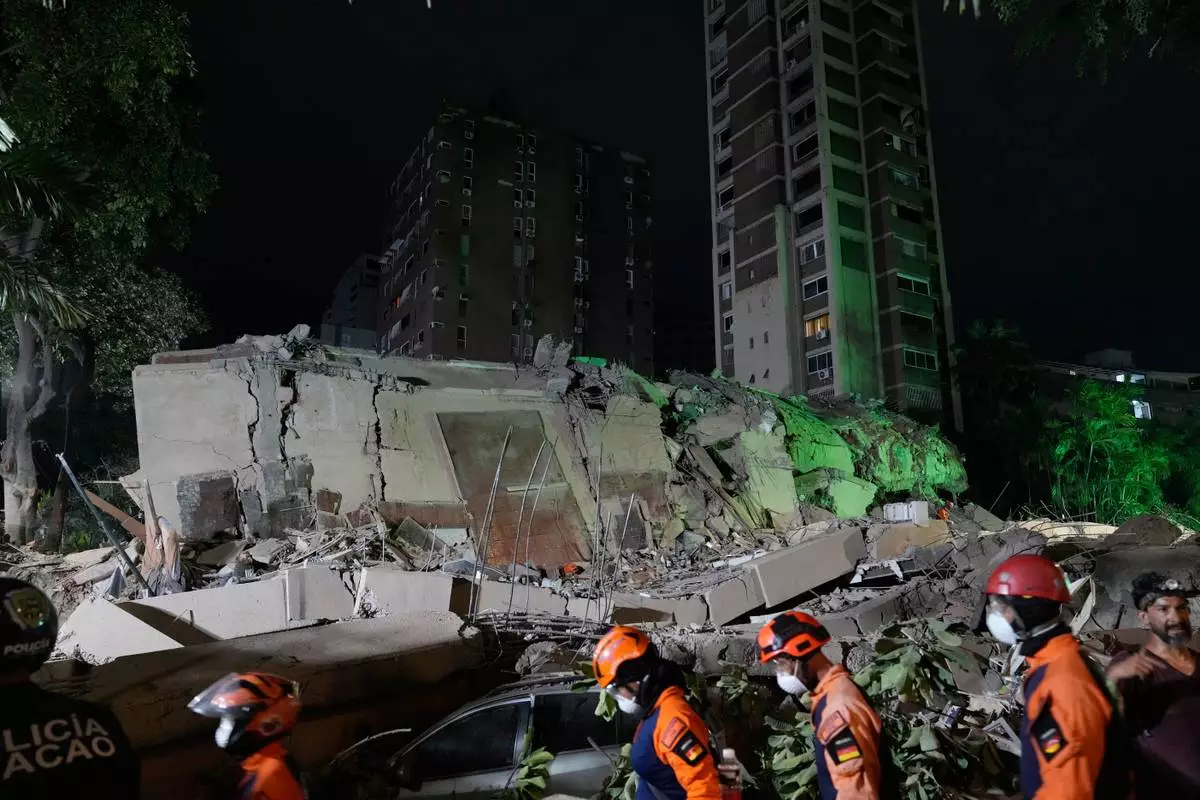
Rescue workers search through the rubble of a collapsed building after an earthquake in Caracas, Venezuela, Thursday, June 25, 2026. (AP Photo/Ariana Cubillos)
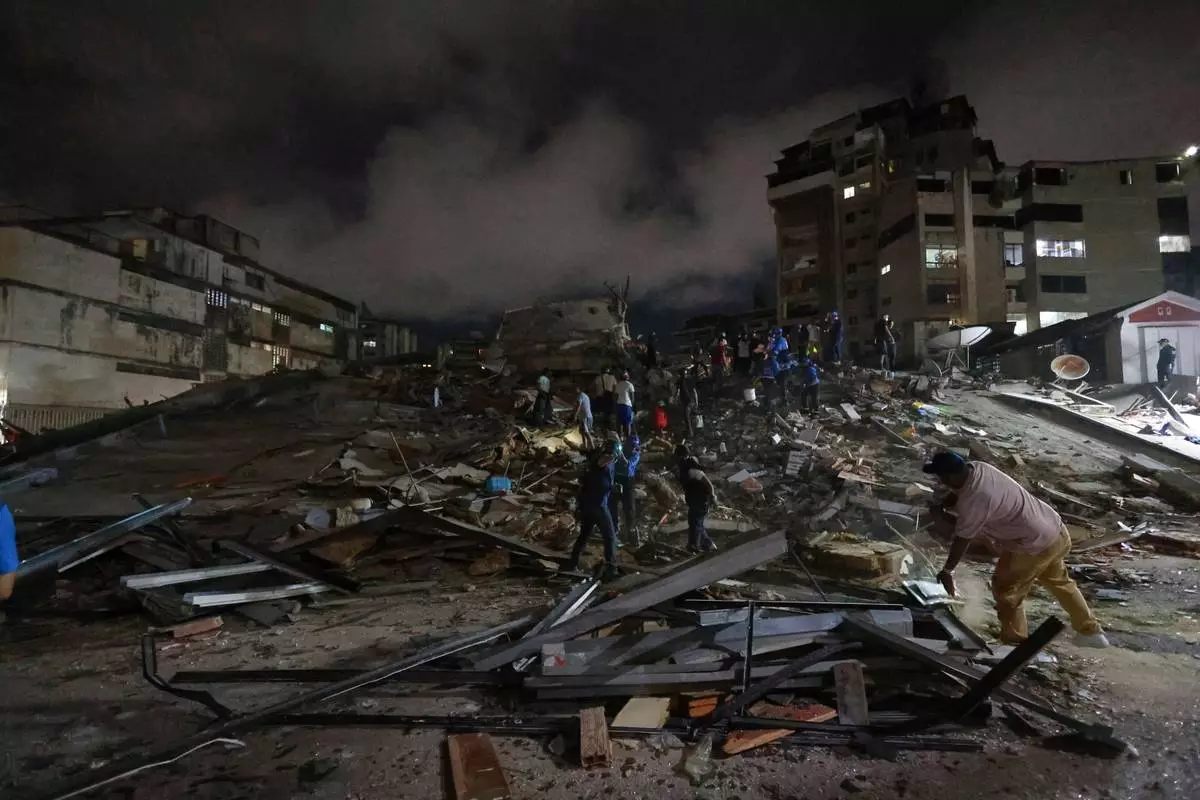
Rescue workers search through the rubble after an earthquake in Caracas, Venezuela, Wednesday, June 24, 2026. (AP Photo/Javier Campos)
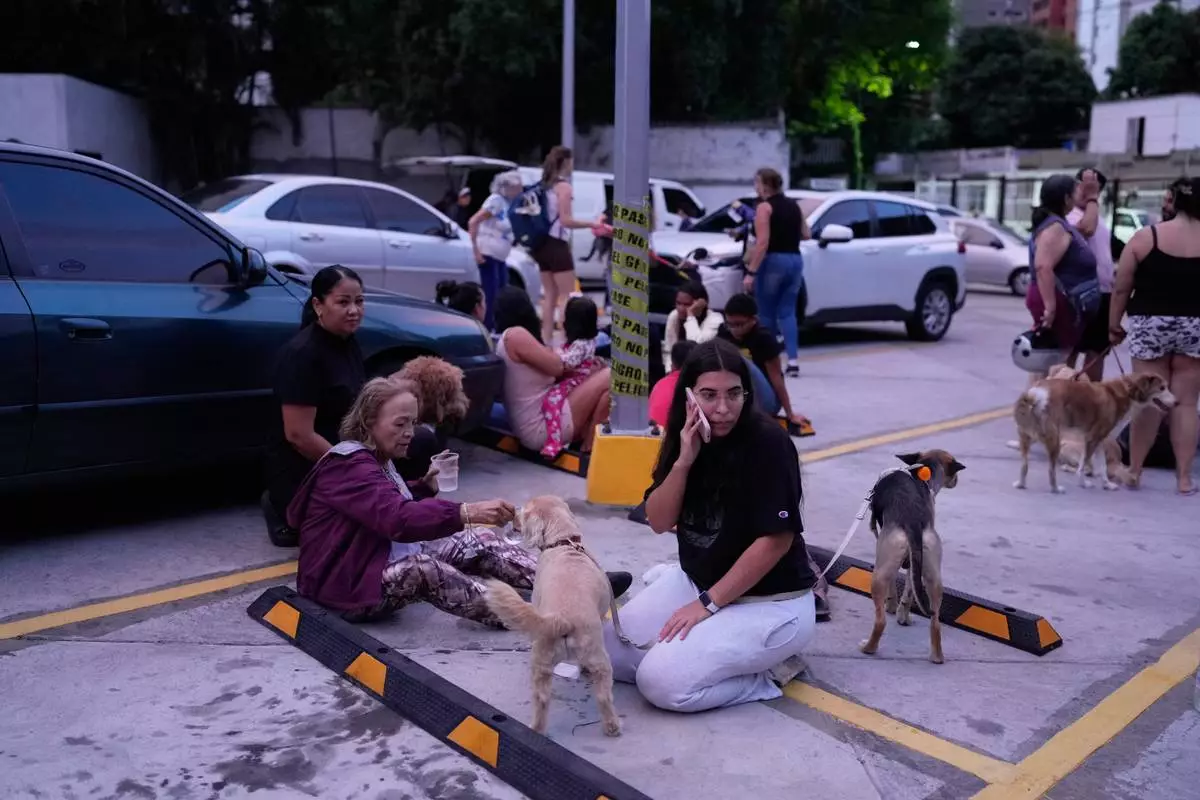
People stay outside their homes after an earthquake in Caracas, Venezuela, Wednesday, June 24, 2026. (AP Photo/Ariana Cubillos)
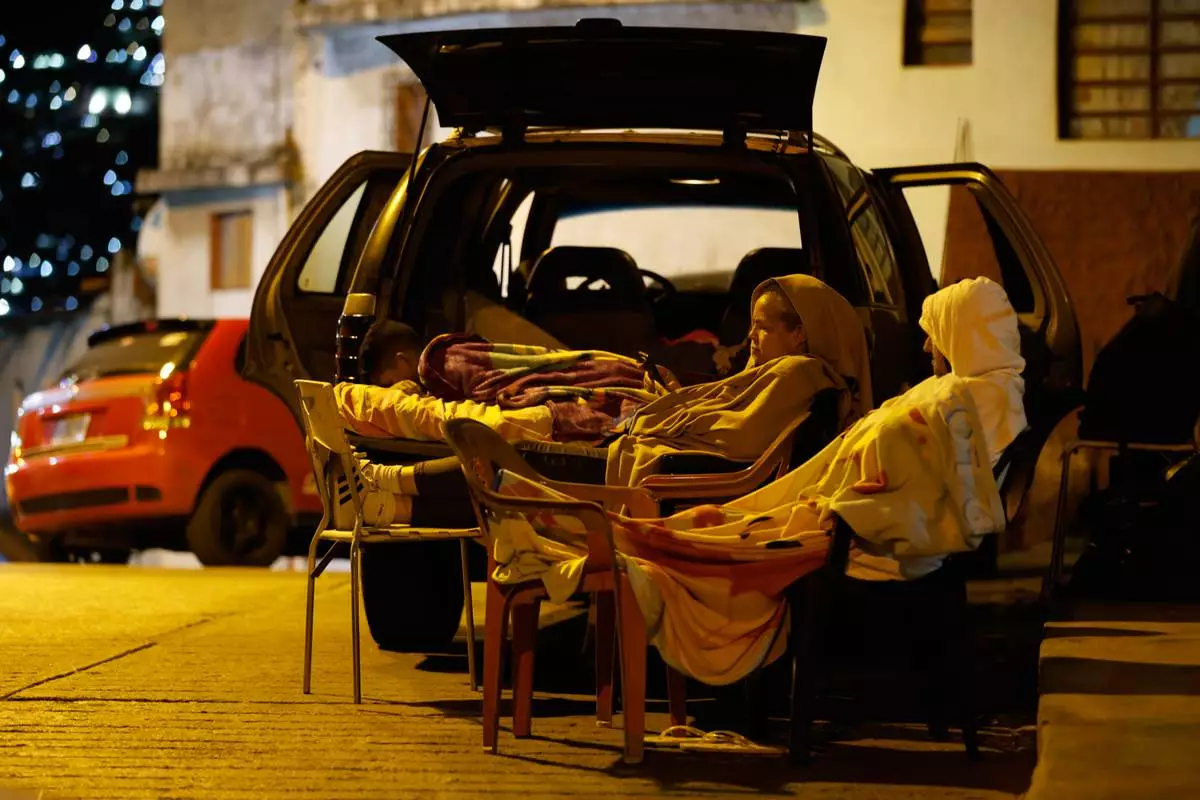
People sleep outside their homes following an earthquake in Caracas, Venezuela, Thursday, June 25, 2026 (AP Photo/Pedro Mattey)
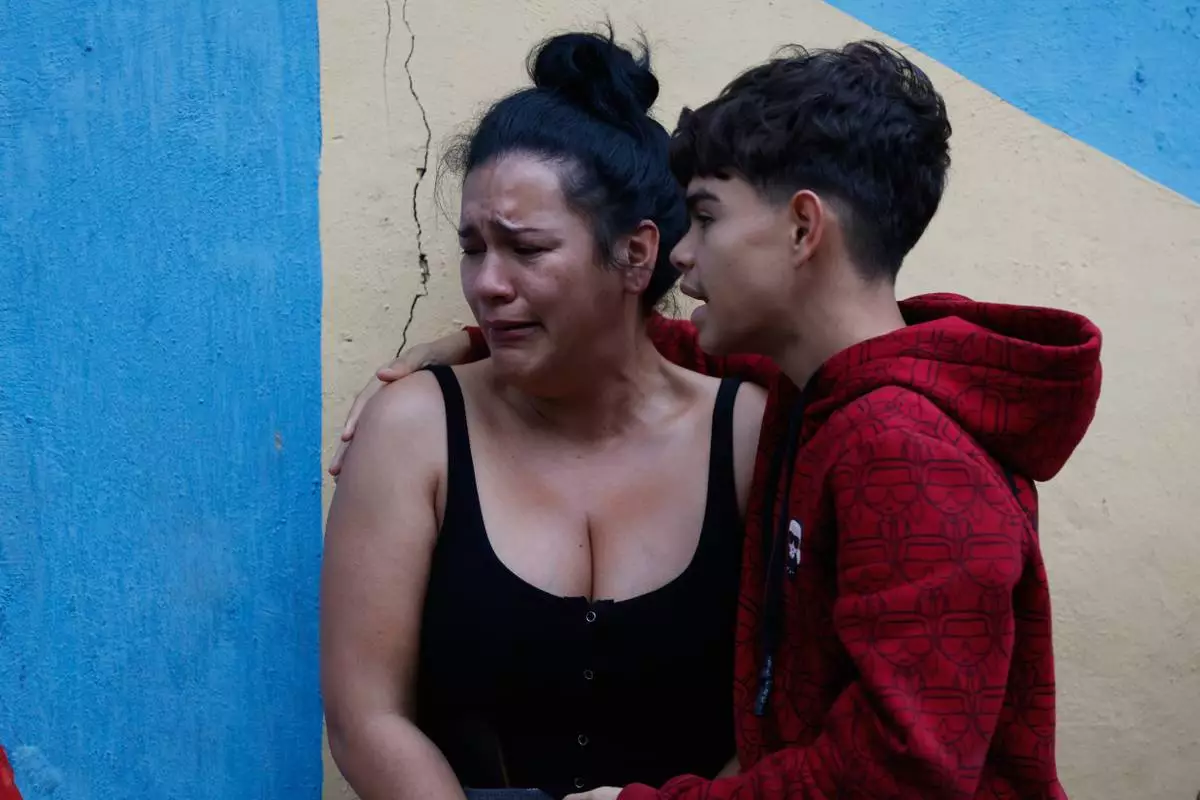
A boy comforts his mother after an earthquake in Caracas, Venezuela, Wednesday, June 24, 2026. (AP Photo/Pedro Mattey)
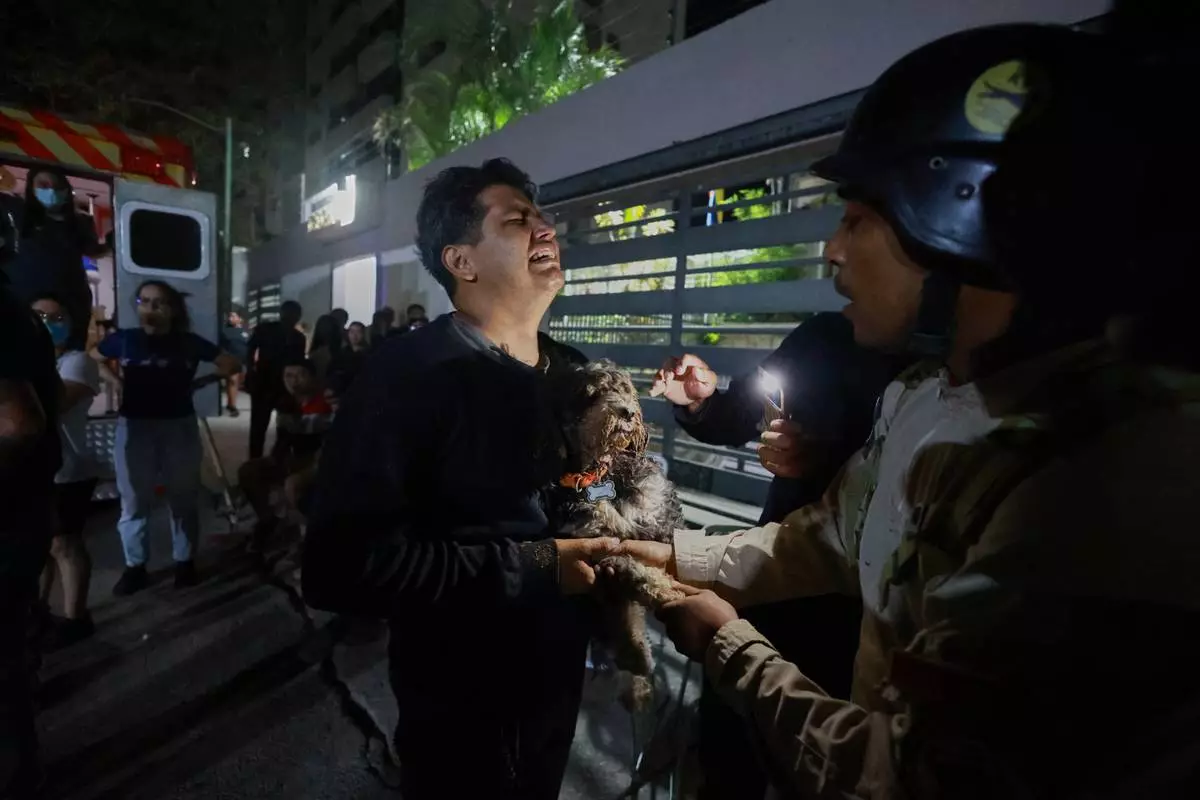
A man holding a dog cries after an earthquake in Caracas, Venezuela, Wednesday, June 24, 2026. (AP Photo/Javier Campos)
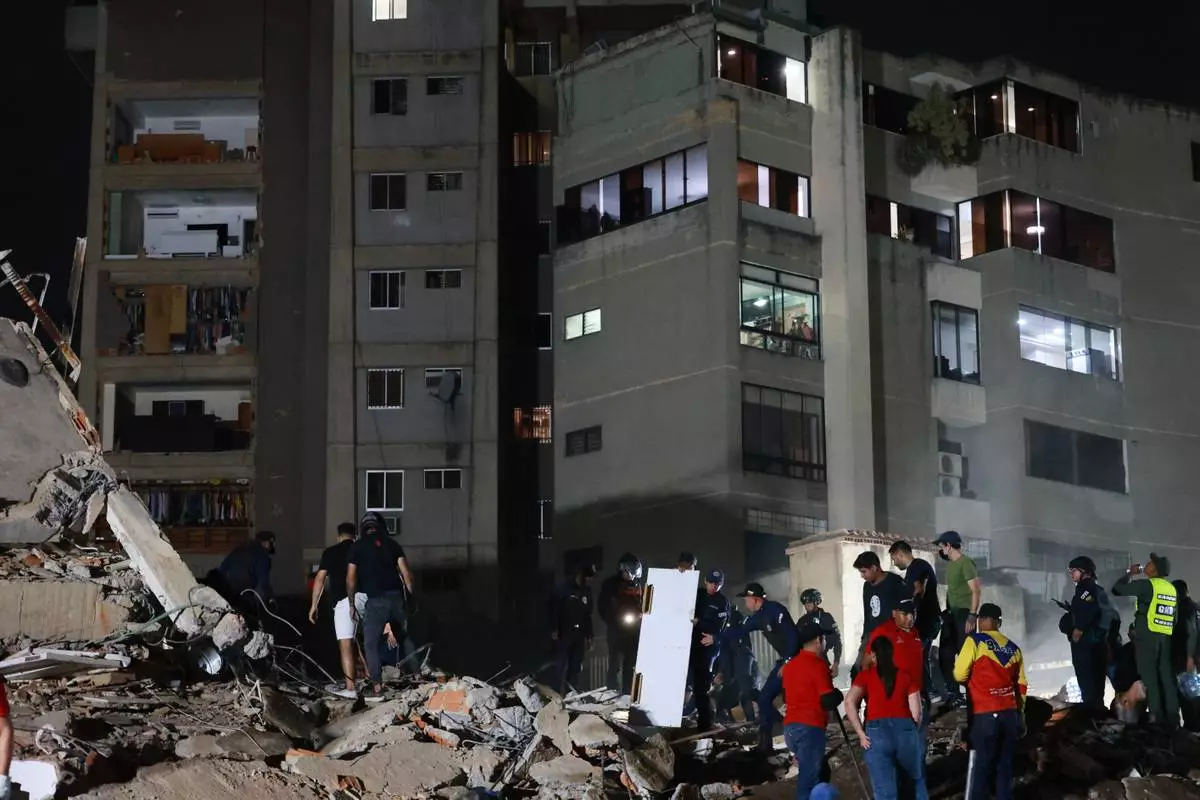
Rescue workers search through the rubble after an earthquake in Caracas, Venezuela, Wednesday, June 24, 2026.(AP Photo/Javier Campos)
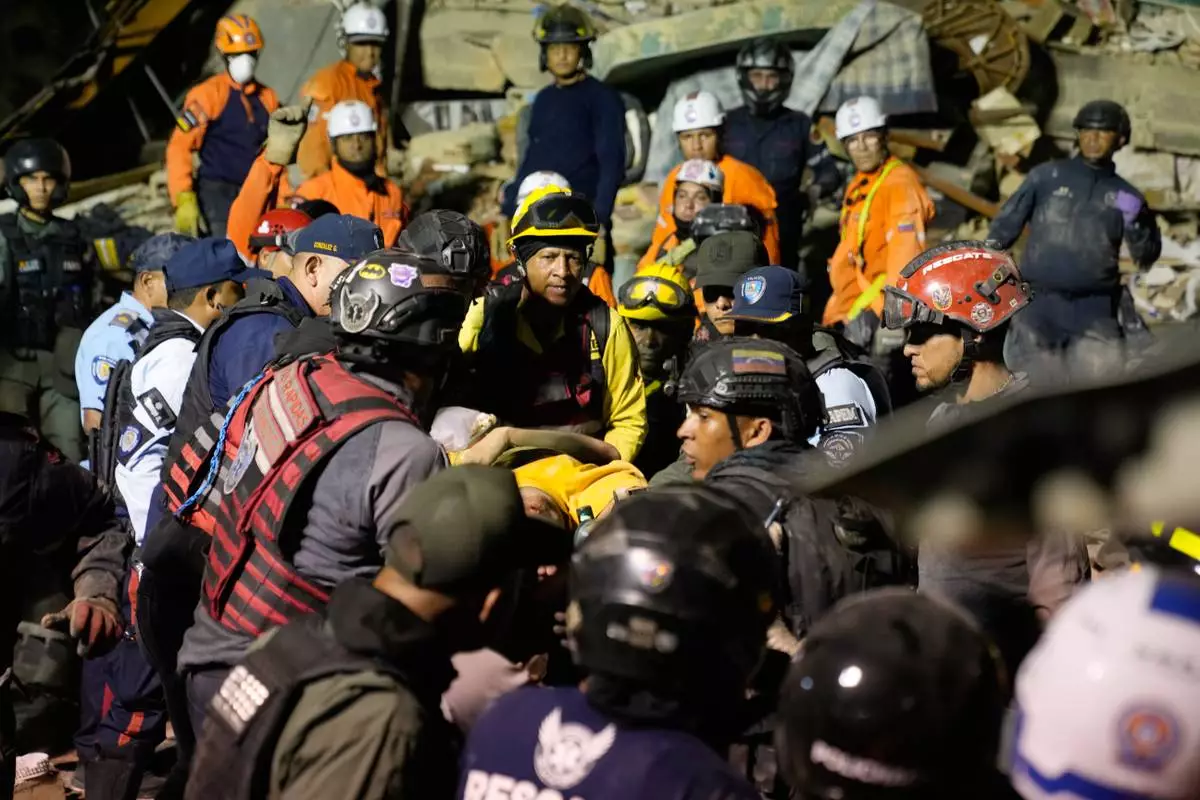
Rescue workers search through the rubble of a collapsed building after earthquake in Caracas, Venezuela, Wednesday, June 24, 2026. (AP Photo/Ariana Cubillos)
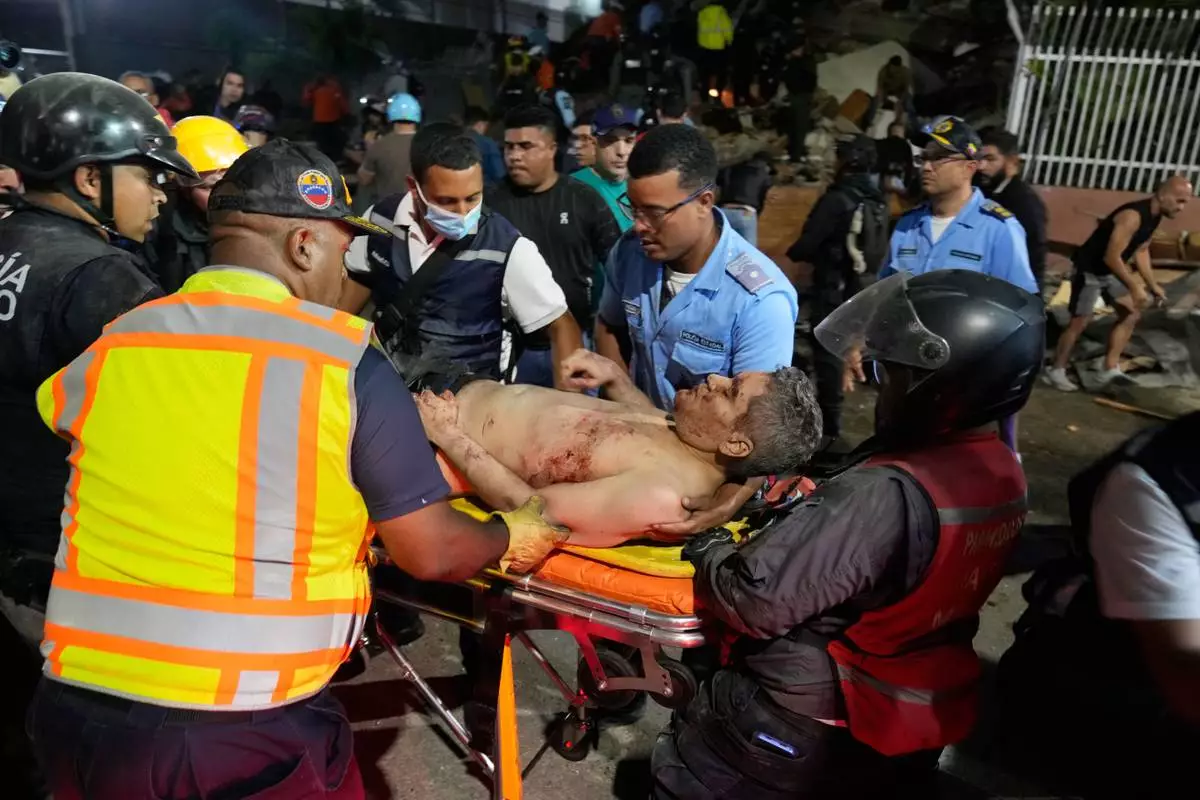
Rescue worker carry an injured man after an earthquake in Caracas, Venezuela, Wednesday, June 24, 2026. (AP Photo/Ariana Cubillos)