WASHINGTON (AP) — America has been rushing into an artificial intelligence future without much of a plan to stop what could be catastrophic job losses.
Critics warn of doomsday scenarios out of a sci-fi thriller, while backers say AI will generate so much new wealth that no one should worry too much about millions of layoffs.
A new bipartisan nonprofit hopes to ensure that America can realize the economic gains promised by AI without its workers suffering.
RAISE US is starting with more than $500 million to deploy on new forms of education and training, putting a focus on partnering with states and major employers rather than the federal government.
Founded by former Commerce Secretary Gina Raimondo, a Democrat, and former Indiana Gov. Eric Holcomb, a Republican, the group aims to pilot programs and incentives to help American workers pivot to new careers in an economy that will increasingly be automated by artificial intelligence.
“We’re talking about a certain level of unemployment that could destabilize our country and our democracy,” Raimondo said in an interview. “If you want to lead the world in AI, you have to take action to make sure our democracy doesn’t crumble.”
The nonprofit is initially partnering with officials in Arkansas, Connecticut, Maryland and Utah, along with several of America's largest companies and charitable organizations. The group intends to develop policies that connect schools more closely to employers, so that layoffs can be replaced by the potential for new jobs with higher incomes. They also are exploring changes to corporate taxes and other incentives with the goal of keeping people working.
“Good things tend to happen when you convert have-nots into haves,” Holcomb said.
Among the companies serving as anchor partners with RAISE US are Amazon, Microsoft, Anthropic, the OpenAI Foundation and Bank of America. Other employers involved in the project include UPS, General Motors, Eli Lilly, Mastercard, chipmaker AMD, Cisco and IBM.
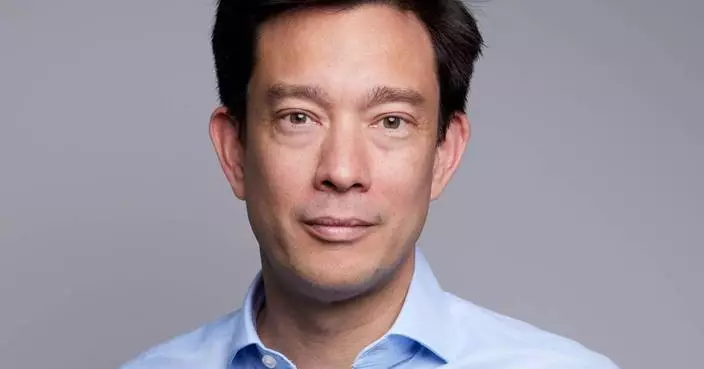
Raimondo, the former Democratic governor of Rhode Island who played a formative role in setting AI policy as the Biden administration’s commerce secretary, will be the nonprofit’s CEO.
The advisory board includes former Republican House Speaker Paul Ryan, billionaire investment manager Stephen Schwarzman, AFL-CIO President Liz Shuler and the economists David Autor, Erik Brynjolfsson and Raj Chetty.
An April analysis by the Boston Consulting Group estimated that roughly half of U.S. jobs will be reshaped by AI over the next few years. The analysis said that as many as 25 million jobs could be eliminated in the U.S. over the next five years. Goldman Sachs, in March, separately released an estimate that a quarter of U.S. work hours could be automated by AI.
More than just a glorified search engine or a generator of video clips and novelty images, AI could fill roads with driverless trucks, create factories staffed by robots and supplant office workers, lawyers and doctors.
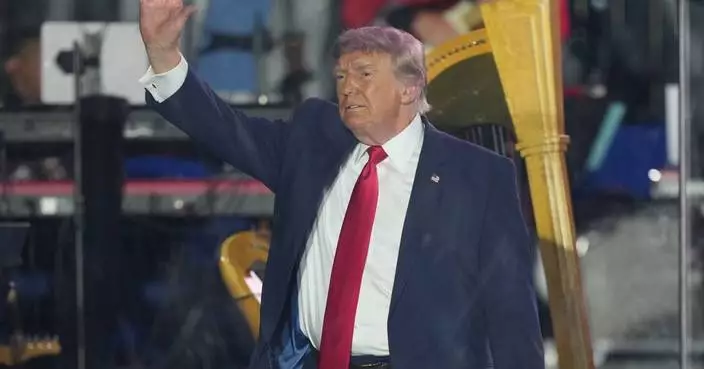
President Donald Trump has expressed little anxiety about the possibility of AI displacing human workers.
Asked on Tuesday ahead of touring a Mack Trucks factory in Pennsylvania if AI could cause truckers to lose their jobs, Trump told a reporter, “Right now, they’re not.”
The president has been banking on the buildout of AI data centers and power plants to drive hiring and overall economic growth. While AI-related investments have helped the economy, manufacturing has shed 68,000 jobs and the trucking transportation sector has cut 28,300 jobs since the start of Trump’s second term, according to the Bureau of Labor Statistics.
“We have, right now, so many jobs that are going to be available and the biggest problem we have is getting the people,” Trump said. “So we’re really doing spectacular.”
AI experts have warned of gaps between the transformations that AI could create and a 20th century social safety net of unemployment insurance and four-year college that seems ill-prepared for the scope, scale and speed of the change.
“AI is now disrupting multiple sectors simultaneously, faster than any institution can respond,” said Vivienne Ming, a neuroscientist who has written the book, “Robot-Proof: When Machines Have all the Answers, Build Better People.”
Ming said that she agrees with an argument by economists that the wealth generated by AI could create demand for more workers that could offset any job losses. But she said the skills that matter in an AI economy go beyond professions such as plumbing or construction and involve curiosity and intellectual flexibility.
“Neither our education system nor our labor policies are building the foundational human capital that AI-era work actually requires,” she said.
Raimondo said the new nonprofit wants to use states as a vehicle for testing ideas that Congress can later embrace as policies, paving the way for the possibility of more profound changes to both the tax code and the educational system.
“I don’t have a lot of hope for bold action by Congress in the next few years on this issue, and I don’t think we can wait a few years,” she said. “I also think there are many examples in history that when the federal government does take action, they will look around at what has been working in states. I feel pretty confident that they will look at the work that we’ve done.”
FILE - The OpenAI logo is displayed on a cellphone with an image on a computer monitor generated by ChatGPT's Dall-E text-to-image model, Dec. 8, 2023, in Boston. (AP Photo/Michael Dwyer, File)