The Iraqi Oil Ministry on Thursday refuted media reports that the country is considering leaving the Organization of the Petroleum Exporting Countries (OPEC).
Neither the Iraqi prime minister nor the government has raised the issue of withdrawal, the ministry said in a statement, adding that Iraq has consistently emphasized the importance of reassessing production quotas to align with the sustainable production capacities of member states, in accordance with the agreement approved by all relevant countries and the understandings regarding Iraq's security and economic situation.
OPEC and its allied nations have responded to this approach by launching a process to reassess the maximum sustainable production capacity of member countries, it said.
The statement noted that OPEC and its allies have already begun gradually restoring reduced production volumes, and the full resumption of all voluntary cuts is scheduled to be completed within the next few months, which will contribute to strengthening Iraq's production quota.
Any demands regarding production quotas or capacity levels will be addressed through the established technical and consensus-based mechanisms within the framework of OPEC and its allies, according to the ministry.
Earlier on Thursday, news reports citing Iraqi sources said that if Iraq's production quota does not increase, it may withdraw from OPEC.
Iraq's economy relies heavily on crude oil exports, which account for about 90 percent of the country's revenues. Iraq's oil exports dropped sharply to 9.88 million barrels in April due to regional conflict, down from around 99.8 million barrels in February.
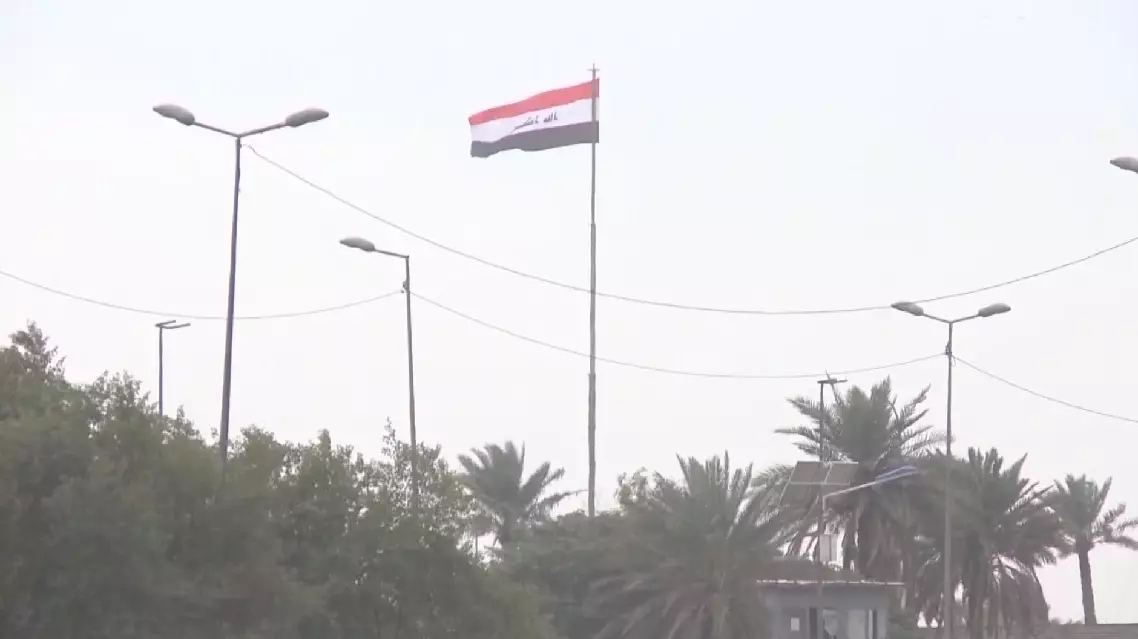
Iraq denies plans to leave OPEC, emphasizes production quota reevaluation
Global economic measurement systems should be redesigned to capture the human and natural capital that sustains all economic activity rather than narrow financial returns, said Andre Hoffmann, co-chair of the Board of Trustees of the World Economic Forum (WEF), on Thursday.
Speaking on the sidelines of WEF's 17th Annual Meeting of the New Champions, or the Summer Davos, in the northeastern Chinese city of Dalian, Hoffmann said that traditional financial metrics are leading governments, investors and business leaders to make decisions that optimize for short-term gains at a long-term cost.
"One thing we fail to do in that process is to understand the consequences of that particular process. And the consequence, that process can be measured on three big capitals that we use to produce value: the social capital, us; the human capital, you and me; and the natural capital, nature. And if we really had a system which would give us a good measurement of what the impact that we're having on these three systems, and even more importantly, the interdependency between the three systems, we would be able to create a more stable value, something that could produce capital of long-term value," he said.
Hoffmann also challenged the conventional understanding of infrastructure. While policymakers typically focus on physical assets, such as roads and ports, he argued that rivers, forests and biodiversity are equally foundational to economic activity.
"The World Economic Forum published four years ago a very important statistic which has been used by a large number of people. The top results of one of our research, where we talked about more than half of the world GDP being dependent a little or a lot on nature. So, 57 percent I think was the number. I disagree with that number. I think all of it depends on it. You know, we, humanity, would not exist without nature. We have an economy based on exploitation rather than on husbanding or regenerating. And so, I think in the long run, if we continue to destroy nature, we will be affected as individuals as well," said the WEF co-chair.
Asked about China's 15th Five-Year Plan (2026-2030), which prioritizes large-scale investments in offshore wind, geothermal, nuclear and solar energy, Hoffmann said there are lessons for the global community, even if China's model may not be easily replicated everywhere.
"If you have some funds to invest, do you go into a setup where you have capital expenditure already done, operating expenditure rather low in order to get your energy? I'm talking about renewable here. Or do you go into a country where the OpEx (operating expense) has been done as well? So you have the choice between the long-term low cost of energy or the short-term increase in energy every year. So, the equipment of this of the Chinese government of so much renewable energy, I think extremely astute because that is lowering the cost of the future, and a lot of companies would favor that," he said.
Taking place from June 23 to 25, the Summer Davos this year brought together over 1,700 participants from more than 90 countries and regions to discuss ways to scale innovation into better jobs, stronger economies and new growth opportunities.
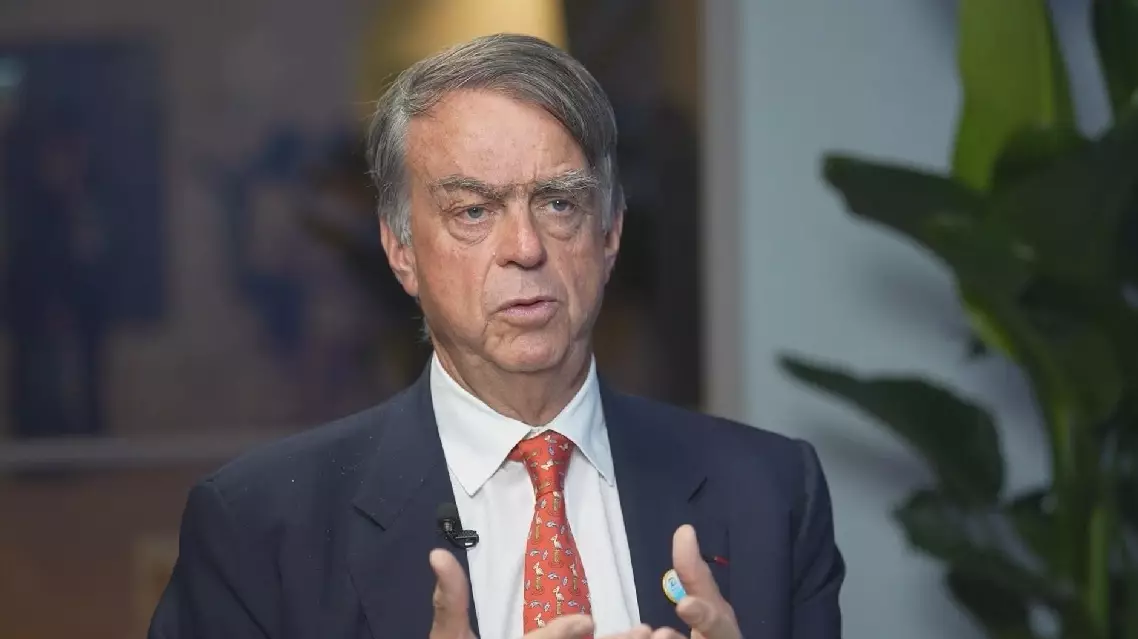
WEF co-chair calls for redefining economic metrics