MINNEAPOLIS (AP) — Tires squeak on the runway every three to four minutes, announcing arrivals from Phoenix, Omaha, Orlando, other points across the country.
The procession of Cessnas, Beechcraft, Hawkers, even a jumbo-sized Boeing 777, pulls up to two Minneapolis-St. Paul airports, whirring to a halt as anticipation inside the cabins builds. Doors open to heroes' welcomes of cheers and high-fives, bringing big smiles to the faces of the passengers.
This is the Special Olympics Airlift, a parade of planes like no other.
"Traveling together makes us feel connected, supported and able to compete,” Team Arizona cheerleading athlete Brianna Sanchez said. “This experience is about more than competition. It's about growth, leadership and showing what we can achieve.”
The Special Olympics have been a bastion of empowerment since Eunice Kennedy Shriver laid the groundwork for the first Games in 1968, allowing people with intellectual disabilities to be recognized for the gifts they have, find themselves being included instead of excluded.
The Special Olympics Airlift has been the driving — flying? — force for getting athletes to and from the Special Olympics for nearly 40 years.
Made up entirely of volunteer pilots, aircraft and crew, the Special Olympics Airlift has transported more than 10,000 athletes to the Special Olympics USA Games.
The airlift to this year’s Games, which wrap up Friday in Minneapolis, featured 130 flights from 25 cities carrying more than 800 athletes and covering nearly 300,000 round-trip nautical miles. Textron Aviation organizes the airlift and had 200 volunteers on the ground last Friday to handle everything from baggage to refueling to manning the tugs to move the aircraft around.
“It’s a massive effort, as you can imagine,” Textron President and CEO Ron Draper said. “But it’s very rewarding to do something for other people and, in this case, you see the immediate feedback and appreciation from those athletes and those teams. That’s why we do it.”
The airlift is coordinated with the FAA, which redirects air traffic in the central U.S. most of the day and has a team on site. The aircraft, manned by Textron's customers, receive special “Dove” call signs and receive priority handling within the US National Airspace System.
Half of St. Paul Downtown Airport shut down to accommodate the airlift, with volunteers and Special Olympics officials on the ground providing rousing welcomes for each group of athletes.
“For many, it's the first time they get to ride on an airplane,” said Prent Corporation's Chris Clawson, pilot of Dove 1, the first to land in Minneapolis-St. Paul. “Transportation is not something they need to stress about — they can actually enjoy it.”
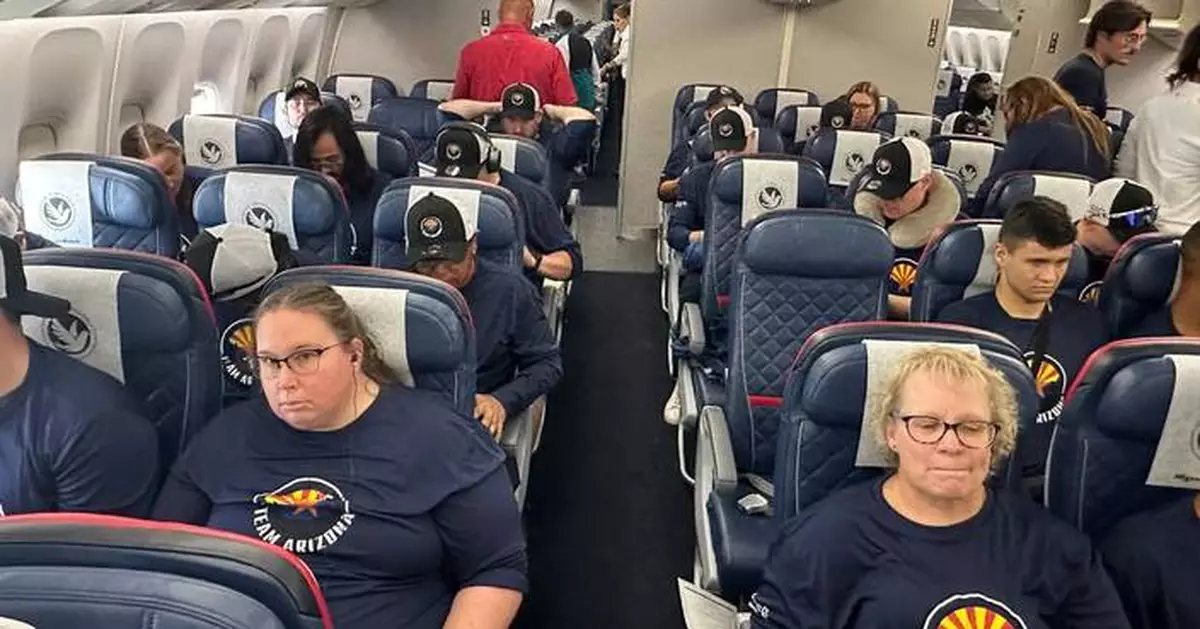
Members of the Arizona and New Mexico delegations — roughly 170 people — got a special treat, flying on the Arizona Cardinals’ team plane out of Phoenix Sky Harbor Airport. They not only sat in the same seats NFL players use, it was a first-class experience that included gift bags and meal service — build-your-own burger, Southwest chicken burrito or Mediterranean salad, a fresh chocolate chip cookie for dessert.
The flight, operated by Cardinals team affiliate Gridiron Air, landed at Minneapolis-Saint Paul International Airport to cheers and a chant of “USA!” from the athletes inside. The plane was doused with a double water cannon salute before pulling into the gate, where a boisterous crowd of several dozen people greeted the exiting athletes.
“I don't really watch movies on planes very often, but that was something we could do up there and they actually served food,” Team Arizona powerlifting athlete Zakarias Hollingshead said. “That's not something I've ever gotten before.”
The Cardinals’ Boeing 777-200ER team plane was the first widebody aircraft to participate in the airlift's 40 years.
Cardinals owner Michael Bidwill has been involved with Special Olympics for several years, even personally flying athletes to various competitions. When Textron approached him about donating use of the team's plane, Bidwill jumped at the opportunity.
“We’re proud to put these athletes on the same airplane that Trey McBride is on, that Budda Baker is riding on, that all of our players and greats over the last several years have ridden on, so they can ride in style to Minneapolis to compete in the games," Bidwill said. "We hope it was a great ride. We’re happy to support it.”
The Special Olympics USA Games are a once-in-a-lifetime opportunity for many of the athletes.
So is the ride there.
AP Sports Writer David Brandt contributed to this story.
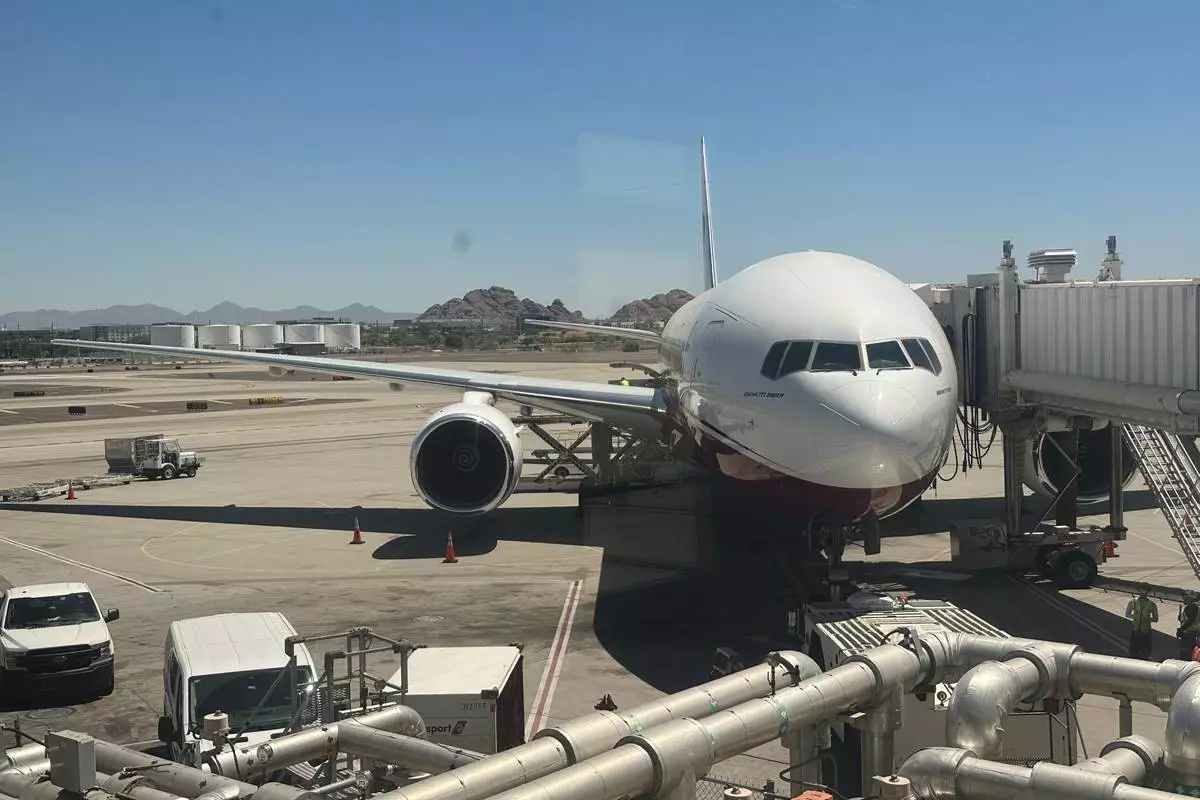
The Arizona Cardinals' team plane waits at a gate at Phoenix Sky Harbor International Airport in Phoenix to take teams from Arizona and New Mexico to Minneapolis for the 2026 Special Olympics USA Games Friday, June 19, 2026. (AP Photos/John Marshall)
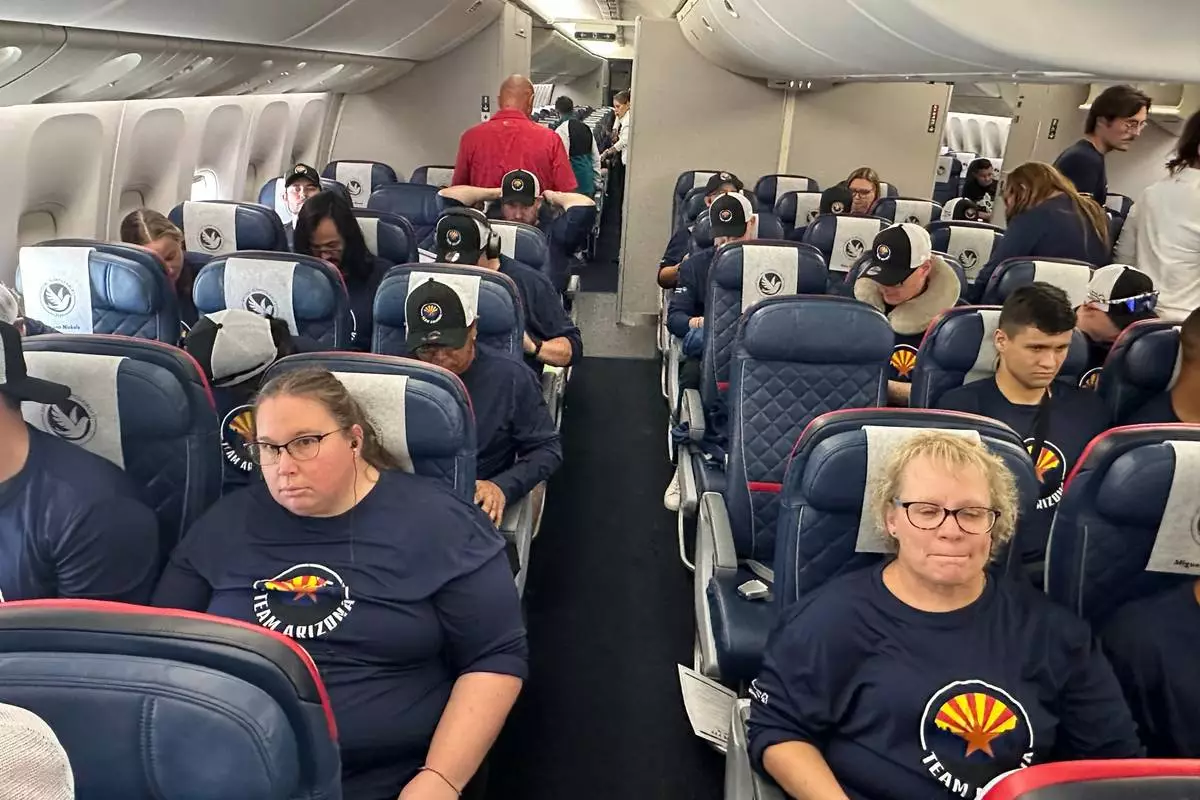
Members of teams from Arizona and New Mexico sit in their seats after boarding their flight to the 2026 Special Olympics USA Games Friday, June 19, 2026. (AP Photo/John Marshall)
Major League Baseball proposed limiting most free agent contracts to five years and 15% of a team's salary cap and to eliminate deferred compensation, fleshing out details of a salary cap plan likely to spark a confrontation with the players' association.
MLB's plan would eliminate deals such as Juan Soto's $765 million, 15-year contract with the New York Mets. The league said just seven players this year exceed the proposed maximum and 98% of free agent contracts would not have been impacted.
"There’s no question that we’re very far apart,” union head Bruce Meyer said during an online news conference.
During a bargaining session Thursday at the union's office, MLB said it would accept the union's proposal granting free agency a year early for players who have reached age 30 if the union accepted the league's salary cap system. MLB also proposed boosting the minimum salary from $780,000 to $1 million for those with two years of big league service.
MLB also proposed increasing the pre-arbitration bonus pool from $50 million to $65 million next year and $75 million by 2032, the sixth season of MLB's proposed seven-year deal.
Meyer said “the debate got a little more vigorous today.”
“The league has done us a favor because their proposals are in fact so obviously and extremely bad for players at all levels that it’s actually been a benefit for our unity,” Meyer said. “Anybody’s who’s banking on Major League Baseball players cracking, it’s never happened. It’s not going to happen. That’s why we’re the only ones who don’t have a salary cap.”
MLB also said it would agree to eliminate the qualifying offer for free agents that since its inception in 2012 has restricted the market for some players.
Bargaining started May 13 for a contract to replace the five-year deal that expires Dec. 1, and owners proposed a salary cap for the first time since the union fought off the system during a 7 1/2-month strike in 1994-95. MLB is expected to impose a lockout in December, halting free agent signings and trades.
After the prior agreement expired in December 2021, intensive bargaining did not start until late February as the threat approached of losing regular-season games — along with revenue and salary. The sides reached an agreement on March 10, the 99th day of the lockout, preserving the 162-game schedule.
In the league's cornerstone proposal, made last month, team spending would be capped next year at $245.3 million, using figures for luxury tax payrolls that include $20.1 million for benefits and the pre-arbitration bonus pool. It also would establish a payroll floor of $171.2 million, forcing several teams to spend more. The two-time World Series champion Los Angeles Dodgers, baseball’s biggest spenders, had a $415.2 million payroll on opening day this year — around $170 million over the proposed cap.
“The biggest issue baseball fans want solved to strengthen the game is fixing the payroll disparity that leaves too many fans without hope of their team competing for a World Series title," MLB spokesman Glen Caplin said in a statement. “Every other major U.S. sport has tackled this problem, and every year more small market teams in those leagues have a chance to win. The salary cap and floor proposal levels the playing field.”
Meyer took issue with that.
“It’s appalling that the stewards of the game, the people whose job it is to grow the game primarily and promote the game have for whatever period of time now in the last couple of years been saying nothing but the game’s broken,” he said.
As part of the plan, MLB would establish a “cornerstone player” similar to the NBA's Bird rule, which would allow a team to re-sign a player at 16% of the cap. A free agent switching clubs would be limited to a $36.8 million salary next year and a re-signing player to $39.2 million.
Salaries for free agents in additional seasons of a multiyear contract would be limited to 5% increases, as would salaries for younger players in multiyear deals that cover potential free-agent seasons.
Contracts would be capped by service time: at $500 million and 12 years for those yet to make major league debuts, $461 million and 11 seasons for those with 0-1 years of service, $421 million and 10 years for 1-2, $382 million and nine seasons for 2-3, $343 million and eight years for 3-4, $304 million and seven years for 4-5, and $265 million and six years for free-agent eligible players.
Banning deferred compensation would eliminate a business practice used most prominently by the Dodgers, who owe just under $1.1 billion to 10 players from 2028-47. In addition, MLB would restrict bonus provisions in player contracts and mandate a standard award bonus package.
MLB said it would accept the union's proposal to drop free-agent eligibility to five seasons of service from six for those turning 30 by the Nov. 1 of the offseason. MLB said 354 players on big league rosters as of Thursday would reach free agency a year earlier. MLB would start the change in the 2027-28 offseason.
As part of the minimum salary proposal, MLB said players with less than two years of service would have a $900,000 minimum and if earning a full year of service would get an additional $100,000 from the pre-arbitration bonus pool. Minor league minimums for players with major league contracts would increase from $63,600 to $73,400 for initial big league deals and $127,100 to $146,700 for additional contracts.
Players made proposals on allowances and gambling.
AP MLB: https://apnews.com/hub/mlb
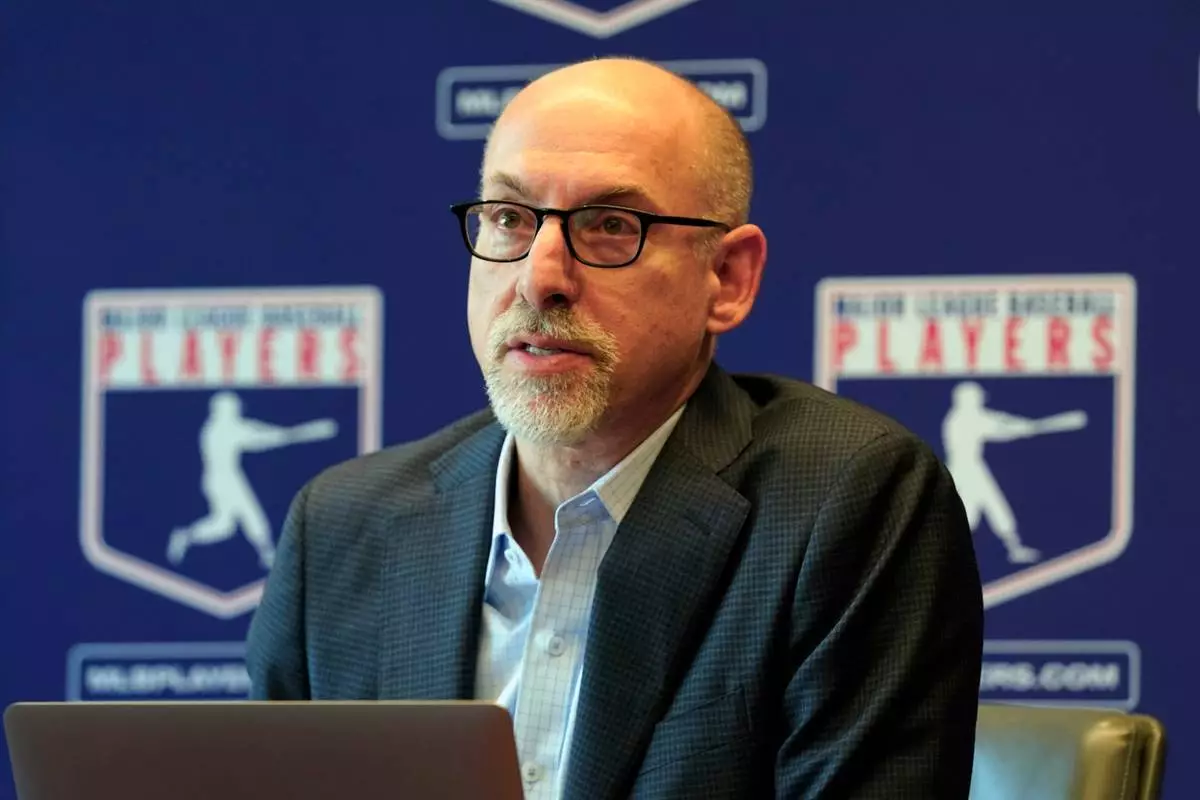
FILE - Attorney Bruce Meyer, the current interim executive director of the Major League Baseball Players Association, speaks at a news conference in New York on March 11, 2022. (AP Photo/Richard Drew, File)
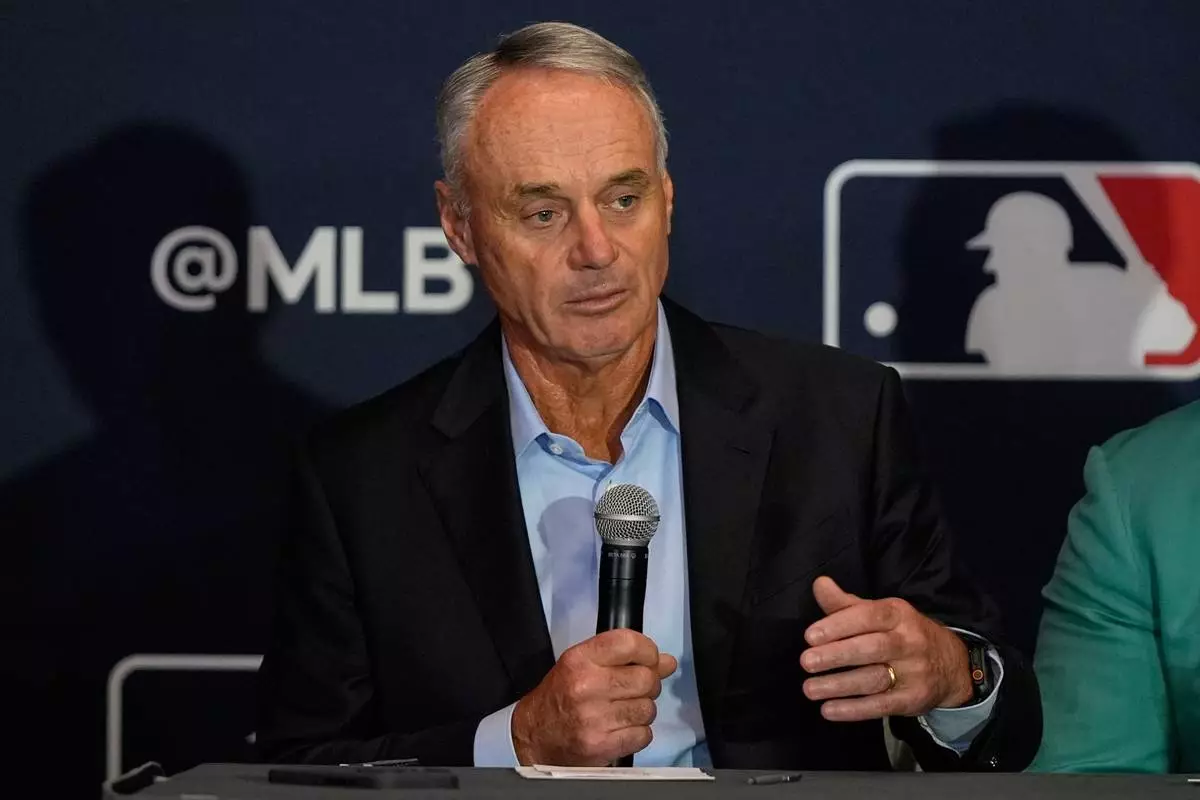
FILE - Commissioner of Major League Baseball Rob Manfred answers questions during a news conference at the MLB winter meetings, Dec. 8, 2025, in Orlando, Fla. (AP Photo/John Raoux, file)