The Utah judge in the murder case over Charlie Kirk’s killing held prosecutors in contempt of court on Friday over comments they made to media organizations about defendant Tyler Robinson’s guilt.
Judge Tony Graf said the comments violated his restrictions on what the two sides can say about the case outside of court.
But Graf denied a defense request to take the death penalty off the table as a sanction for the violation. He said the problem could instead be resolved through the screening and questioning process for potential jurors, which is intended to weed out people who could be biased about the case.
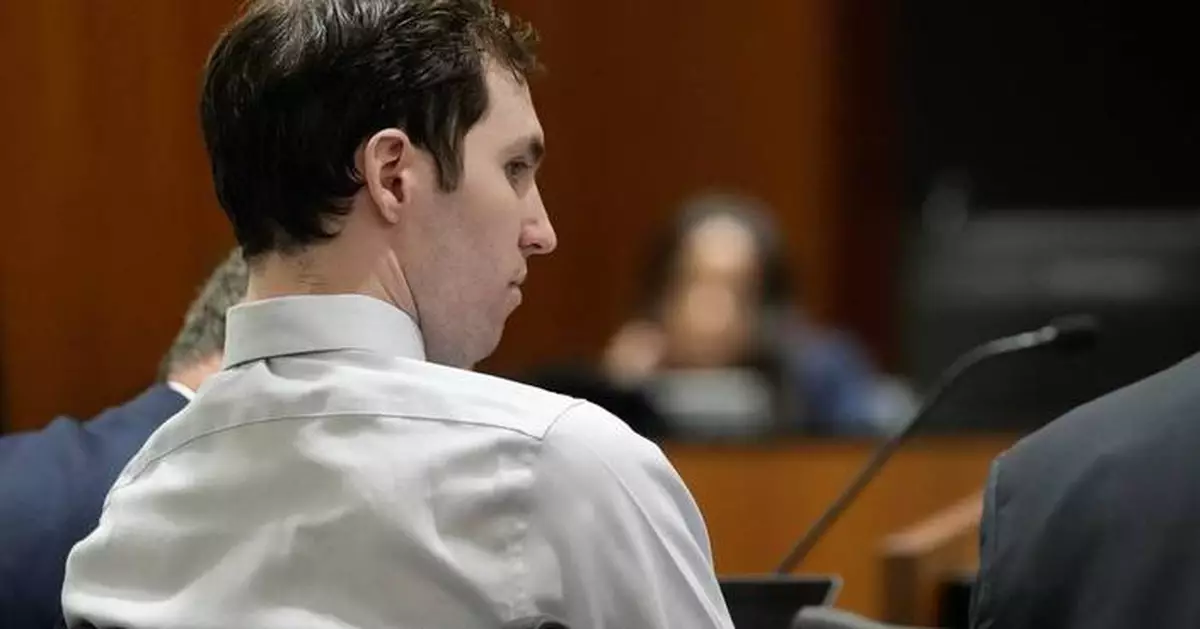
Robinson has not yet entered a plea. The 23-year-old from southwestern Utah is charged with aggravated murder in the Sept. 10 assassination of Kirk, an ally of President Donald Trump who was shot in the neck while addressing a crowd of thousands at Utah Valley University.
Defense attorneys had accused Deputy Utah County Attorney Christopher Ballard of trying to influence potential jurors by going on a “media tour” to talk about ballistics evidence in the case. Ballard also said prosecutors had enough evidence to show Robinson murdered Kirk.
Legal experts had said blocking the death penalty would have been an extreme remedy. Graf said it would have been “grossly disproportionate" to the misconduct.
Ballard argued that he had a right to speak to the press to correct misinformation about a preliminary finding by ballistics experts.
Those experts’ initial tests did not match the bullet fragment with a gun that investigators believe was used to kill Kirk. That spurred stories by some publications raising questions about the prosecution’s case: A March 30 headline in the U.K.-based Daily Mail reported that the bullet that killed Kirk “did NOT match” the rifle investigators say was used to kill Kirk.
Ballard said he was trying to “set the record straight,” when he told media organizations the ballistics tests were inconclusive to determine whether the bullet was fired from the suspected murder weapon.
Conjecture over that evidence fueled unsubstantiated conspiracy theories that there might have been a second shooter, or that Kirk's death was staged. Attorneys on both sides have raised concerns that the misinformation and extensive media attention could taint the potential jury pool.
Graf said the comments about the bullet did not violate the court's rules, but that Ballard went too far when he went on to say that prosecutors had "ample evidence to demonstrate beyond a reasonable doubt that Tyler Robinson committed this murder.”
The judge said those additional public statements possessed a “substantial likelihood” of prejudicing the case.
The judge added that the comments were not made out of any malicious desire by prosecutors to taint the jury pool, and that his ruling had nothing to do with the charges or Robinson's guilt.
“Its sole purpose is enforcement of a narrowly tailored publicity order governing attorney conduct,” Graf said.
Authorities have said DNA consistent with Robinson’s was found on the trigger of the rifle, the fired cartridge casing, two unfired cartridges and a towel used to wrap the rifle.
The Associated Press left telephone and email messages seeking comment from prosecutors and Robinson's lawyers.
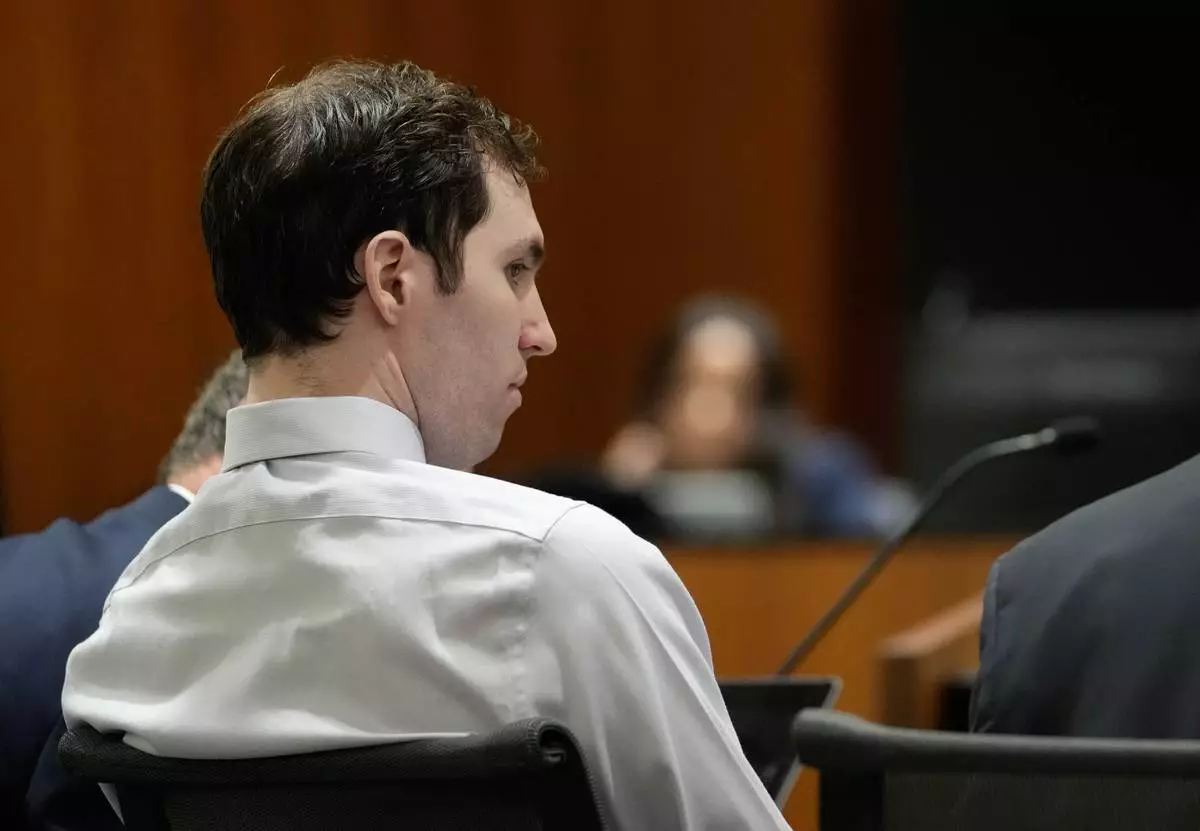
Tyler Robinson, accused in the fatal shooting of Charlie Kirk, appears during a hearing in 4th District Court in Provo, Utah, on Friday, June 12, 2026. (Francisco Kjolseth /The Salt Lake Tribune via AP, Pool)
A rare double earthquake ravaged Venezuela on Wednesday, killing at least 589 people and leaving thousands injured. Many more are feared dead.
Thousands of people have been reported missing. Some of the heaviest damage and casualties were in La Guaira, a coastal region north of the capital, Caracas.
Here’s what to know about the earthquakes and the search for survivors:
The powerful 7.2- and 7.5-magnitude earthquakes struck 39 seconds apart along the San Sebastian fault on Venezuela’s northern coast, according to the U.S. Geological Survey.
They were among the strongest in the South American nation in more than a century.
The first earthquake, a 7.2-magnitude foreshock, hit west of Morón on the Caribbean coast, about 170 kilometers (105 miles) west of Caracas, with a depth of 22 kilometers (about 14 miles).
The second, a 7.5-magnitude mainshock, was centered 16 kilometers (10 miles) southwest of Morón, with a depth of 10 kilometers (about 6 miles).
The back-to-back earthquakes — known as a doublet because of their similarities in magnitude, time and proximity — resulted from shallow strike-slip faulting near the complex plate boundary between the Caribbean and South American tectonic plates, the U.S. Geological Survey said.
The International Federation of Red Cross and Red Crescent Societies, IFRC, has launched an Emergency Appeal for 50 million Swiss francs ($61 million) to assist its operations in Venezuela. The first 17 metric tons of humanitarian supplies left the IFRC’s regional humanitarian hub in Panama for Venezuela on Friday. The shipment includes kitchen sets, hygiene kits, mosquito nets and other essential items.
The Red Cross is also providing mental health and psychosocial support, safe water and sanitation services, the distribution of essential relief items and cash assistance, and family reunification and protection services. National Red Cross Societies in ten countries (Ecuador, Colombia, Bolivia, Guatemala, Mexico, Costa Rica, Honduras, Uruguay, Paraguay and Argentina) have activated family links services to help locate missing relatives or obtain information about them.
The United States is sending $150 million in aid moving through the United Nations and nonprofit partners on the ground. It is also deploying two urban search-and-rescue teams with dozens of people, search dogs and search equipment. Military airlift, logistics and lifesaving support will also be sent.
The European Union said on Friday that Czechia, Spain, Italy, France, Luxembourg, Germany, Portugal and the Netherlands are sending 520 responders to support Venezuela through the bloc's civil protection mechanism. The EU also activated its Copernicus satellite service to provide Venezuelans with satellite imagery and other geospatial data.
A spokesperson of China's Foreign Ministry said Friday that the Chinese government and the Red Cross Society of China will provide emergency humanitarian aid to Venezuela. Guo Jiakun added that the government will provide further support to Venezuela whenever requested.
Brazilian President Luiz Inácio Lula da Silva said Friday that he was sending his defense minister to Venezuela to assist needs on the ground. Earlier Friday, a KC-390 plane departed from Sao Paulo's international airport with dozens of firefighters and other support personnel, chiefly telecommunications specialists. A second plane is scheduled to depart Saturday with equipment to assemble an open hospital, 100 solar-powered water purifiers, medicines and medical supplies.
Venezuelans in the U.S. are rushing to organize donation drives. More than 770,000 Venezuelans live in the U.S., with large communities in Florida, Texas and Utah.
The death toll in Venezuela is likely to climb as rescue crews comb through buildings toppled by the earthquakes.
Acting President Delcy Rodríguez said authorities have deployed rescue teams from other parts of the country to La Guaira, where dozens of buildings have collapsed.
The city, about 165 kilometers (103 miles) east of the 7.5-magnitude quake’s epicenter, is a “disaster zone,” she said.
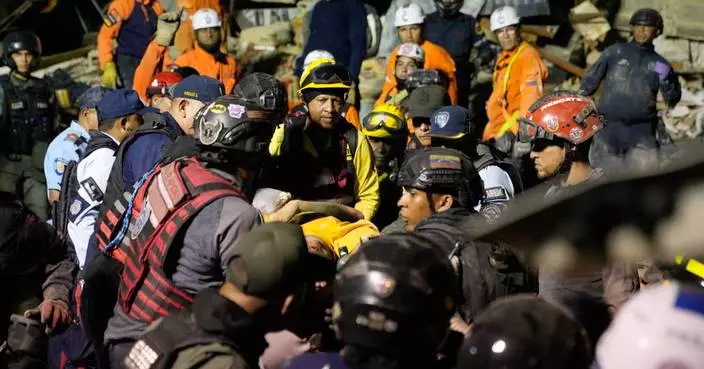
Civilians and authorities pulled survivors out of concrete rubble, some of them covered in dust and blood. Families sobbed in front of destroyed homes.
Families began posting missing-person flyers with photos of loved ones, while others shared handwritten lists of names as they searched for those still unaccounted for.
The earthquakes destroyed buildings in Caracas and led to evacuations as far away as Brazil’s Amazon, about 1,700 kilometers (1,050 miles) away.
In downtown Caracas, hundreds of people spent the night huddled in parks, parking lots and other open spaces.
Parts of the city lost power and cellphone service. Venezuela’s main airport in Caracas was damaged and closed, subway service was suspended and natural gas was shut off.
Classes will also be canceled for several days as schools are used as shelters and donation centers.
Rodríguez said the government was creating a $200 million reconstruction fund for hospitals and homes damaged by the earthquakes.
The earthquakes are yet another crisis for Rodríguez, the former vice president who took office in January after the U.S. captured former President Nicolás Maduro.
Maduro and his wife, Cilia Flores, are jailed in New York City while awaiting trial on drug trafficking charges.
Rodríguez inherited a country that has been in economic turmoil for more than a decade.
Many Venezuelans reject the legitimacy of her political movement, while some loyalists have criticized her leadership and warming relationship with the U.S.
Follow AP’s Latin America coverage at https://apnews.com/hub/latin-america
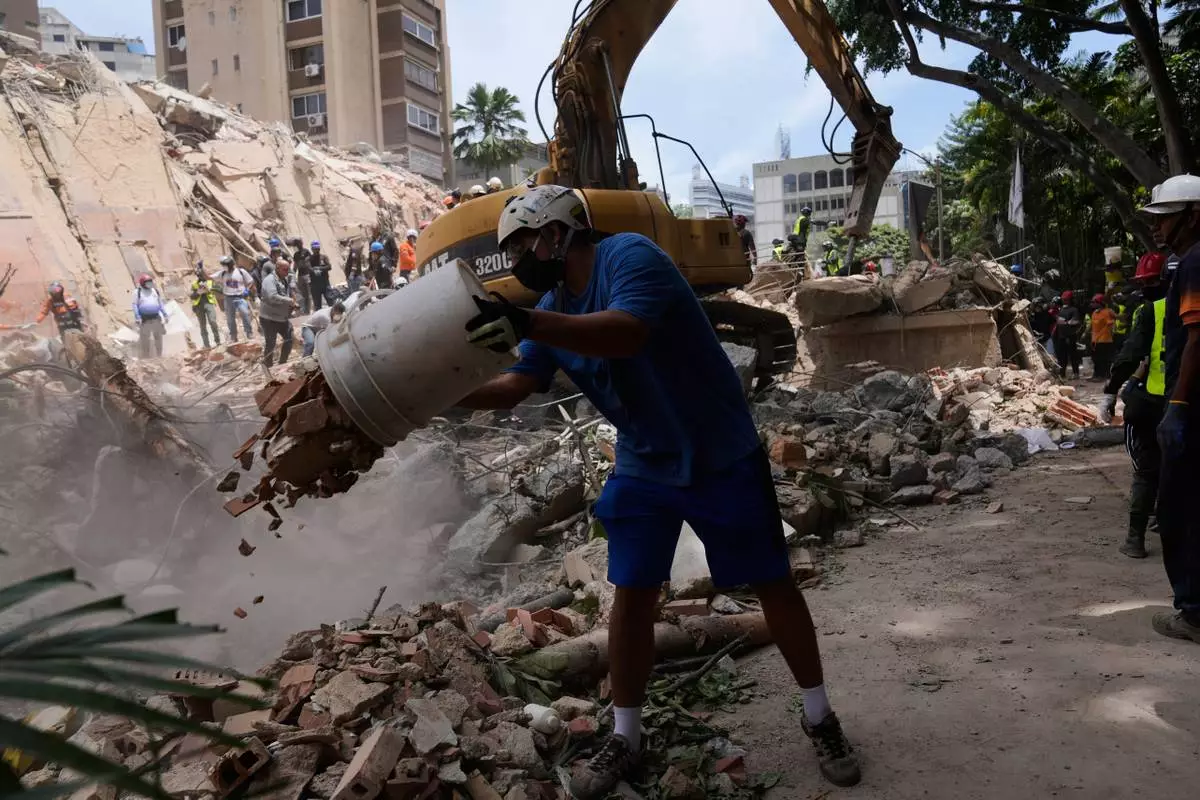
Residents help to remove rubble from a collapsed building in Caracas, Venezuela, Thursday, June 25, 2026, a day after successive powerful earthquakes struck the country. (AP Photo/Ariana Cubillos)
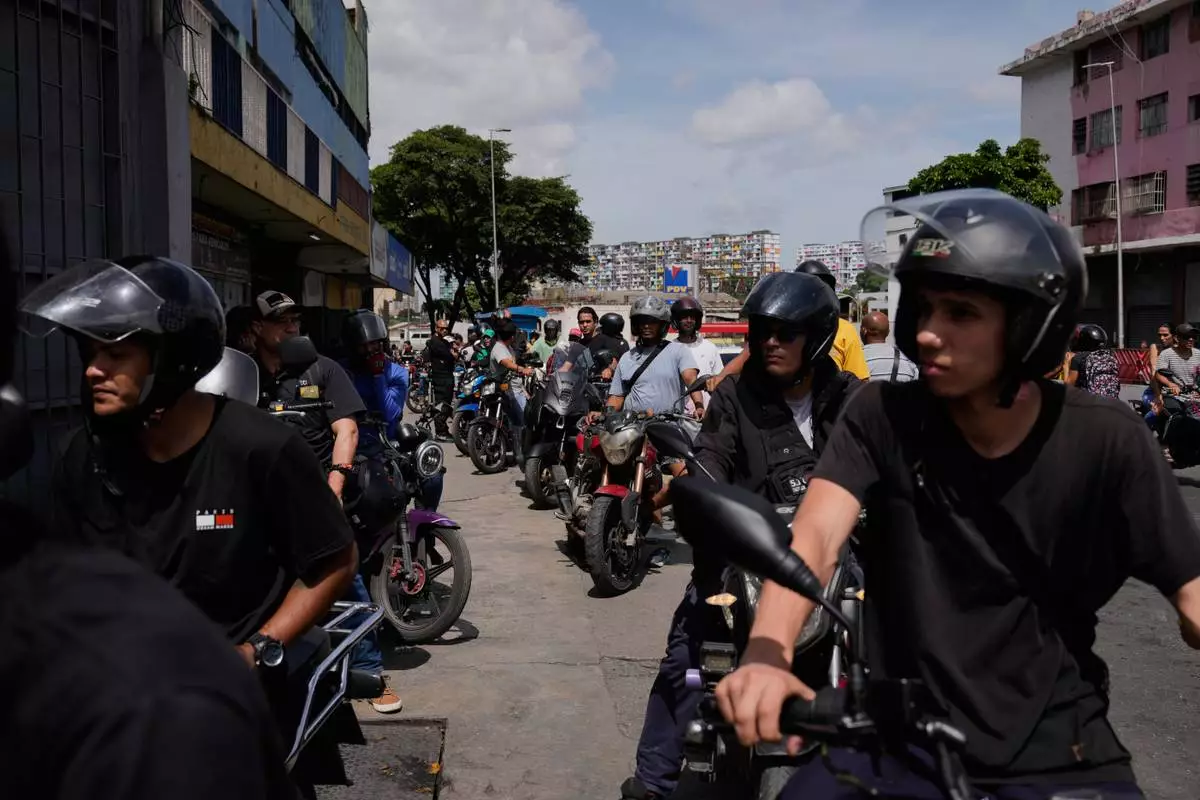
Motorcyclists wait in line to fill their tanks in Caracas, Venezuela, Thursday, June 25, 2026, a day after successive powerful earthquakes struck the country. (AP Photo/Ariana Cubillos)
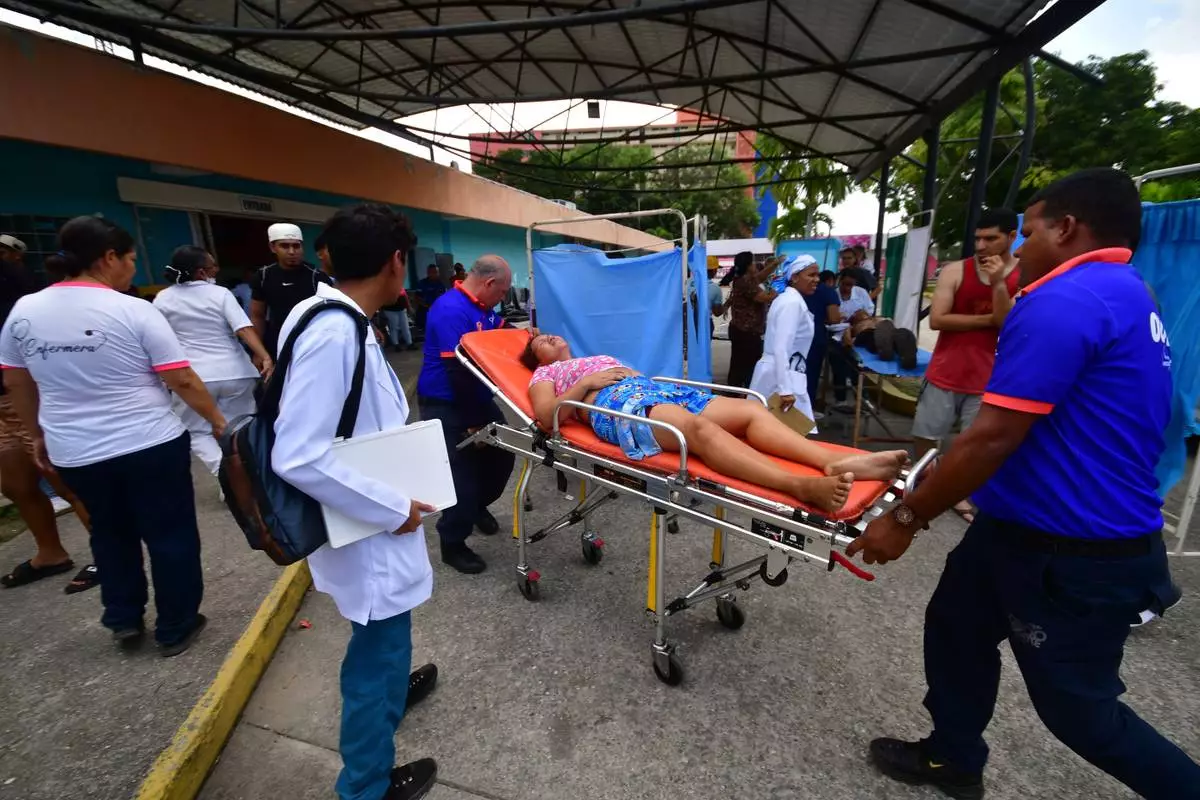
Paramedics carry an injured person at a hospital in Moron,near the epicenter of two earthquakes that struck Venezuela a day earlier, Thursday, June 25, 2026. (AP Photo/Jacinto Oliveros)
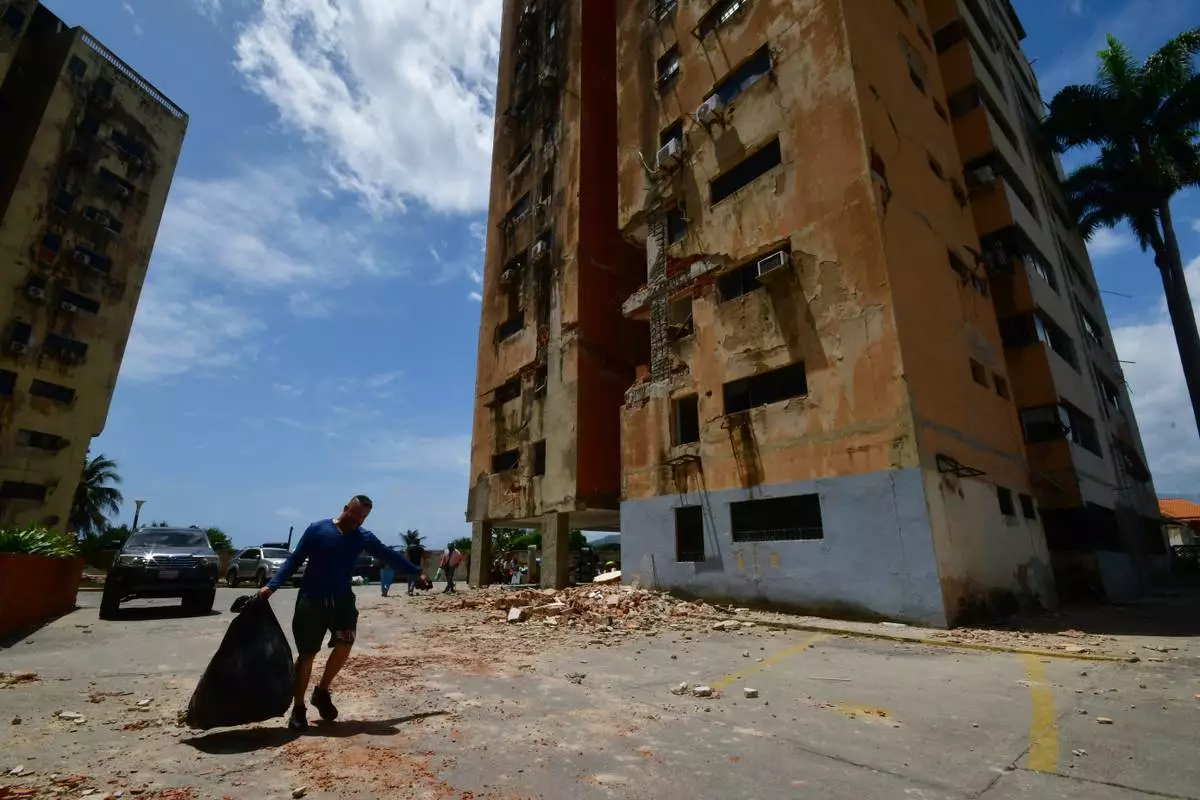
A man walks past a building damaged by earthquakes that struck Puerto Cabello, Venezuela, a day earlier, Thursday, June 25, 2026. (AP Photo/Jacinto Oliveros)
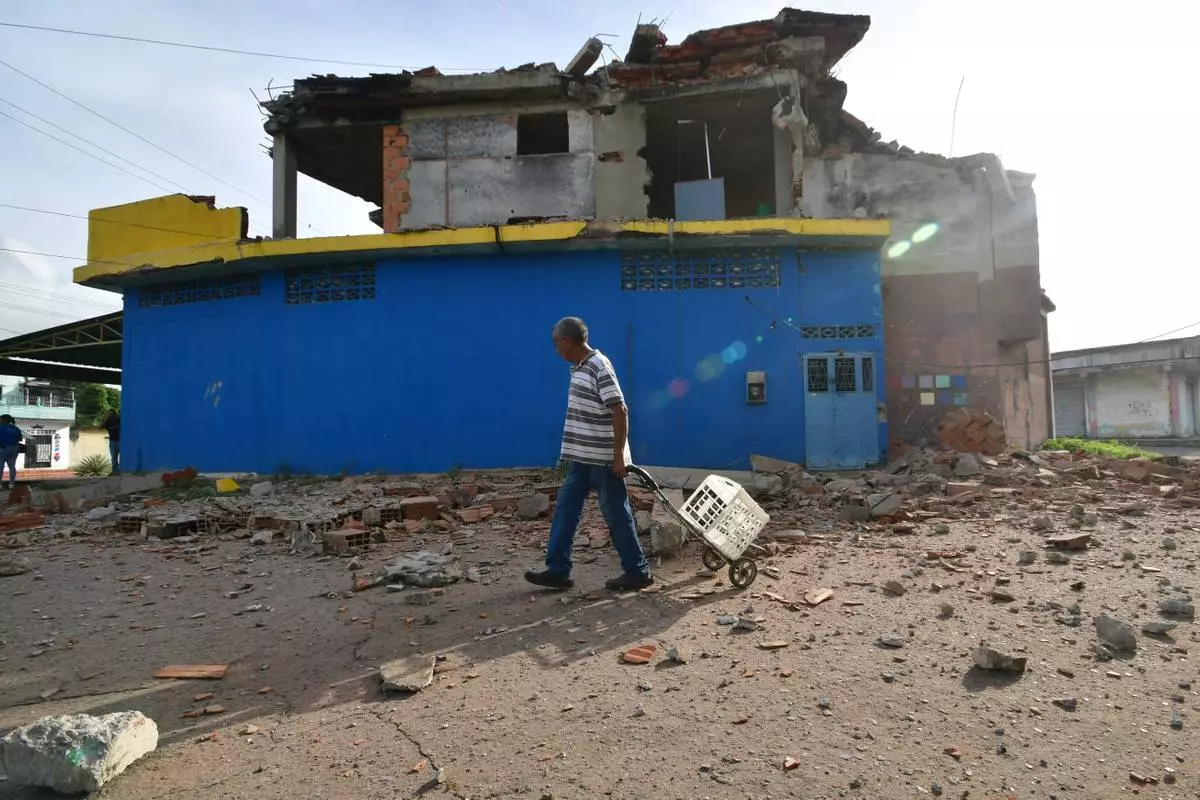
A man walks past a damaged home in Moron, near the epicenter of two earthquakes that struck Venezuela the day before, Thursday, June 25, 2026. (AP Photo/Jacinto Oliveros)