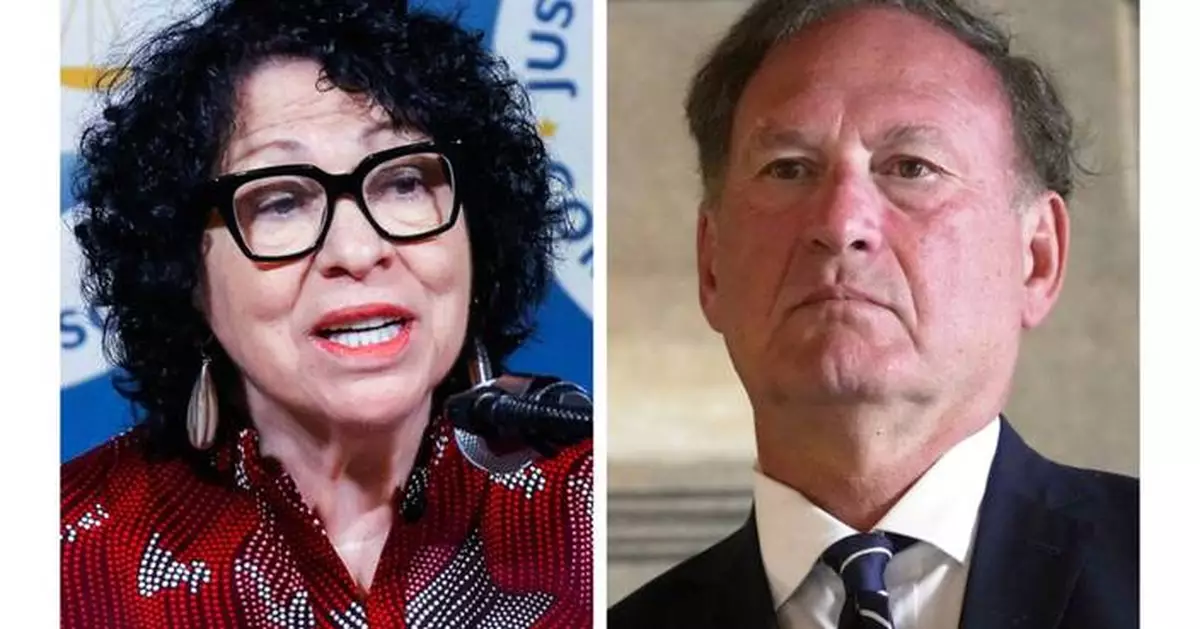
WASHINGTON (AP) — The Supreme Court is handing down major opinions at a rapid clip, but even with some of the biggest decisions yet to come there are signs of tension between the justices.
One highly unusual exchange for the restrained and traditional atmosphere came Thursday, as the members of the nation’s highest court took the bench as usual to read a short summary of their decisions. Those rulings included two major immigration wins for President Donald Trump.
After conservative Justice Samuel Alito finished his reading of the majority’s ruling limiting how people can seek asylum at the southern border, liberal Sonia Sotomayor spoke up to read from her strident dissent.
She traced the difficult journey many asylum seekers face and outlined a painful chapter in the country’s history: When the U.S. and other countries turned back a ship full of Jewish refugees attempting to flee persecution in Nazi Germany in 1939. About 250 of those passengers later died in the Holocaust.
Sotomayor said the majority’s opinion would allow the Trump administration to block people from applying for asylum at the border, which would result in more deaths. The decision “regrettably and tragically extinguishes the light of the torch of the Statue of Liberty.”
Justice Brett Kavanaugh watched her intently as she spoke, while Justice Ketanji Brown Jackson looked straight ahead.
Majority opinions are always read from the bench and dissenters can speak up as well to underscore their objections, which typically happens in few cases every term. More rulings are expected on Monday.
Sotomayor’s spoken dissent, however, appeared to be a surprise for Alito. In a very rare move, he spoke off the cuff. He sounded surprised and frustrated, saying he would have added more detail to his summary if he'd known about plans to speak.
For the conservative majority, the case was about whether border officials can delay asylum seekers’ entry into the U.S. “until they can be processed in a safe and orderly way.”
Out loud, Alito defended his opinion by noting that the policy at the center of the case had been used under both the Obama and Trump administrations. “I won’t add anything more to that,” he said.
The exchange comes during the court's busiest time of the year, as the justices prepare to release opinions next week on some of the biggest issues of the term, and Trump’s presidency so far. Those include his push to restrict birthright citizenship and expand the president’s power to fire board members at independent agencies.
Supreme Court justices have spoken publicly about their cordial working relationships and regular lunches as a group where they set aside cases to talk and share each other's company. And while there are ideological splits between the court's conservative majority and its liberal wing, they also decide many cases unanimously, including one this month about the Second Amendment rights of marijuana users.
Still, it isn’t the first time unusual tensions have surfaced this term. Sotomayor issued a rare public apology in April to another justice, Brett Kavanaugh, for what she termed “hurtful comments.” She had said during a law school talk that a colleague “probably doesn’t really know any person who works by the hour.”
In another public appearance in March, Kavanaugh and Justice Ketanji Brown Jackson sparred over the many emergency orders the court had issued allowing Trump to move ahead with key parts of his agenda.
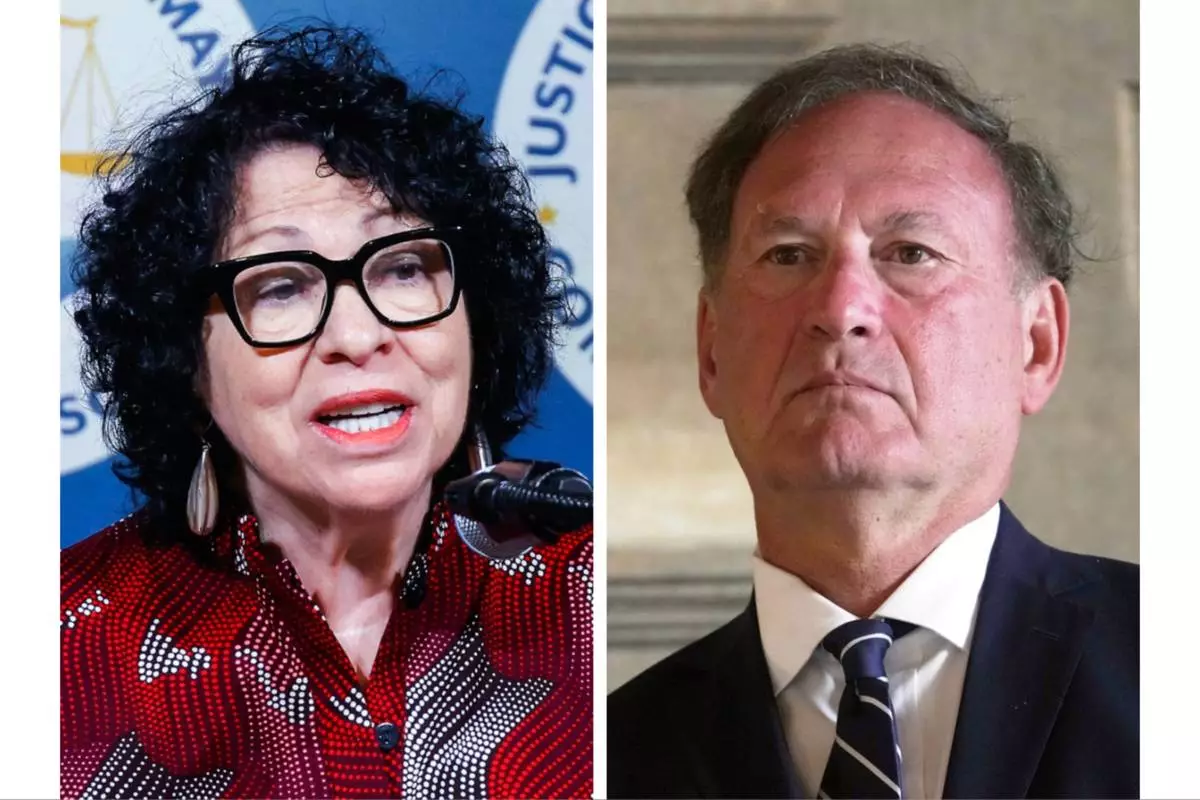
This combination photo shows Justice Sonia Sotomayor, Sept 16, 2024, in New York, left, and Justice Samuel Alito in Rome, Sept. 20, 2025. (AP Photo)
WASHINGTON (AP) — Billionaire investor Leon Black said Friday that Jeffrey Epstein deceived him during a yearslong relationship in which he paid the disgraced financier $158 million, but insisted he committed no criminal wrongdoing as he appeared before the House Oversight Committee.
Black is the 16th person to appear before the committee as part of their broader investigation into the web of wealth and influence around Epstein. Before entering the closed-door deposition, Rep. James Comer, R-Ky., the House committee chairman, told reporters he believed it might be the most “groundbreaking" yet.
“This could be a pretty significant deposition as we try to get answers,” said Comer.
Black is the co-founder and former chief executive of the private equity firm Apollo Global Management. He stepped down in 2021 amid fallout over his ties to Epstein.
Black maintained Friday that he was not aware of Epstein's “nefarious activity” until 2019 and that he paid Epstein for legitimate purposes, in part due to his “unrivaled network of relationships” with influential figures.
“I knew Jekyll. I didn’t know Hyde,” said Black.
Black is mentioned repeatedly in files that the Department of Justice has released related to the Epstein investigation. He also appears in a collection of birthday messages sent to Epstein that were released by the House committee last year, including a poem attributed to him that refers to “Blond, Red or Brunette, spread out geographically.”
A 2021 review commissioned by Apollo found that Black paid Epstein $158 million from 2012 to 2017, after Epstein pleaded guilty in 2008 to soliciting prostitution from a minor. The review said the payments were for “bona fide tax, estate planning and other related services.”
“I gave Epstein a second chance, as did many others. I wish I had not,” Black said.
Epstein was indicted in July 2019 on federal charges of sex trafficking of minors and conspiracy to commit sex trafficking of minors. The Justice Department alleged that Epstein created a vast network of girls, some as young as 14, for him to sexually abuse between 2002 and 2005. He died by suicide in a New York jail cell in 2019 while awaiting trial.
The House committee chairman, Rep. James Comer, R-Ky., said earlier this year that Epstein’s former accountant, Richard Kahn, told lawmakers in his testimony that Epstein received significant sums of money from a number of high-profile individuals, including Black.
Sen. Ron Wyden, D-Ore., this month referred findings from a nearly four-year investigation into Black to the House committee. In a statement, Wyden said, “Epstein even appears to have acted as a middleman for Black to pay women on Black’s behalf.”
Black broadly denied the allegations in his opening statement, calling them “rank speculation.”
“I have never abused a woman. I have never been with an underage woman. I have never engaged in sex trafficking. I have never paid Epstein for access to women. I was never blackmailed by Epstein.”
Other figures to have appeared for the investigation include former Democratic President Bill Clinton, former Secretary of State Hillary Clinton, Commerce Secretary Howard Lutnick, former Attorney General Pam Bondi and Microsoft co-founder Bill Gates.
Gates testified earlier this month and said he had made a “grave error in judgment” by meeting with Epstein.
Black said Epstein's network included SpaceX founder Elon Musk, Google co-founder Sergey Brin and Peter Thiel, the co-founder of PayPal and Palantir.
Democrats on the House committee have pushed Republicans to seek testimony from President Donald Trump, a Republican who had his own yearslong relationship with Epstein. Republicans have refused, saying they have not come across any evidence that Trump did anything wrong during his well-documented friendship with Epstein.
Comer has said he has been in touch with the Justice Department about acting Attorney General Todd Blanche coming in for questioning soon.
Bondi, in her testimony, stressed that Blanche had overseen the chaotic release of the federal Epstein files, which included the unintentional release of victim information.
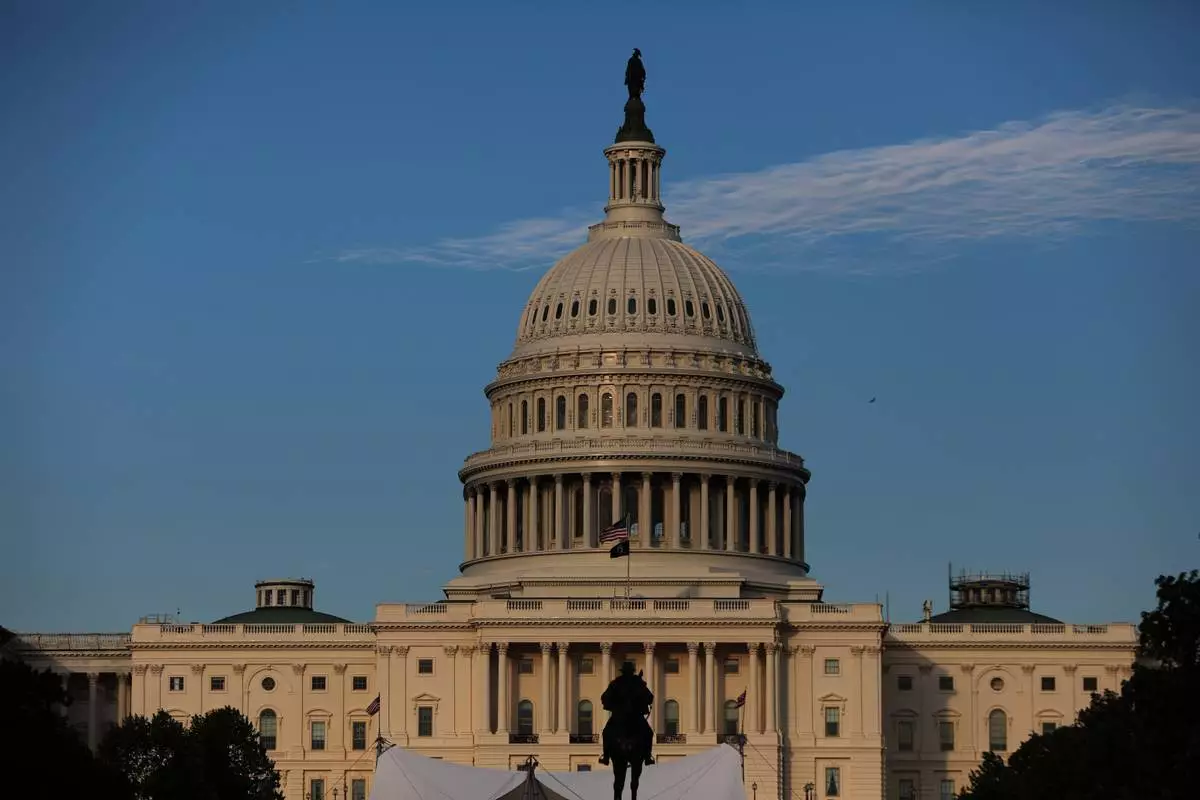
The U.S. Capitol is seen at sunset, Thursday, June 25, 2026, in Washington. (AP Photo/Rahmat Gul)