Skip to Content Facebook Feature Image

A Trump commission urges 'bridges' between church and state in sweeping draft report

News

A Trump commission urges 'bridges' between church and state in sweeping draft report
News

News

A Trump commission urges 'bridges' between church and state in sweeping draft report

2026-06-27 05:01 Last Updated At:05:10

A new report by a Trump administration commission suggests replacing the idea of separating church and state with the idea of building bridges between them.

The assertion — challenging a longstanding concept in American law — comes amid a raft of recommendations in a draft report of the Religious Liberty Commission, released Friday afternoon.

The advisory body was created by President Donald Trump last year and filled almost entirely by conservative Christians. The 224-page draft report — part policy document, part philosophical argument — echoes members' support for a stronger role for religion and religious expression in government, schools and the public square.

The report applauds recent Supreme Court decisions expanding rights to religious expression in public settings, such as creating opt-outs for religious objections to school lessons.

The report recommends eliminating the “ Johnson Amendment ” that forbids political activities by tax-exempt religious groups — a longstanding goal of Trump. It calls for compensating military service members who were discharged for refusing COVID-19 vaccines.

It calls in general for allowing more religious expression in the public square, greater access to public money for faith-based agencies and broader exemptions for those claiming conscientious objections to policies ranging from vaccine mandates to pronoun usage to classroom lessons.

It recommends that federal agencies publish “Know Your Rights” posters for various settings and establish hotlines to receive complaints about religious liberty violations.

The draft report also calls for the creation of new honors — a Presidential Medal of Religious Liberty and First Freedom Hero Awards. And it calls for exhibits and markers at historic sites paying tribute to the role of religion in American history.

It calls for combatting antisemitism through various legal tools. It also recommends requiring any public official who says an employee engaged in improper religious expression to provide a written explanation.

At a news conference in the Oval Office, commissioners said witnesses who appeared at their hearings had suffered “persecution” at work and elsewhere.

The draft report is now available for public comment over the next 15 days. It is sure to draw opposition.

Critics have said the commission has failed adequately to address issues like anti-Muslim efforts in some states and that, while its hearings spotlighted left-wing antisemitism, it gave less attention to similar right-wing movements.

Some groups, including the progressive Interfaith Alliance, have a pending lawsuit saying the commission lacks ideological diversity as required of federal advisory panels.

The Rev. Paul Raushenbush, president of Interfaith Alliance, said the report represents “a wishlist of divisive, unpopular ideas far-right religious groups have pushed for years,” such as expanding vouchers for religious schools and repealing the Johnson amendment.

At the same time, Raushenbush said in a statement, the commission “couldn’t bring itself to acknowledge the growing threat of Islamophobia” nor Trump’s own criticisms of Pope Leo XIV, Episcopal Bishop Mariann Budde, and other religious critics of “his administration’s inhumane policies.”

The report comes as conservative states such as Texas have worked to incorporate more religion into public spaces such as classrooms, including Bible lessons and Ten Commandments displays.

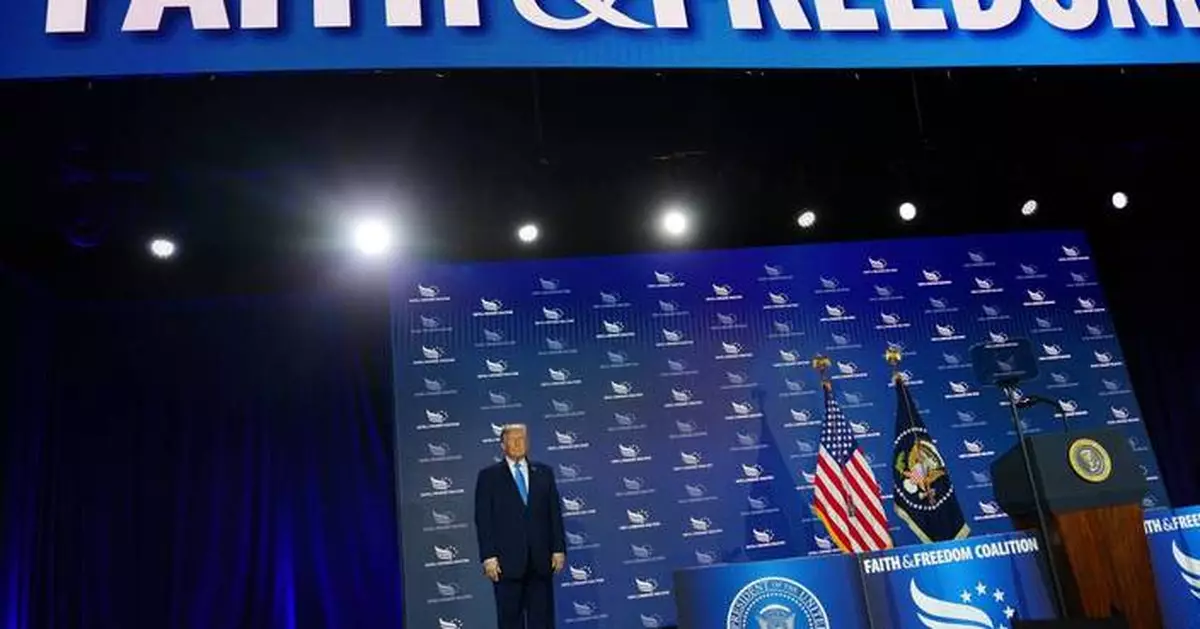
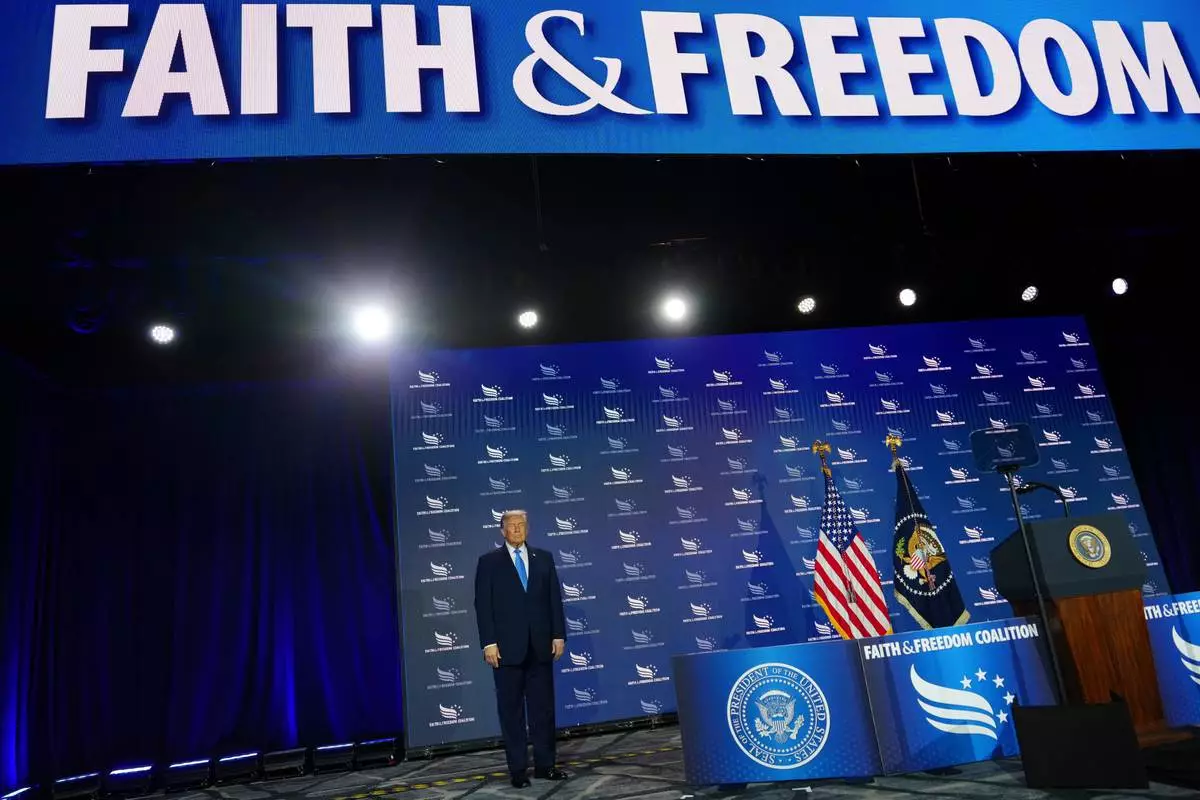
Trump, speaking to supporters at a Faith & Freedom Coalition gathering in Washington on Friday, touted the newly released report.

“We saved religion, it was going down,” he boasted.

Trump contended that the administration of his predecessor, Democrat Joe Biden, had carried out a “reign of persecution.”

While the commission report downplays the separation of church and state, the commission didn't go so far as to call it a “lie,” as the commission chairman, Texas Lt. Gov. Dan Patrick, did in April.

But it largely took the stance that the idea is misapplied.

“To be clear, this does not involve or require advocating ‘theocracy’ or even the total elimination of any separation between church and state,” the report says. Rather, it calls for honoring a “tension between the relevant clauses of the First Amendment” that guarantee religious freedom but forbid any government-established church.

Still, Patrick pressed the issue at the news conference, saying the phrase separation of church and state was used to “batter and hammer people of faith” for decades.

Americans "cannot be attacked by that phrase any longer,” Patrick said.

The phrase, “a wall of separation between church and state” does not appear in the Constitution, but it’s embodied in Supreme Court precedent. Thomas Jefferson used that expression in a letter to Baptists, supporting them in opposing official churches in U.S. states, a practice that soon ended.

Twentieth-century decisions by the high court invoked the “separation” phrase to extend the First Amendment’s prohibition on federal church establishment to state and local governments, citing the 14th Amendment’s ban on states denying citizens’ rights.

That led to bans on official prayers and Ten Commandments displays in public schools. The Supreme Court in recent years has steered a different course, permitting such things as a public school coach's on-field prayers and a religious opt-out for parents objecting to a lesson on transgender issues.

The draft report contends that even Jefferson didn’t believe in completely banishing religion from public life, but rather in keeping church and state in a kind of balance.

“In reality, the church and state strengthen and support one another,” it says.

The report touts the value of religion to society in terms of providing humanitarian work, anchoring families and acting as “conscience” monitoring government.

“In many cases the law protects the religious expression of Americans, but government officials and employers often use fear tactics to silence individuals into believing that they don’t have the right to publicly express their faith,” it argues.

It argues — citing one of its own members, Catholic media figure Bishop Robert Barron — that notions of strict church-state separation can be traced to a “God is dead” ideology that originated in Europe and saw traditional religion as an opponent to individual autonomy.

“This way of thinking made its way … into the American culture and courtroom,” the report said.

The report, while touting the value of religion, appears to give little emphasis on the large population of Americans with no religious affiliation. A key argument of many atheists and secular humanists is that one can be “good without God” — that religion doesn't have a monopoly on virtue and can do harm as well as good.

The lawsuit challenging the commission alleges that commissioners have asserted that America is specifically a Judeo-Christian or Christian nation, showing a lack of ideological diversity.

The Republican administration is asking a federal court to dismiss the lawsuit.

This draft report comes two months after another entity created by Trump — the Task Force to Eradicate Anti-Christian Bias — issued its own report. It claimed that Christians faced discrimination under the Biden administration. Progressive critics said that the report amounted to advocacy rather than an investigation.

Associated Press religion coverage receives support through the AP’s collaboration with The Conversation US, with funding from Lilly Endowment Inc. The AP is solely responsible for this content.
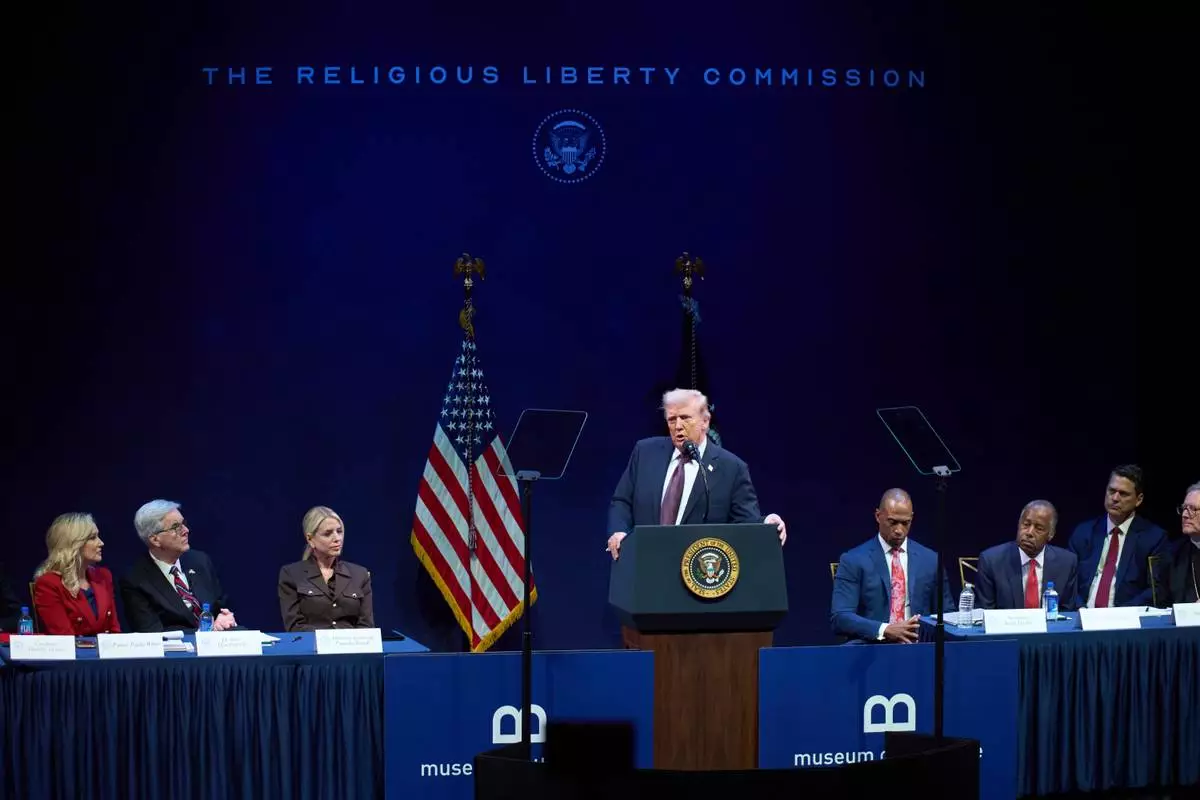
FILE - President Donald Trump speaks to the White House Religious Liberty Commission during an event at the Museum of the Bible, Sept. 8, 2025, in Washington. (AP Photo/Evan Vucci, File)
FILE - President Donald Trump speaks to the White House Religious Liberty Commission during an event at the Museum of the Bible, Sept. 8, 2025, in Washington. (AP Photo/Evan Vucci, File)

President Donald Trump arrives to speak at the Faith & Freedom Coalition's policy conference at the Washington Hilton, Friday, June 26, 2026, in Washington. (AP Photo/Julia Demaree Nikhinson)

President Donald Trump arrives to speak at the Faith & Freedom Coalition's policy conference at the Washington Hilton, Friday, June 26, 2026, in Washington. (AP Photo/Julia Demaree Nikhinson)
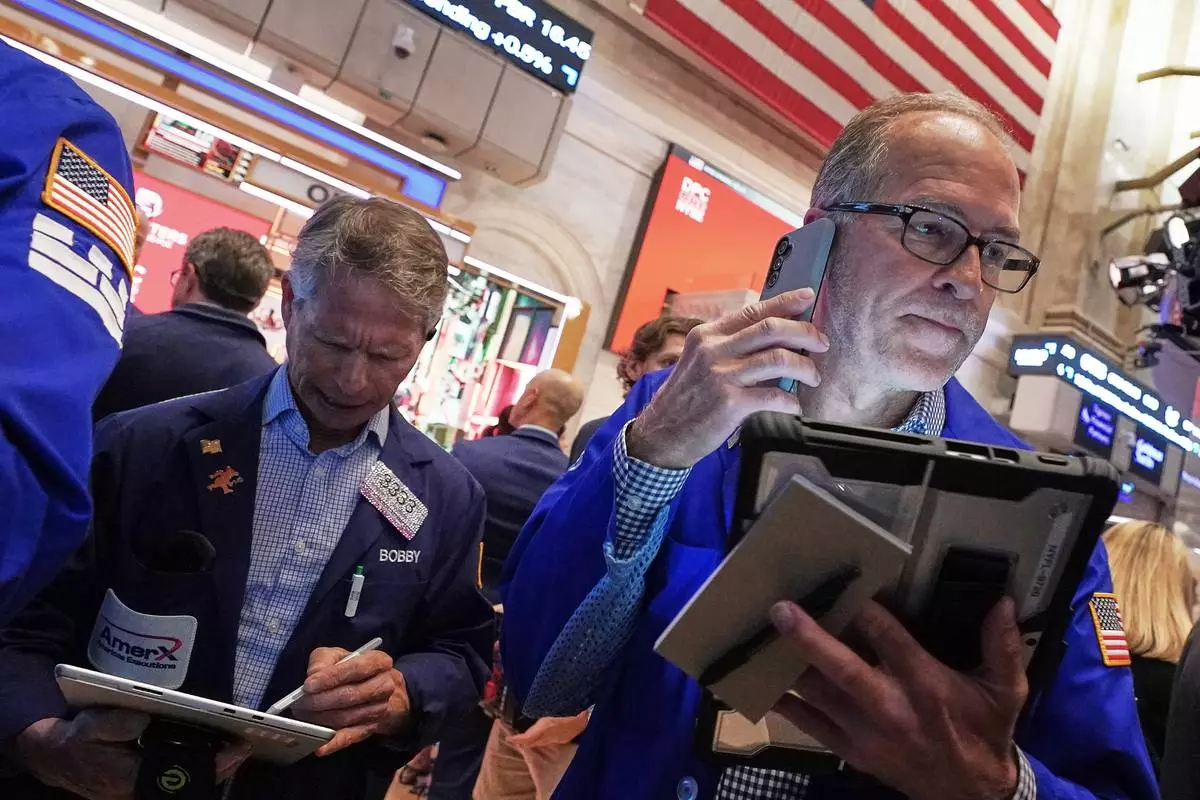
NEW YORK (AP) — Most of the U.S. stock market rose Friday after oil prices eased back to where they were before the war with Iran, but drops for stocks swept up in the mania around artificial-intelligence technology kept the market in check.

The S&P 500 finished nearly flat and slipped less than 0.1% to close out just its second losing week in the last 13. The Dow Jones Industrial Average dipped 44 points, or 0.1%, and the Nasdaq composite fell 0.2%.

Stocks got a boost as the price of Brent crude oil, the international standard, dropped 3.8% to $72.60. That’s lower than it was the day before the United States and Israel attacked Iran, which eventually led to the closure of the Strait of Hormuz and the curtailment of oil shipments worldwide.

The easier oil prices helped stocks of companies with big fuel bills, and American Airlines Group climbed 1.7%.

Health care stocks, meanwhile, were some of the strongest forces pushing upward on the market after a committee of the European Medicines Agency recommended several medicines for approval and the extension for another dozen of their therapeutic indications. That included one for Eli Lilly, whose stock jumped 7.1%.

Besides Lilly, nearly two out of every three stocks within the S&P 500 rose. But more drops for AI stocks helped to overshadow them.

After soaring to tremendous heights and leading the market for years, AI stocks have been under pressure recently because of worries their profits can’t possibly keep pace with the tremendous rallies for their stock prices. And those drops have an outsized effect because AI stocks have become Wall Street’s largest and most influential, giving movements for their stock prices more weight on indexes than others.

Micron Technology’s drop of 6.7% was the heaviest weight on the market, for example. The maker of memory for computers has been a big winner this year, with its stock roughly quadrupling, because the AI boom has created a surge of demand for its products.

But investors saw the downside of that surge Thursday, when Apple said it had to raise prices on laptops and other products by significant percentages to make up for the increases in memory prices. The worry is that such higher prices could ultimately lead to lower demand.

Highlighting the roller-coaster ride that AI stocks have been on, SpaceX briefly dropped 2.9% in the morning and fell below $149. It then erased the loss to swing to a gain of 3.5% before finishing with a modest rise of 0.2%.

After initially selling its stock at $135 apiece in its ballyhooed initial public offering earlier this month, SpaceX’s price briefly soared above $225 within its first few days of trading. Besides rockets, Elon Musk’s company also owns the xAI artificial-intelligence business.

The day’s largest loss in the S&P 500 was a 23.7% drop for ON Semiconductor, which said it agreed to buy Synaptics in an all-stock deal valued at roughly $7 billion.

All told, the S&P 500 slipped 3.47 points to 7,354.02. The Dow Jones Industrial Average dipped 44.51 to 51,876.11, and the Nasdaq composite fell 60.99 to 25,297.62.

In the bond market, Treasury yields eased with oil prices. The yield on the 10-year Treasury fell to 4.37% from 4.40% late Thursday.

It fell after a report showed expectations for inflation in the coming year inched down among U.S. consumers to 4.6% from 4.8% in May. That’s still high, but moves downward mean less chance of a vicious cycle where expectations for higher inflation drive changes in behavior that create higher inflation.

High yields in bond markets worldwide caused by worries about inflation have been threatening to slow economies, and they have already sent rates higher for mortgages and other kinds of loans. High yields also hurt prices for investments, particularly those seen as the most expensive. That raises the pressure on AI winners.

Asian stock markets began Friday with sharp drops because of losses for AI winners.

In Japan, a 12.5% plunge for Softbank Group Corp. helped pull the Nikkei 225 index down by 4.2%. The company is a major investor in OpenAI, the maker of ChatGPT, and a report in The New York Times suggested OpenAI is considering delaying an initial public offering of its stock to next year from the second half of this year.

Such an IPO would give OpenAI the chance to raise more cash to spend on data centers, as well as the opportunity for early investors like Softbank to cash out some of their holdings. But the recent stumbles for SpaceX’s stock and for AI stocks broadly may be a signal of less appetite for big AI stocks among investors.

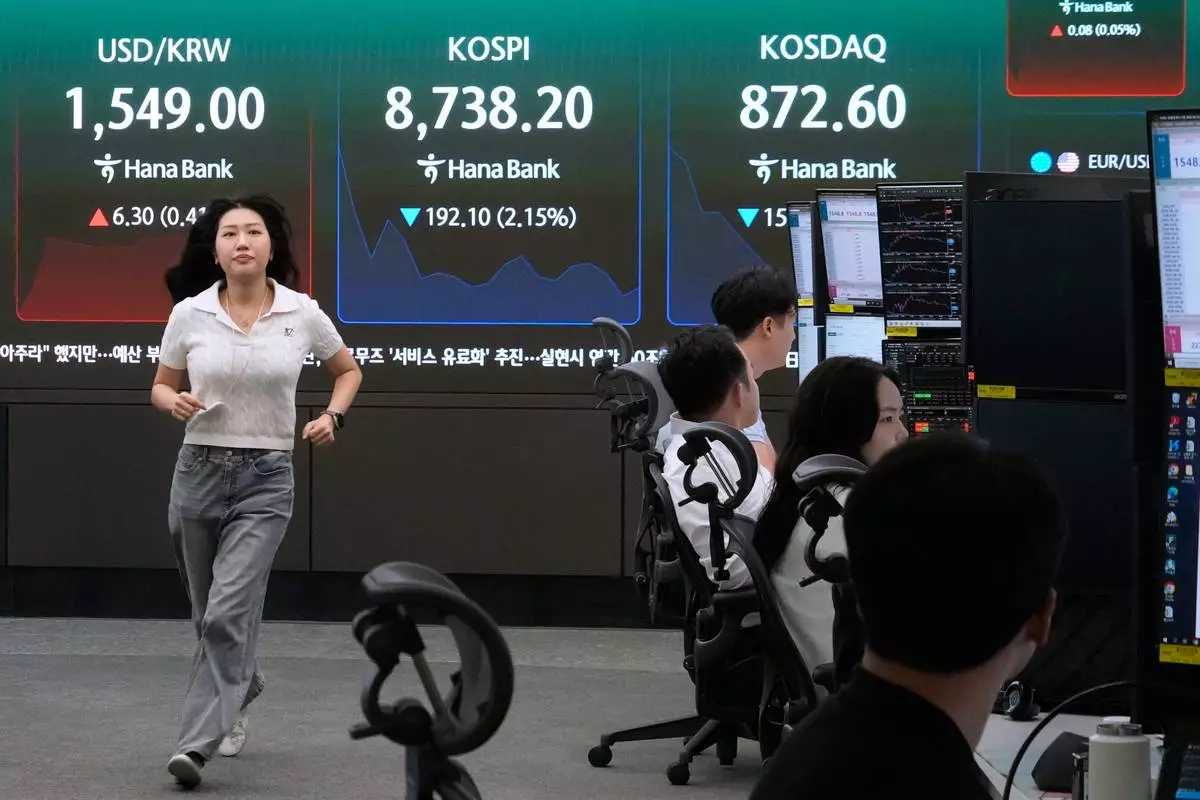
In South Korea, SK Hynix fell 8.4%, and Samsung Electronics sank 5.3%. That helped pull the Kospi 5.8% lower and trim its gain for the year so far to 99.6%.

AP Business Writers Matt Ott and Elaine Kurtenbach contributed.

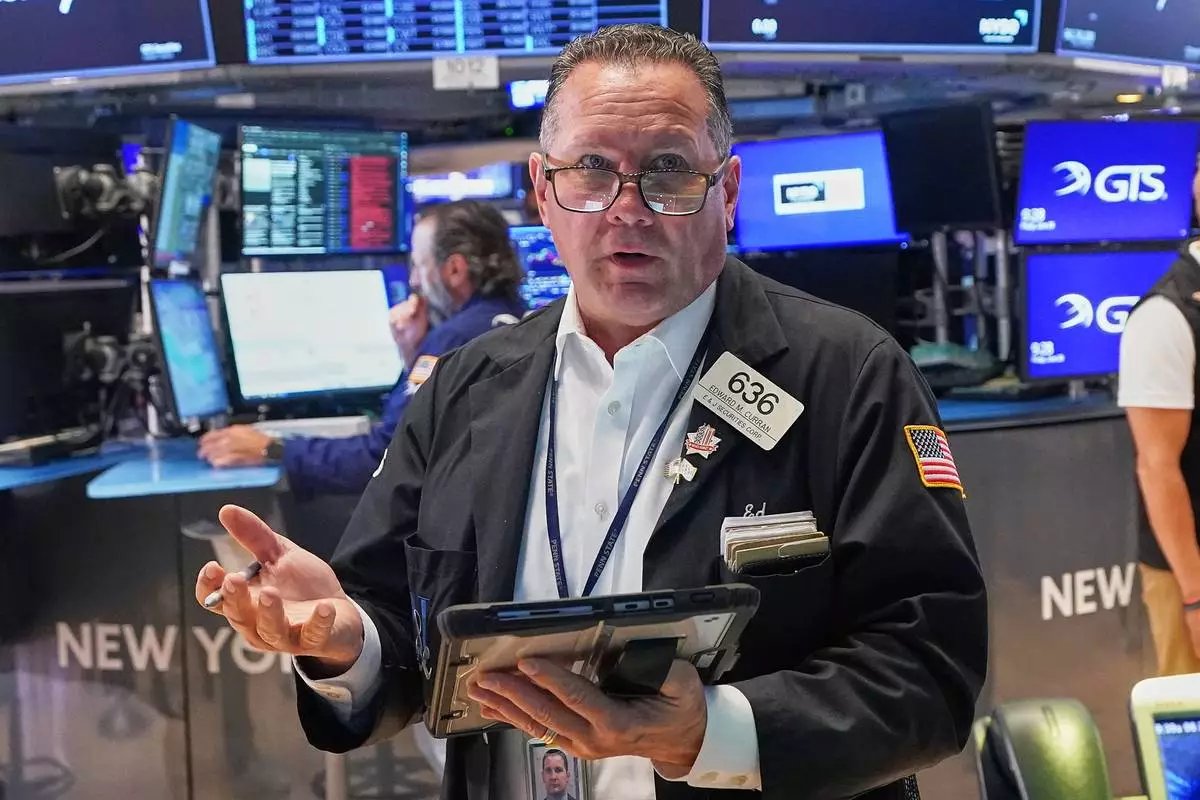
Trader Edward Curran works on the floor of the New York Stock Exchange, Friday, June 26, 2026. (AP Photo/Richard Drew)

Trader Edward Curran works on the floor of the New York Stock Exchange, Friday, June 26, 2026. (AP Photo/Richard Drew)

Traders Robert Charmak, left, and Mark Puetzer work on the floor of the New York Stock Exchange, Thursday, June 25, 2026. (AP Photo/Richard Drew)

Traders Robert Charmak, left, and Mark Puetzer work on the floor of the New York Stock Exchange, Thursday, June 25, 2026. (AP Photo/Richard Drew)

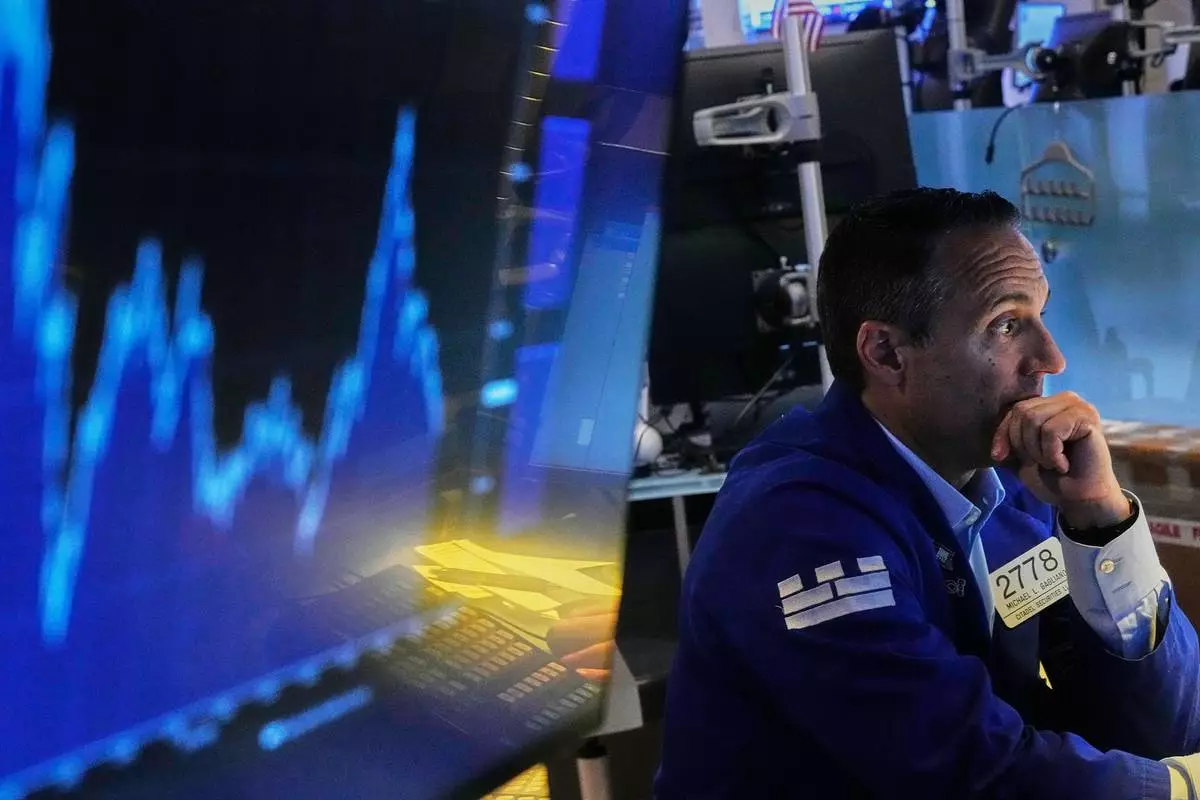
Specialist Michael Gagliano works at his post on the floor of the New York Stock Exchange, Thursday, June 25, 2026. (AP Photo/Richard Drew)

Specialist Michael Gagliano works at his post on the floor of the New York Stock Exchange, Thursday, June 25, 2026. (AP Photo/Richard Drew)

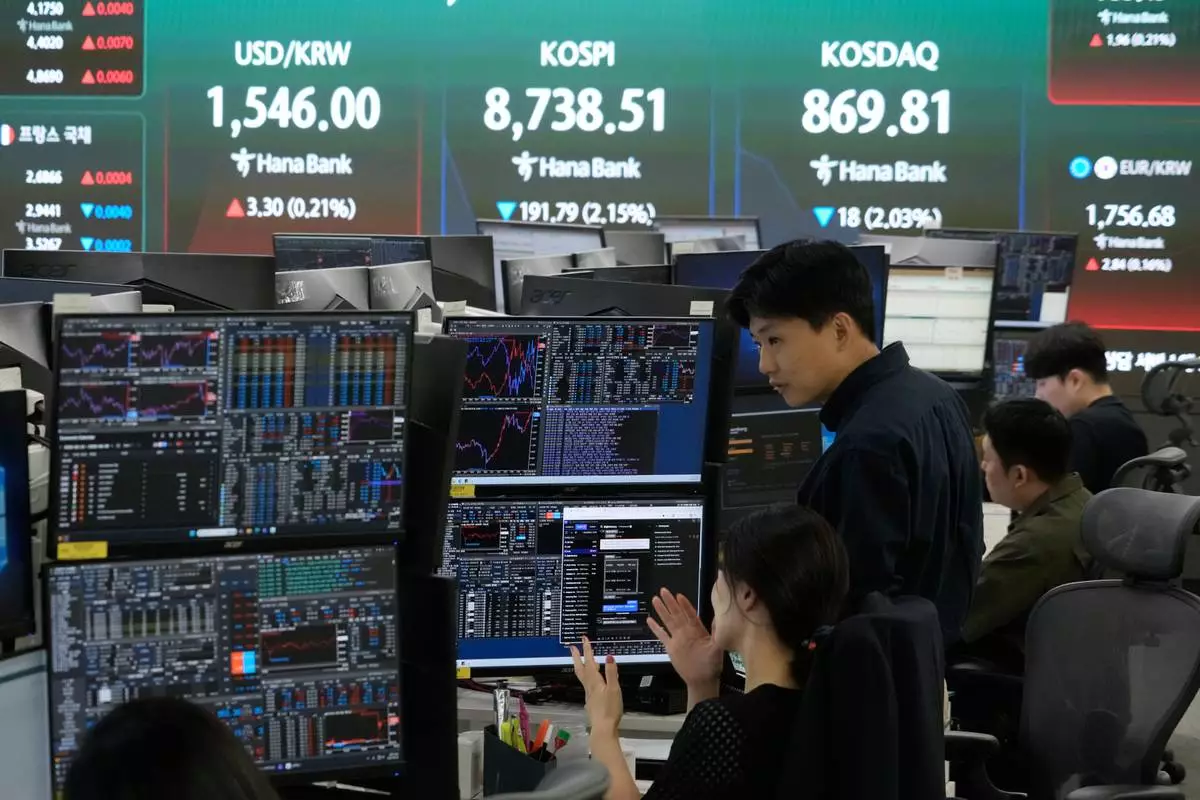
Currency traders work near a screen showing the Korea Composite Stock Price Index (KOSPI) and the foreign exchange rate between U.S. dollar and South Korean won at the foreign exchange dealing room of the Hana Bank headquarters in Seoul, South Korea, Friday, June 26, 2026. (AP Photo/Ahn Young-joon)

Currency traders work near a screen showing the Korea Composite Stock Price Index (KOSPI) and the foreign exchange rate between U.S. dollar and South Korean won at the foreign exchange dealing room of the Hana Bank headquarters in Seoul, South Korea, Friday, June 26, 2026. (AP Photo/Ahn Young-joon)

Currency traders work near a screen showing the Korea Composite Stock Price Index (KOSPI) and the foreign exchange rate between U.S. dollar and South Korean won at the foreign exchange dealing room of the Hana Bank headquarters in Seoul, South Korea, Friday, June 26, 2026. (AP Photo/Ahn Young-joon)

Currency traders work near a screen showing the Korea Composite Stock Price Index (KOSPI) and the foreign exchange rate between U.S. dollar and South Korean won at the foreign exchange dealing room of the Hana Bank headquarters in Seoul, South Korea, Friday, June 26, 2026. (AP Photo/Ahn Young-joon)

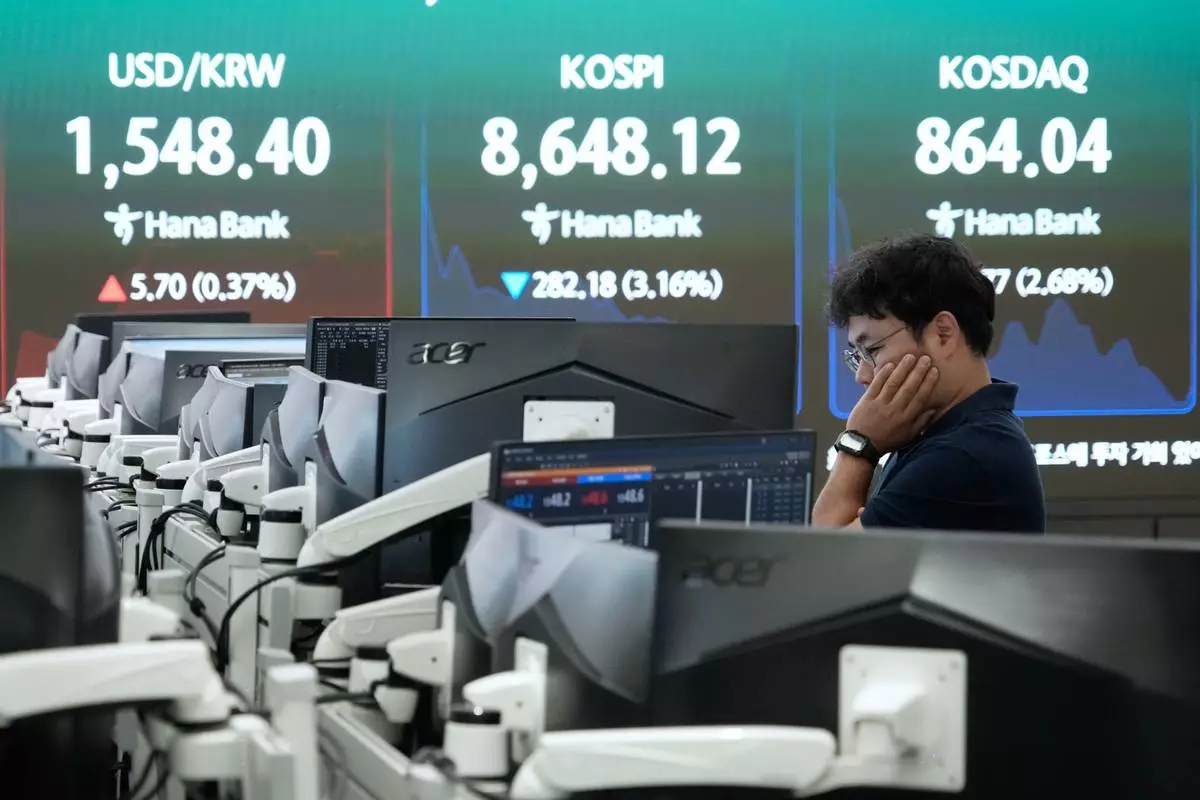
A currency trader watches monitors near a screen showing the Korea Composite Stock Price Index (KOSPI) and the foreign exchange rate between U.S. dollar and South Korean won at the foreign exchange dealing room of the Hana Bank headquarters in Seoul, South Korea, Friday, June 26, 2026. (AP Photo/Ahn Young-joon)

A currency trader watches monitors near a screen showing the Korea Composite Stock Price Index (KOSPI) and the foreign exchange rate between U.S. dollar and South Korean won at the foreign exchange dealing room of the Hana Bank headquarters in Seoul, South Korea, Friday, June 26, 2026. (AP Photo/Ahn Young-joon)

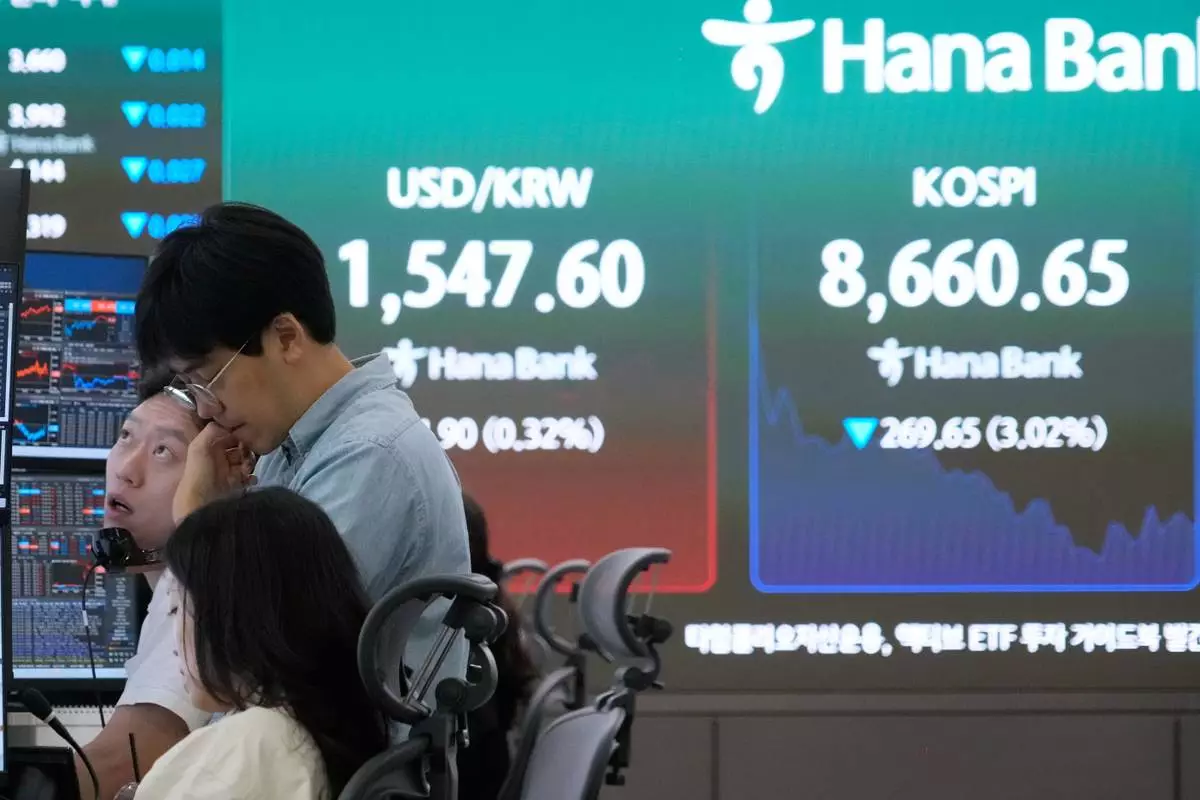
A currency trader passes by a screen showing the Korea Composite Stock Price Index (KOSPI) and the foreign exchange rate between U.S. dollar and South Korean won at the foreign exchange dealing room of the Hana Bank headquarters in Seoul, South Korea, Friday, June 26, 2026. (AP Photo/Ahn Young-joon)

A currency trader passes by a screen showing the Korea Composite Stock Price Index (KOSPI) and the foreign exchange rate between U.S. dollar and South Korean won at the foreign exchange dealing room of the Hana Bank headquarters in Seoul, South Korea, Friday, June 26, 2026. (AP Photo/Ahn Young-joon)

Recommended Articles