Former Germany player Bastian Schweinsteiger said Friday he was talking about Ivory Coast’s style and not its players when he spoke last weekend about what his country's national team could expect from its African opponent during their group match.
Schweinsteiger called it, “A bit African football, a bit unorthodox, a bit wild, a bit perhaps also not so conditioned by tactics" and added it was unpredictable. Ivory Coast coach Emerse Faé slammed those comments on Thursday as being racist.
“I was talking about football, not about people," Schweinsteiger said in a statement released by German broadcaster ARD, the same outlet on which he made the remarks. "It’s a football analysis. Nothing more and nothing less. ... I certainly didn’t mean to offend anyone.”
Some commentators criticized his comments as playing into racist stereotypes. Sports commentator Patrick Schnitzler wrote on Instagram of “racist prejudices that we are all passing on unnoticed,” and journalist Philipp Awounou, who is Black, wrote in Der Spiegel magazine that the characterizations played on old racist tropes rooted in colonialism. Awounou said he did not think Schweinsteiger is racist.
Germany went on to defeat the Ivory Coast 2-1 on Saturday.
Faé then led Ivory Coast into the World Cup knockout round for the first time in its history with a 2-0 win over Curaçao on Thursday. Faé said after the game he hoped Schweinsteiger had made a “clumsy statement that’s not necessarily reflective of what’s in his life.”
“We could call it racist, if we were calling a spade a spade,” Faé said.
Jürgen Klopp, who is working for broadcaster Magenta, seemed taken aback when asked about Schweinsteiger’s comments by Deutsche Welle in a conversation with journalists in New York on Wednesday.
“Now you want to carry on the subject,” Klopp responded before breaking off the interview. “No, no, I have no chance. I have no chance to answer this question. Everybody likes it so you bring me in this situation. It’s not my job that everybody likes it, but this is a serious subject, and I don’t even know what is appropriate to say. For African people it’s one thing, for other people it’s another thing, and I’m not here.”
ARD executive Axel Balkausky defended Schweinsteiger’s stance.
“He summarized his experiences and observations from recent games,” said Balkausky, ARD’s sports coordinator. "It wasn’t about individual people but rather a footballing assessment. I can’t detect any form of racism in that or in his choice of words. If the coach of Ivory Coast, Emerse Faé, were to speak directly with Bastian, his suspicions would be quickly revised, I am sure of that. Perhaps an opportunity of that sort will arise in the course of the tournament.”
See more of AP’s World Cup coverage here

FILE - Former German soccer player Bastian Schweinsteiger conducts an interview ahead of the UEFA Nations League soccer match between Germany and Switzerland in Cologne, Germany, Oct. 13, 2020. (AP Photo/Martin Meissner, File)

Ivory Coast players celebrate at the end of the World Cup Group E soccer match between Curacao and Ivory Coast in Philadelphia, Thursday, June 25, 2026. (AP Photo/Matt Rourke)
MIAMI (AP) — A 35-year-old nurse in Kentucky prepared her will. The single mother named a legal guardian for her four children and transferred her properties into their names.
She felt like she needed to prepare for death — in case she gets deported back to Haiti, a country she fled at 9 years old.
After the Supreme Court decided Thursday to allow the Trump administration to end legal protections for migrants fleeing violence and natural disasters in Haiti and Syria, fear ricocheted through those communities across the United States. Hundreds of thousands of people now face the prospect of deportation.
“I have been living with this internal fear, it’s like preparing for a funeral, just in case I die when going to another country,” said the nurse, who asked not to be identified for fear of being targeted for deportation.
She is among about 350,000 Haitians granted Temporary Protected Status, many of whom have legally lived and worked in the U.S. for decades and have children who are U.S. citizens. Thursday’s decision, which is expected to take effect July 27, also applied to around 6,000 Syrians. It could also open the door to the administration unwinding protections for 1.3 million people from 17 countries.
Congress created Temporary Protected Status in 1990 to prevent deportations to countries deemed dangerous, because of disasters, civil war or other violence or instability. It permits people to work legally in the U.S. but does not provide a path to citizenship. It can be renewed in increments of up to 18 months if the homeland security secretary deems conditions unsafe for return.
The Biden administration roughly doubled the number of people covered by TPS. The Trump administration ended those protections, insisting it was meant to be temporary, the countries are now safe and that President Joe Biden’s administration expanded the destination and poorly vetted its recipients.
TPS beneficiaries have, by definition, been living in limbo and their futures have been especially precarious under President Donald Trump, but the Supreme Court ruling delivered what could be a crushing blow to living and working legally in the United States.
The Haitian community in Springfield, Ohio, became a particular target of the administration during the 2024 campaign, when Trump spread fictional rumors that Haitians there were eating people’s cats and dogs. There is no evidence to support those claims.
Still, the community has been under intense pressure ever since, said Viles Dorsainvil, the executive director of the Haitian Community Help and Support Center in Springfield.
Thursday’s ruling added to the panic and chaos. People don’t know if they should withdraw all their money from the bank, Dorsainvil said. They don’t know if they can work, if their kids can go to school. Many are making preparations to leave their children who are U.S. citizens behind if they are sent away.
“As a Haitian, I always say that life has not been easy for us, nothing has been easy for us and this is another chapter in our life. And we’ve been in that type of situation since after the presidential campaign when they came up with that type of conspiracy theory of us eating cats and dogs,” he said. “We’ve been targeted. We’ve been in the spotlight for their political agenda.”
Dorsainvil said he’s focused on trying to keep people calm, telling them not to panic, not to feel hopeless or make desperate decisions that could further jeopardize them and their children.
On Thursday morning, a Haitian mother of a 17-month-old baby boy who lives in Florida woke up to the news.
“I was reading it and I just for a moment there I just felt like I couldn’t breathe, like as if something was just sitting on my chest, like my lungs couldn’t extend,” the 37-year-old said, her voice breaking.
She asked not to be identified for fears of being detained and deported.
“I did not expect this. It is so hard to accept. Maybe I am in denial but I think this can’t be real,” she said. “I had so much hope.”
She arrived in the U.S. in 1995 when she was 7 years old and graduated from high school here. But she could not go to college because she did not have legal status.
But in 2010 everything changed, when the U.S. granted Haitians protection after a catastrophic earthquake. The U.S. repeatedly extended that amid the gang violence that has consumed the country and displaced more than a million people.
The Florida woman applied, and she was able to go to school and become a nurse.
She was supposed to begin a new job in two weeks. Now she doesn’t know if she’s authorized to work.
TPS holders are overrepresented in caregiving roles, and the long-term care industry, like nursing homes and facilities for disabled people, industry groups said, could be hit particularly hard as fear and uncertainty ripples across America.
The nurse in Kentucky said she’s trying to focus on her work taking care of disabled people. But it’s hard to not think of the worst-case scenario, imagining being separated from her children, who are ages 13, 12, 8, and 2, and being sent to her home country that she left more than two decades ago. She reads in the news that there are gang wars, kidnappings, killings.
“I don’t want to go there. I am very Americanized,” she said. “It’s like someone saying, hey, do you want to go live in a horror movie? Like, you know, no, I don’t.”
—-
Aftoora-Orsagos reported from Springfield, Ohio, and Galforo contributed from Louisville, Kentucky.
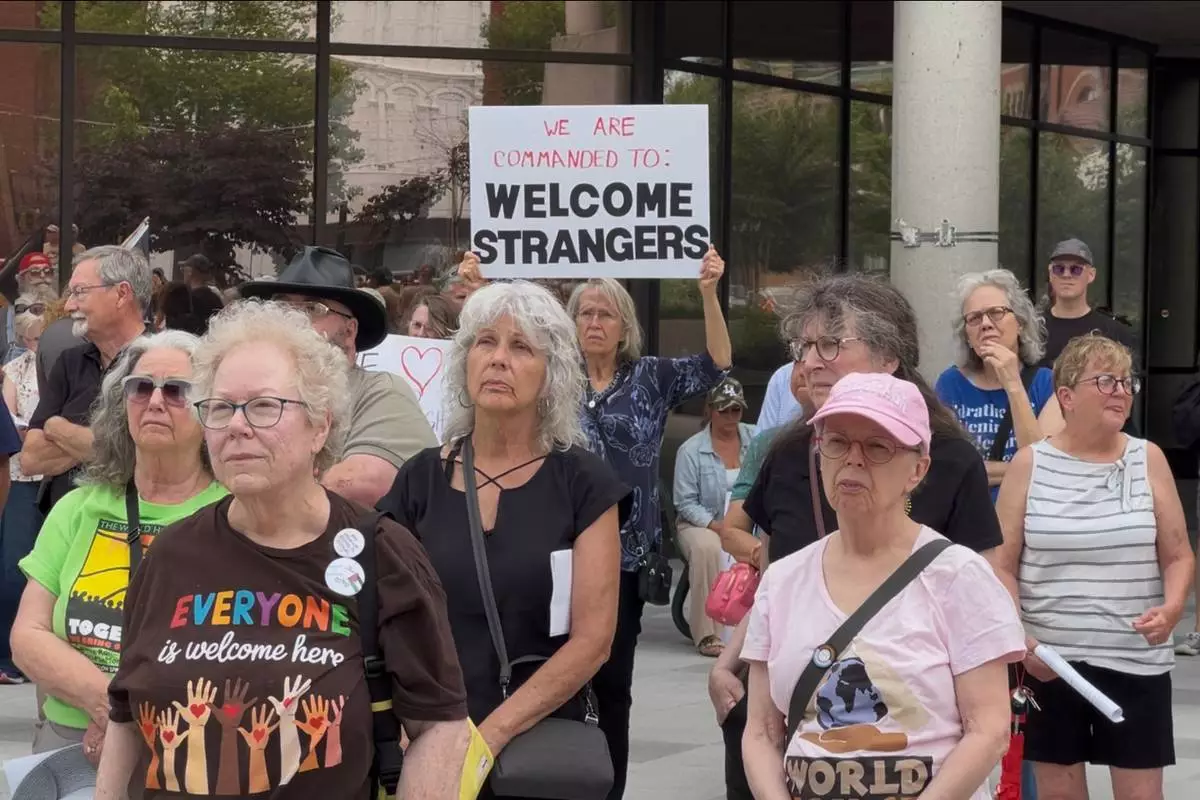
This photo made from video shows people at a rally in support of Haitians on Thursday, June 25, 2026, in Springfield, Ohio, after the United States Supreme Court ruled that the Trump administration can end temporary protected status for Haitians and Syrians. (AP Photo/Patrick Aftoora-Orsagos)
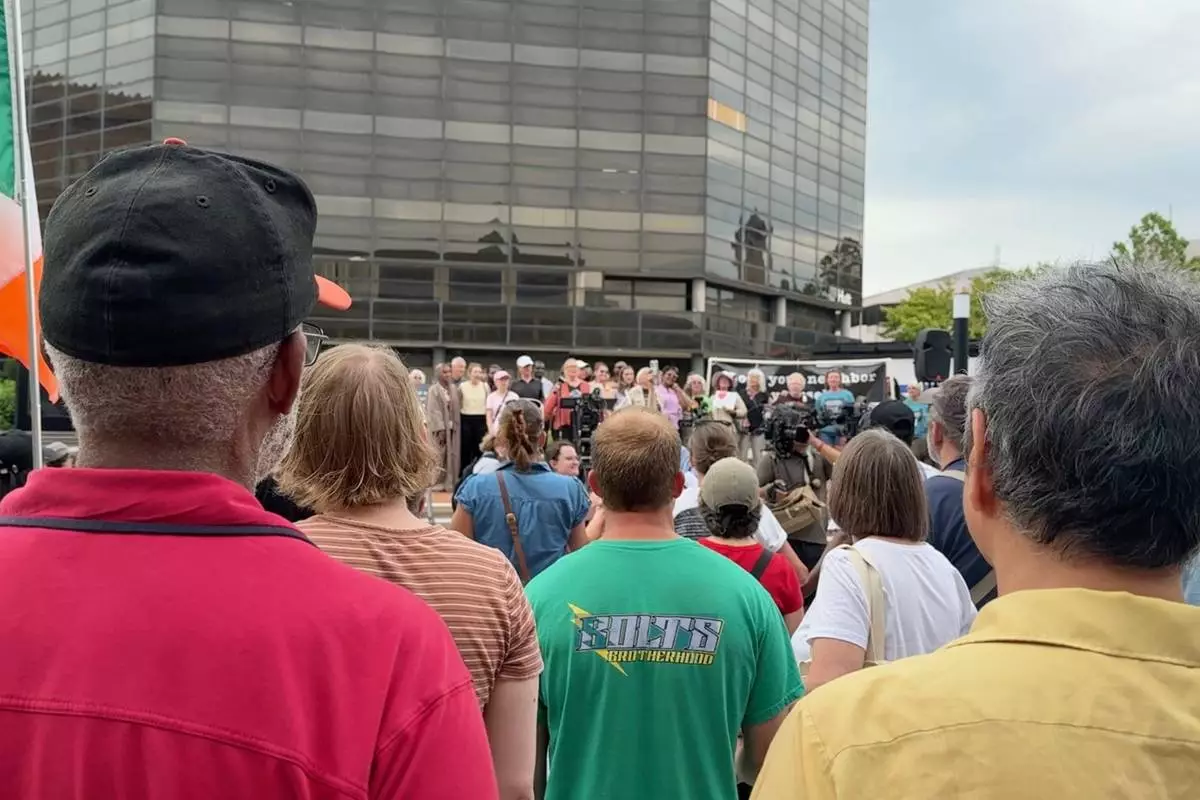
This photo made from video shows residents watching members of a choir sing while attending a rally in support of Haitian people on Thursday, June 25, 2026, in Springfield, Ohio, after the United States Supreme Court ruled that the Trump administration is allowed to end TPS for Haitians and Syrians. (AP Photo/Patrick Aftoora-Orsagos)
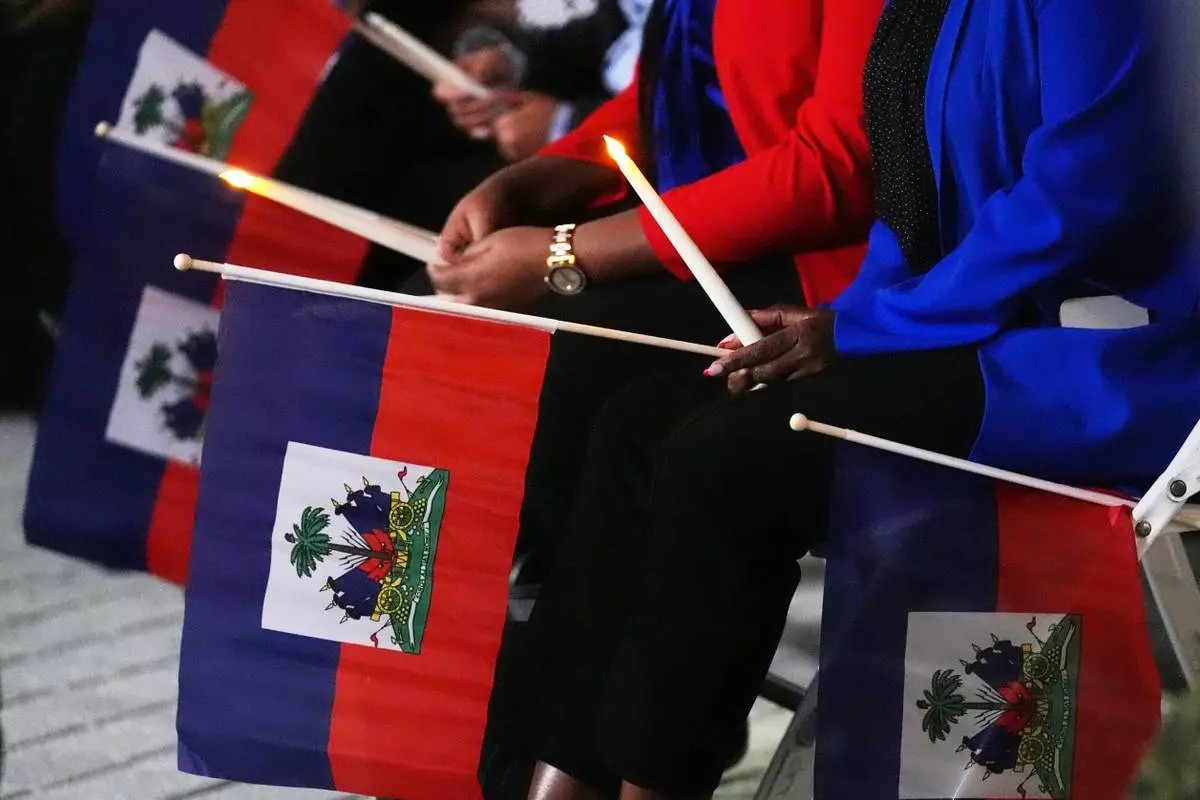
FILE - People hold Haitian flags and candles during a vigil at the Little Haiti Cultural Complex after a federal judge blocked the Trump administration from ending temporary immigration status, or TPS, for Haitians, Feb. 3, 2026, in North Miami. (AP Photo/Lynne Sladky, File)
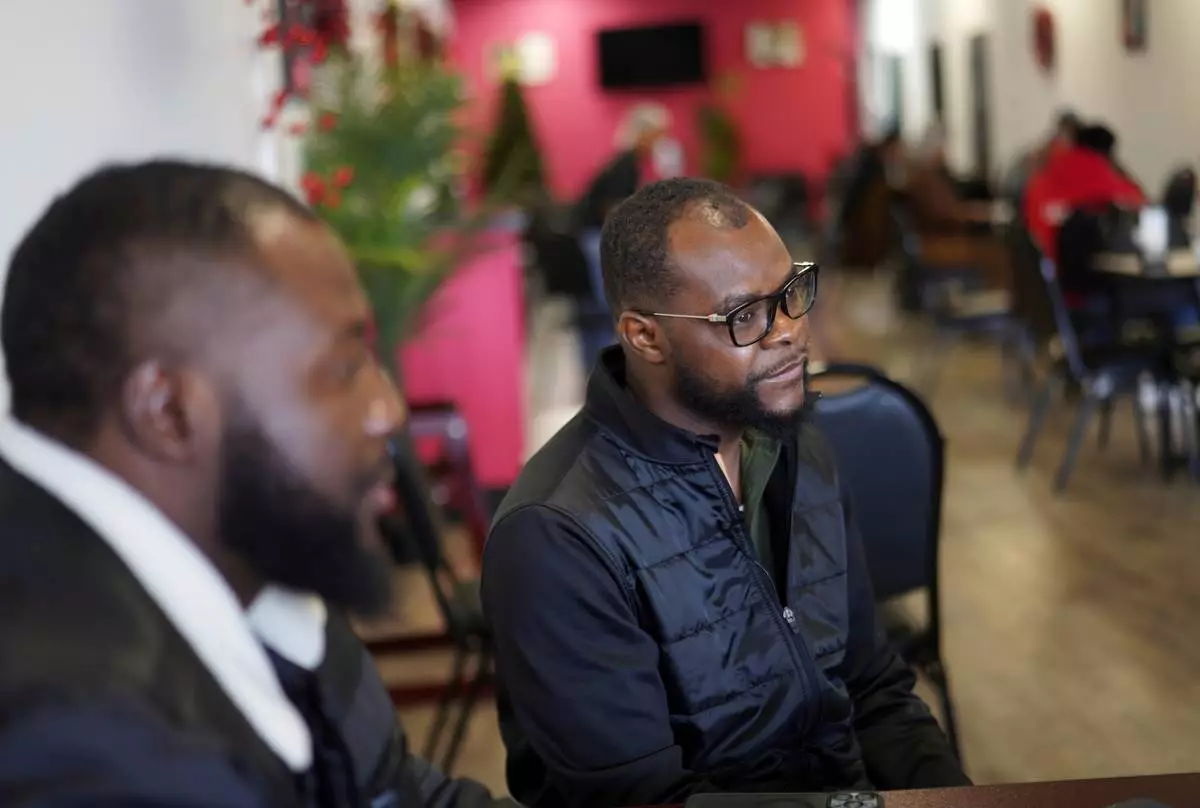
FILE - Viles Dorsainvil, executive director of the Haitian Community Help and Support Center at Rose Goute Creole Restaurant, sits with interpreter James Fleurijean, left, a board member of the Haitian Community Help and Support Center, in Springfield, Ohio, Jan. 25, 2025. (AP Photo/Jessie Wardarski, File)
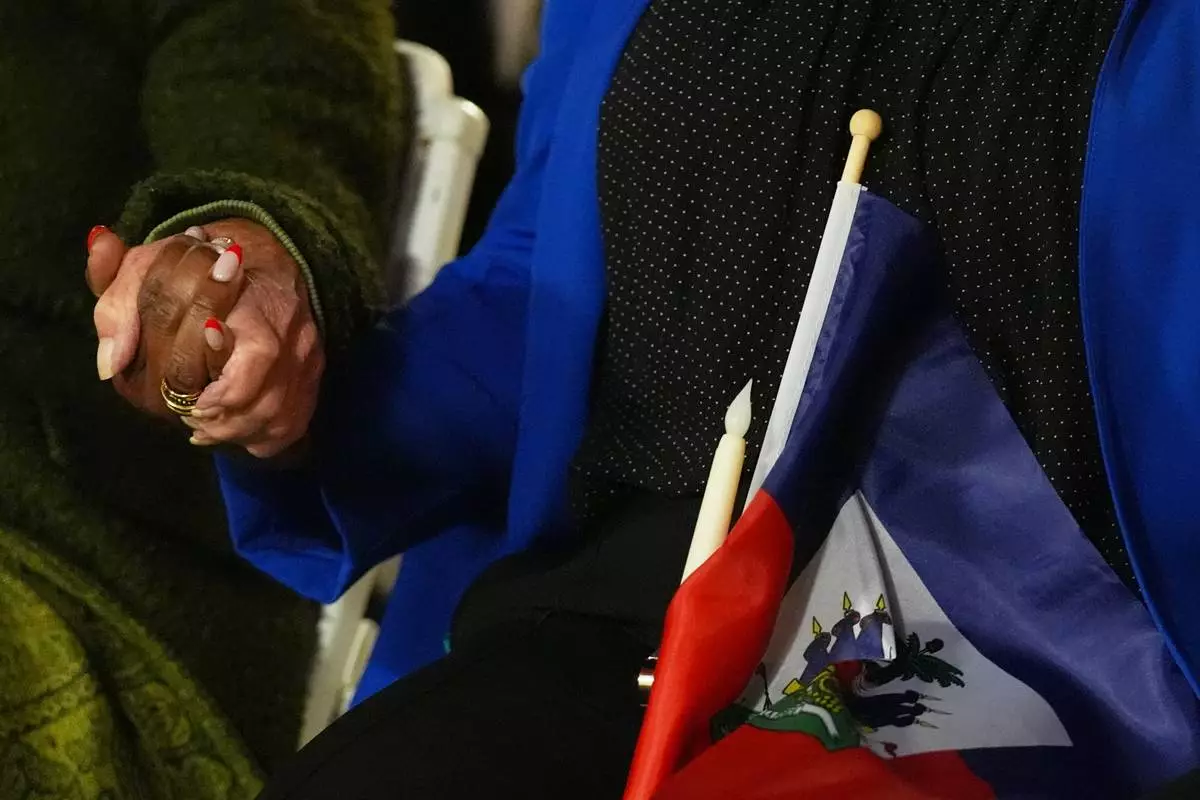
FILE - People hold hands and a Haitian flag during a vigil at the Little Haiti Cultural Complex after a federal judge blocked the Trump administration from ending temporary immigration status, or TPS, for Haitians, Feb. 3, 2026, in North Miami. (AP Photo/Lynne Sladky, File)