Skip to Content Facebook Feature Image

World Cup final day of group play will set the field for the round of 32

Sport

World Cup final day of group play will set the field for the round of 32
Sport

Sport

World Cup final day of group play will set the field for the round of 32

2026-06-28 03:02 Last Updated At:03:11

Going into the final day of group play at the World Cup, there are essentially eight teams vying for four spots in the round of 32.

Tournament co-hosts the United States, Canada and Mexico have all advanced, along with France, Germany, Spain, Portugal, Brazil, Norway and others.

The U.S. will face Bosnia-Herzegovina on Wednesday in Santa Clara, California, while Canada heads to Southern California to face South Africa on Sunday. Other marquee matchups are set, including Morocco versus the Netherlands, Japan versus Brazil and Norway versus Ivory Coast.

The eight best third-place teams get in with ties broken by goal differential and goals scored, if necessary.

Scotland and its passionate fans are waiting for lots of things to go right to make the knockout stage in a long shot bid. Iran and South Korea are also among those on the bubble.

Here's what to watch Saturday:

Panama vs. England and Croatia vs. Ghana (5 p.m. ET): England and Ghana have qualified, though first in the group is still to be decided. Croatia gets through with a win or a draw, while Panama has already been eliminated.

Colombia vs. Portugal and Congo vs. Uzbekistan (7:30 p.m. ET): Whoever wins between already-qualified Colombia and Portugal finishes atop the group, with Colombia getting it if they draw. Congo is in with a win but out with a draw or a loss and Uzbekistan has long odds and likely needs to win in a romp.

Algeria vs. Austria and Jordan vs. Argentina (10 p.m. ET): Barring a multigoal loss by Croatia against Ghana earlier, the winner of Algeria-Austria advances and the loser still has a chance, while a draw would get both Austria and Algeria in. Argentina has won the group, while Jordan has already been eliminated.

Here are the round of 32 matchups that have been set:

The Americans had their powerful momentum from two consecutive victories stalled in the loss to Turkey. But in the knockout round, they’ll face a Bosnia-Herzegovina that is 62nd in the FIFA rankings — the lowest-ranked World Cup qualifier from Europe. Bosnia finished third in Group B with four points. U.S. star Christian Pulisic entered as a substitute in the second half against Turkey. He had not played since leaving the opening win over Paraguay at halftime with a calf injury. “We play every game like a knockout game,” said U.S. midfielder Sebastian Berhalter, who scored against Turkey. “You saw that in our intensity and the way we worked. For us, it’s keep doing what we’ve been doing.”

These nations have already made history. It’ll be the first time both are in the knockout stage of the World Cup. Canada advanced as runner-up in Group B with four points — one win, one draw and one loss. South Africa was runner-up in Group A, also with four points, including a surprising win over South Korea.

Japan advanced as Group F runner-up with a hard fought 1-1 draw against Sweden and the Samurai Blue’s reward is a knockout match against five-time World Cup champion Brazil. It’ll be a full-circle moment for Japan, which brought in Brazilian great Zico in 1991 to professionalize the country’s new domestic league and support Japan’s successful bid to co-host the World Cup in 2002. Now, the Japanese have a chance to show how far they’ve come against a country that has set the standard.

The Netherlands won Group F after a draw with Japan and outscoring Sweden and Tunisia by a combined 8-2. Morocco went unbeaten to finish second in Group C in pursuit of becoming the first African winner of the World Cup. Morocco reached the semifinals four years ago in Qatar.

France came in as the tournament favorite and remains it after winning all three of its group games to set up a matchup against Sweden, which had a 5-1 win, a 5-1 loss and a draw.

Germany comes into the knockout stage off a similarly low-key late defeat as the U.S., having already clinched its group with little to play for. Germany is a significant favorite against Paraguay, which lost to the U.S. 4-1 in its opener but steadied itself enough to move on.

This may be one of the most evenly matched round of 32 games, after Australia beat Turkey, lost to the U.S and drew with Paraguay. Egypt got through as the second-place team in Group G after a late goal by Iran on Friday night was called back for offside.

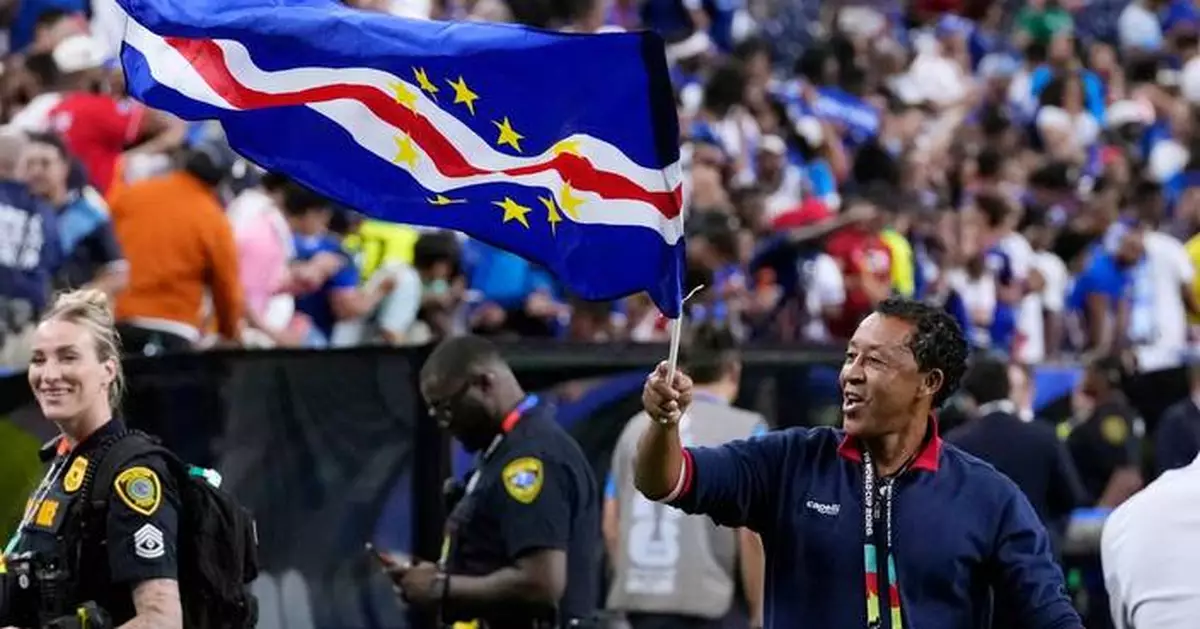
Defending champion Argentina faces the smallest country to qualify for the knockout stage at a World Cup. Unsurprisingly, Cape Verde goes in as a massive underdog.

After an opening draw against Morocco, Brazil won its next two by 3-0 scores, with Vinícius Júnior scoring to silence critics and Neymar returning from injury. Japan has a couple of draws and a 4-0 rout of Tunisia to show for itself so far.

It would have taken beating favored France for Norway to win Group I. Instead, coach Ståle Solbakken opted to rest Erling Haaland and all but one starter. That sets up a matchup against the Ivory Coast at the Dallas Cowboys’ stadium in Arlington, Texas, on Tuesday.

See more of AP’s World Cup coverage here.
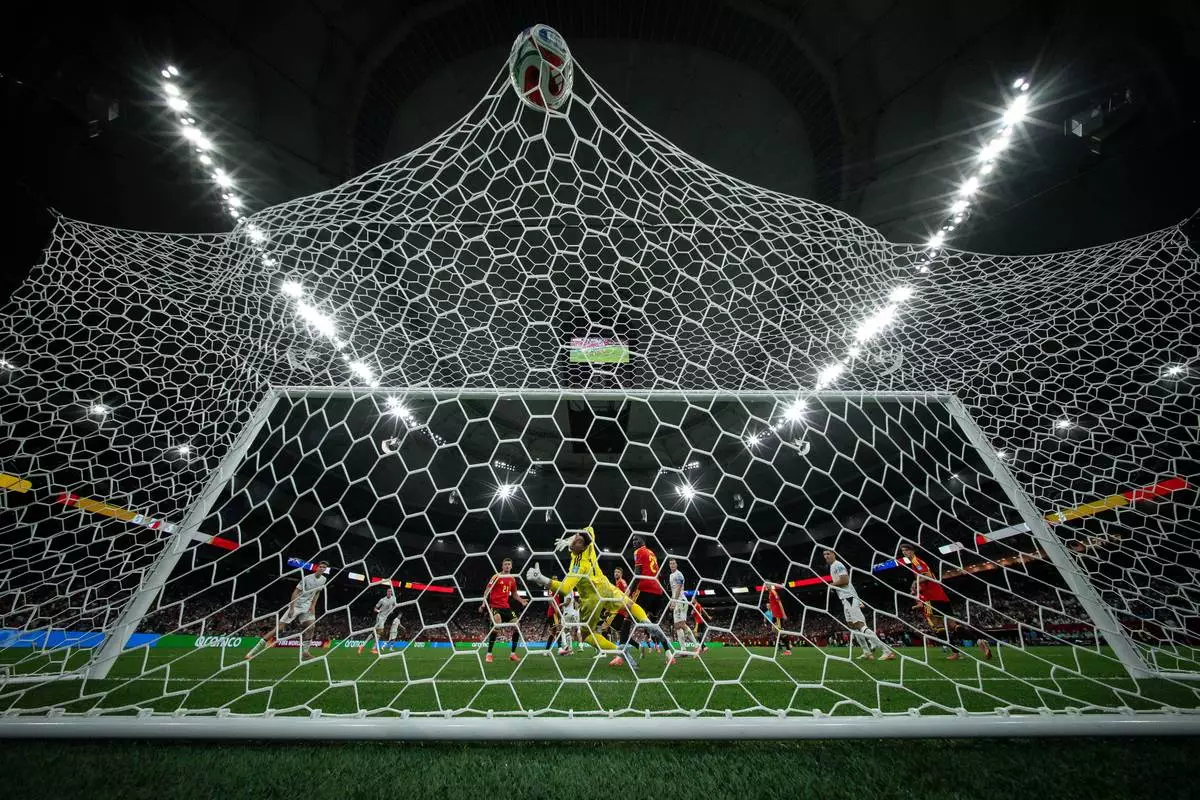
Belgium goalkeeper Thibaut Courtois (1) looks back at the ball after New Zealand's Elijah Just, not seen, scored a goal during the World Cup Group G soccer match between New Zealand and Belgium in Vancouver, British Columbia, Friday, June 26, 2026. (Ethan Cairns/The Canadian Press via AP)
Belgium goalkeeper Thibaut Courtois (1) looks back at the ball after New Zealand's Elijah Just, not seen, scored a goal during the World Cup Group G soccer match between New Zealand and Belgium in Vancouver, British Columbia, Friday, June 26, 2026. (Ethan Cairns/The Canadian Press via AP)

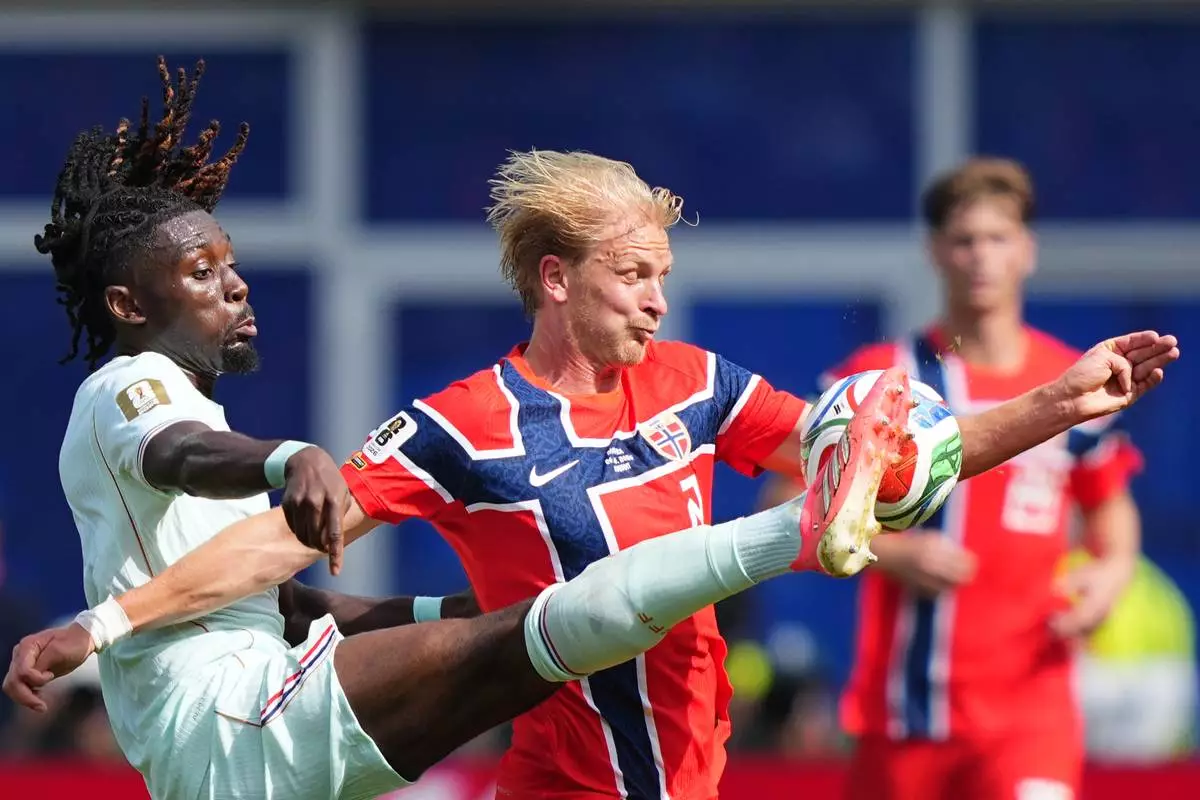
France's Manu Kone, left, vies for the ball with Norway's Morten Thorsby during the World Cup Group I soccer match between Norway and France in Foxborough, Mass., near Boston, Friday, June 26, 2026. (AP Photo/Martin Meissner)
France's Manu Kone, left, vies for the ball with Norway's Morten Thorsby during the World Cup Group I soccer match between Norway and France in Foxborough, Mass., near Boston, Friday, June 26, 2026. (AP Photo/Martin Meissner)

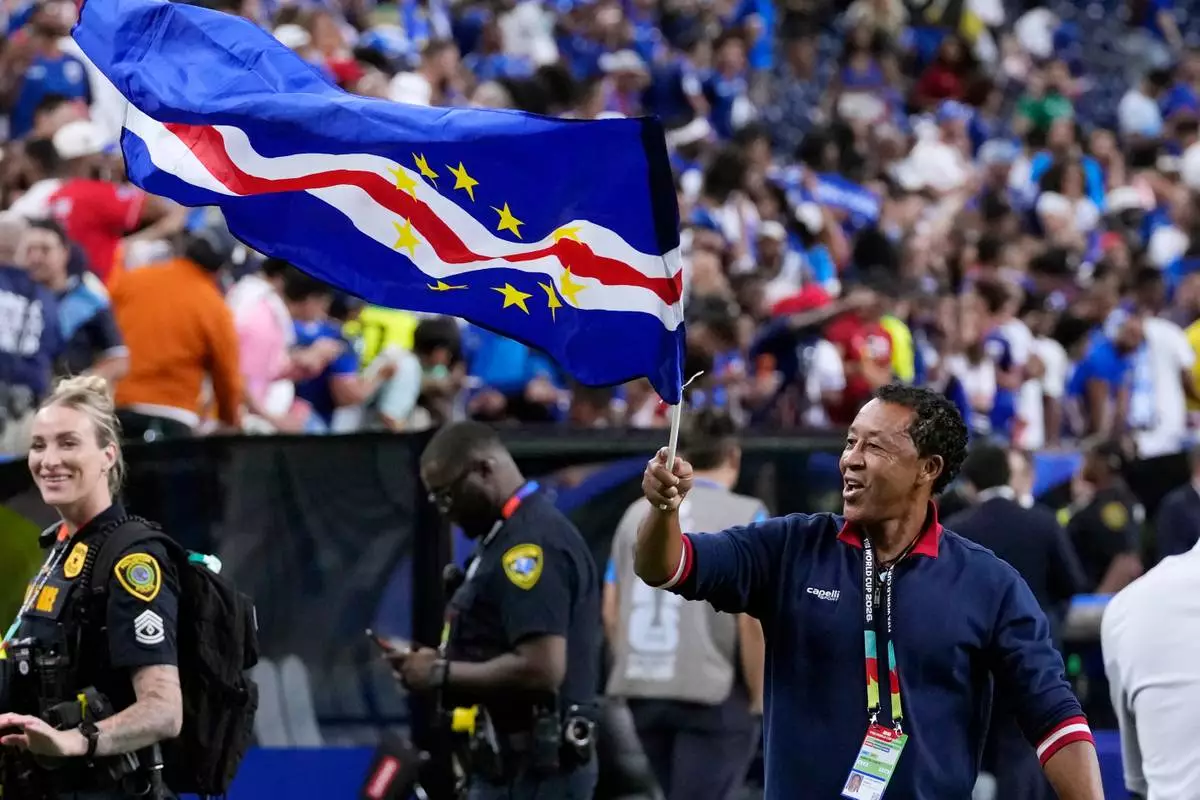
Cape Verde head coach Bubista waves the flag as he celebrates with fans after their 0-0 draw against Saudi Arabia after the World Cup Group H soccer match in Houston, Friday, June 26, 2026. (AP Photo/David J. Phillip)


Cape Verde head coach Bubista waves the flag as he celebrates with fans after their 0-0 draw against Saudi Arabia after the World Cup Group H soccer match in Houston, Friday, June 26, 2026. (AP Photo/David J. Phillip)

JUNEAU, Alaska (AP) — A man with the same name and party affiliation as Alaska Republican U.S. Sen. Dan Sullivan is eligible to challenge the senator in the August primary, a judge ruled Friday.

Superior Court Judge Thomas Matthews’ ruling overturns a June 15 decision by Division of Elections Director Carol Beecher to disqualify the challenger and keep him off the primary ballot. Matthews’ ruling can be appealed to the state Supreme Court.

Attorneys for the state have said Tuesday is the deadline for a final ruling so that ballots for the Aug. 18 primary can be printed.

The judge ruled that the division’s decision to exclude Dan J. Sullivan because his candidacy was not “in good faith” was not based on the Constitution, Alaska law or the division’s own regulations. The retired teacher from the small fishing community of Petersburg filed to challenge the incumbent.

“Instead, the decision was based upon a new, previously unstated, ‘good faith’ criteria,” the judge wrote.

The division is appealing the decision, Sam Curtis, a spokesperson with the state Department of Law, said by email Saturday. Jeffrey Robinson, an attorney for Dan J. Sullivan, said in an email he expected the division to appeal and couldn't comment until the Alaska Supreme Court rules on the case.

The controversy over the two Dan Sullivans has underscored the stakes involved in the incumbent’s reelection campaign. The Alaska race is one of about half a dozen U.S. Senate races expected to be highly competitive in the fall, and the seat is one Democrats are trying to flip in their efforts to try to regain the majority.

The senator and allies, including the National Republican Senatorial Committee, have condemned the challenger’s efforts to join the race, arguing his presence could confuse voters. Under Alaska’s election system, the top four candidates from the primary, regardless of party, move on to the ranked-choice November general election.

The senator has accused the challenger Sullivan of working with Democrats and the campaign of Democratic former U.S. Rep. Mary Peltola — who is considered the senator’s main opponent — to cause confusion and boost Peltola’s chances. Peltola’s campaign and state Democrats have denied the allegation, as has the challenger.

Sen. Sullivan and Peltola are the highest-profile candidates in the crowded race and the only ones to report raising any money.

Beecher has said she determined the challenger Sullivan is not eligible to run because his candidacy was not filed in good faith and instead was done with an intent to confuse voters. She said he had registered to vote as Daniel J. Sullivan Jr. and, in conjunction with his candidacy, changed his party affiliation to Republican. She also cited similarities between his campaign website and the senator’s, and his work with a consultant whose clients have included some Democrats. She did not mention finding any evidence of alleged coordination.

In arguing to keep the challenger disqualified, attorneys for the state pushed back on suggestions the ballot could be designed in a way to reduce voter confusion over two candidates with the same name and party running for the same office.

“The Constitution does not require States to place a sham candidate on the ballot and then attempt to mitigate the damage through design choices,” attorney Rachel Witty, with the Alaska Department of Law, and outside attorneys Christopher Murray and Michael Francisco wrote in court filings.

Attorneys for the challenger Sullivan argued that the Constitution lays out three exclusive qualifications for the Senate, addressing only age, citizenship and residency. They said Beecher lacked the legal authority to boot their client off the ballot.

The challenger Sullivan has said that sharing a name and party affiliation with the incumbent gave him “an instant megaphone.” But the 69-year-old retired teacher and former U.S. Forest Service employee said he had considered a run for some time and had grown frustrated with the senator.

He initially was certified on the state’s candidate list as Dan J. Sullivan, with the senator listed as Dan S. Sullivan and identified as the incumbent.

———

This story has been updated to correct the surname of Dan J. Sullivan's attorney: it is Robinson, not Robertson.

Dan Sullivan, who has filed to run for U.S. Senate in Alaska, poses for a photo Friday, June 26, 2026, in Petersburg, Alaska. (AP Photo/Katie Holmlund)

Dan Sullivan, who has filed to run for U.S. Senate in Alaska, poses for a photo Friday, June 26, 2026, in Petersburg, Alaska. (AP Photo/Katie Holmlund)

Dan Sullivan, who has filed to run for U.S. Senate in Alaska, poses for a photo Friday, June 26, 2026, in Petersburg, Alaska. (AP Photo/Katie Holmlund)

Dan Sullivan, who has filed to run for U.S. Senate in Alaska, poses for a photo Friday, June 26, 2026, in Petersburg, Alaska. (AP Photo/Katie Holmlund)

Dan Sullivan, who has filed to run for U.S. Senate in Alaska, poses for a photo Friday, June 26, 2026, in Petersburg, Alaska. (AP Photo/Katie Holmlund)

Dan Sullivan, who has filed to run for U.S. Senate in Alaska, poses for a photo Friday, June 26, 2026, in Petersburg, Alaska. (AP Photo/Katie Holmlund)

Recommended Articles