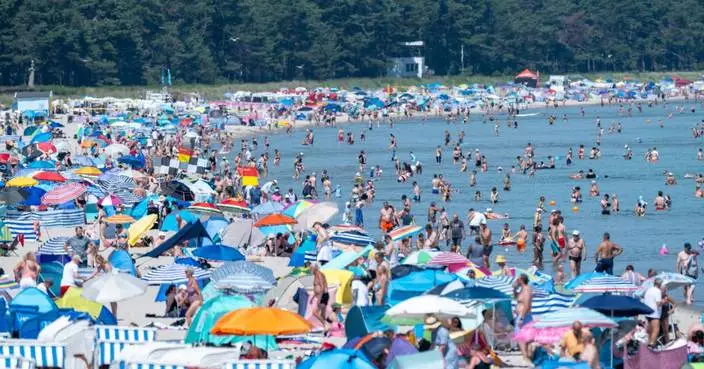
BUDAPEST, Hungary (AP) — Tens of thousands of people gathered in soaring temperatures in Hungary's capital on Saturday to celebrate the 31st annual Budapest Pride, the first such LGBTQ+ march since former Prime Minister Viktor Orbán, who had sought to ban the event, was ousted in an April election.
The march began Saturday afternoon as temperatures reached at least 38 C (100 F) amid a record-breaking heat wave that has gripped most of Europe. Organizers distributed water bottles to marchers, and the city's public water utility opened fountains along the route.
Participants set off from Budapest's iconic Opera house and wound through the city center before crossing the Erzsébet Bridge over the Danube River. Members of Hungary’s LGBTQ+ community and masses of supporters danced to music and waved rainbow flags.
Luca Új, who was participating in her third Pride event, said she felt the mood at the march was more relaxed now that Orbán's government, which implemented numerous anti-LGBTQ+ policies during its 16 years in power, had been defeated.
“There used to be a lot of tension. But now I see people as being somehow happier, and there are more older people, too,” she said.
Saturday's Pride march came a little more than a year after Orbán's nationalist-populist government passed legislation and a constitutional amendment to outlaw the event, drawing criticism from human rights groups and politicians across the European Union.
Yet in open defiance of the ban, last year's Pride went on as planned and was the biggest in Hungary's history, with organizers estimating attendance at over 350,000. The massive turnout for the march, which the government for months had insisted would no longer be permitted, was seen as a major blow to Orbán’s prestige.
Orbán was handily defeated in the April election by a center-right challenger, Prime Minister Péter Magyar and his Tisza party. Hungary's new government has not repealed the Orbán-era legislation that outlawed Pride, but police this year authorized the event and were providing security along the route.
Kristóf Györgyi, a first-time Pride participant who traveled to Budapest from the southern city of Szeged, said he has high hopes that Hungary's new government will take steps to extend rights to sexual minorities that are available in many other European countries.
“The fact that there’s already a debate in Parliament about whether an orphaned child is better off with a same-sex couple or in an orphanage is a positive sign,” he said, referring to the Orbán-era ban on same-sex adoption, as well as same-sex marriage.
“Obviously, the laws haven’t changed yet, but there are already many signs of hope for our community,” he said.
Hungary's previous government long insisted that Pride, a celebration of LGBTQ+ visibility and struggle for equal rights, was a violation of children’s rights to moral and spiritual development — something rights groups and many experts have rejected.
In April, the EU's highest court ruled that Orbán-era legislation from 2021 that banned the availability of LGBTQ+ content to minors violates EU law and breaches a foundational treaty guaranteeing respect for human rights and equality.

Participants cross the Elizabeth Bridge during the 31st Budapest Pride event in downtown Budapest, Hungary, Saturday, June 27, 2026. (Zoltan Balogh/MTI via AP)

Participants cross the Elizabeth Bridge during the 31st Budapest Pride event in downtown Budapest, Hungary, Saturday, June 27, 2026. (Zoltan Balogh/MTI via AP)
The economy, inflation and how those forces could impact the lives of Americans were front and center over the past week. Trips to the grocery store or gas station are more painful than they were last year, and rising costs are impacting the decisions of both households and businesses.
Here’s a snapshot of prominent economic data and news that occurred over the past week and what it potentially means for you.
The Federal Reserve’s preferred inflation gauge rose to a new three-year high in May as gas prices peaked, a sign rising costs could pose political problems for President Donald Trump and his political party as midterm elections near.
Consumer prices rose 4.1% in May from a year earlier, the Commerce Department said Thursday, the largest annual increase since April 2023. On a monthly basis, inflation was 0.4% last month, matching April’s increase and down from 0.7% in March.
The increase was largely driven by more expensive gas, as well as pricier semiconductors and other computer equipment that are in high demand for the AI buildout.
Apple announced an increase in prices for Macs and iPads, citing a memory chip shortage brought on by the artificial intelligence boom.
The company called the demand spike an “unprecedented challenge” for the consumer electronics industry.
“We have never seen a component price increase this much, this quickly,” the company said in a written statement.
The new, entry-level MacBook Neo will now cost $699, up from $599. The 512 gigabyte MacBook Air now costs $1,299, up from $1,099. The one terabyte MacBook Pro is $1,999, up from $1,699. The 128 gigabyte iPad Air is now $749, up from $599, while the 256 gigabyte iPad Pro Wifi is now $1,199, up from $999.
The U.S. economy expanded at a solid and unexpected 2.1% annual pace from January through March, the Commerce Department reported Thursday in its final estimate of first-quarter growth.
The growth in gross domestic product — the nation’s output of goods and services — marked a rebound from a sluggish 0.5% in the last three months of 2025 when a 43-day federal government shutdown weighed on the economy. Thursday’s numbers were an upgrade from Commerce’s previous first-quarter estimate of 1.6% growth.
Business investment surged, likely due to an investment boom in artificial intelligence. But consumer spending, which accounts for around 70% of U.S. economic activity, fell sharply from fourth-quarter 2025 and from Commerce’s previous estimate in a sign that consumers may be cutting back in the face of higher gasoline prices caused by the war with Iran.
The average long-term U.S. mortgage rate edged higher this week, staying close to 6.5%, where it’s been the last six weeks.
The benchmark 30-year fixed rate mortgage rate rose to 6.49% from 6.47% last week, mortgage buyer Freddie Mac said Thursday. One year ago, the average rate was 6.77%.
When mortgage rates rise they can add hundreds of dollars a month in costs for borrowers, reducing their purchasing power.
Borrowing costs on 15-year fixed-rate mortgages, often sought by borrowers refinancing a home loan, also rose this week. That average rate ticked up to 5.84% from 5.81% last week. A year ago, it was at 5.89%, Freddie Mac said.
Fewer Americans applied for jobless aid last week as layoffs remain low despite economic headwinds that are creating uncertainty for businesses.
U.S. applications for unemployment benefits in the week ending June 20 fell by 12,000 to 215,000, the Labor Department reported Thursday. That’s fewer than the 225,000 new applications forecast by analysts surveyed by the data firm FactSet.
Weekly filings for unemployment benefits are considered representative of U.S. layoffs and are close to a real-time indicator of the health of the job market.
US markets rose on the final day of trading during the week after oil prices eased back to where they were before the war with Iran, but drops for AI stocks kept the market in check.
The S&P 500 had its second losing week in the last 13, largely because of a retreat in the tech sector, particularly artificial-intelligence companies and related technology.
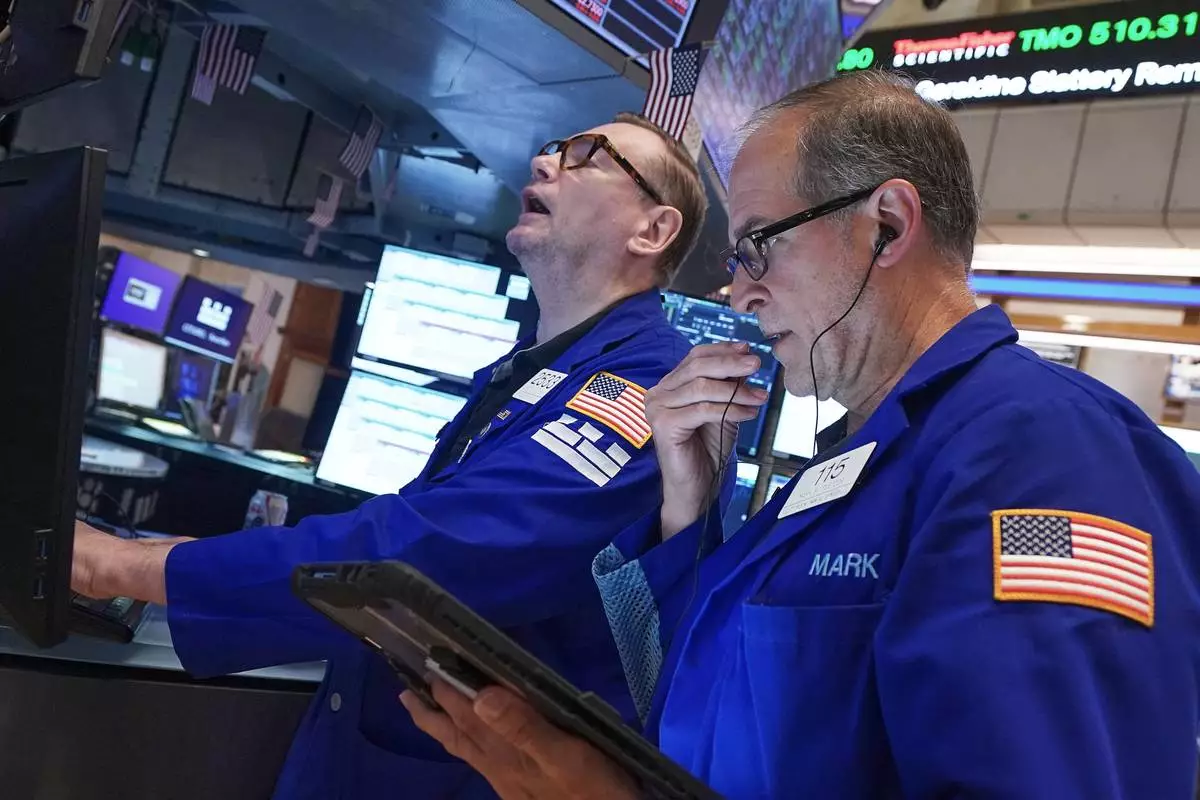
Specialist Patrick King, left, and trader Mark Puetzer work on the floor of the New York Stock Exchange, Friday, June 26, 2026. (AP Photo/Richard Drew)

FILE - A shopper looks over Apple MacBook laptops on display in a Costco warehouse on June 2, 2026, in Sheridan, Colo. (AP Photo/David Zalubowski, File)

An electronic billboard with an image of President Donald Trump reads "I love the inflation." - Donald J. Trump June 10, 2026," is seen near I-74 in Cincinnati, Tuesday, June 16, 2026. (AP Photo/Carolyn Kaster)