With mutual visa-free policies between China and Russia, group traveling have become popular.
A 200-member Russian tour group including students and travel agents recently visited Weihai City, east China's Shandong Province, for an in-depth experience of China's intangible cultural heritage and seaside scenery.
The group visited an art center, and were treated to Sichuan opera face-changing and traditional folk music performances, and talked with masters of paper-cutting, painted gourds, tin inlay, and guqin.
They also stopped by a local vocational school, where Russian students teamed up with their Chinese counterparts to paint in the traditional style, try moxibustion, and make dumplings.
"It was such a great way to connect with Chinese culture through food. They guided us through every step and even said we did a good job. It was a lot of fun and a really amazing experience," said Nikiforova Elizaveta, a Russian student.
They also visited a marine science museum to learn about local aquaculture techniques.
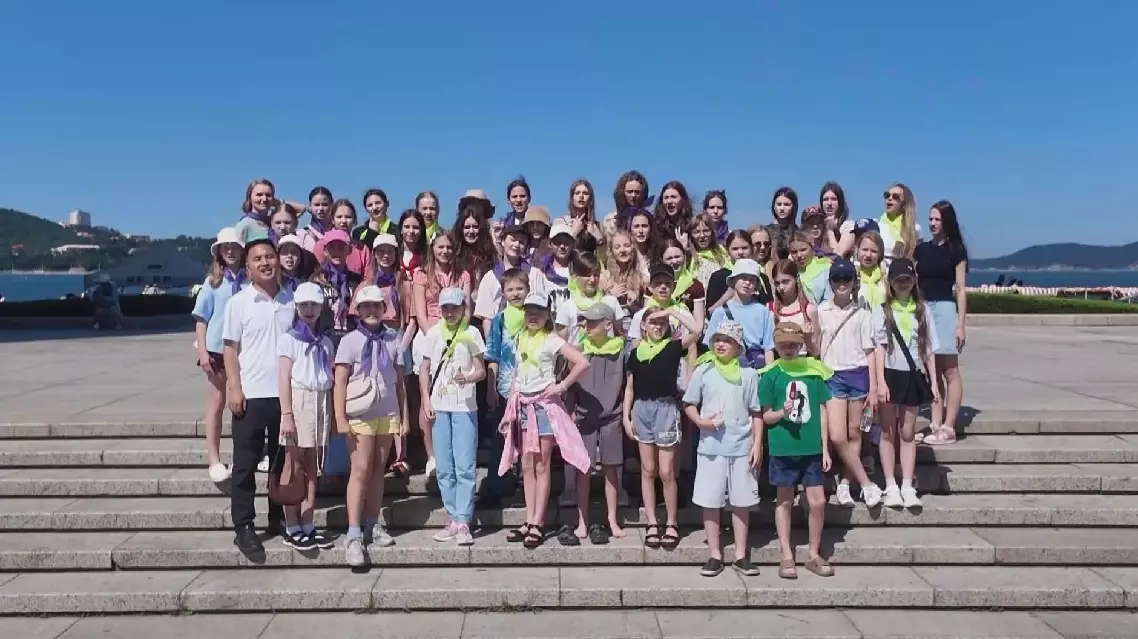
Visa-free policy facilitates group visits to China
Outdoor film screenings are drawing large crowds to some of Beijing’s most significant historic and industrial landmarks this summer, bringing audiences to centuries-old architecture and a repurposed industrial park.
The New Zealand film "1978" had its global premiere Saturday night at the foot of a cooling tower beside Big Air Shougang during the 10th China-New Zealand Film Carnival, running Friday through Monday.
The screening took place in Shougang Park, a former steel mill transformed into a cultural and sports hub that served as a venue for the 2022 Beijing Winter Olympics. The site's industrial relics, including massive blast furnaces and cooling towers, now provide a backdrop for events blending heritage with modern entertainment.
Meanwhile, crowds gather every weekend for nighttime screenings at the Bell and Drum Towers, which sit at the northern end of Beijing's Central Axis. The 13th-century structures served as the official timekeepers for the Yuan, Ming and Qing dynasties and are part of the site added to the UNESCO World Heritage List in 2024.
"I think combining historical architecture with film is a brilliant idea. It blends cultural elements with artistic inspiration, giving a sense of blending history and modernity," said Zhao Qian, an audience member at a screening.
The weekend screenings at the Bell and Drum Towers, ongoing for several months now, will continue through the National Day holiday in October with diverse offerings, including animated family films and Chinese-style films.
"The screenings encourage visitors to appreciate the beauty of the ancient architecture, particularly the Bell and Drum Towers, breathing new life into old buildings through film and other art forms," said Yuan Jian, deputy general manager of the Creative Integration Department of the Fanghu Zhaowen (Beijing) Culture Technology Company.
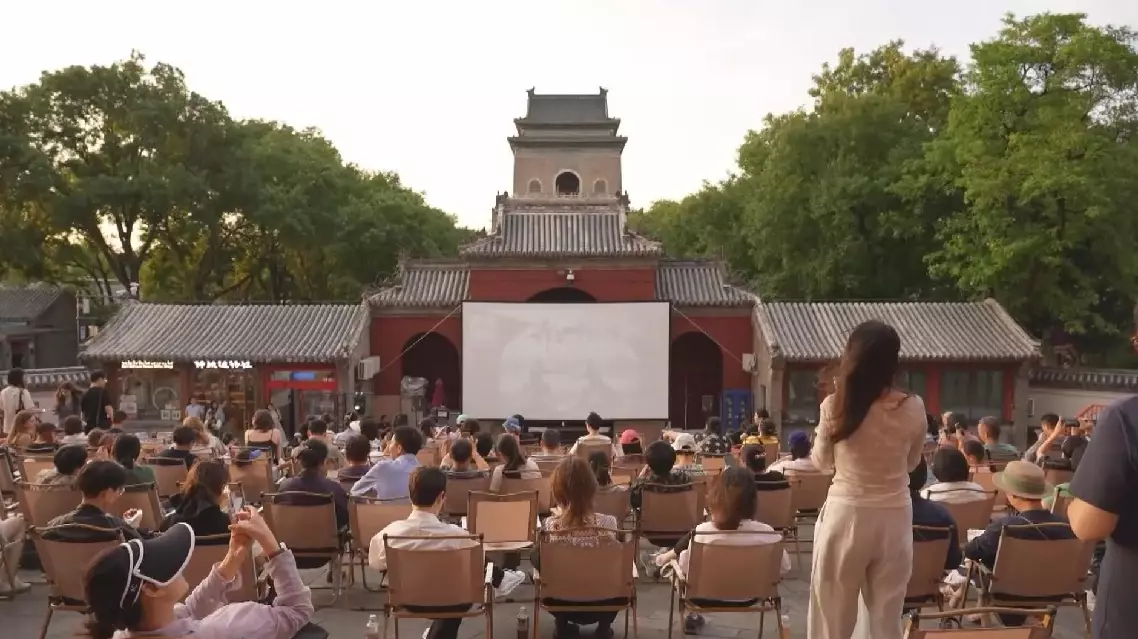
Open-air screenings turn Beijing's historic, industrial sites into summer cinemas