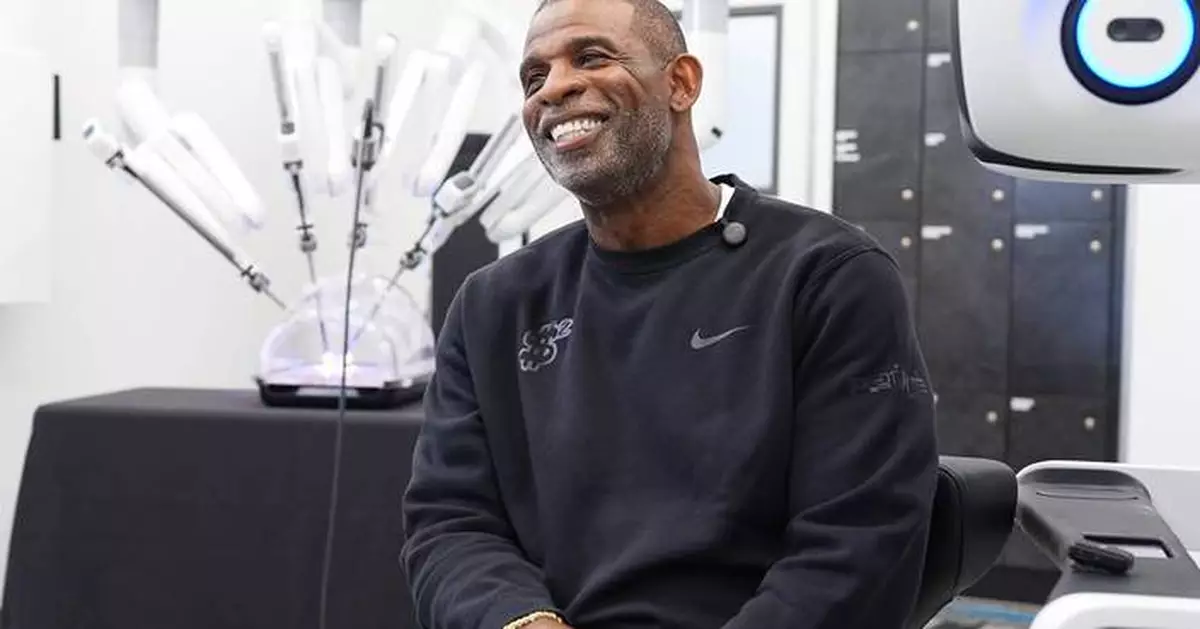
BOULDER, Colo. (AP) — Deion “Coach Prime” Sanders says he feels like his old — and younger — self again a year after undergoing surgery to remove his cancerous bladder.
“I consider myself cancer-free," thanks to robotic surgery that also reconstructed his bladder using part of his intestine, Sanders told The Associated Press after getting a tutorial in the surgical system that was used in his operation.
Click to Gallery
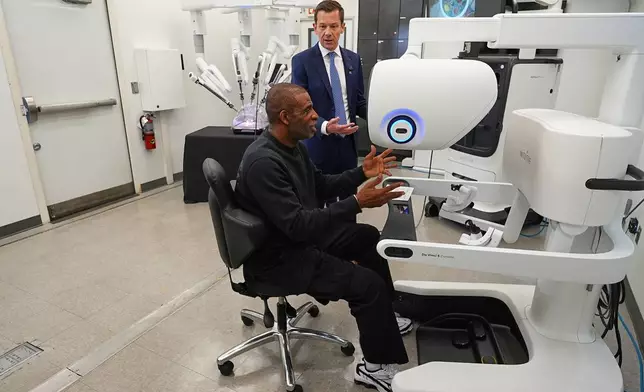
Colorado head football coach Deion Sanders, front, reacts after working the Da Vinci robotic surgical machine used to remove his cancerous bladder last year during a demonstration of the device by Jason Hart, senior vice president of global marketing for Intuitive, Tuesday, June 23, 2026, in Boulder, Colo. (AP Photo/David Zalubowski)
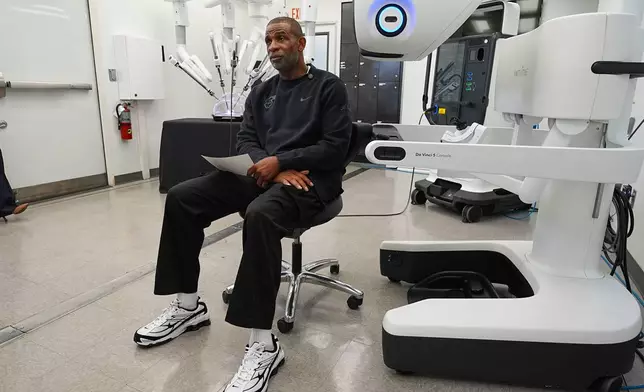
Colorado head football coach Deion Sanders talks after working the Da Vinci robotic surgical machine used to remove his cancerous bladder last year after a demonstration of the device Tuesday, June 23, 2026, in Boulder, Colo. (AP Photo/David Zalubowski)
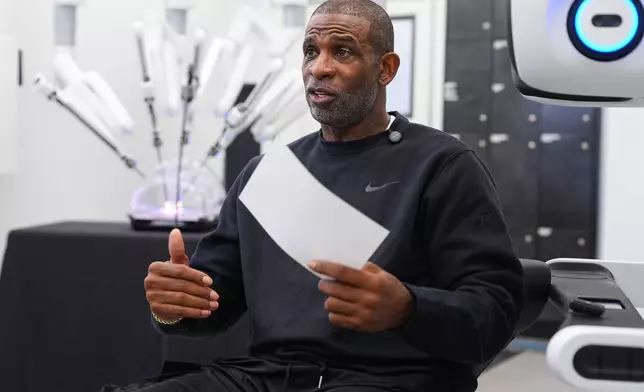
Colorado head football coach Deion Sanders talks after working the Da Vinci robotic surgical machine used to remove his cancerous bladder last year during a demonstration of the device Tuesday, June 23, 2026, in Boulder, Colo. (AP Photo/David Zalubowski)
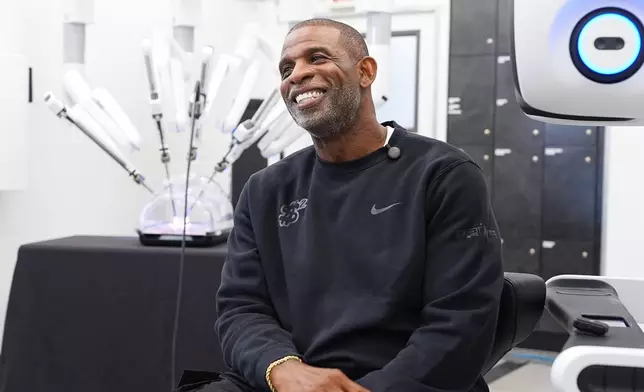
Colorado head football coach Deion Sanders talks about working the Da Vinci robotic surgical machine used to remove his cancerous bladder last year during a demonstration of the device Tuesday, June 23, 2026, in Boulder, Colo. (AP Photo/David Zalubowski)
This being Men's Health Awareness Month, the University of Colorado football coach wanted to get a first-hand look at the Intuitive Da Vinci System, which is less invasive than open surgeries and cuts down on hospital stays and speeds recoveries.
“I was fighting” last year at this time, Sanders recalled. "I was walking out on the property with a bag of blood and also urine and trying to get back. But this expedited the process. Last year at this time I was in a whole different place, and I'm just thankful.”
Sanders missed football camps last summer in Boulder as he went through cancer treatments. The Buffaloes finished with a 3-9 mark a year after making a bowl game behind Shedeur Sanders and Heisman Trophy winner Travis Hunter.
This summer he appears much fitter and energetic as he oversees offseason training.
"If I pull my shirt up, I'm not scarred, it's not flawed. I'm not embarrassed by anything that transpired. I'm elated by everything that transpired,” Sanders said.
At a routine checkup last spring, a CT scan showed a mass on Sanders' bladder. He was referred to the University of Colorado Anschutz, where he met Dr. Janet Kukreja, director of urologic oncology at the CU Cancer Center and UCHealth University of Colorado Hospital.
Sanders, who turns 59 later this summer, was diagnosed with a malignant tumor in his bladder. Although the tumor hadn't reached the muscle layer in his bladder, it was considered “very high risk,” with a 50-50 chance of recurring or progressing after treatments.
Kukreja is among the small group of surgeons in the U.S. who perform robotic removal of the entire cancerous bladder — called a radical cystectomy — and robotic reconstruction of the organ, which involves having a section of intestine function as a bladder.
“It got me back in the game, got me back on my feet and got me out of the darn hospital and back into the normalcy of my life," Sanders said. “I'm here to let people know there's another option if you need surgery."
He called the robotic system his time machine.
”I'd be a fool to be blessed the way I was blessed and not sound alarms," Sanders said. “When I opened up a club years ago I went to the mountaintop and told all the stations come on to the nightclub. So, why wouldn't I do this? Saved me time so I could get back on the field, get back on my game instead of sitting up there in the hospital having a pity party. It saves you time. That’s what we’re all fighting for is time. We never know how much we get.”
Sanders has spent time recently with his son Shedeur, who's entering his second year with the Cleveland Browns and who will compete for the starting job with Deshaun Watson in training camp.
“He's on vacation, but he's going to the hills in St. Croix right now doing gassers," Sanders said.
Asked what he thought about Hunter, entering his second season in Jacksonville, possibly focusing on playing defensive back after pulling double duty as a DB and wide receiver in college, Sanders said: “I just want him to be happy. I can't tell those coaches how to coach and Travis what he's gifted to do. I just want him happy; that's all I want.”
As for Julian “JuJu” Lewis, the Buffs' starting quarterback and former five-star recruit out of Carrollton, Georgia, who took over the starting role as a freshman late last season, Sanders said those cameos will pay dividends in 2026.
“I think the entire team is benefiting" from lessons learned last year and new faces arriving this spring, Sanders said. “I have the best coaching staff I've ever featured. Everybody's unified. I just walked out of the weight room. They're lifting their butts off and they can't wait to go to camp. It's going to be phenomenal.”
AP college football: https://apnews.com/hub/ap-top-25-college-football-poll and https://apnews.com/hub/college-football
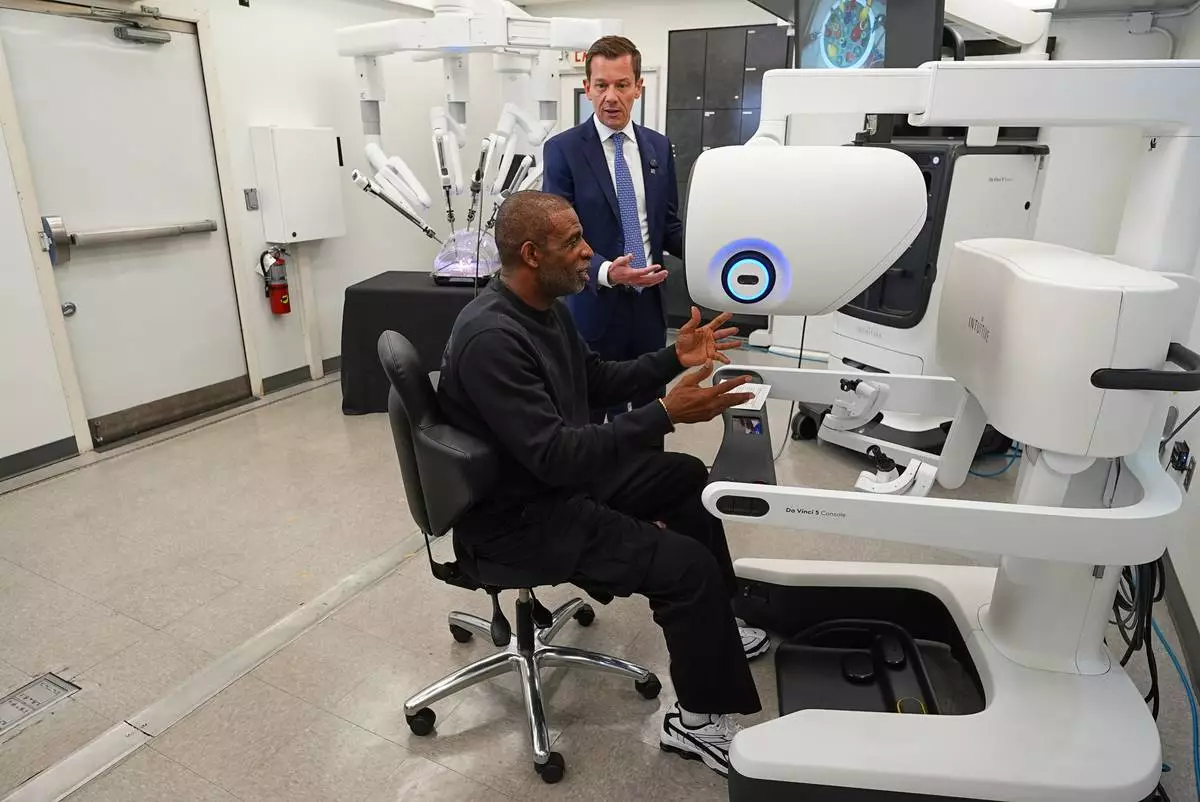
Colorado head football coach Deion Sanders, front, reacts after working the Da Vinci robotic surgical machine used to remove his cancerous bladder last year during a demonstration of the device by Jason Hart, senior vice president of global marketing for Intuitive, Tuesday, June 23, 2026, in Boulder, Colo. (AP Photo/David Zalubowski)
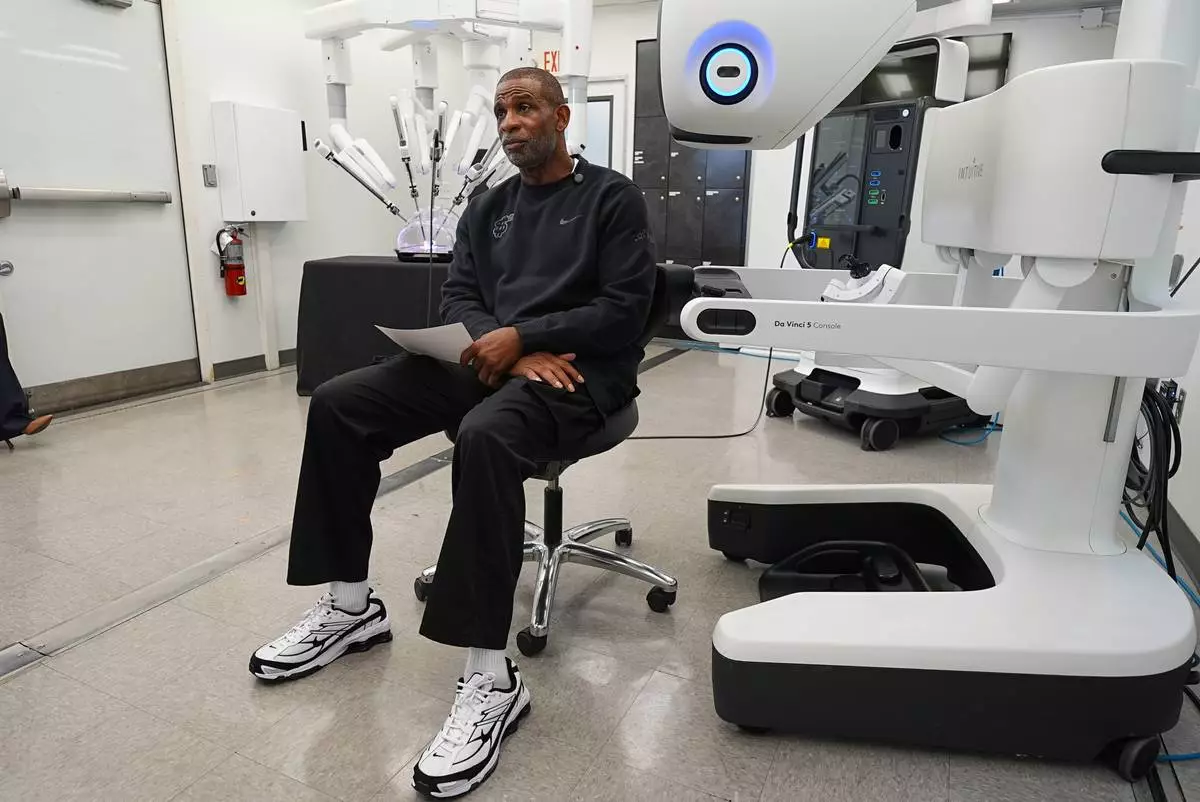
Colorado head football coach Deion Sanders talks after working the Da Vinci robotic surgical machine used to remove his cancerous bladder last year after a demonstration of the device Tuesday, June 23, 2026, in Boulder, Colo. (AP Photo/David Zalubowski)
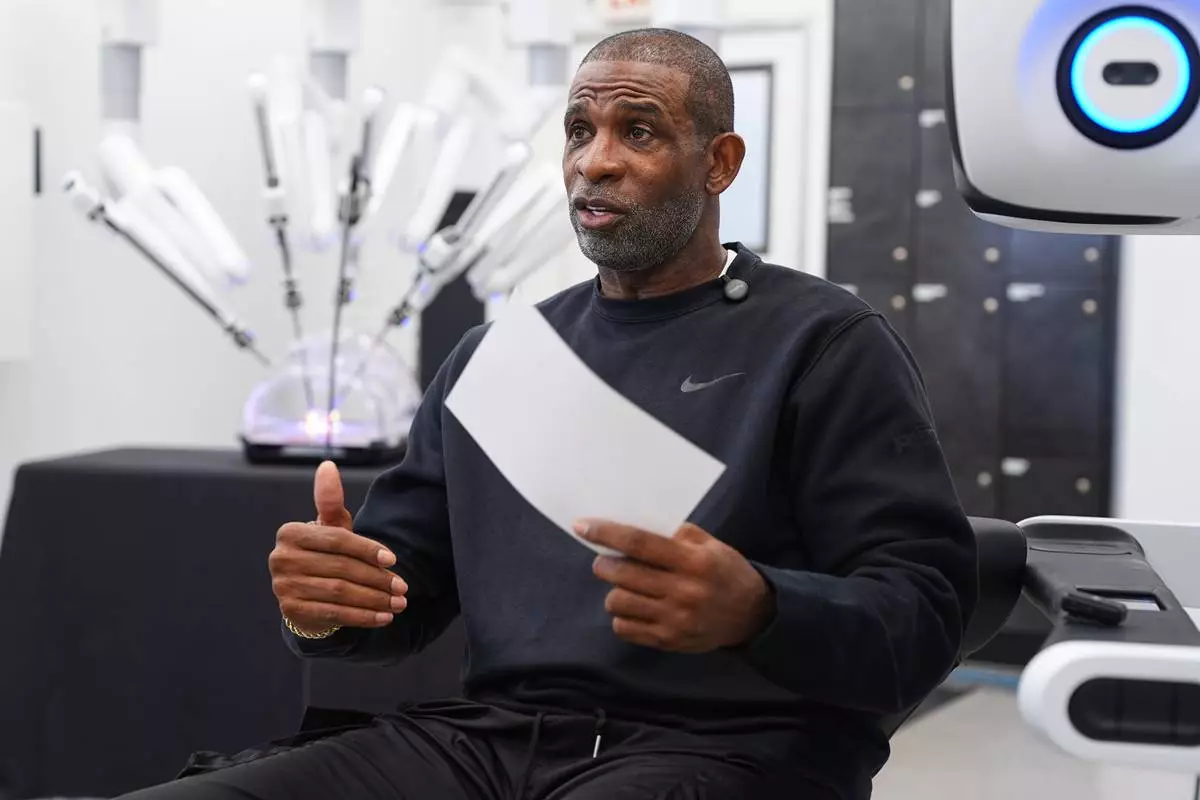
Colorado head football coach Deion Sanders talks after working the Da Vinci robotic surgical machine used to remove his cancerous bladder last year during a demonstration of the device Tuesday, June 23, 2026, in Boulder, Colo. (AP Photo/David Zalubowski)
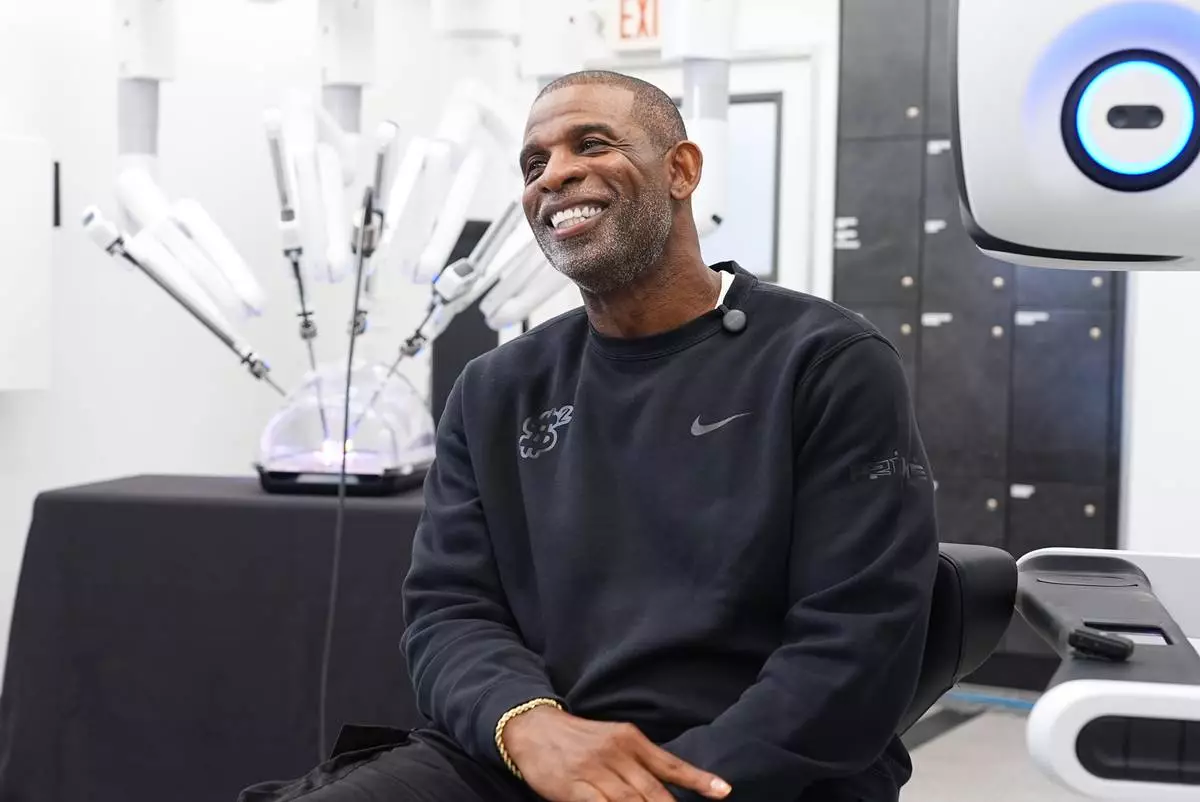
Colorado head football coach Deion Sanders talks about working the Da Vinci robotic surgical machine used to remove his cancerous bladder last year during a demonstration of the device Tuesday, June 23, 2026, in Boulder, Colo. (AP Photo/David Zalubowski)