Getting to the knockout rounds of the World Cup is nothing new for the United States. But that's usually where the American make a quick exit.
Wednesday's match against Bosnia-Herzegovina in Santa Clara, California, marks the eighth time the U.S. has played in an elimination round in 12 World Cups. But only once, in 2002, have the Americans a won a match in the knockout rounds.
Because this year's tournament was expanded to 48 teams, the first knockout round includes 32, creating an extra round of elimination play.
Here's a look at the short and mostly unsuccessful U.S. record once the World Cup reaches the win-or-go-home stage.
The first World Cup was played with 13 teams and the U.S. advanced straight to the semifinals as winner of its group. That's where the Americans' tournament ended with a 6-1 loss to Argentina.
The second edition of the World Cup was the only tournament that did not use groups for the early matches. Instead, all 16 teams played a straight knockout format. The U.S. was immediately eliminated with a 7-1 loss to host and eventual champion Italy.
The U.S. didn't qualify for the World Cup from 1954 through 1986, was eliminated in the group stage in 1990 and then got an automatic bid as the host nation in '94. A 1-1 tie with Switzerland and shocking 2-1 victory over Colombia in the Rose Bowl in the group stage earned the Americans a match against Brazil in the knockout round.
Brazil was down to 10 men after a first-half red card: Leonardo threw an elbow that fractured American midfielder Tab Ramos' skull. The Brazilians still controlled the match and won 1-0 on the way to their fourth World Cup title.
The best U.S. showing in the modern era of the tournament. An upset of European heavyweight Portugal and a draw with co-host South Korea sent the Americans to the knockout round against regional rival Mexico. Goals from Brian McBride and Landon Donovan led to a 2-0 victory.
The U.S. run ended in the next match with a tense 1-0 loss to eventual finalist Germany that was decided on Michael Ballack's goal in the 39th minute. Americans remember the match for an infamous no-call when a German player appeared to block a likely U.S. goal with his arm. There was no video review in use at the time.
Donovan's frantic, last-minute goal against Algeria secured a dramatic 1-0 victory in the final group match that sent the U.S. to the next round.
Facing Ghana, the U.S. went down 1-0 after just five minutes. Donovan tied it on a penalty kick in the second half. Asamoah Gyan’s extra-time goal secured a 2-1 victory for Ghana that sent the U.S. home.
The U.S. advanced out of the group stage with a 2-1 win over Ghana, a 2-2 draw with Portugal and a 1-0 loss to eventual champion Germany. Their tournament ended with a 2-1 loss to Belgium.
The U.S. started group play with draws with Wales and England, and advanced with a 1-0 win over Iran on Christian Pulisic's goal. The Netherlands then made quick work of the U.S., winning 3-1.
See more of AP’s World Cup coverage here
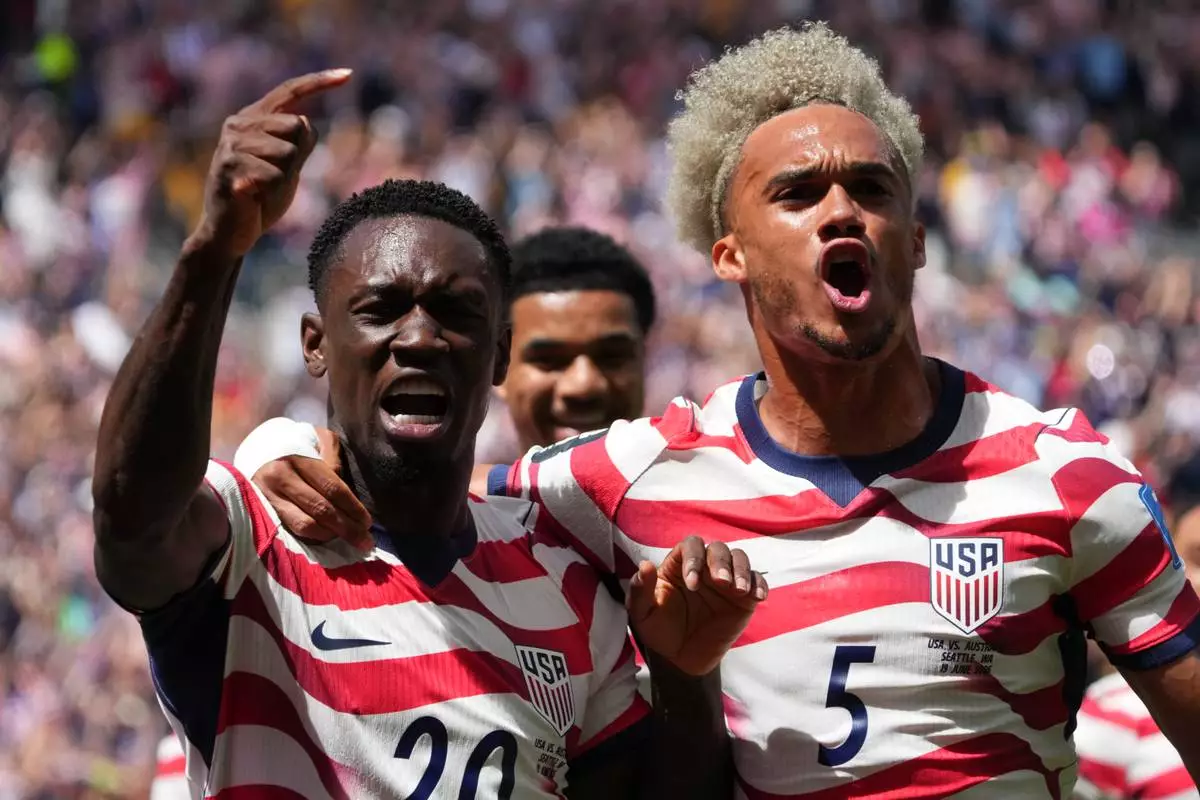
United States' Folarin Balogun (20) and Antonee Robinson (5) celebrate after scoring during the World Cup Group D soccer match between the United States and Australia in Seattle, Friday, June 19, 2026. (AP Photo/Ted S. Warren)
DETROIT (AP) — Jerry Esters proudly displays the American flag each day on his Detroit home. A few miles away, Yvonne Pistochini says there is no scenario under which she would allow the Stars and Stripes to cast its shadow where she lives.
Both are Black.
For Esters, the flag represents the opportunities that allowed the great-great-grandson of slaves to find success and flourish. Pistochini, 79, simply says the America identified by the flag is not the same country she saw growing up.
Americans' views of “Old Glory” are divided by politics, age and race, according to a new survey conducted by The Associated Press-NORC Center for Public Affairs Research ahead of the nation's 250th birthday celebration.
Republicans and older, white adults are especially likely to say they fly the American flag, while younger Democrats and Black adults are more likely to say they don't fly it. Views of the flag — and whether it's a unifying or divisive symbol — track with other deep divisions among Americans, who see their country's history and accomplishments very differently.
“A lot of Black Americans see the flag as a symbol of both inclusion and exclusion,” said Matthew Delmont, professor of American history at Dartmouth College. “Black Americans, more so than white Americans, also understand the flag can be used to justify a version of patriotism that is rooted in exclusion, with the flag being used to say ‘you don’t belong here.’”
The survey of 2,596 adults was conducted April 16-20. It suggests that older white Americans, especially Republicans, are more likely to see the flag as unifying.
About half of U.S. adults said they display the flag at home throughout most of the year, or during holidays. About 7 in 10 Republicans and about 6 in 10 Americans ages 60 and older fly the flag at least during holidays.
About 6 in 10 Democrats and independents, on the other hand, say they “never” fly the U.S. flag. That includes the vast majority, 75%, of Democrats under 45.
Esters, a 64-year-old retired clay sculptor for a Detroit automaker, flies three American flags at his Sherwood Forest home on the city’s west side.
“When these homes were built, Black men like me, my mother and my family ... we couldn’t even buy these homes,” he said. “To me, that’s one reason I fly the flag. We went through a lot to be able to own nice homes, and this is what we fought for.”
The other reason is Moriah Martin, Esters’ great-great-grandmother, who was born into slavery.
“I’m kind of living out her dreams — what I did for a living, having a business, having a nice home,” he said. “I think that’s the American way, but we got to fight for it and we, as Blacks, fought for it.”
He's in the minority among Black adults, according to the survey, which found that only about 3 in 10 Black adults say they ever display the American flag, compared with about half of white and Hispanic adults.
Pistochini says current divisions over political leanings and perspectives, and inequality of opportunities for the poor and people of color are not what she believes the flag should stand for. People confuse flying it with being patriotic, she added.
“Just because you fly a flag doesn't make you a patriot,” Pistochini said. “If there was patriotism, we would not have all this. We can't look at (what's going on) and say this is America.”
Ben Gaskins, chair of political science at Lewis & Clark College in Portland, Oregon, says the flag is an important symbol of patriotism for many Americans.
“It is those who are older people, who are white and people who are more conservative,” Gaskins said. “They take it as more central to their identity.”
Nancy Hansen, a 73-year-old retired Customs and Border Protection clerk in Culvertson, Montana, believes “you have to be for the country, no matter what” and that the flag means “freedom.”
“Freedom to live where we want to live, travel where we want to travel, raise our kids where we want to raise our kids,” said Hansen, who is white and identifies as Republican.
Each year around July 4, the American Legion posts flags outside businesses and homes in Culvertson, including Hansen’s home.
Linda and Greg Cunningham also equate the flag with freedom.
The white, conservative Pontiac, Michigan, couple are going all out this summer. The exterior of their home northwest of Detroit is awash in red, white and blue. The flag sits atop a flagpole just feet from their door.
“It's no political thing, at all," said Linda Cunningham, 63. “It's our freedom. I love the American flag. I love the whole concept of it. I love America. I know there’s so much going on in the world, right now, and I know everyone has their own views, and I'm just sad that politics have to be brought into the flag.”
Of those who took the survey, 47% see the flag as a “more unifying” symbol. About 16% call it a “more divisive” icon, while 36% say it's neither divisive nor unifying.
Only 22% of Black adults see the flag as a unifying symbol, compared with 55% of white adults and 42% of Hispanic adults.
“It’s a painful symbol. It’s a reminder of what we could be and how it’s failed to live up to that for Black people, for Indigenous people and people of color,” said Allison Wiltz, a Black author and founder of Writers and Editors of Color.
Paul Walthour, 71, occasionally flies the flag outside his Minneapolis-area home on special occasions and some holidays. Walthour says that when he’s away from home and at his cabin, the flag goes up each morning and is taken down at the end of the day.
“This is antiquated, perhaps,” said Walthour, who is white and a retired advertising agency creative director. “I feel it’s a symbol that you’re proud to be an American.”
“Unfortunately, I kind of think it’s kind of a symbol of dividing more than uniting,” added Walthour, who identifies as a Democrat. “The people who fly it on the far right have one kind of feeling about it, and the people who fly it on the left have a different kind of feeling about it.”
Williams is a member of AP's Race & Ethnicity team. Sanders and Parwani reported from Washington.
The AP-NORC poll of 2,596 adults was conducted April 16-20 using a sample drawn from NORC’s probability-based AmeriSpeak Panel, which is designed to be representative of the U.S. population. The margin of sampling error for adults overall is plus or minus 2.6 percentage points.
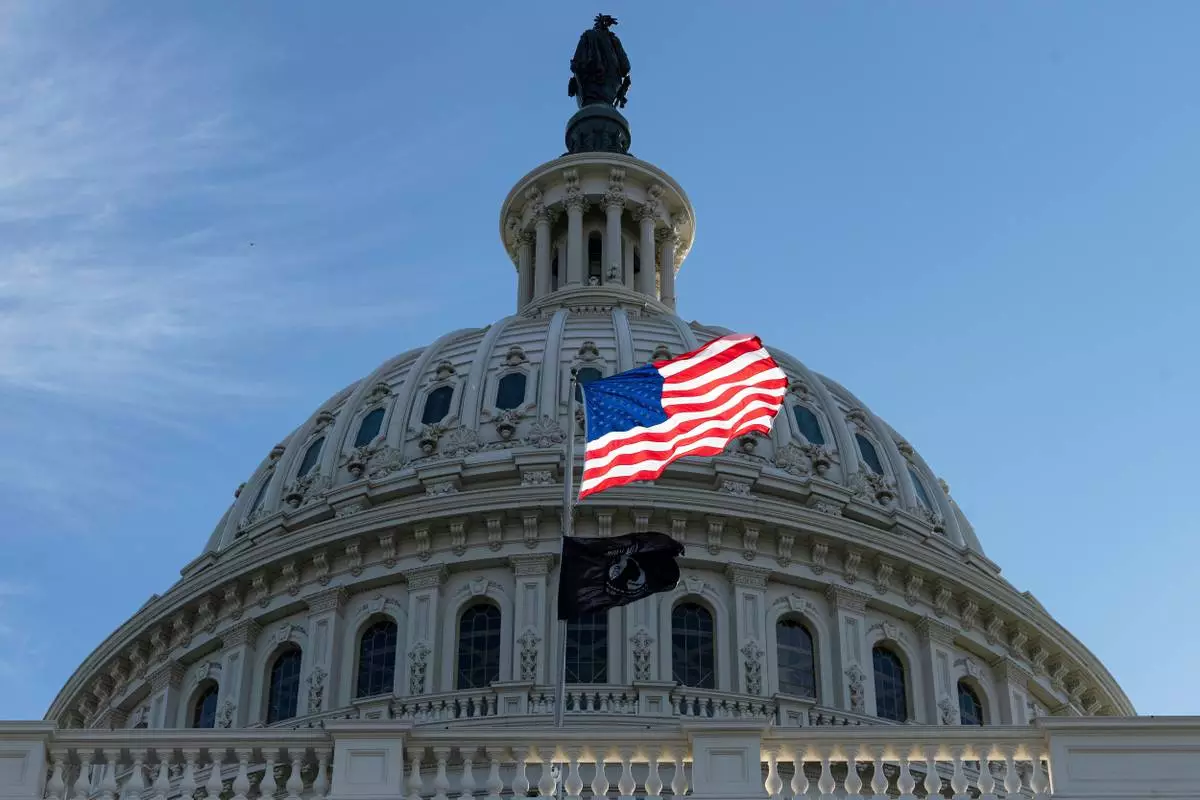
FILE - The American flag over the Capitol is illuminated by the early morning light in Washington, Oct. 1, 2025. (AP Photo/J. Scott Applewhite, File)
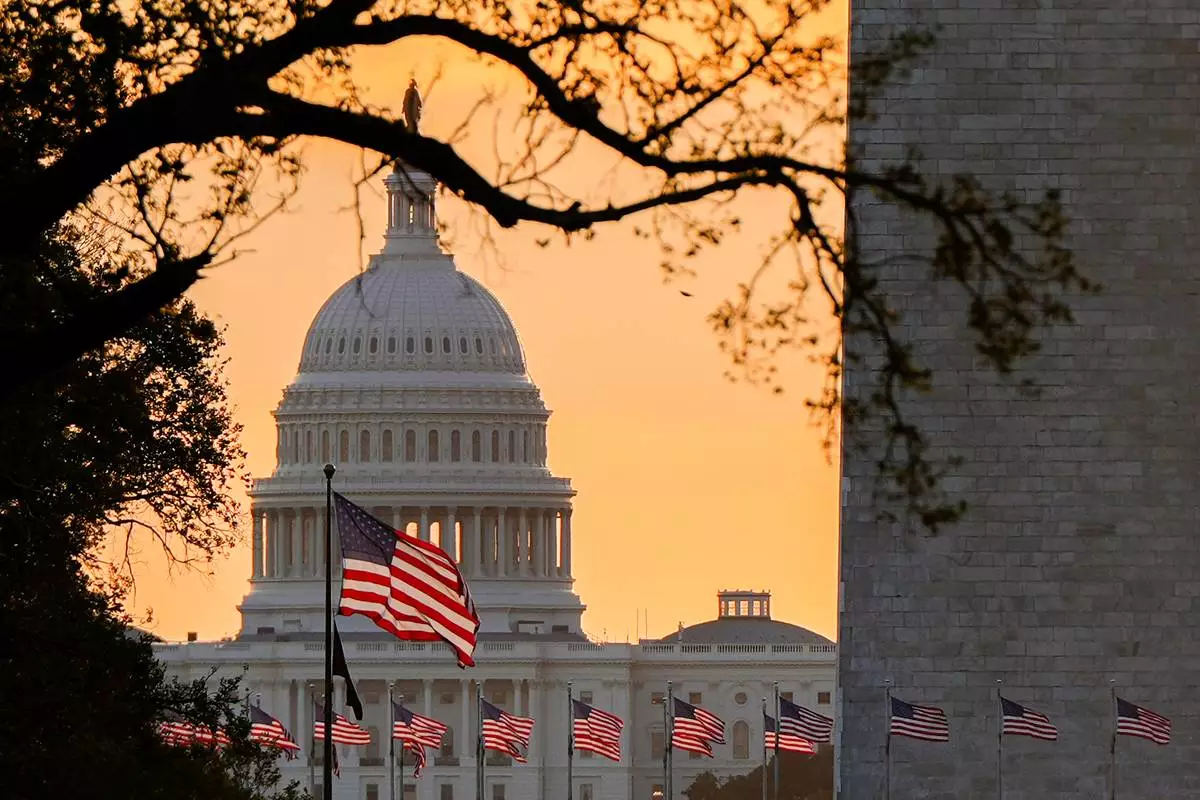
FILE - American flags fly in front of the U.S. Capitol at sunrise, Oct. 1, 2025, in Washington. (AP Photo/Julia Demaree Nikhinson, File)
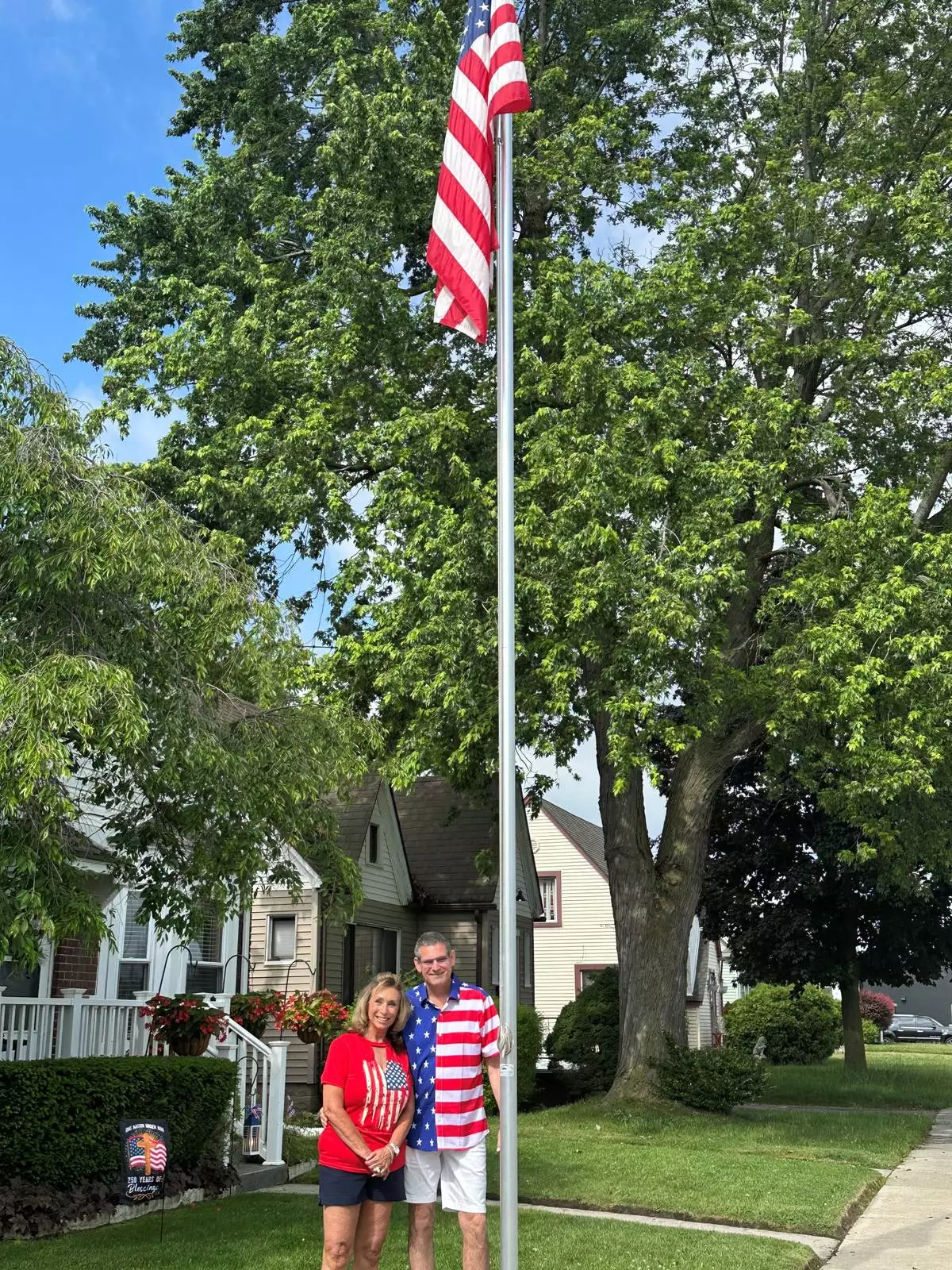
Linda and Greg Cunningham fly the American flag outside their Pontiac, Mich., home on June 10, 2026. (AP Photo/Corey R. Williams)
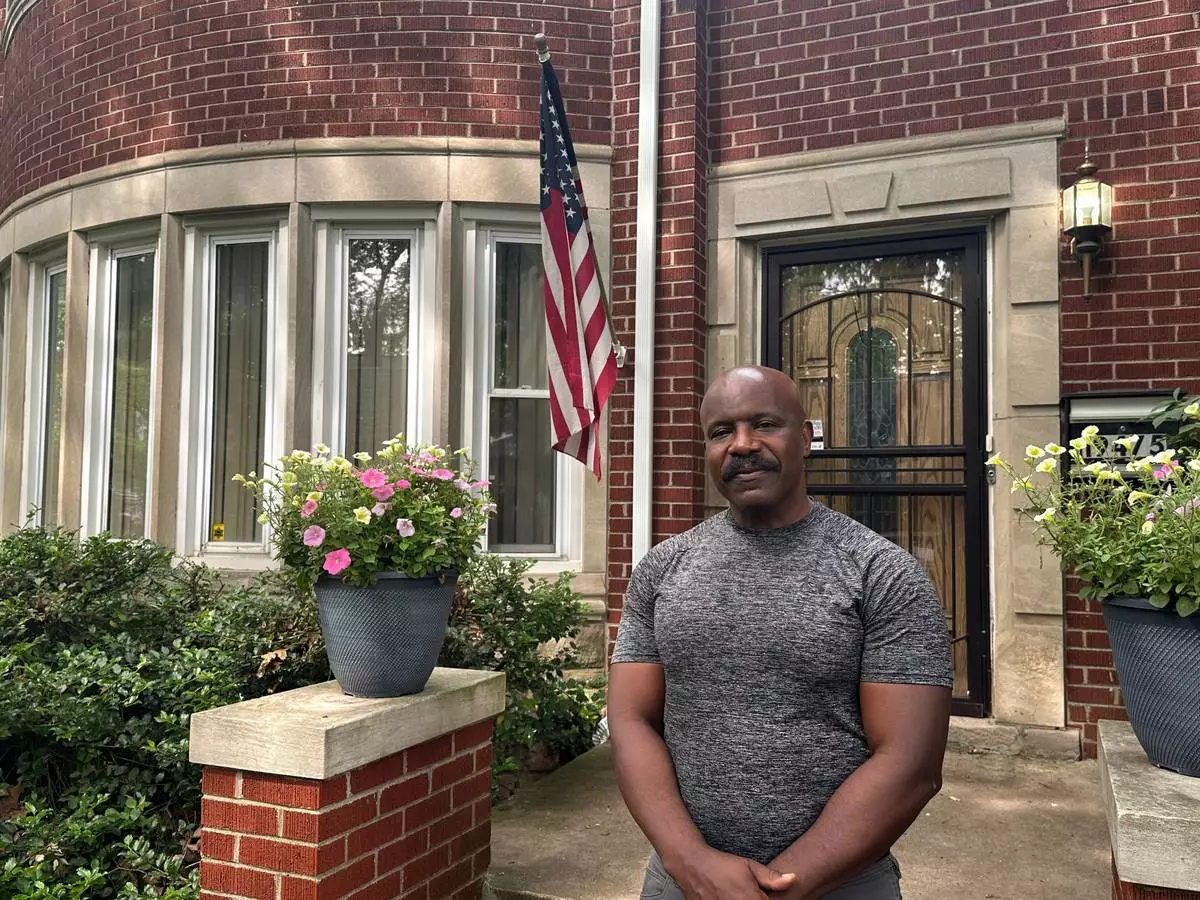
Jerry Esters stands in front of American flag outside his Detroit home on June 9, 2026. (AP Photo/Corey R. Williams)
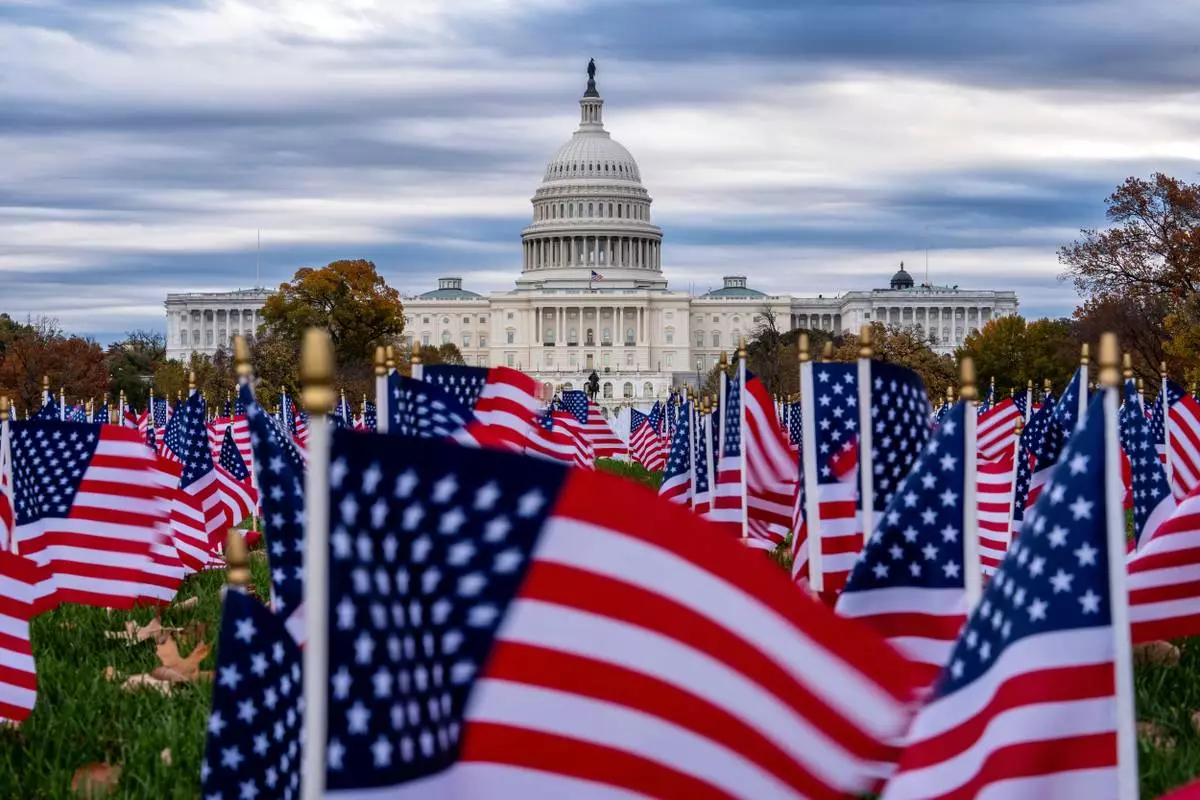
FILE - Miniature American flags flutter in wind gusts across the National Mall near the Capitol in Washington, Nov. 10, 2025. (AP Photo/J. Scott Applewhite, File)