MADRID (AP) — Around 1 million immigrants in Spain have sought to legalize their status after the Southern European nation launched a measure earlier this year to integrate foreigners living and working in the country without authorization.
The window to apply for the program, which was announced in January and kicked off in April, was set to close Tuesday.
It offers immigrants without legal status a one-year, renewable residence permit if they have spent five months living in the country and have a clean criminal record.
Spain's government estimated that half a million people could benefit from the program. But by mid June, the government said it had received more than 900,000 applications.
Spanish Prime Minister Pedro Sánchez, one of Europe's prominent progressive leaders, called the measure “an act of justice and a necessity,” arguing that people already living and working in Spain should “do so under equal conditions” and pay taxes.
The policy contrasts starkly with ratcheted-up deportation efforts taking place in other parts of other parts of the European Union and in the United States. While it wasn't the first time Spain implemented such a policy, it invited intense public debate and scrutiny in the country.
Here's a look at the immigration measure by the numbers.
That's how many applications the Spanish government had received as of June 12 from immigrants seeking work and residency permits under the temporary program.
The government originally estimated about 500,000 foreigners living in Spain without authorization could benefit, but think tanks and the Spanish police placed the estimate closer to a million people.
Immigration experts and analysts expect the final tally to easily exceed a million applicants.
The government's estimate of how many applications were successfully processed by mid June, with applicants set to receive temporary residence and work permits. The final numbers will be higher, as the government has three months to process all applications submitted by June 30.
The share of applicants who are Colombian nationals. Colombians represent one of the largest immigrant groups in Spain, with upward of 980,000 Colombian-born nationals living in the country, according to the National Statistics Institute.
Moroccan nationals made up 14% of applicants, followed by Venezuelans at 10% and Peruvians at 9%, the government said.
Key sectors of the Spanish economy, including agriculture, tourism and the service sector, depend on immigrants from Latin America and Africa.
Spanish residents who were born outside the country. Spain’s population has grown considerably in recent decades, with around 10 million people in the country of 50 million who were born elsewhere — or about one in every five people.
Many are from Colombia, Venezuela and Morocco, having fled violence or political instability, or seeking better economic opportunities.
The number of times Spain previously undertook mass legalization measures for immigrants living and working illegally in the country.
The first three times were under Socialist Party Prime Minister Felipe González starting in 1986, but conservative leader José Aznar's government also oversaw two such measures in the 2000s.
This time around, many more immigrants have applied. In the 2005 measure, the second-largest such instance, 576,500 immigrants had their status legalized.
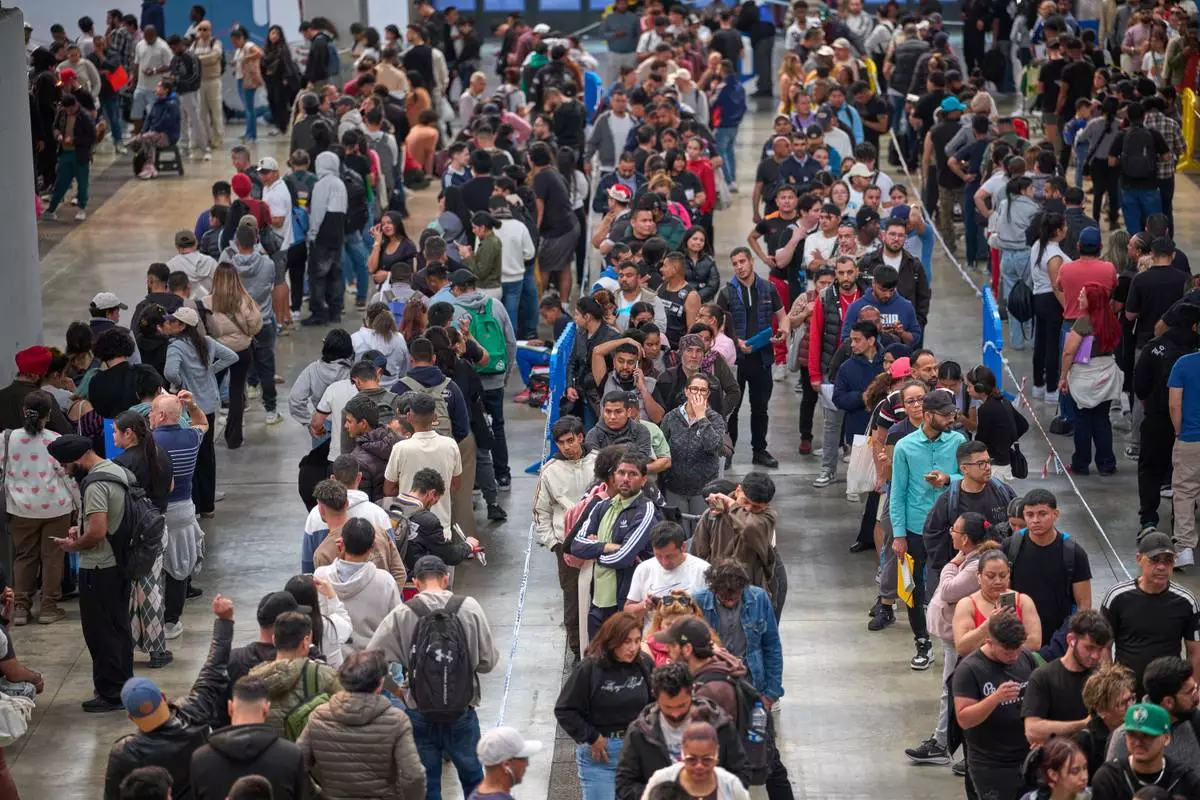
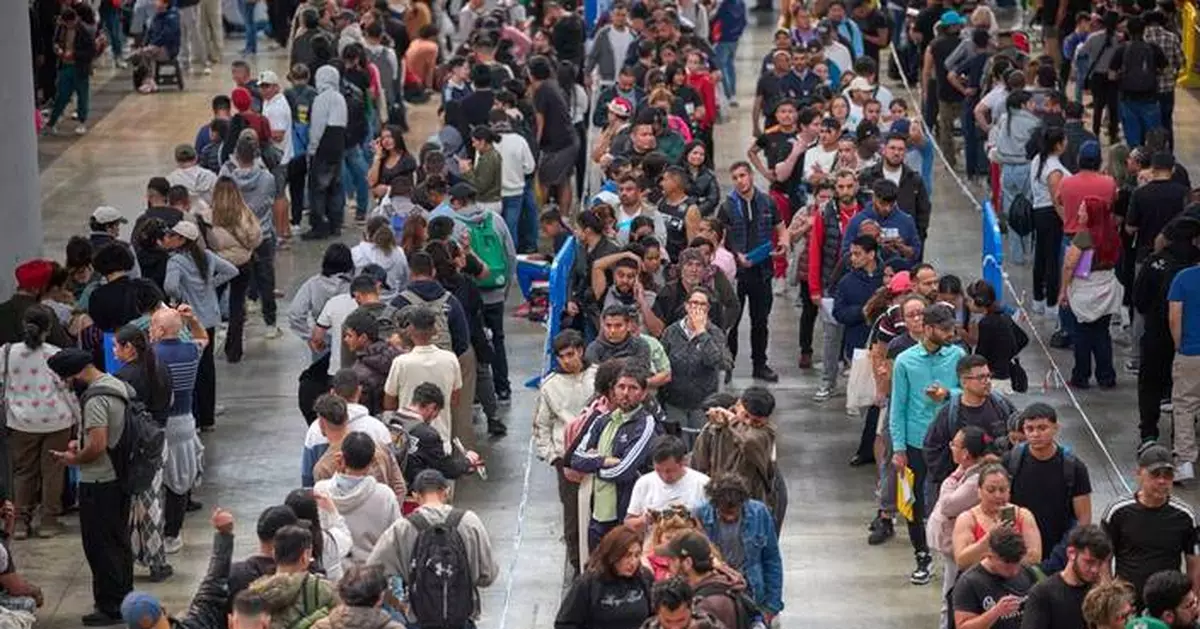
FILE - Migrants queue at a public service office to obtain paperwork needed to apply for Spain's immigration amnesty, in L'Hospitalet de Llobregat near Barcelona, Spain, on April 21, 2026. (AP Photo/Emilio Morenatti, File)
DETROIT (AP) — Jerry Esters proudly displays the American flag each day on his Detroit home. A few miles away, Yvonne Pistochini says there is no scenario under which she would allow the Stars and Stripes to cast its shadow where she lives.
Both are Black.
For Esters, the flag represents the opportunities that allowed the great-great-grandson of slaves to find success and flourish. Pistochini, 79, simply says the America identified by the flag is not the same country she saw growing up.
Americans' views of “Old Glory” are divided by politics, age and race, according to a new survey conducted by The Associated Press-NORC Center for Public Affairs Research ahead of the nation's 250th birthday celebration.
Republicans and older, white adults are especially likely to say they fly the American flag, while younger Democrats and Black adults are more likely to say they don't fly it. Views of the flag — and whether it's a unifying or divisive symbol — track with other deep divisions among Americans, who see their country's history and accomplishments very differently.
“A lot of Black Americans see the flag as a symbol of both inclusion and exclusion,” said Matthew Delmont, professor of American history at Dartmouth College. “Black Americans, more so than white Americans, also understand the flag can be used to justify a version of patriotism that is rooted in exclusion, with the flag being used to say ‘you don’t belong here.’”
The survey of 2,596 adults was conducted April 16-20. It suggests that older white Americans, especially Republicans, are more likely to see the flag as unifying.
About half of U.S. adults said they display the flag at home throughout most of the year, or during holidays. About 7 in 10 Republicans and about 6 in 10 Americans ages 60 and older fly the flag at least during holidays.
About 6 in 10 Democrats and independents, on the other hand, say they “never” fly the U.S. flag. That includes the vast majority, 75%, of Democrats under 45.
Esters, a 64-year-old retired clay sculptor for a Detroit automaker, flies three American flags at his Sherwood Forest home on the city’s west side.
“When these homes were built, Black men like me, my mother and my family ... we couldn’t even buy these homes,” he said. “To me, that’s one reason I fly the flag. We went through a lot to be able to own nice homes, and this is what we fought for.”
The other reason is Moriah Martin, Esters’ great-great-grandmother, who was born into slavery.
“I’m kind of living out her dreams — what I did for a living, having a business, having a nice home,” he said. “I think that’s the American way, but we got to fight for it and we, as Blacks, fought for it.”
He's in the minority among Black adults, according to the survey, which found that only about 3 in 10 Black adults say they ever display the American flag, compared with about half of white and Hispanic adults.
Pistochini says current divisions over political leanings and perspectives, and inequality of opportunities for the poor and people of color are not what she believes the flag should stand for. People confuse flying it with being patriotic, she added.
“Just because you fly a flag doesn't make you a patriot,” Pistochini said. “If there was patriotism, we would not have all this. We can't look at (what's going on) and say this is America.”
Ben Gaskins, chair of political science at Lewis & Clark College in Portland, Oregon, says the flag is an important symbol of patriotism for many Americans.
“It is those who are older people, who are white and people who are more conservative,” Gaskins said. “They take it as more central to their identity.”
Nancy Hansen, a 73-year-old retired Customs and Border Protection clerk in Culvertson, Montana, believes “you have to be for the country, no matter what” and that the flag means “freedom.”
“Freedom to live where we want to live, travel where we want to travel, raise our kids where we want to raise our kids,” said Hansen, who is white and identifies as Republican.
Each year around July 4, the American Legion posts flags outside businesses and homes in Culvertson, including Hansen’s home.
Linda and Greg Cunningham also equate the flag with freedom.
The white, conservative Pontiac, Michigan, couple are going all out this summer. The exterior of their home northwest of Detroit is awash in red, white and blue. The flag sits atop a flagpole just feet from their door.
“It's no political thing, at all," said Linda Cunningham, 63. “It's our freedom. I love the American flag. I love the whole concept of it. I love America. I know there’s so much going on in the world, right now, and I know everyone has their own views, and I'm just sad that politics have to be brought into the flag.”
Of those who took the survey, 47% see the flag as a “more unifying” symbol. About 16% call it a “more divisive” icon, while 36% say it's neither divisive nor unifying.
Only 22% of Black adults see the flag as a unifying symbol, compared with 55% of white adults and 42% of Hispanic adults.
“It’s a painful symbol. It’s a reminder of what we could be and how it’s failed to live up to that for Black people, for Indigenous people and people of color,” said Allison Wiltz, a Black author and founder of Writers and Editors of Color.
Paul Walthour, 71, occasionally flies the flag outside his Minneapolis-area home on special occasions and some holidays. Walthour says that when he’s away from home and at his cabin, the flag goes up each morning and is taken down at the end of the day.
“This is antiquated, perhaps,” said Walthour, who is white and a retired advertising agency creative director. “I feel it’s a symbol that you’re proud to be an American.”
“Unfortunately, I kind of think it’s kind of a symbol of dividing more than uniting,” added Walthour, who identifies as a Democrat. “The people who fly it on the far right have one kind of feeling about it, and the people who fly it on the left have a different kind of feeling about it.”
Williams is a member of AP's Race & Ethnicity team. Sanders and Parwani reported from Washington.
The AP-NORC poll of 2,596 adults was conducted April 16-20 using a sample drawn from NORC’s probability-based AmeriSpeak Panel, which is designed to be representative of the U.S. population. The margin of sampling error for adults overall is plus or minus 2.6 percentage points.
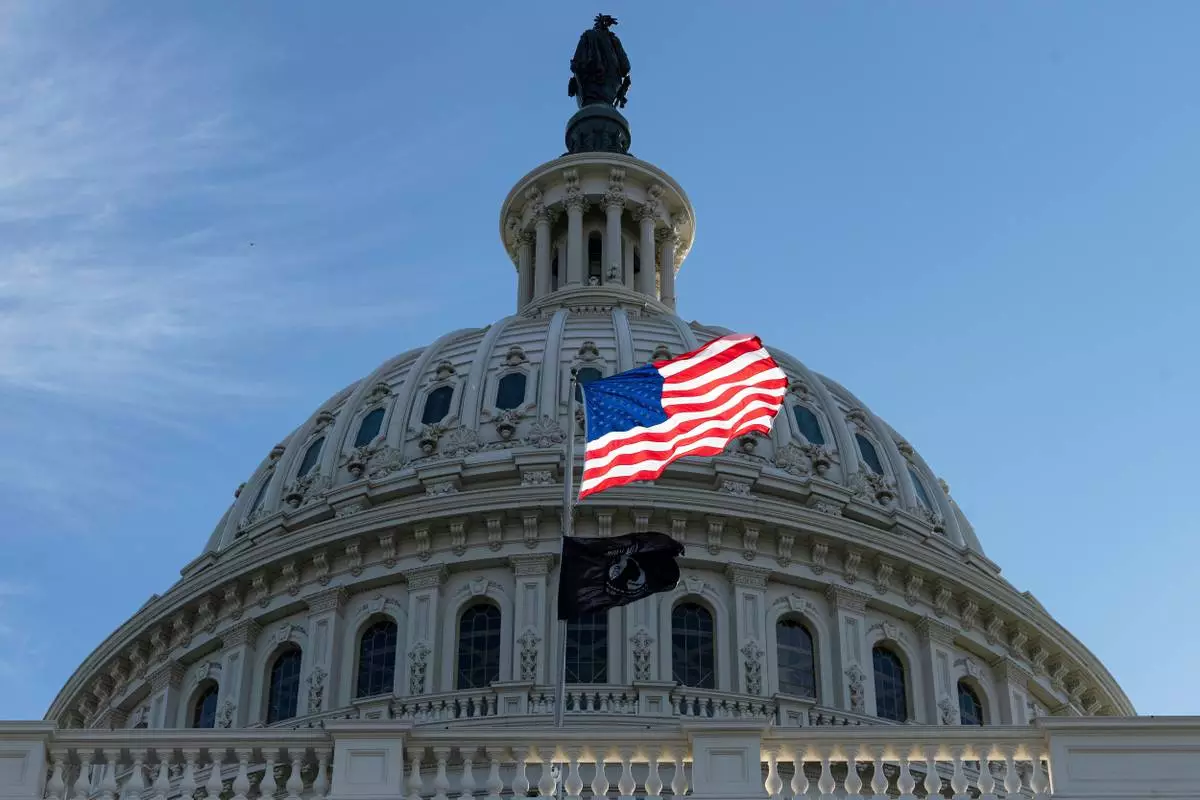
FILE - The American flag over the Capitol is illuminated by the early morning light in Washington, Oct. 1, 2025. (AP Photo/J. Scott Applewhite, File)
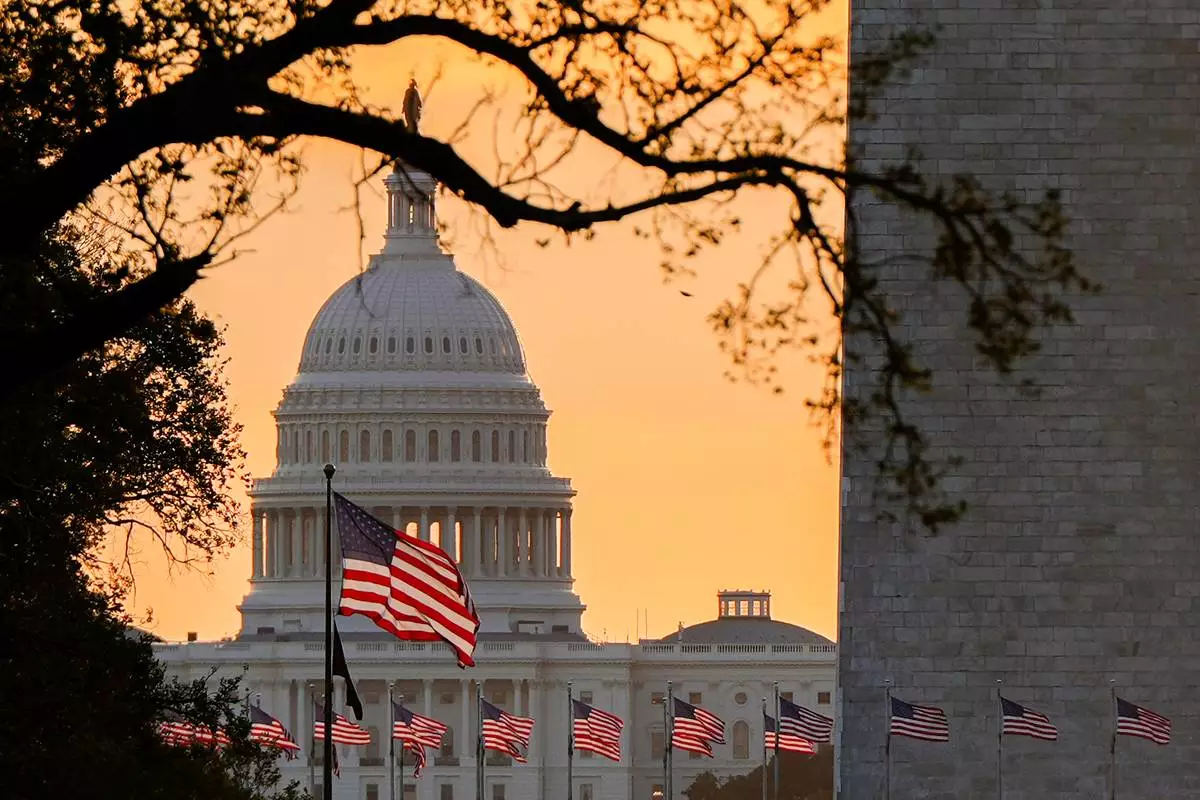
FILE - American flags fly in front of the U.S. Capitol at sunrise, Oct. 1, 2025, in Washington. (AP Photo/Julia Demaree Nikhinson, File)
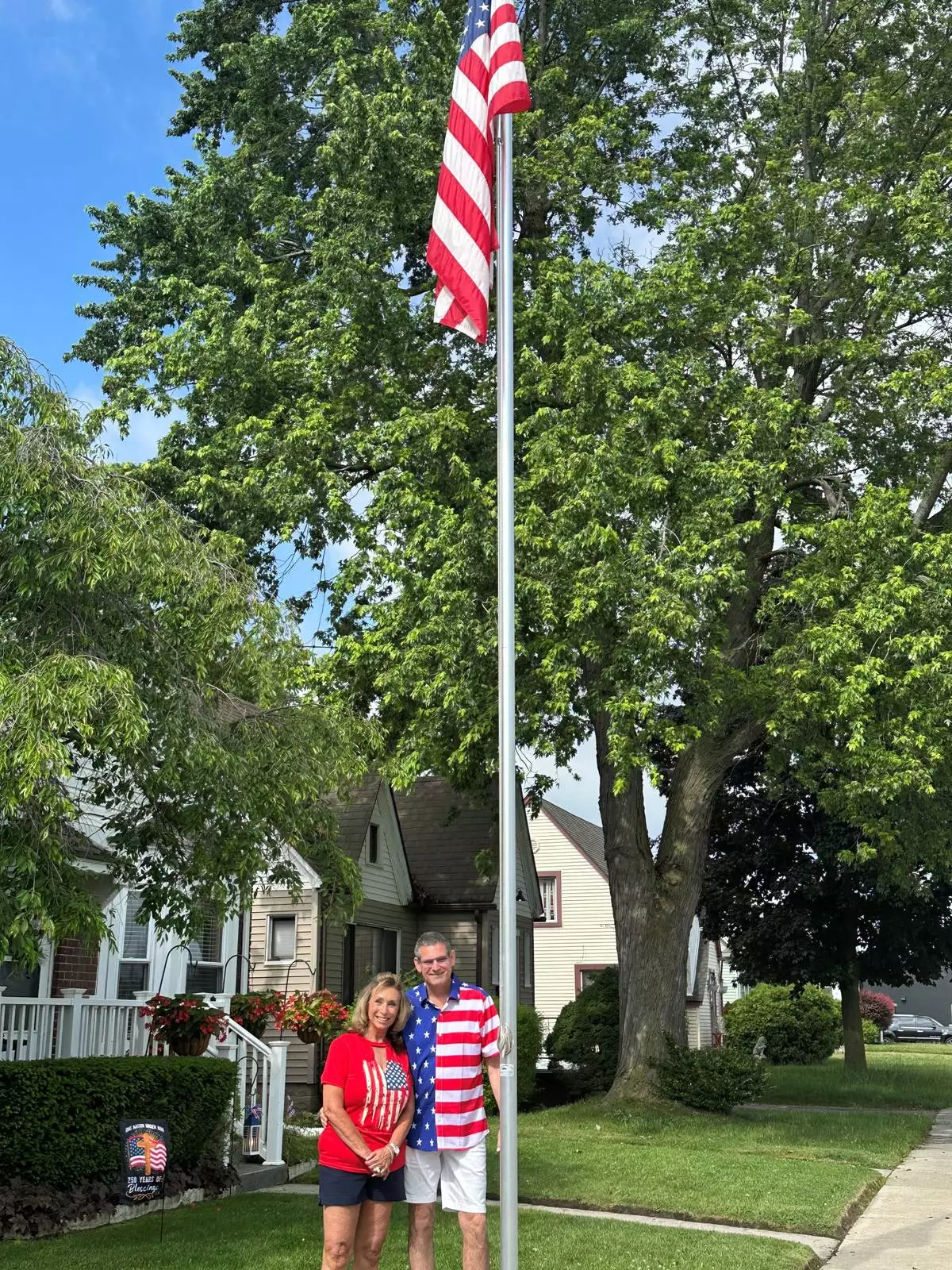
Linda and Greg Cunningham fly the American flag outside their Pontiac, Mich., home on June 10, 2026. (AP Photo/Corey R. Williams)
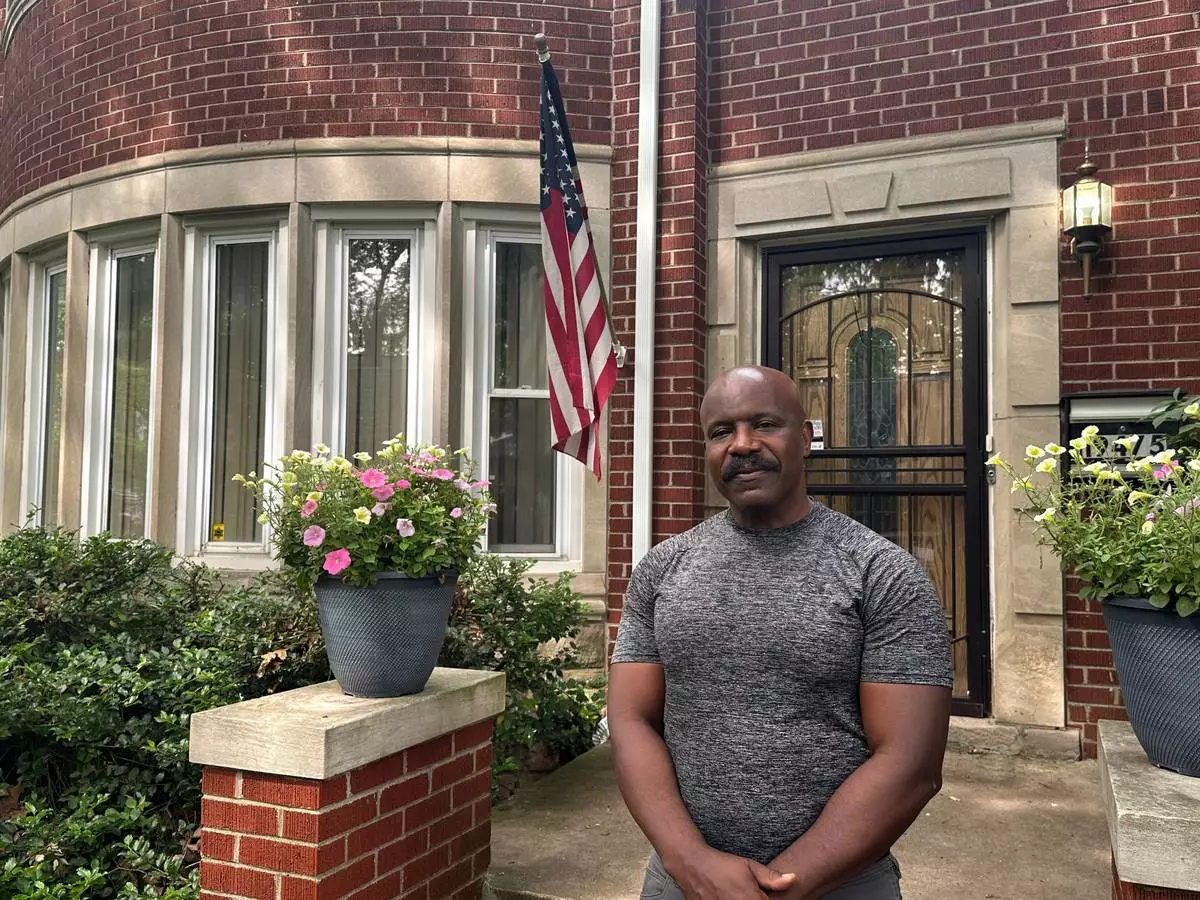
Jerry Esters stands in front of American flag outside his Detroit home on June 9, 2026. (AP Photo/Corey R. Williams)
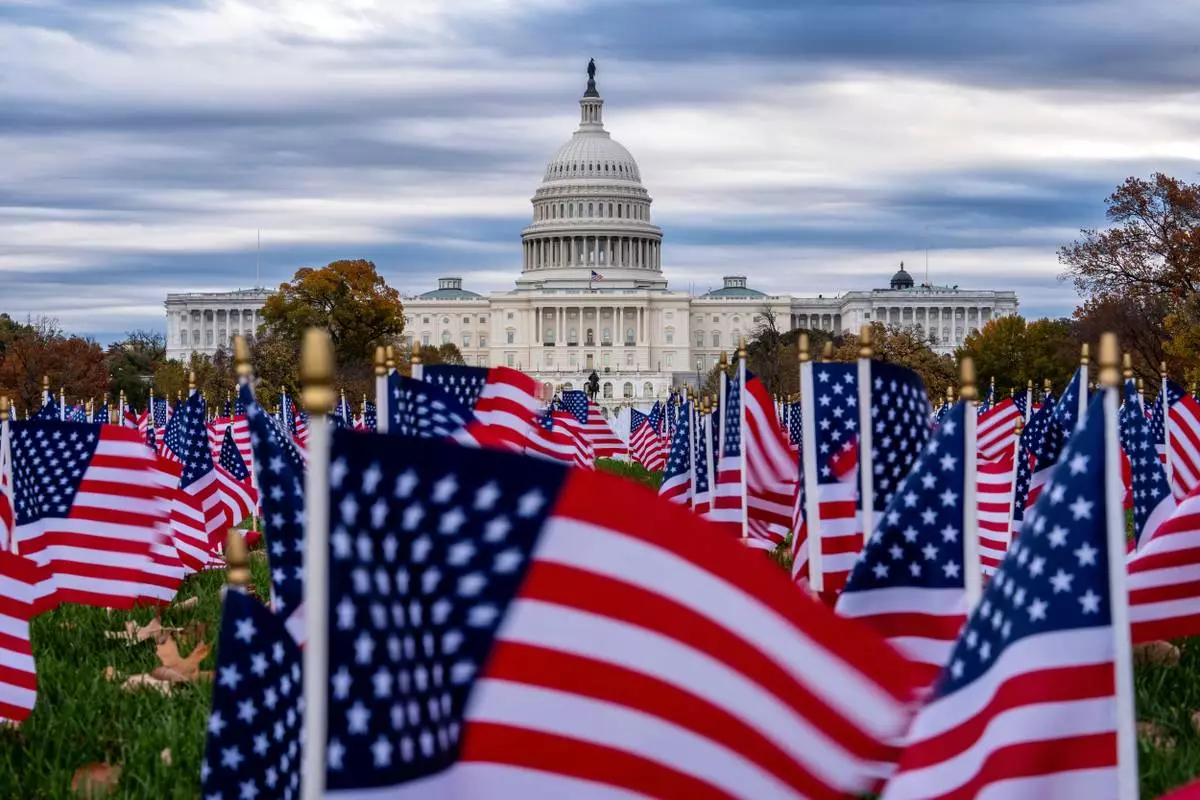
FILE - Miniature American flags flutter in wind gusts across the National Mall near the Capitol in Washington, Nov. 10, 2025. (AP Photo/J. Scott Applewhite, File)