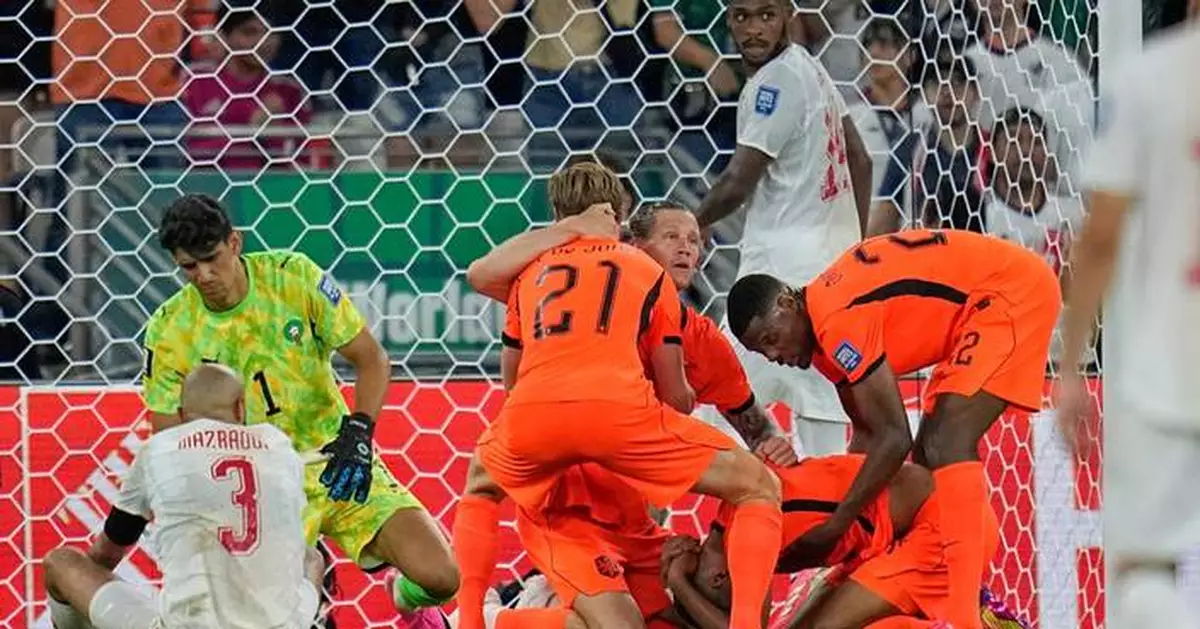
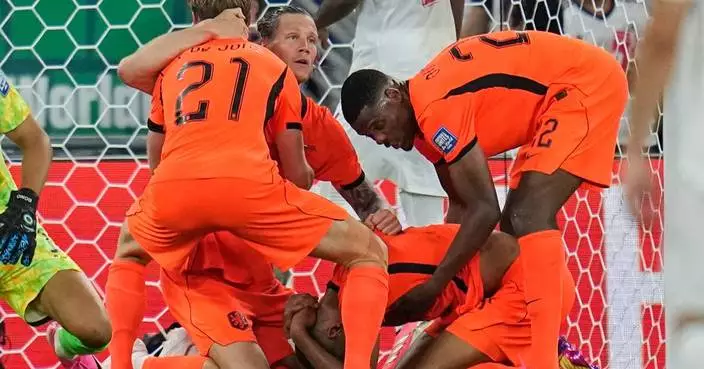
GUADALUPE, Mexico (AP) — After scoring in the 72nd minute, Cody Gakpo immediately sank to his knees.
As his teammates immediately rushed toward him in celebration, the 27-year-old forward covered his face while weeping, later pointing to the sky and appearing to pray.
While this marked Gakpo’s third goal of the World Cup, this goal in the Round of 32 loss to Morocco on Monday was especially emotional for him.
On Saturday, Gakpo and his partner, model Noa van der Bij, announced the death of their unborn child.
Despite the grief, Gakpo was determined to continue on in the tournament.
“I think he dealt with it very well,” Netherlands head coach Ronald Koeman had said before the game. “There was never a moment where he said he wanted to leave the squad and go home. That says a lot about his maturity and the way in which he can deal with this."
And just as Gakpo has been a key contributor for the Oranje, his teammates have been there to support him and his family during this difficult time.
“The most important thing is to ask, ‘What do you need?’” Netherlands captain Virgil van Dijk said. “It’s awful news, and reminds us that football is secondary and there are much more important things in life.”
In the 113th minute, Gakpo was substituted off for Justin Kluivert.
As he walked off the pitch, the Netherlands fans in a section behind the goal immediately rose for a standing ovation. As Gakpo rounded the corner toward the bench, the applause only grew louder — a show of appreciation for someone who showed up for his team while dealing with tragedy.
See more of AP’s World Cup coverage here

Netherlands' Cody Gakpo (11) and Morocco's Noussair Mazraoui (3) embrace during the World Cup round of 32 soccer match between the Netherlands and Morocco in Guadalupe, near Monterrey, Mexico, Monday, June 29, 2026. (AP Photo/Dolores Ochoa)

Netherlands' Cody Gakpo (11) celebrates with Denzel Dumfries (22) and Frenkie de Jong (21) after scoring their first goal during the World Cup round of 32 soccer match between the Netherlands and Morocco in Guadalupe, near Monterrey, Mexico, Monday, June 29, 2026. (AP Photo/Moises Castillo)
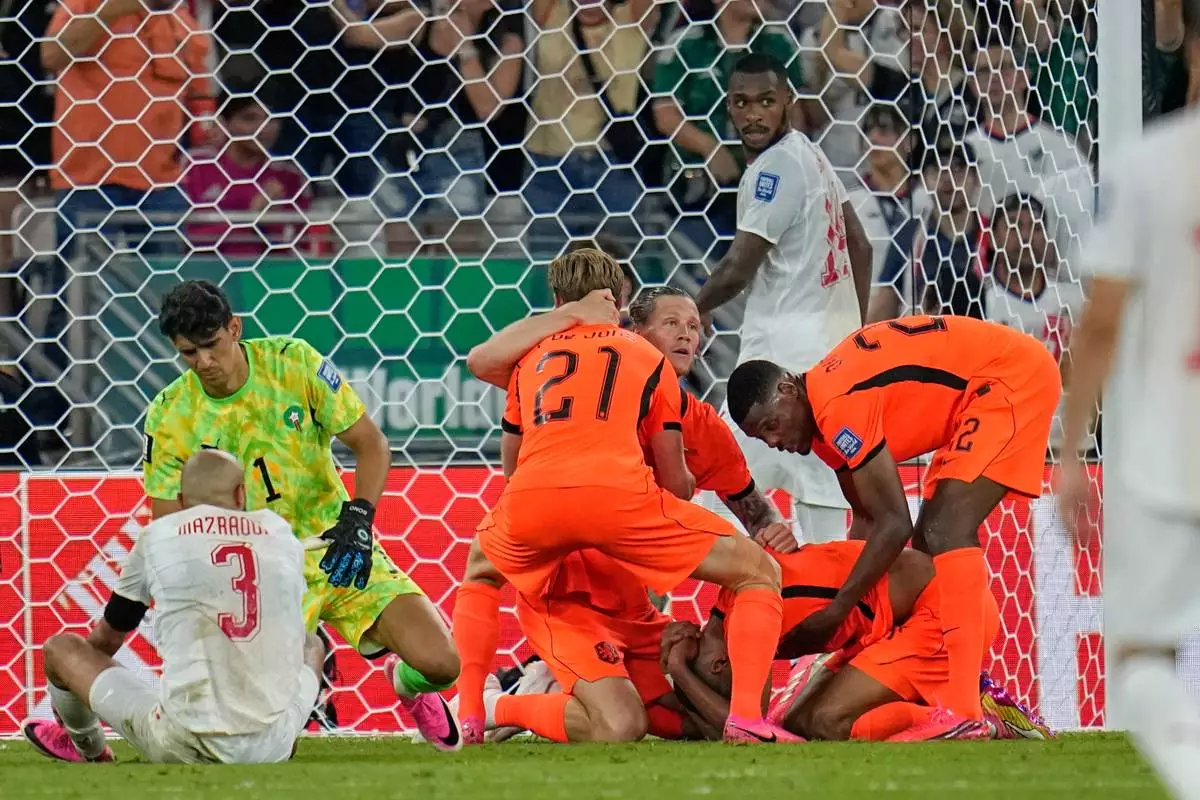
Netherlands' Cody Gakpo, kneeling, is congratulated by teammates after scoring his team's first goal during the World Cup round of 32 soccer match between the Netherlands and Morocco in Guadalupe, near Monterrey, Mexico, Monday, June 29, 2026. (AP Photo/Ricardo Mazalan)
Venezuelan merchant Grian Serrano has survived two of the country's worst natural disasters: the devastating 1999 mudslides that ravaged the coastal state of La Guaira and, 26 years later, two powerful earthquakes that struck the same region.
Bruised around his left eye and across much of his body, 46-year-old Serrano is recovering from the ordeal he endured with his son and mother Wednesday.
The three were buried beneath rubble and twisted steel when their eight-story apartment building collapsed in the city of Caraballeda in La Guaira, the state hardest hit by the magnitude 7.2 and 7.5 earthquakes.
“It is a miracle from God,” Serrano said as he recalled how, in total darkness, he clawed through debris with his bare hands before rescuing his 8-year-old son and 69-year-old mother with the help of two passersby.
The two earthquakes have killed more than 1,700 people and injured more than 5,000, according to the government. Hundreds of buildings collapsed or were damaged, primarily in La Guaira. Significant damage was also reported in the capital, Caracas, and in the states of Carabobo, Miranda, Aragua and Yaracuy.
La Guaira — known as Vargas until 2019 — is Venezuela’s second-smallest state but one of its most strategically important. About 30 kilometers (19 miles) north of Caracas, it is home to the country’s main international airport and second-largest seaport.
Its roughly 440,000 residents are largely low-income and depend on tourism, commerce and jobs tied to the airport and seaport.
Speaking from his brother's home in Caracas, Serrano recalled the terror he felt last week, his thoughts inevitably returning to Dec. 15, 1999, when he was jolted awake by the screams of their household employee, who had seen a nearby river overflow after days of heavy rain.
From his window, he watched the swollen river sweep away trees, massive boulders and vehicles with people trapped inside, banging on the windows and pleading for help.
Driven by instinct, Serrano fled his fourth-floor apartment with his mother, sister and nanny, climbing to the roof. From there, they watched floodwaters engulf the building’s lower floors as massive trees slammed into its columns, fearing it would collapse like others nearby.
Their fears eased at dawn as the rain stopped and the floodwaters began to recede. After waiting in vain for rescue, the family made their way through mud, rocks, debris and fallen trees to his grandparents’ home in a nearby neighborhood.
The 1999 floods and landslides known as the “Vargas Tragedy” killed 782 people, another 2,000 were reported missing and about 250,000 residents were affected, according to Ángel Rangel, who led rescue operations as director of Venezuela’s Civil Protection agency.
Still shaken by the devastation left by the earthquakes, Serrano believes La Guaira — bordered by the Caribbean Sea and the Ávila mountain range — is under a curse.
“It isn’t normal for such horrible things to happen in the same place,” he said.
Rangel, a disaster specialist, sees it differently. The engineer said the buildings that collapsed in La Guaira were built on terrain formed over centuries by sediment carried down from the surrounding mountains.
“That type of terrain is particularly risky for construction,” Rangel said, adding that building in such areas requires “strict adherence to seismic-resistant engineering standards” adopted after the powerful 1967 earthquake that struck Caracas.
Many of the buildings that collapsed in La Guaira were built in the 1970s, and it remains unclear whether they met those standards.
After losing his home and all his belongings, Serrano said he does not know what comes next. But one thing is certain: He will never live in La Guaira again.
“That’s twice now,” he said. “Sometimes I think if there’s a third time, it’s going to win the battle.”
Follow AP’s coverage of Latin America and the Caribbean at https://apnews.com/hub/latin-america
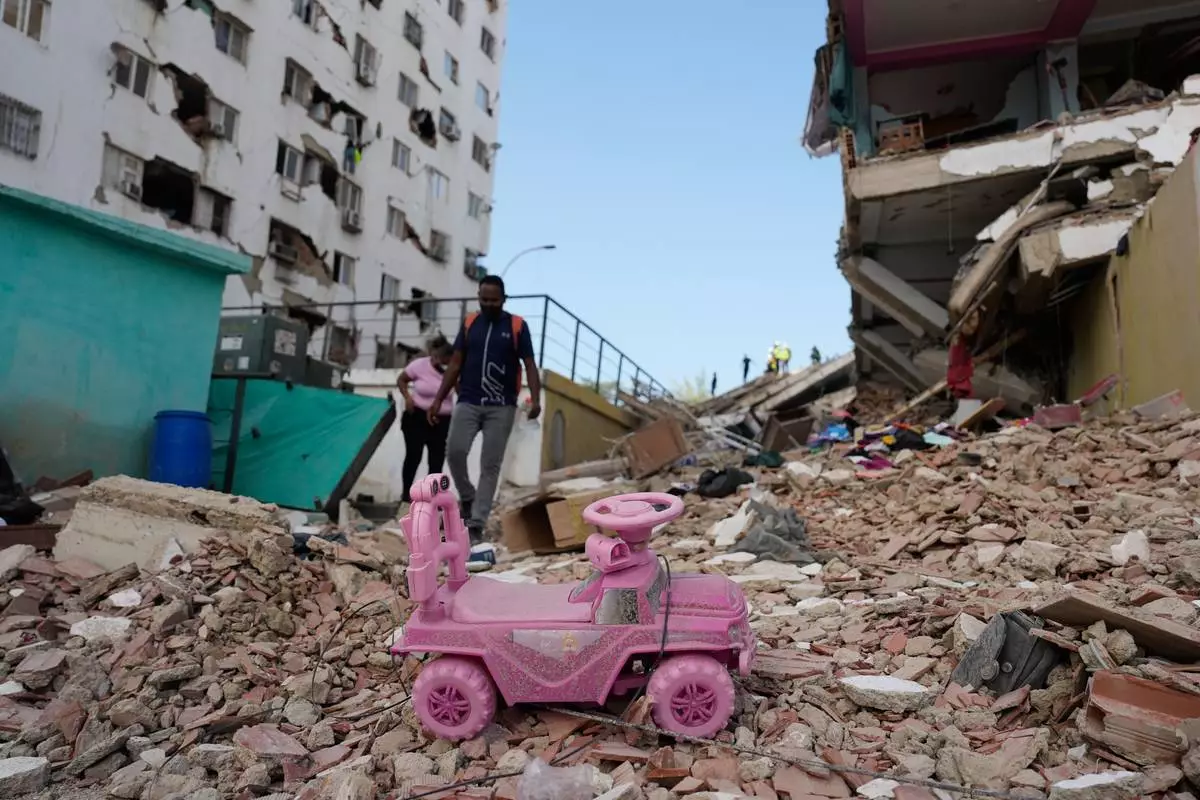
A toy car lies in the rubble two days after earthquakes struck Catia La Mar, Venezuela, Friday, June 26, 2026.(AP Photo/Fernando Vergara)
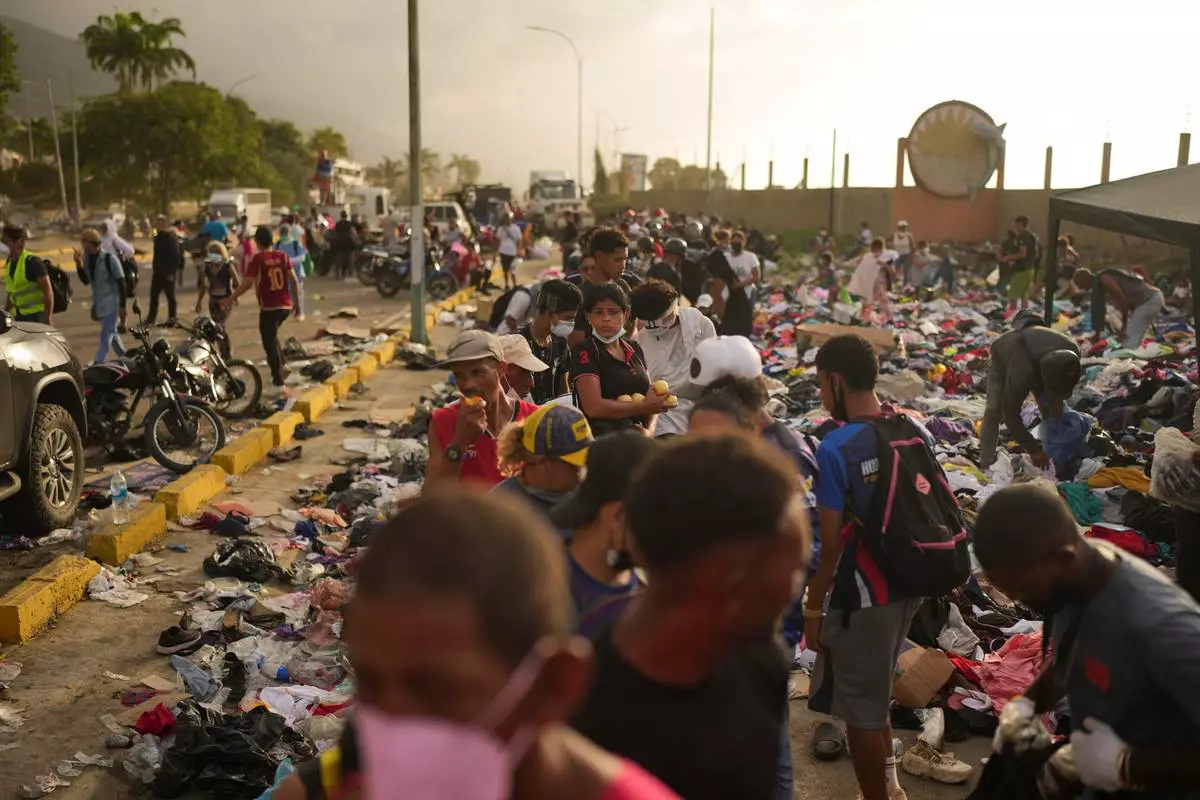
People affected by the earthquake line up for food in La Guaira, Venezuela, Saturday, June 27, 2026.(AP Photo/Matias Delacroix)
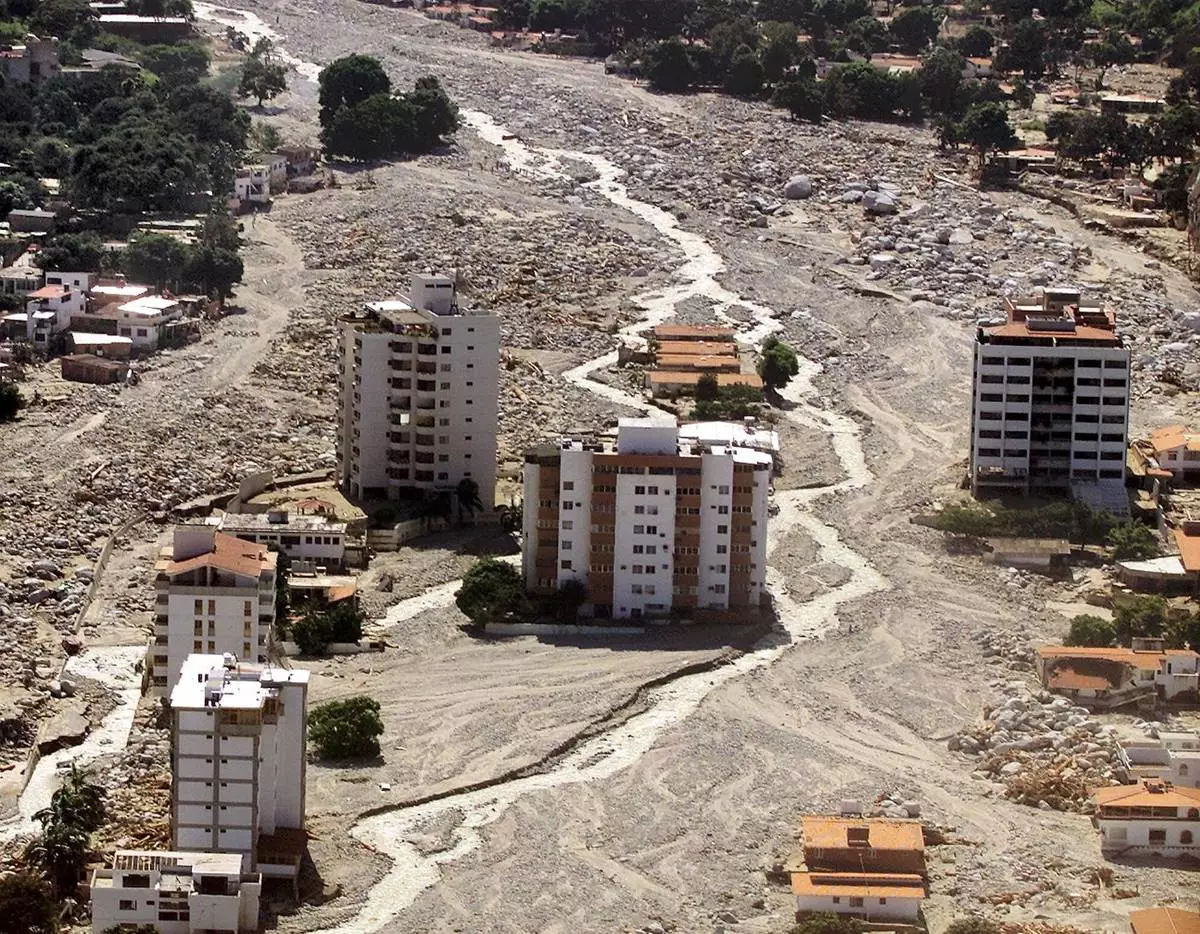
FILE - The flood ravaged neighborhood of Los Corales, in Vargas state just north of the capital Caracas, Dec. 19, 1999. (AP Photo/Ricardo Mazalan, File)
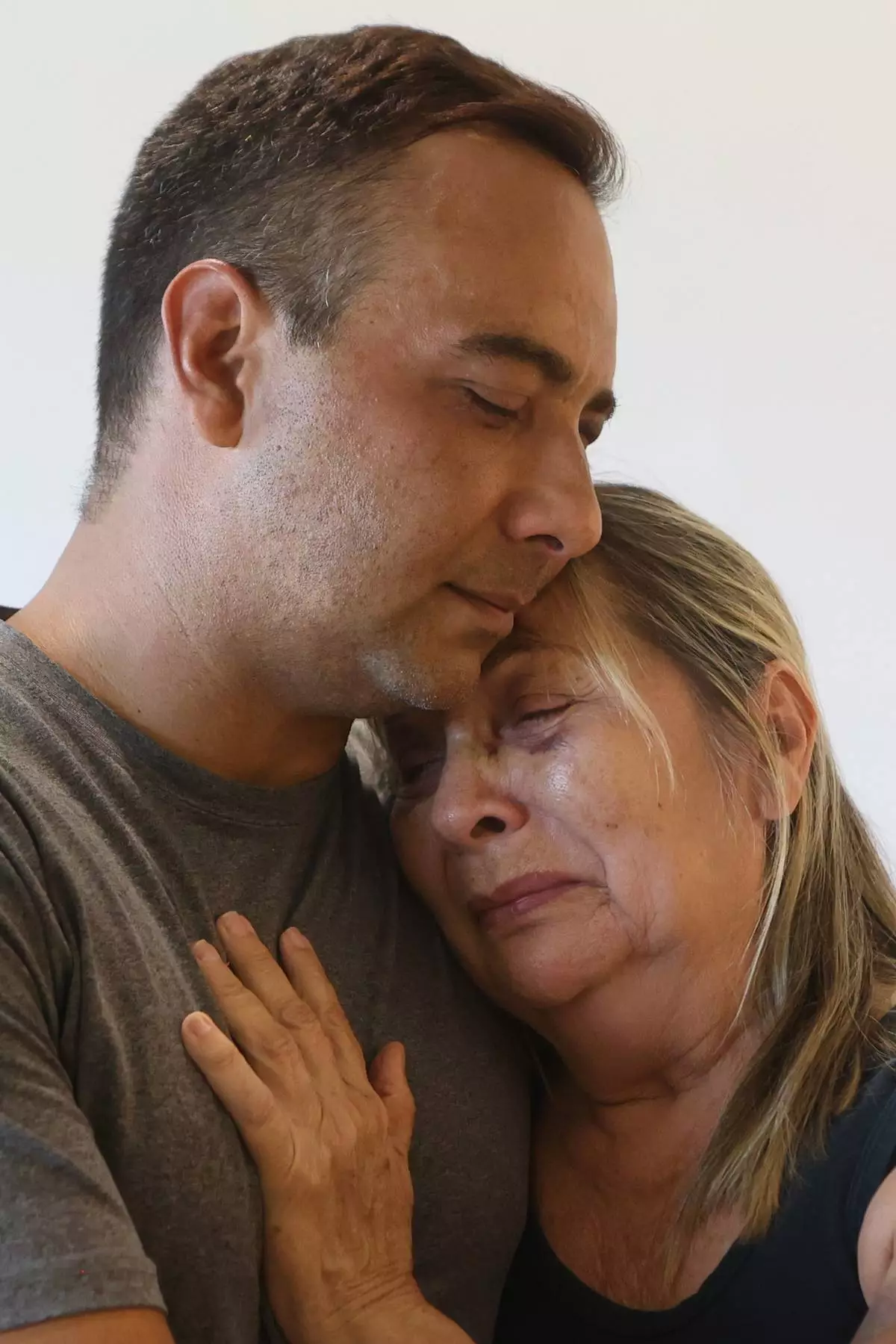
Grian Serrano embraces his mother Ingrid Rochabrun at the home where they are staying with relatives in Caracas, Venezuela, after surviving the back-to-back earthquakes that destroyed their apartment building in Caraballeda, Monday, June 29, 2026. Serrano also survived the 1999 mudslides that struck La Guaira. (AP Photo/Pedro Mattey)
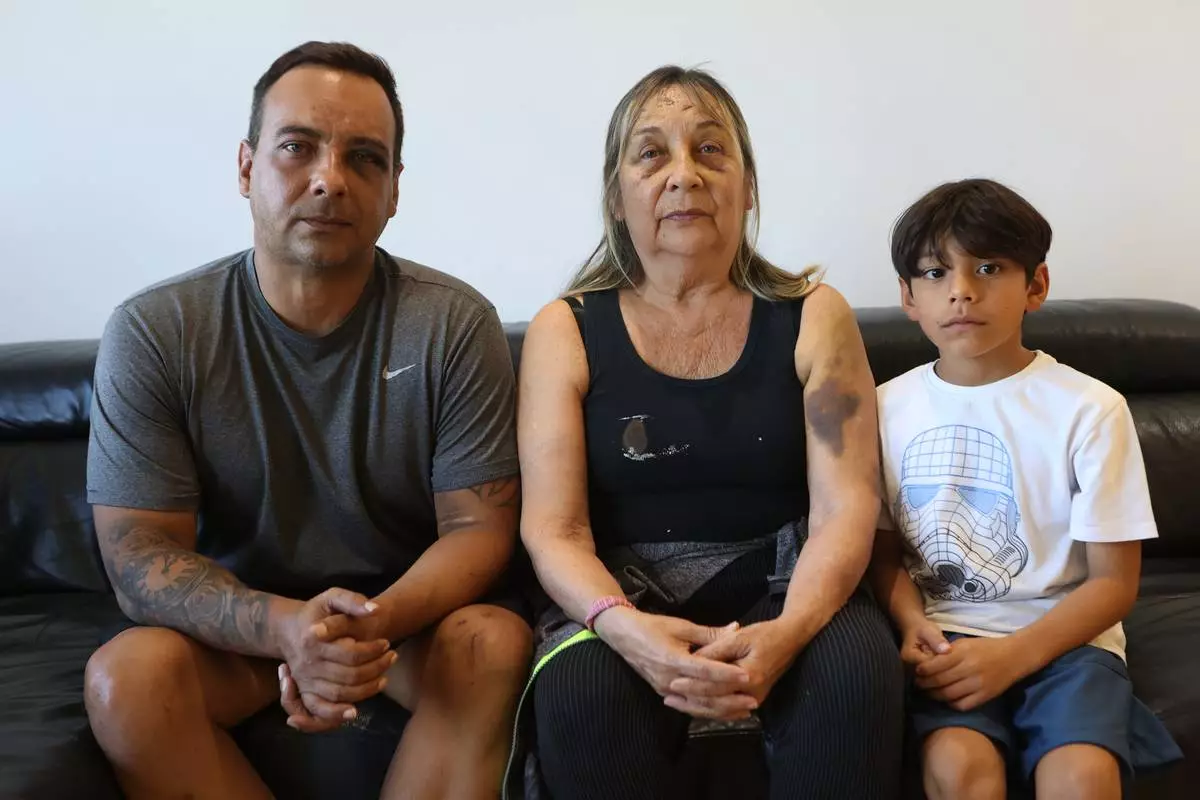
Grian Serrano, left, his mother, Ingrid Rochabrun, and his son, Gael, sit at the home where they are staying with relatives in Caracas, Venezuela, after surviving the back-to-back earthquakes that destroyed their apartment building in Caraballeda, Monday, June 29, 2026. Serrano also survived the 1999 mudslides that struck La Guaira. (AP Photo/Pedro Mattey)