OSLO, Norway--(BUSINESS WIRE)--Jun 30, 2026--
While the AI boom has made robots significantly more capable, the accompanying safety infrastructure has struggled to keep pace. Traditional 2D laser scanners, which are widely used to define safety perimeters for most mobile robotic systems, are unable to detect people and obstacles above or below a single plane.
This press release features multimedia. View the full release here: https://www.businesswire.com/news/home/20260630523612/en/
"The bottleneck to safe human-robot coexistence isn't intelligence or speed,” said Knut Sandven, CEO of Sonair. “It's safe perception; knowing reliably under any condition, that a human is nearby. This milestone certification is the first time a 3D sensor has been independently verified to meet that bar using sound instead of light - a new sensing modality that complements cameras where they fall short.”
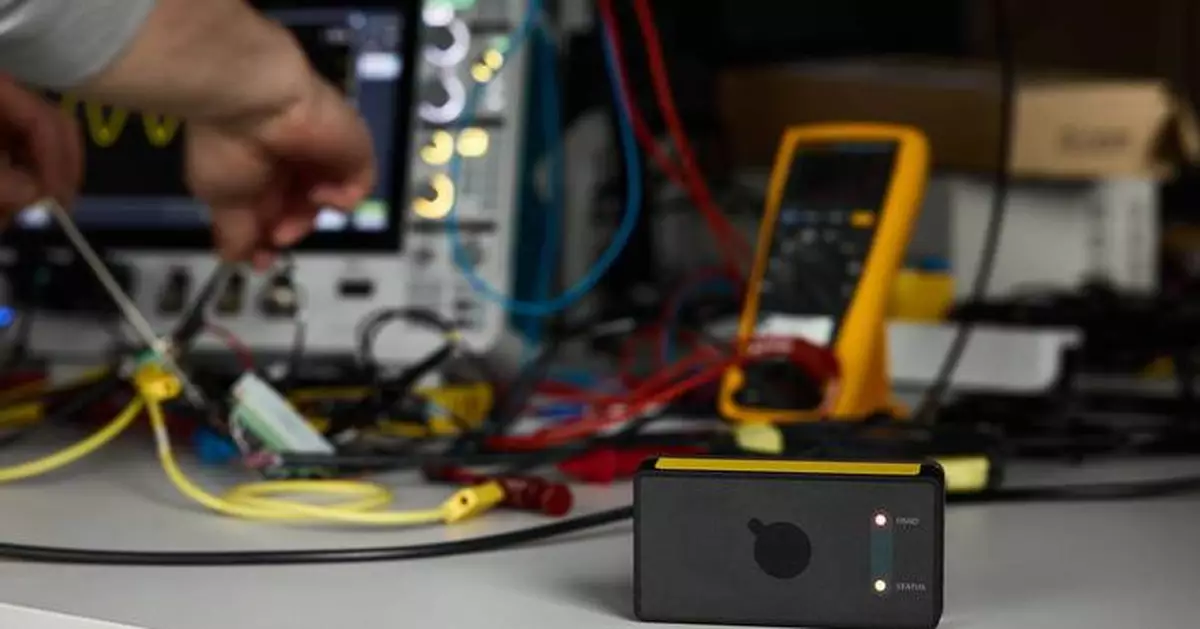
Designed for autonomous mobile robots and industrial automation, ADAR One delivers 180°×180° 3D spatial awareness, detecting people and obstacles at all heights, eliminating the limitations and blind spots that define today's 2D safety systems. Easy integration with a tiny footprint enables ADAR (acoustic detection and ranging) technology to be embedded flush into virtually any robot form factor, including humanoids.
“ADAR One does not merely replace a sensor. It introduces a new safety layer for robotics, a certified 3D perceptual foundation that sits beneath any camera, AI stack, or motion system, independently verifying that the space around a robot is safe,” said Knut Sandven.
ADAR One is already in series production and shipping on deployed industrial robots. Since the introduction of the beta version of ADAR one year ago, more than 80 global robotics companies have rigorously evaluated ADAR through Sonair's test program within. For many, safety certification is the moment they have been waiting for.
beRobox, a leader in plug-and-play palletizing and de-palletizing solutions, has entered into an agreement with Sonair to deploy the safety-certified ADAR One sensor in future solutions. The agreement marks certified 3D safety arriving in one of industrial automation's highest throughput use cases, where machines and people share the tightest spaces.
"At beRobox, innovation is not just about developing new products. It's about continuously integrating the best technologies available to simplify automation for our customers. Partnering with Sonair is another step in our mission to stay ahead through innovation and deliver the most advanced, user-friendly palletizing and de-palletizing solutions on the market,” said David Demers, CEO of beRobox
The certification
ADAR One was assessed as a human protection sensor according to the very demanding IEC 61496 standard for electrosensitive protection devices. In addition, the product meets two foundational standards: IEC 61508, the functional safety standard for electronic safety systems in high-risk industrial environments, and ISO 13849, the universal standard for safety-related parts of control systems.
The result: ADAR is rated SIL 2, (Safety Integrity Level 2) and PL d (Performance Level d) with a probability of dangerous failure (PFH) below 1.5 x 10 ⁻7 per hour.
ADAR has received an EC type-examination certificate from exida, a notified body under the Machinery Directive 2006/42/EC. In addition to the above-mentioned standards, exida has assessed ADAR’s conformity to the essential health and safety requirements from the European machine directive.
Furthermore, ADAR is the first safety-certified embedded system to be built in Rust, a programming language especially designed for performance, safety, and reliability.
What this means for robot manufacturers, system integrators, and end users
“This is precisely the role ADAR One is designed to play as a drop-in, pre-certified safety layer,” said Sandven. “What used to be an engineering burden is now transformed into a commercial differentiator for all stakeholders.”
Availability
ADAR One, the safety-certified variant designed for autonomous robots and machine safety applications requiring SIL 2, PL d compliance, is available now. Get ADAR One.
Media resources (images, illustrations, and more):Here
Embed product video:Here
About Sonair
Sonair develops 3D ultrasonic sensing technology for robotics and autonomous machines. The company’s patented, award-winning ADAR (acoustic detection and ranging) technology uses MEMS-based ultrasonic transducer arrays to detect objects and people in true three-dimensional space. Sonair’s mission is to make robot safety simple, scalable, and reliable as automation expands into human environments. The company is headquartered in Oslo, Norway. www.sonair.com
Industry data:
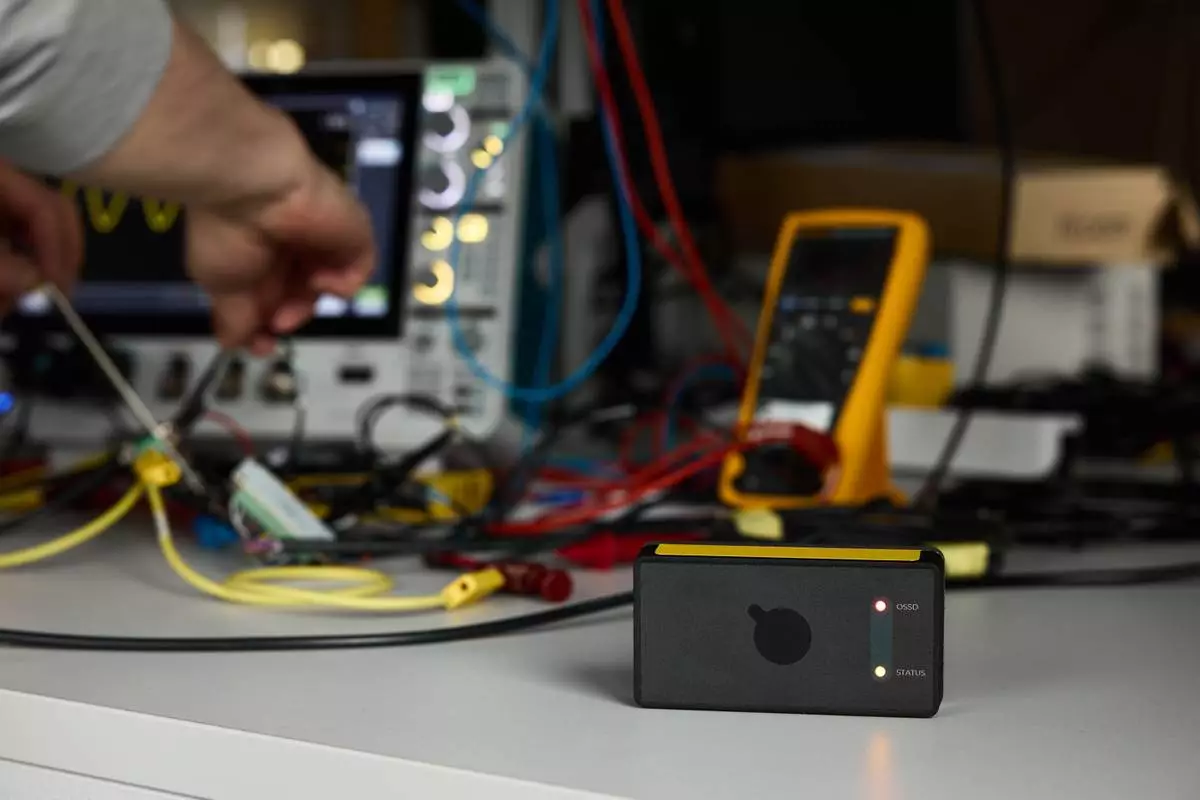
The world's first safety-certified 3D ultrasonic sensor, ADAR One, introduces a new safety layer for robotics, a certified 3D perceptual foundation that sits beneath any camera, AI stack, or motion system, independently verifying that the space around a robot is safe.
The Supreme Court on Tuesday will rule on the constitutionality of President Donald Trump’s order on birthright citizenship declaring that children born to parents who are in the United States illegally or temporarily are not American citizens.
The decision comes on the final day of a Supreme Court term that has centered on Trump’s expansive claims of presidential power — and largely ruled in his favor.
The court on Monday handed Trump a major win by upholding his firings of independent federal agency heads at will, with the exception of Federal Reserve governor Lisa Cook, who will retain her job while she fights the president’s effort to fire her over allegations of mortgage fraud.
Here's the latest:
Most Americans say they believe in birthright citizenship, though many are conflicted about exactly who it should apply to.
An April survey by The Associated Press-NORC Center for Public Affairs Research of more than 2,500 U.S. adults found that about two-thirds say children born in the U.S. should get automatic citizenship. That number drops to 44% for Republicans.
But the poll also showed ambivalence when it came to specifics.
For example, 75% of U.S. adults support automatic citizenship for children born in the U.S. to parents in the country on work visas. Only about half, though, believe in it for children born to parents who are illegally in the country.
The 5-4 decision rejected a Republican-led attack on laws in more than half the states and the District of Columbia that permit mailed ballots to arrive and be counted some number of days after the election, provided they are postmarked by Election Day.
The outcome spares officials the headache of changing their ballot rules just a few months before the 2026 midterm congressional elections.
In just over half of those states, the more forgiving deadlines apply only to ballots cast by military and overseas voters.
During oral arguments, even many conservative justices appeared unconvinced by the government’s case.
“I can imagine it being messy in some applications,” Justice Amy Coney Barrett said, asking Solicitor General D. John Sauer about the issue of abandoned infants.
“What if you don’t know who the parents are?” she asked.
Sauer started to say that question was addressed in the U.S. code, but Barrett quickly interrupted him.
“Yeah, yeah, yeah, yeah, but what about the Constitution?” she asked.
Outside of the Americas, most countries follow the legal principle of jus sanguinis, or “right of blood,” with a child’s citizenship inherited from its parents, no matter the place of birth.
In the European Union, for example, no member states grant automatic, unconditional citizenship to children born to foreigners.
But American legal practice is descended in many ways from English common law, which had long provided for citizenship based on a child’s place of birth, the legal concept of jus soli, or “right of soil.”
The UK, though, abandoned jus soli with the British Nationality Act of 1981.
Under the new rules, people born in the UK get citizenship only if at least one parent is a British citizen or has “settled status” under the law.
The court will dive right into the remaining decisions when the justices take the bench at 10 a.m. ET.
The opinions are typically read in ascending order of seniority so that the most junior justice with an opinion goes first. Chief Justice John Roberts, who may well have the decision in the birthright citizenship case, would go last.
Other than at the Federal Reserve, with its role of setting interest rates, the court held that presidents have free rein to fire agency heads at will, despite federal laws that require a cause for such dismissals and a 91-year-old decision that had limited executive authority.
The justices allowed Fed governor Lisa Cook to stay in her job while she fights Trump’s effort to fire her over allegations of mortgage fraud, which she has denied.
With the six conservative justices in the majority, the nine-member court jettisoned its unanimous decision in Humphrey’s Executor that had limited when presidents can fire agencies’ board members — in part to try to ensure decision-making free of political influence.
“We hold that such protection from removal is contrary to the separation of powers enshrined in the Constitution,” Chief Justice John Roberts wrote for the court.
In separate cases, the court will also decide:
Whether states can prohibit transgender athletes from playing on girls’ and women’s public school and college teams.
Whether to uphold a federal law more than 50 years old limiting how much political parties can spend in coordination with candidates for Congress and the president.
Oral arguments for the case lasted more than two hours in a crowded courtroom that included Trump, the first sitting president to attend arguments at the nation’s highest court, and, in seats reserved for the justices’ guests, actor Robert De Niro.
Trump heard his administration’s top Supreme Court lawyer, Solicitor General D. John Sauer, face one skeptical question after another. Justices asked about the legal basis for the order and voiced more practical concerns.
“Is this happening in the delivery room?” Justice Ketanji Brown Jackson asked, drilling down into the logistics of how the government would actually figure out who is entitled to citizenship and who is not.
Chief Justice John Roberts suggested that Sauer was relying on quirky exceptions to citizenship to make a broad argument about people who are in the country illegally. “I’m not quite sure how you can get to that big group from such tiny and sort of idiosyncratic examples,” Roberts said.
Justice Clarence Thomas sounded the most likely among the nine justices to side with Trump.
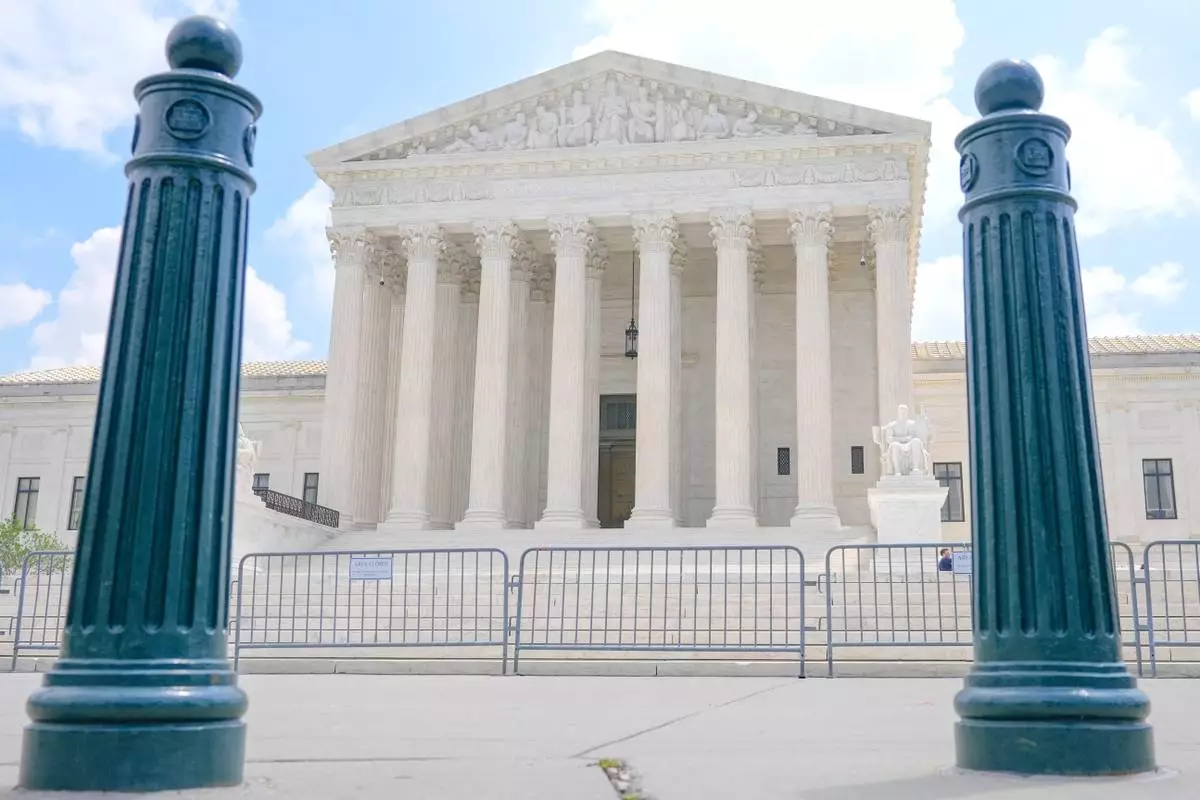
The U.S. Supreme Court is seen Monday, June 29, 2026, in Washington. (AP Photo/Mariam Zuhaib)
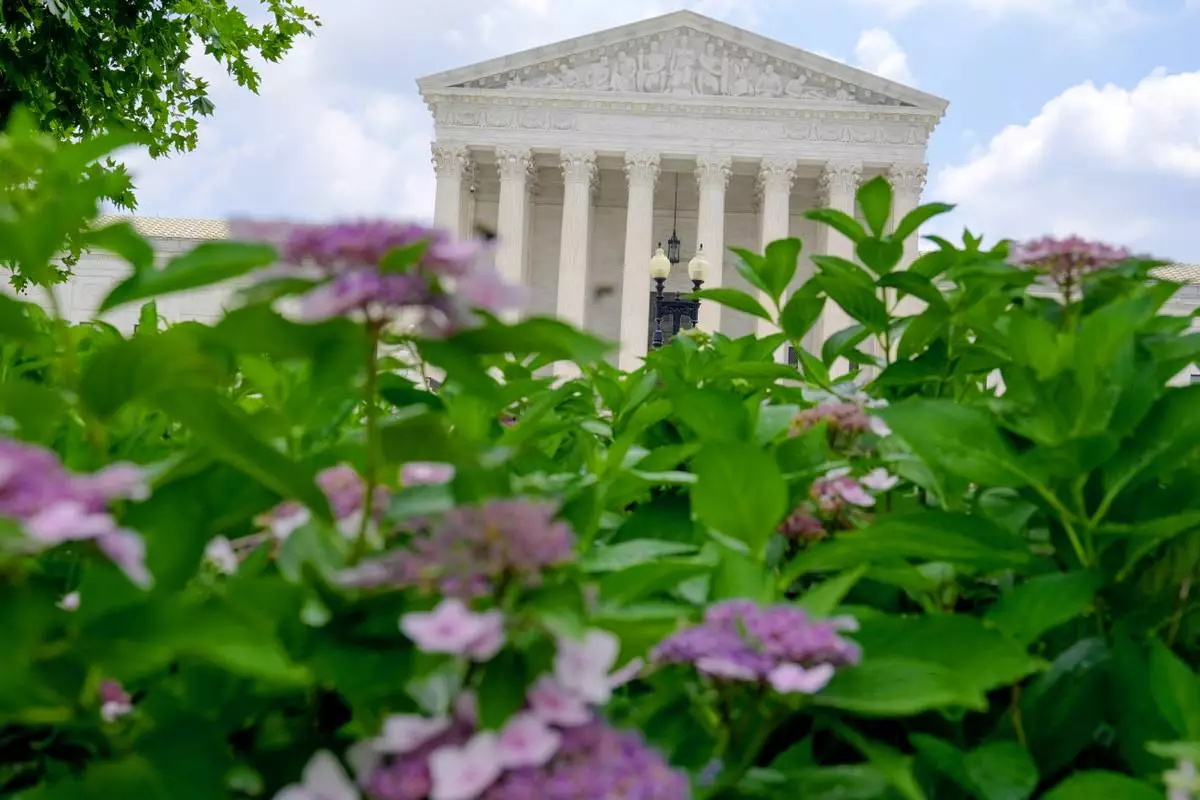
The U.S. Supreme Court is seen Monday, June 29, 2026, in Washington. (AP Photo/Mariam Zuhaib)