MOSCOW (AP) — Two-time Olympic champion Artur Dmitriev, who won figure skating gold medals with different partners, has died, the Russian ice skating federation said on Tuesday. He was 58.
A cause for his death was not immediately announced.
Dmitriev was the first male skater to win the pairs event twice with different partners. He won the title with Natalia Mishkutionok at the 1992 Winter Olympics and claimed another title in 1998 with Oksana Kazakova.
He also was a two-time world champion and a three-time European champion.
After retiring from the sport, he competed in professional world championships and then in ice shows, the federation said.
After returning to Russia, Dmitriev became a coach. He worked in Moscow and, in recent years, trained pairs in St. Petersburg.
More figure skating: https://apnews.com/hub/figure-skating

FILE - Russian pair Oksana Kazakova and Artur Dmitriev listen to their country's national anthem during the medal ceremony at White Ring Arena Tuesday, Feb. 10, 1998, in Nagano, Japan. The pair won the gold medal. (AP Photo/Rick Bowmer, File)
BELGRADE, Serbia (AP) — Feliks' journey resembles a Hollywood movie script, with kidnappers, smugglers and clandestine border crossings.
The year-old eastern imperial eagle from Serbia, started flying in August and later set off on his first migratory flight toward the Middle East, only to be captured by poachers, sold illegally and retrieved in a daring cross-border mission.
While Feliks returned home safely last week, his ordeal highlighted both the widespread practice of profit-driven, illegal animal trade and an unfaltering struggle by animal protection groups to counter it.
“It’s getting worse year after year, season after season, day after day,” said Michel Sawan, the head of the Lebanese Association for Migratory Birds, who played a key role in Feliks's rescue. "We can actually barely believe ... the mission was done successfully."
The eastern imperial eagle is an imposing bird of prey with a wingspan of up to 2 meters (6 feet). The protected species in Serbia was down to a single breeding pair back in 2017 but has recovered thanks to the tireless work of the Bird Protection and Study Society of Serbia, or BPSSS.
The precious offspring of a new generation of eagles, Feliks was ringed and got a “small backpack” with a transmitter before setting off last August, Uros Stojiljkovic from the BPSSS said.
“Everything seemed normal,” Stojiljkovic added. “We didn't dream all this would happen."
Feliks first circled close to home before heading southeast across North Macedonia, Greece and Turkey. His tracking signal was lost in late October in Syria.
“We hoped this was because there was a problem with the transmitter or something,” Stojiljkovic said.
Weeks passed by before the news came from Sawan: Feliks was put up for sale after he was captured by poachers who catch migratory birds by placing water in the desert, or shoot at them, capture them with nets or even chase them with motorcycles.
“When Felix was caught at first, it was posted on many WhatsApp groups for selling wild birds illegally trapped in Syria,” Sawan said. “I started my phone calls with people I know in Syria and we were able to reach out for Feliks.”
Paying money to smugglers was out of the question but Sawan wasn't ready to give up.
Feliks was sold to a buyer in Lebanon and resold back into Syria before Sawan managed to retrieve him through a network of associates. Getting Feliks over the border into Lebanon was then impeded by fighting in the region and bad weather, he said.
Eventually, a group of refugees carried Feliks in a potato sack over the Nahr al-Kabir river on the northern border between Syria and Lebanon. “It was crazy,” Sawan said.
Now safely in Sawan's bird sanctuary in Beirut, Feliks still needed to get back home, a task that became virtually impossible after the start of the war in Iran in February.
After three failed attempts, the Serbian army came to the rescue through its troops serving in a U.N. peacekeeping mission in Lebanon. Finally, on June 22, Feliks arrived back in Serbia aboard a military transport plane.
Feliks is now in a zoo in northern Serbia where he must be quarantined for 21 days. Experts from the BPSSS say the eagle will get a new transmitter before he is released again.
Over the past decade, the BPSSS has worked hard to plant trees and set up bird platforms across the flat agricultural plain of northern Serbia. Back in 2017, volunteers organized a 24-hour watch of the remaining nesting pair to make sure they were safe. A European Union-backed project later helped beef up the population to the current 29 breeding couples.
Dangers are still many, from accidental poisoning to electrical cables, Stojiljkovic said.
“Feliks went full circle and came back to where he had set off,” Stojiljkovic said. “Let's hope he won't be bored here.”
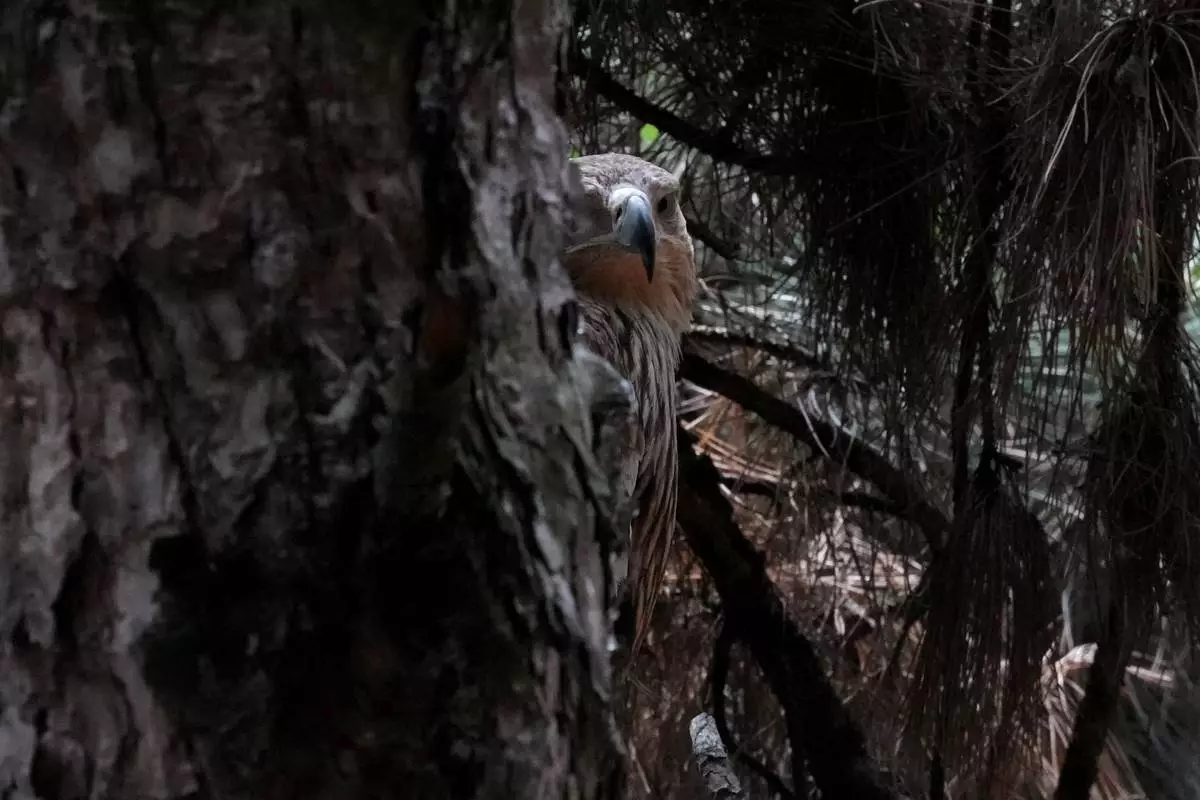
Feliks, an Eastern imperial eagle which flew from Serbia across North Macedonia, Greece, Turkey and Syria, where he fell victim to traffickers looks out from a cage at Palic Zoo after returning in Serbia, Wednesday, June 24, 2026. (AP Photo/Darko Vojinovic)
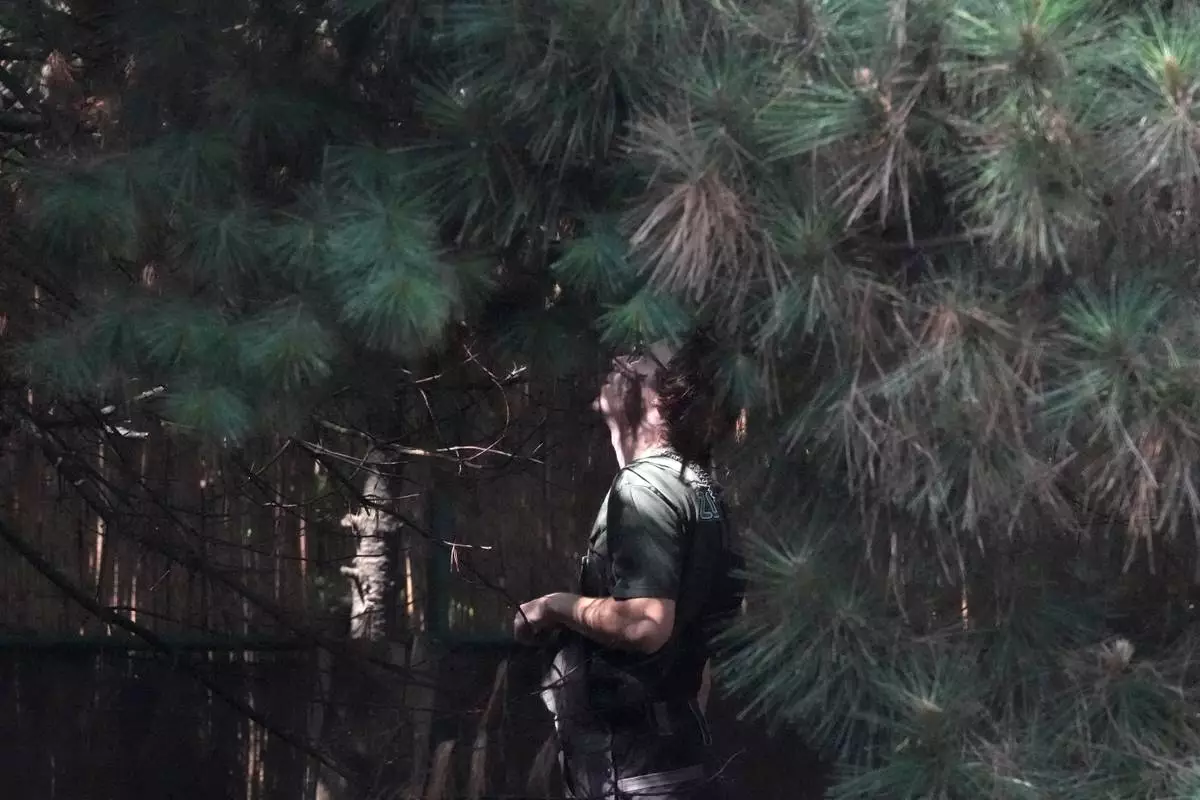
A worker inside the cage at Palic Zoo looks among trees for Feliks, an Eastern imperial eagle which flew from Serbia across North Macedonia, Greece, Turkey and Syria, where he fell victim to traffickers after returning in Serbia, Wednesday, June 24, 2026. (AP Photo/Darko Vojinovic)
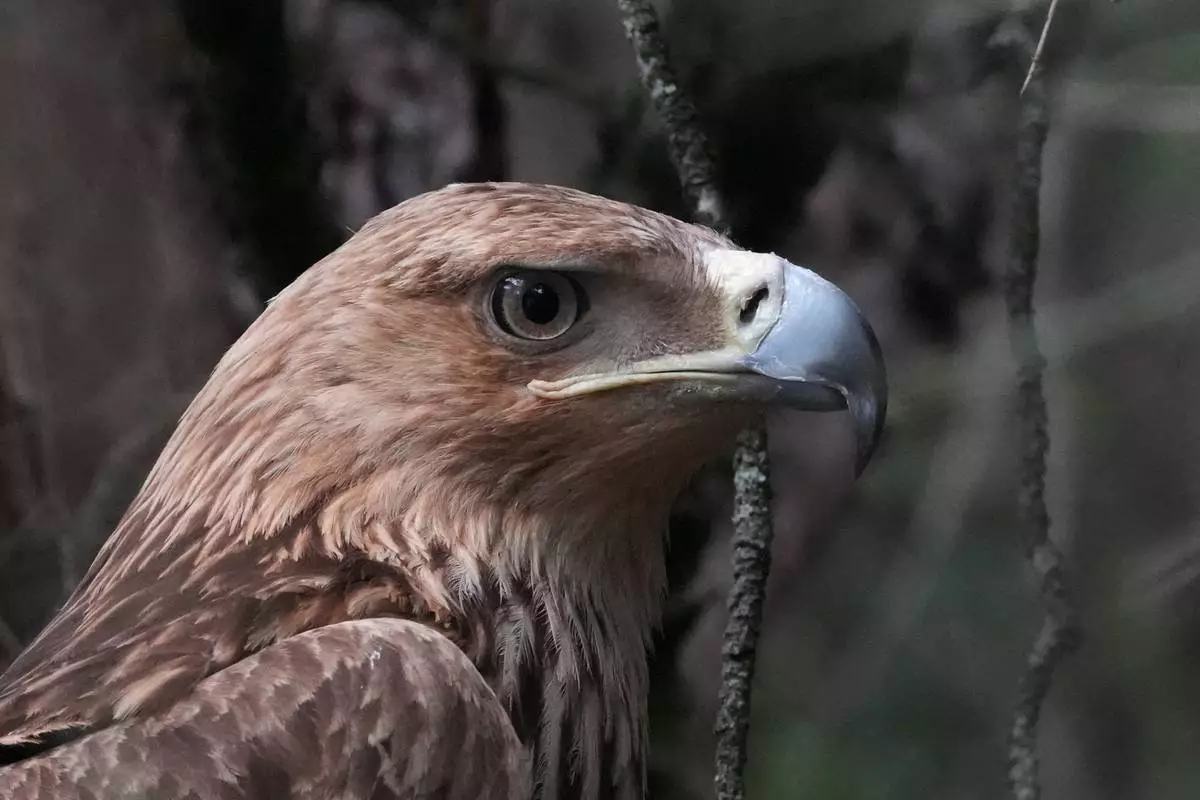
Feliks, an Eastern imperial eagle which flew from Serbia across North Macedonia, Greece, Turkey and Syria, where he fell victim to traffickers, looks out from a cage at Palic Zoo after returning in Serbia, Wednesday, June 24, 2026. (AP Photo/Darko Vojinovic)
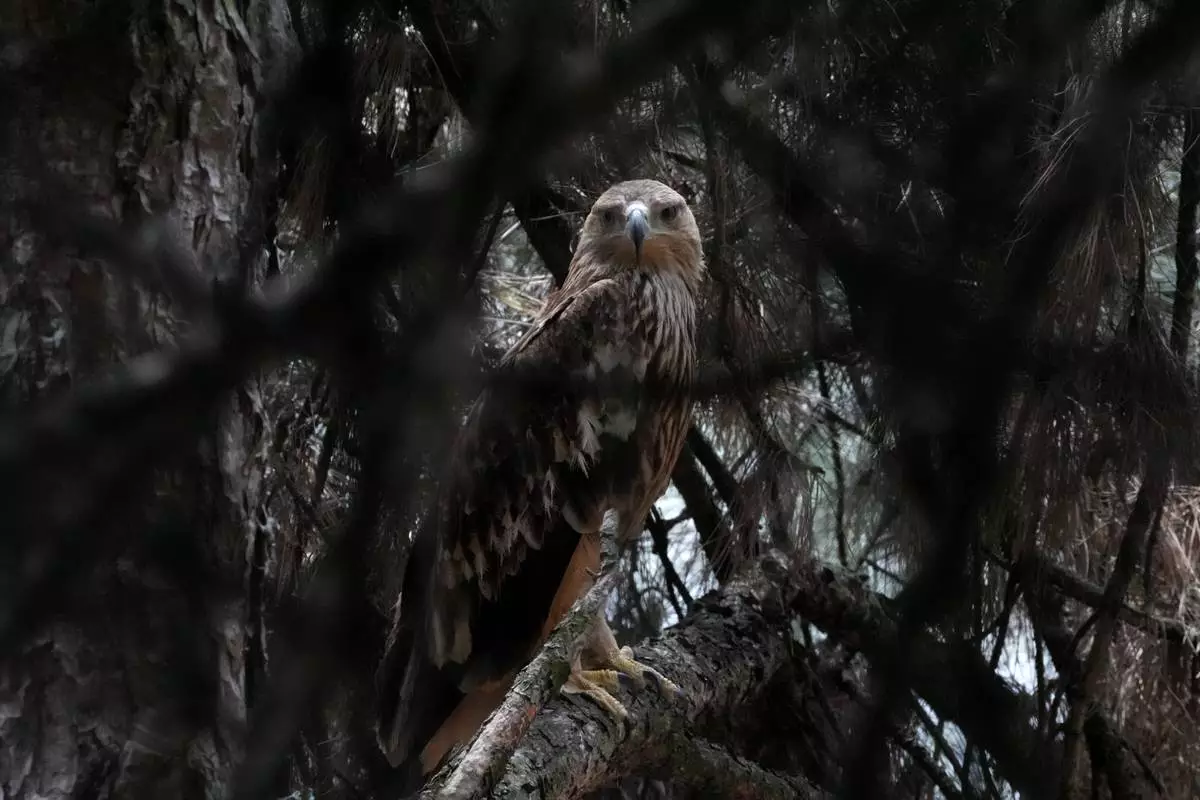
Feliks, an Eastern imperial eagle which flew from Serbia across North Macedonia, Greece, Turkey and Syria, where he fell victim to traffickers looks out from a cage at Palic Zoo after returning in Serbia, Wednesday, June 24, 2026. (AP Photo/Darko Vojinovic)