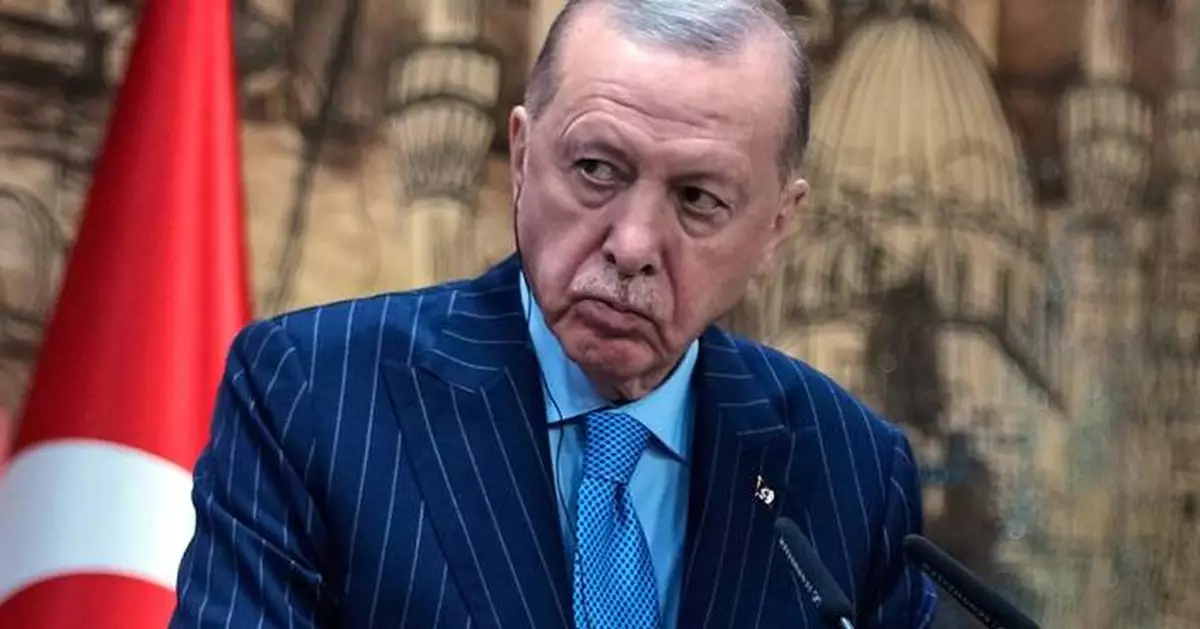
ANKARA, Turkey (AP) — Turkey's president on Tuesday dismissed an Israeli proposal to designate violence against Armenians by the Ottoman Empire during World War I as genocide, and turned the accusation back at Israel by pointing at the deaths of Palestinians in Gaza.
President Recep Tayyip Erdogan was responding to a measure approved Sunday by Israel's Cabinet. The proposal still requires parliamentary approval and comes amid deteriorating ties between Israel and Turkey.
Turkey has fiercely lobbied to prevent countries from officially recognizing the mass deaths of Armenians around 1915 as genocide, even as Armenians have pushed for it.
Historians estimate that up to 1.5 million Armenians were killed by Ottoman Turks around the time of World War I, an event widely viewed by scholars as the first genocide of the 20th century. Turkey denies that the deaths constituted genocide, saying the toll has been inflated and that those killed were victims of civil war and unrest.
“We pay absolutely no attention to the slanders against our country by this criminal network, which has the blood of 73,000 innocent people of Gaza, mostly children and women, on its hands,” Erdogan said in a televised address following a Cabinet meeting.
“Our history is free from genocide, massacres, oppression and colonialism," Erdogan said.
Armenian Prime Minister Nikol Pashinyan, whose government is engaged in efforts to normalize ties with neighboring Turkey, declined to respond to the Israeli proposal on Monday, suggesting that the issue should not be turned into a political weapon.
“We see no need to respond because we believe that refraining from entering into the issue of the weaponization of the Armenian Genocide is in the interests of the Republic of Armenia,” state news agency Armenpress quoted Pashinyan as saying.
Turkey and Armenia have no formal diplomatic ties and their border has been closed since 1993. The countries have been engaged in normalization talks in recent years, however, with special envoys meeting to discuss reopening the border and restoring ties.
Israel for years avoided officially recognizing the violence as genocide out fear of angering Turkey, but that relationship has soured over the past two decades, especially as the most recent wars in Gaza, Lebanon and Iran have dragged on.
Israeli Foreign Minister Gideon Saar, who introduced the proposal, said on Sunday that the “Armenian Genocide remains to this day the subject of an institutionalized campaign of denial and minimization” by the Turkish government, despite overwhelming historical evidence.
Saar noted that Israeli leaders, including Prime Minister Benjamin Netanyahu, have previously described the violence against Armenians as genocide. But it has never been formally recognized in a vote by Israel’s Knesset.
He noted that 32 countries, including the United States, Syria and Lebanon, have also classified the violence as genocide.
Israel and Turkey were once close allies, but ties deteriorated after Erdogan, whose party is rooted in Turkey’s Islamic movement, came to power. Relations soured steadily over his outspoken criticism of Israeli policies toward Palestinians.
On Sunday, Turkey’s Foreign Ministry called Israel’s move a “politically motivated” step meant to distract from the country’s own actions against Palestinians and from proceedings at the International Court of Justice over alleged genocide in Gaza. In 2024, Turkey formally joined the ongoing case that was filed by South Africa.
Israel has faced repeated accusations, including from the United Nations and Turkey, that its offensive in Gaza amounts to genocide. Israel, founded in the wake of the Holocaust, denies the accusations.
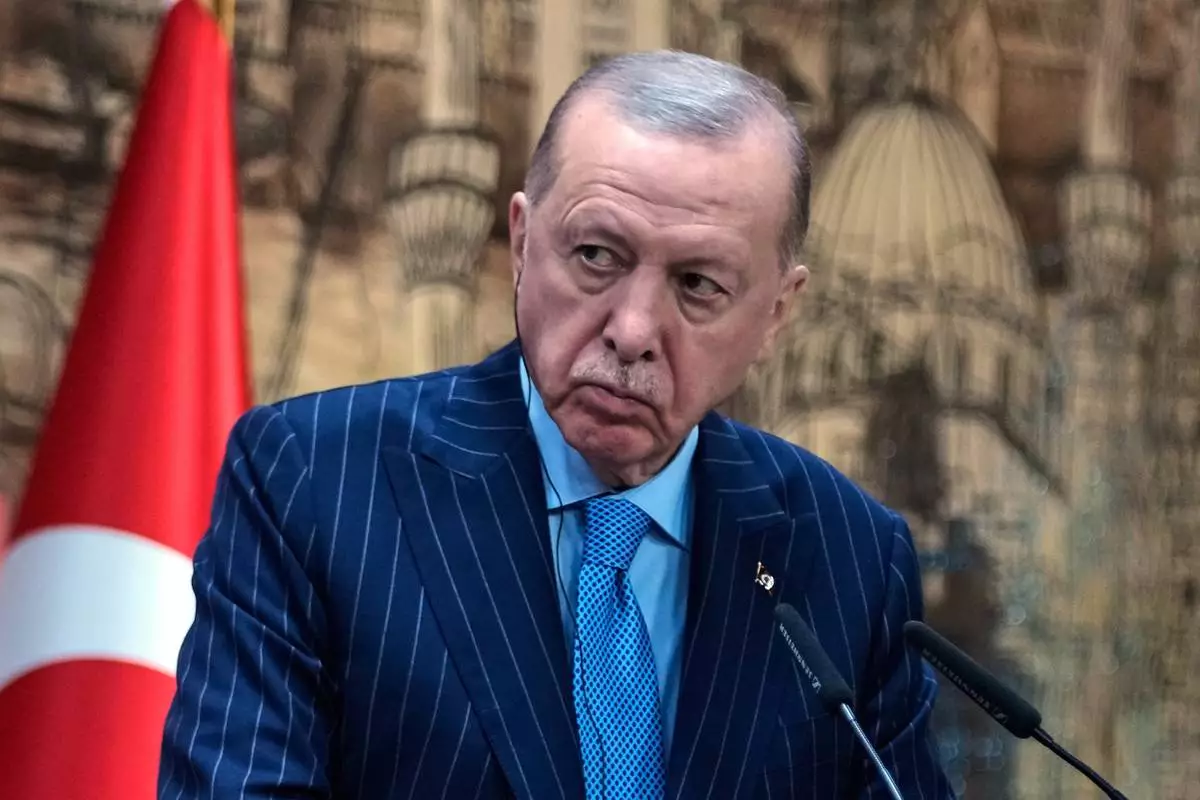
FILE - Turkey's President Recep Tayyip Erdogan listens as Somalia's President Hassan Sheikh Mohamud speaks during a joint news conference in Istanbul, Turkey, on Dec. 30, 2025. (AP Photo/Khalil Hamra, File)
WASHINGTON (AP) — The Supreme Court on Tuesday erased limits on how much political parties can spend in coordination with candidates for Congress and president, striking down a federal election law that is more than 50 years old.
Prodded by a Republican-led lawsuit that includes Vice President JD Vance, the court's six conservative justices were again in the majority of the latest decision that upended congressionally enacted limits on raising and spending money to influence elections. The court’s 2010 Citizens United decision opened the door to unlimited independent spending in federal elections.
The limits on party spending stem from a desire to prevent large donors from skirting caps on individual contributions to a candidate by directing unlimited sums to the party, with the understanding that the money will be spent on behalf of the candidate.
The Supreme Court had previously upheld the limits, in 2001.
But Justice Brett Kavanaugh, writing for the court, said that decision was wrong and should be overruled. “In short, constitutional text, history and precedent establish that the political-party coordinated-expenditure limits violate the First Amendment,” Kavanaugh wrote.
Justice Elena Kagan's dissent for the three liberal justices said the court “ushers in untold harm” by enabling parties to funnel large contributions to individual candidates, far in excess of what donors can give those candidates directly.
National parties now will be able to make direct contributions to candidates’ campaigns,
The decision is likely to give Republicans at least a short-term boost because they maintain a sizable cash advantage over Democrats.
The Republican National Committee and its Senate and House campaign fundraising arms have dwarfed Democrats’ in the months before congressional elections where the GOP is defending narrow majorities in both houses.
At the end of May, the RNC reported having more than $125 million to spend, its highest-ever cash on hand total, according to its most recent Federal Election Commission filing in May. Meanwhile, the National Republican Senatorial Committee had more than $48 million on hand in its most recent report and the National Republican Congressional Committee had more than $81 million.
In the same period, the Democratic National Committee had $14.4 million on hand, while the Democratic Senatorial Campaign Committee had roughly $37 million and the Democratic Congressional Campaign Committee, roughly $73 million.
The Republican committees for House and Senate candidates filed the lawsuit in Ohio in 2022, joined by Vance, then a senator from Ohio, and then-Rep. Steve Chabot.
After President Donald Trump took office for his second term, the Federal Election Commission dropped its defense of the law and joined with Republicans in urging that it be overturned.
Democrats had called on the court to uphold the law, even though there is wide agreement that the spending limits have hurt political parties in an era of unlimited spending by other organizations.
Last year, the coordinated party spending for Senate races ranged from $127,200 in several states with small populations to nearly $4 million in California, the most populous state. For House races, the limits were $127,200 in states with only one representative and $63,600 everywhere else.
Entrenched divisions between liberal and conservative justices over campaign finance restrictions were on display when the court heard arguments in December.
“Every time we interfere with the congressional design, we make matters worse,” said Justice Sonia Sotomayor, a dissenter in Citizens United and the court’s other campaign money cases.
By contrast, Justice Samuel Alito, a member of the Citizens United majority, described the decision as “much maligned, I think unfairly maligned.” The effect of the decision was to ”level the playing field,” Alito said, by expanding the right to spend freely that had previously belonged only to media companies.
Associated Press writer Thomas Beaumont contributed to this report.
Follow the AP's coverage of the U.S. Supreme Court at https://apnews.com/hub/us-supreme-court.
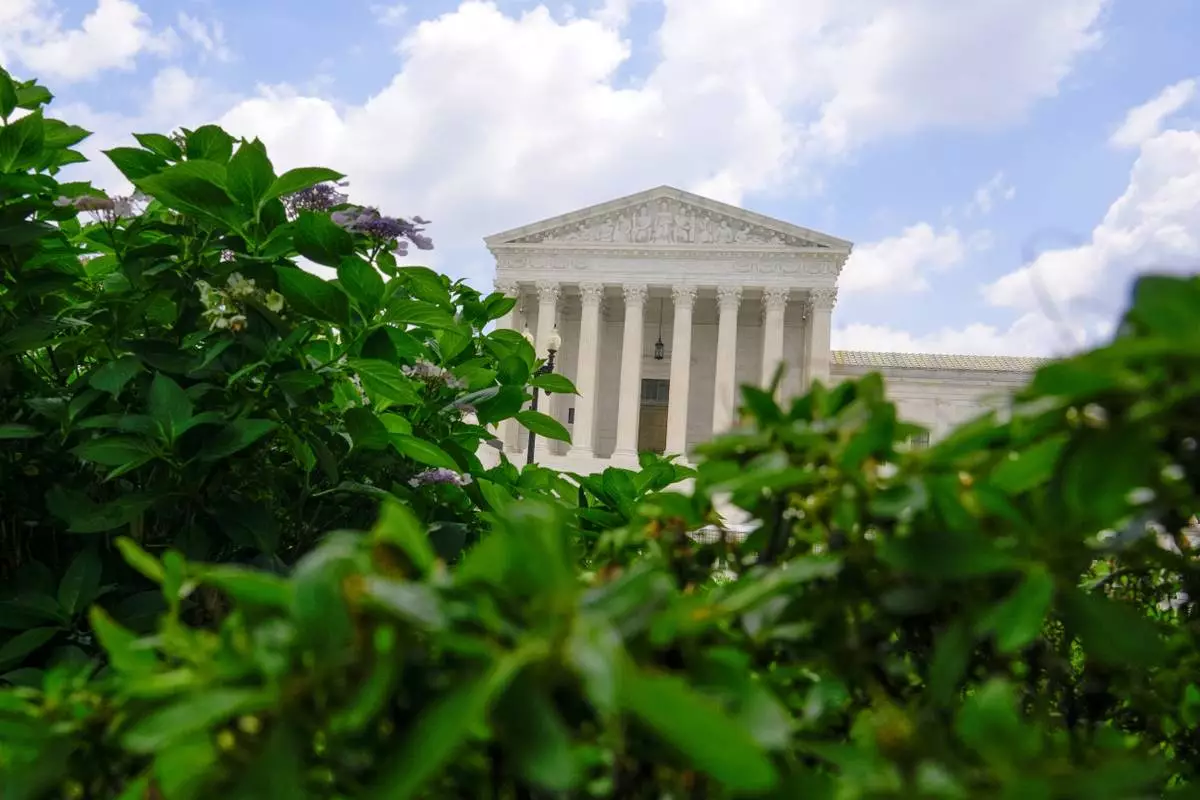
The U.S. Supreme Court is seen Monday, June 29, 2026, in Washington. (AP Photo/Mariam Zuhaib)