WASHINGTON (AP) — The Supreme Court just wrapped up a term that yielded significant rulings in cases involving race and discrimination that could have lasting effects on U.S. politics and society.
Justices were at times bitterly divided — and critical of one another — in rulings that winnowed key provisions of a landmark voting rights law, allowed the government to revoke protections for some immigrants and even challenged the historic understanding of birthright citizenship for the children of immigrants.
The decisions come at a moment when long-standing debates over race and identity have turned toward immigration, increasing racial diversity and the fairness of policies meant to prevent and redress discrimination.
“This term, we saw a Supreme Court that is moving quickly to eradicate legal protections in ways that will leave vulnerable communities exposed to the harsh winds of discrimination and hatred that we continue to see across the country today,” Kristen Clarke, general counsel for the NAACP and the former head of the Justice Department’s civil rights division during the Biden administration, told The Associated Press.
Here is a breakdown of the latest decisions involving race and what they may mean going forward:
The court allowed the government to end deportation protections for Haitians and Syrians in the U.S. who have fled violence and natural disaster. President Donald Trump's administration revoked the temporary protected status last year.
With the president's more than decadelong track record of denigrating developing nations and immigrants who come to the U.S. from Africa, Asia, Latin America and the Middle East, attorneys for some affected migrants contended that the government could not cancel the designations, in part because Trump's comments about immigrants were racist.
“The true reason for the termination is the president’s racial animus towards non-white immigrants and bare dislike of Haitians in particular,” Geoffrey Pipoly, an attorney for the Haitian nationals in the case, said during April oral arguments in the case, Mullin v. Doe. The attorneys noted that, during his second presidential campaign, Trump claimed immigrants “are poisoning the blood of our country" and suggested in another instance that migrants have “bad genes.”
Federal authorities denied prejudice played a role in the decision and argued that TPS was supposed to end but has lasted more than a decade in some cases.
In writing for the 6-3 conservative majority, Justice Samuel Alito said none of the cited statements was “overtly racial,” reasoning that any of Trump's actions could have been taken without racial animus and attributing his anti-immigrant comments to “political discourse."
That's not how the court's liberal minority saw the situation.
“The references — of filth, disease, and primitiveness — are shot through with racial stereotypes and tropes. It is hard to imagine the statements being made today of any White community,” Justice Elena Kagan wrote in her dissent.
In one of the highest-profile cases of the term, the court reaffirmed that the 14th Amendment to the U.S. Constitution means all people born in the U.S. are citizens.
On his first day in office last year, Trump signed an executive order seeking to restrict birthright citizenship to the children of U.S. citizens, a move that civil rights groups challenged as unconstitutional and racist.
In his majority opinion, Chief Justice John Roberts traced the arc of birthright citizenship — a principle that all people born on U.S. soil are citizens — from its origins in English common law to its codification in the 14th Amendment.
Roberts noted that race and citizenship had been fiercely debated in courts, speeches, Congress and battlefields because of Black Americans’ fight for freedom from slavery.
Freed Black Americans did not receive citizenship as a “reward,” Roberts wrote, but because “the Amendment recognized their rightful claim to birthright citizenship simply and solely by virtue of their having been born on American soil.”
The 6-3 ruling was a blow to the Trump administration, which has made restricting immigration its central goal.
“The clause does not extend citizenship to the children of temporary visa holders or illegal aliens,” U.S. Solicitor General John Sauer argued before the court in April.
Justice Clarence Thomas agreed and wrote in his dissent that African descendants of enslaved people in the U.S. are a unique case separate from the children of tourists or people in the country illegally.
“Blacks were entitled to citizenship because they were Americans. They had no other homeland, owed no allegiance to any foreign power, and were subject to no other authority,” Thomas wrote.
In a stark move, liberal Justices Ketanji Brown Jackson and Sonia Sotomayor directly criticized Thomas' claim in a joint opinion.
“The Reconstruction Amendments were an anticaste, antisubordination reset for the Nation, not a mere spot treatment for the dark stain of slavery,” they wrote.
The Supreme Court handed down a decision in April that gutted a key provision of the Voting Rights Act meant to remedy efforts to disenfranchise minority voters. Among the methods the law permitted to stop voting discrimination in states was the creation of majority-minority congressional districts.
In the majority opinion, Alito found that because race and partisan voting behavior were so intertwined, it was unfair to conclude that a partisan gerrymander of a state's congressional districts could be racist, given there may be other reasons for the map's results.
Alito reasoned that “in a state where both parties have substantial support and where race is often correlated with party preference,” partisan actors can “easily exploit” laws meant to protect minority political participation for disingenuous reasons.
The liberal justices balked at the logic and criticized the conservative majority for harming minority representation in politics and culture. They believed that the law's provisions were still necessary to prevent discrimination by states and worried about the fallout from its removal.
“The consequences are likely to be far-reaching and grave," Kagan wrote in her dissent. “Today’s decision renders Section 2 all but a dead letter. In the states where that law continues to matter — the states still marked by residential segregation and racially polarized voting — minority voters can now be cracked out of the electoral process.”
The decision has had profound impact on the political landscape, with nearly a dozen Southern states immediately taking steps to redistrict and eliminate majority-Black districts.
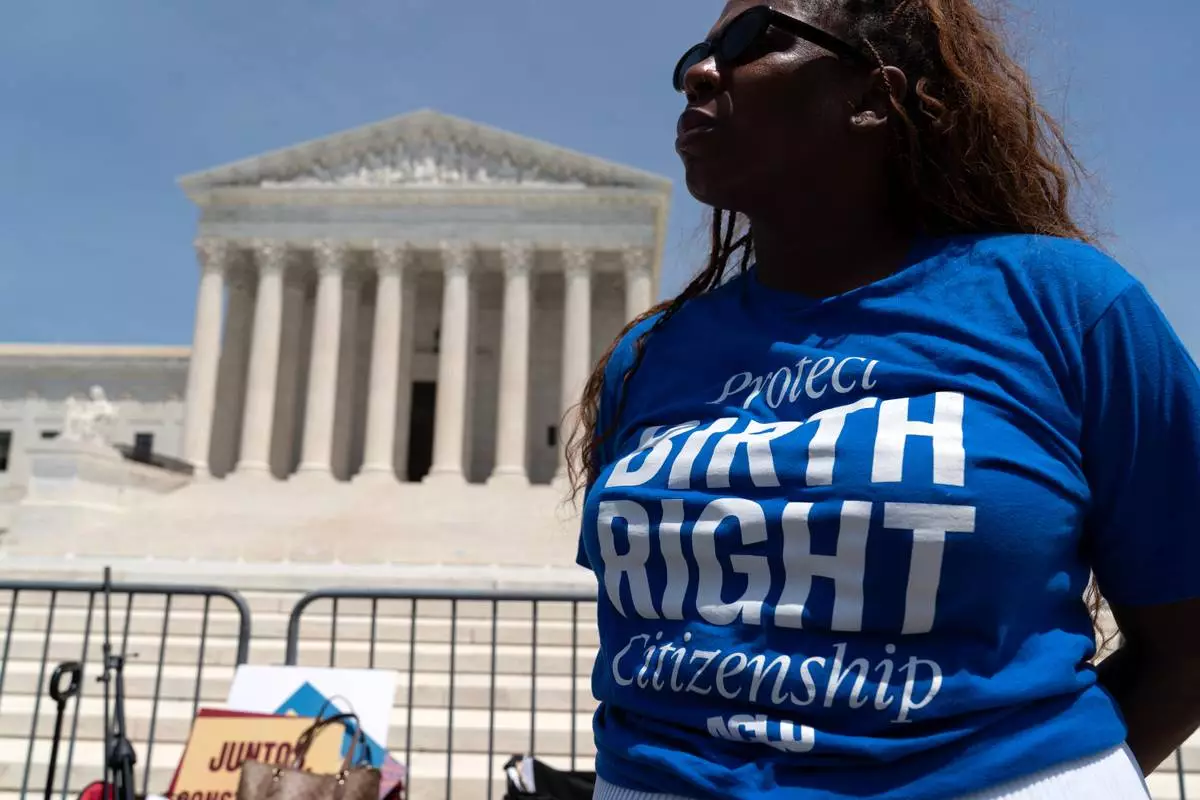
Activists celebrate the Supreme Court's birthright citizenship ruling outside of the Supreme Court on Capitol Hill, Tuesday, June 30, 2026, in Washington. (AP Photo/Jose Luis Magana)
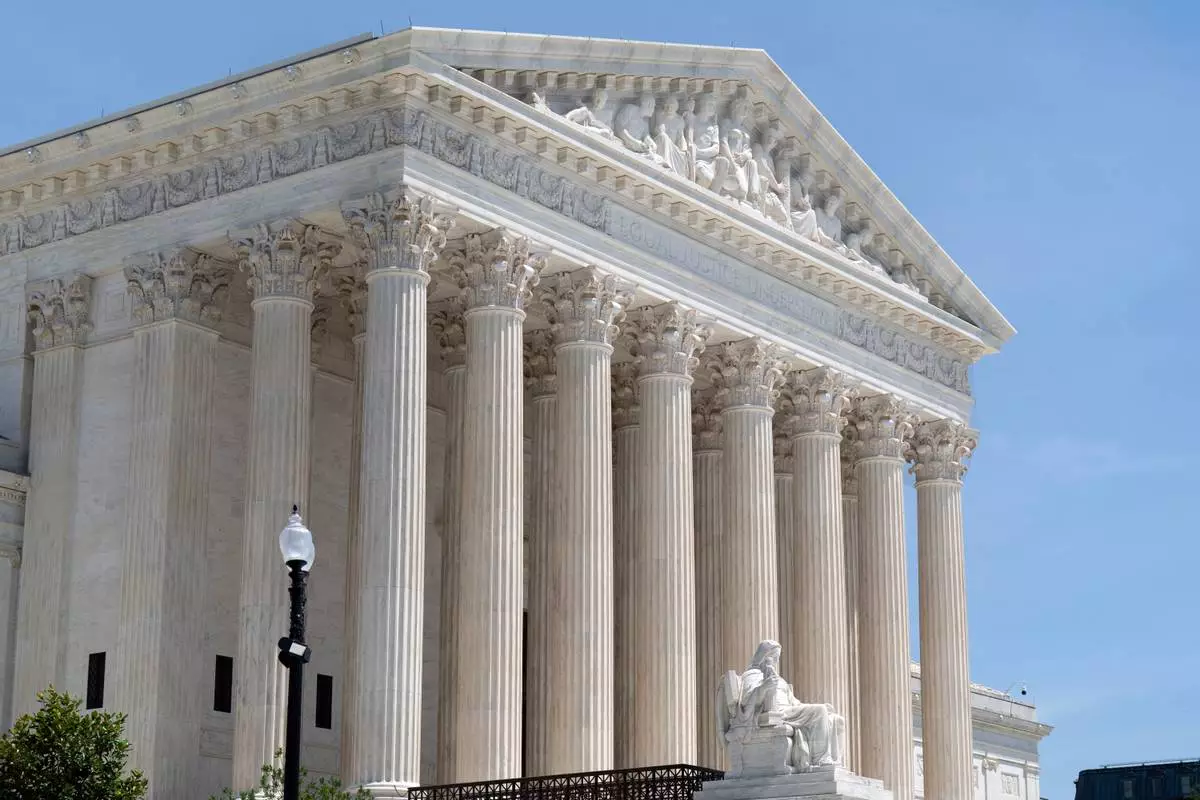
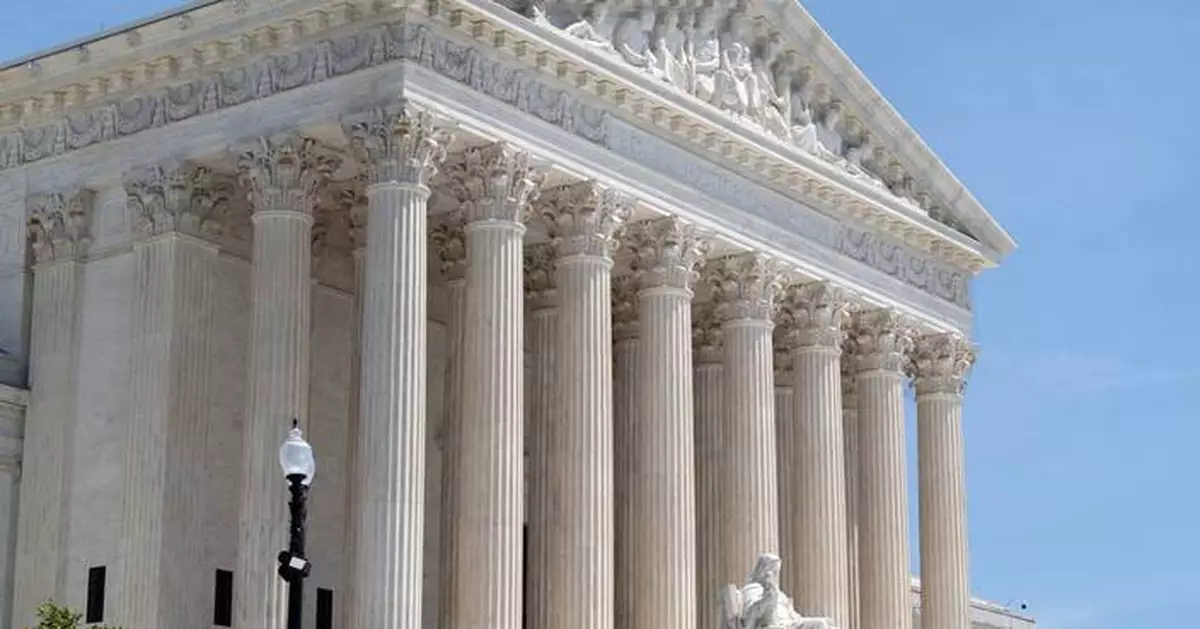
The Supreme Court is seen Tuesday, June 30, 2026, in Washington. (AP Photo/Jose Luis Magana)
VATICAN CITY (AP) — The Vatican responded aggressively Thursday to a traditionalist group that consecrated bishops without the pope’s consent, declaring the Society of St. Pius X had formally broken with the Catholic Church. It also excommunicated its bishops and priests, and warned its faithful that they too face the harshest sanctions in the church.
By declaring a schism and extending excommunications to potentially thousands of Catholics, the Vatican’s doctrine office went above and beyond the minimum sanctions foreseen by the church’s canon law to respond to the consecrations Wednesday of four new bishops.
The society, known by its acronym SSPX, celebrates the ancient Latin Mass and opposes the modernizing reforms of the Catholic Church, which it considers to be rife with heresies and errors. While a fringe movement on the Catholic right, the SSPX has been a thorn in the Vatican's side for five decades because it claims to be even more Catholic than the Holy See.
During a ritual-filled, five-hour Mass on Wednesday at its seminary in Econe, Switzerland, the SSPX consecrated four new bishops in direct defiance of Leo, who had urged the group to hold off for the sake of church unity. An estimated 15,500 people and their children attended, a sign that the SSPX has plenty of supporters who came from around the world knowing full well they were defying Rome.
The harshness of the response suggested that after trying to negotiate with the SSPX, the Vatican under Pope Leo XIV had had enough.
In a decree, the Vatican excommunicated the four new bishops and the two bishops who participated in the ceremony. It declared the consecrations a “schismatic act” and declared the society itself had created a schism, or intentional rupture with the Catholic Church.
It declared SSPX priests — who number about 750 — to be schismatic, and therefore excommunicated, and invalidated the sacraments of confession and marriage that they administer. The Vatican warned the faithful to stop going to the society’s Masses, declaring “those who adhere formally” to the society are considered themselves schismatic and excommunicated.
The Vatican has previously described “adherence” to the SSPX as including those Catholics who share in the schism by placing their loyalties to the society above the pope, and those who participate exclusively in SSPX Masses. As a result, Thursday's decree could potentially involve the excommunications of thousands of rank-and-file SSPX faithful.
The sanctions, especially those targeting the priests, the faithful and the sacraments they can receive, were particularly harsh and reversed concessions the Vatican had granted the SSPX in recent years as part of its outreach to bring the group back under Rome's wing.
The actions were announced just as one of the new bishops, Pascal Schreiber of Switzerland, was celebrating his first Mass as a bishop in Econe.
Marc-André Mabillard, media manager for the society, expressed shock at the severity of the sanctions and called them “unjust."
“For us, this excommunication extended to the faithful is brutal. It’s not what we expect from a father to whom we refer every day,” he told The Associated Press. “We are told, ‘You claim to have the truth.’ Fine. I’m just saying that we certainly have our flaws, but our main flaw today is having a leader who doesn’t want to communicate with us. And that’s terrible.”
The Vatican's doctrine chief, Cardinal Víctor Manuel Fernández, met in February with the SSPX superior, the Rev. Davide Pagliarani, and proposed a dialogue. But Pagliarani asked instead to meet with Leo, who declined but wrote a letter Tuesday begging the SSPX to call off the consecrations.
French Archbishop Marcel Lefebvre founded the SSPX in 1970 in opposition to the modernizing reforms of the Second Vatican Council. Among other things, the 1960s meetings known as Vatican II revolutionized the church’s relations with other Christians, Jews and people of other faiths and allowed Mass to be celebrated in the vernacular rather than Latin.
Lefebvre consecrated four bishops without papal consent in 1988. The Vatican promptly excommunicated Lefebvre and the four bishops and declared the consecrations a “schismatic act.”
Pope Benedict XVI in 2009 lifted the excommunications as part of his yearslong outreach to the group. But the SSPX today has no legal standing in the church and with Thursday’s decree is declared to be in schism.
The consecrations had posed a crisis for Leo because the American pope has stressed the need for church unity. He has reached out especially to the conservative and traditionalist wing of the church that was in many ways alienated during the Pope Francis pontificate.
The Vatican responded so aggressively in part because the group poses something of a threat by representing a parallel, ultra-Catholic, pre-Vatican II church that has grown in the decades since its original break from Rome. While representing a fraction of the 1.4-billion strong Catholic faithful, the SSPX now has six bishops, 751 priests, 264 seminarians, 145 religious brothers, 88 oblates and 250 religious sisters representing 50 nationalities, according to SSPX statistics.
In a note accompanying the decree, the Vatican said it was willing, “like a caring mother,” to welcome any SSPX faithful back into the fold. But it didn't create any specific Vatican entity to receive them, decreeing only that Vatican ambassadors around the world would establish procedures for local bishops to follow.
While the SSPX is out of communion with Rome, plenty of other Catholic traditionalists who love the Latin Mass remain in communion with the Holy See. They had been watching carefully to see how Leo's Vatican would respond to the SSPX consecrations and were surprised by the harshness of Thursday's sanctions.
Luigi Casalini, of the blog Messa in Latino, meaning Latin Mass, said the excommunication of the bishops was correct because canon law provides for it.
But the extension of the excommunications to SSPX priests and faithful was “an act of unusual severity,” he said, while saying the invalidation of SSPX sacraments was problematic.
“Above all, we find it hard to believe that, to date, no Vatican body has been established to manage potential defectors,” as was the case after the 1988 excommunications, Casalini told The Associated Press.
The SSPX has accused the church of being rife with errors, such as modernism and liberalism, and that only it is upholding the true faith of Christ. It has justified the consecrations, citing a “state of necessity” to minister to its faithful. Only two of the original four bishops consecrated in 1988 are alive, and the SSPX has said they simply are too old to minister to all the SSPX faithful.
One of the thousands of worshippers at Wednesday’s consecrations was Allison Isermann, a 24-year-old from St. Marys, Kansas, who grew up as a society member and strongly defended its teaching in opposition to Vatican II, specifically its openness to those of other faiths.
“It is actually very anti-Catholic and anti-charitable to affirm others and their beliefs when it is our duty and our mission to actually convert and sanctify the world and to restore all things in Christ,” she said.
Jamey Keaten contributed from Econe, Switzerland.
Associated Press religion coverage receives support through the AP’s collaboration with The Conversation US, with funding from Lilly Endowment Inc. The AP is solely responsible for this content.
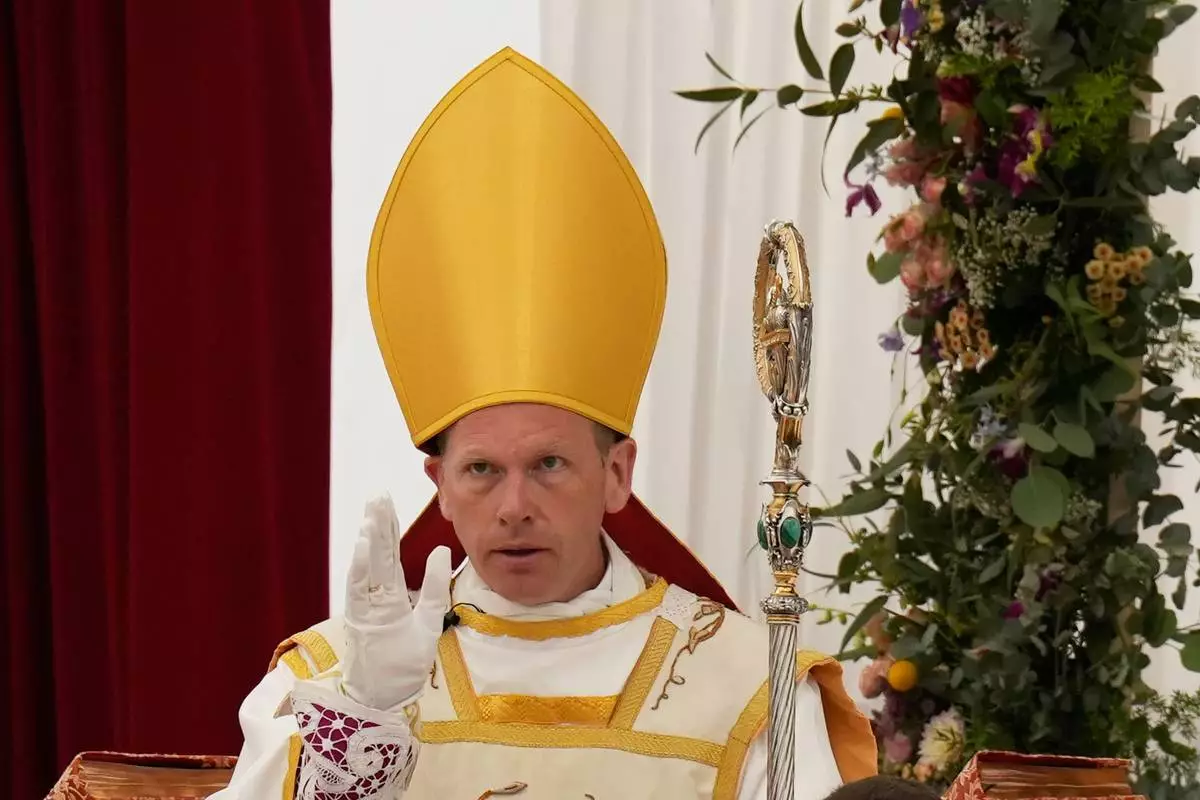
Newly consecrated Bishop Michael Goldade delivers his blessing at the end of his consecration ceremony in a tent set up outside the Society of St. Pius X seminary in Econe, Switzerland, Wednesday, July 1, 2026. (AP Photo/Baz Ratner)
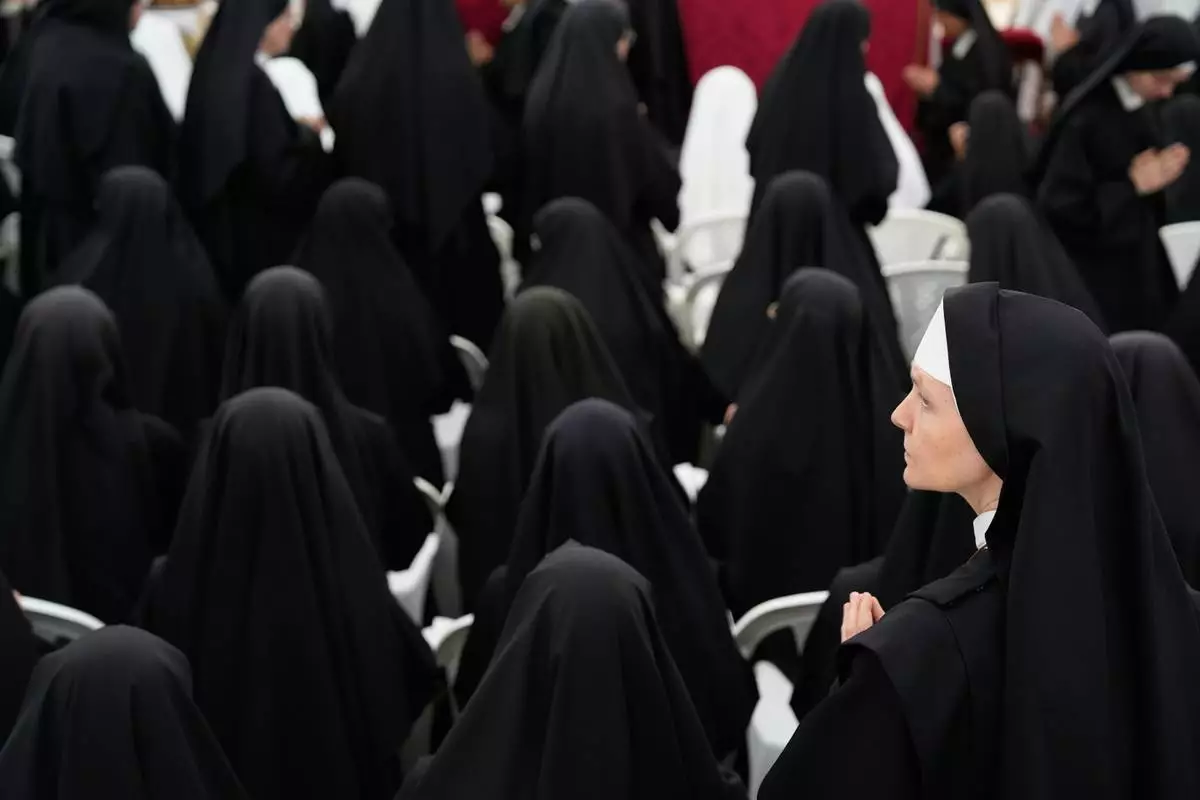
Nuns attend a consecration ceremony for four new bishops in a tent set up outside the Society of St. Pius X seminary, in Econe, Switzerland, Wednesday, July 1, 2026. (AP Photo/Baz Ratner)
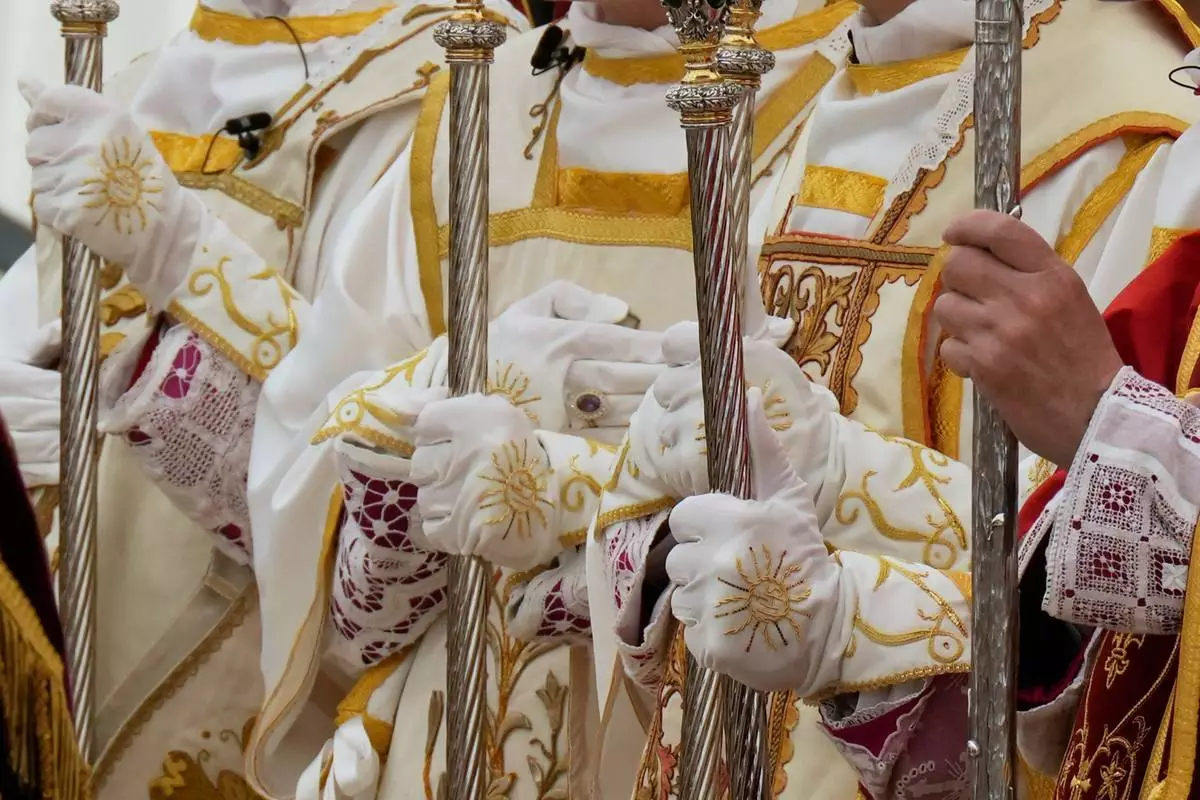
Newly consecrated Bishops, from left, Pascal Schreiber, Michael Goldade, Michel Poinsinet de Sivry and Marc Hanappier hold their pastoral staffs at the end of their consecration ceremony in a tent set up outside the Society of St. Pius X seminary in Econe, Switzerland, Wednesday, July 1, 2026. (AP Photo/Baz Ratner)
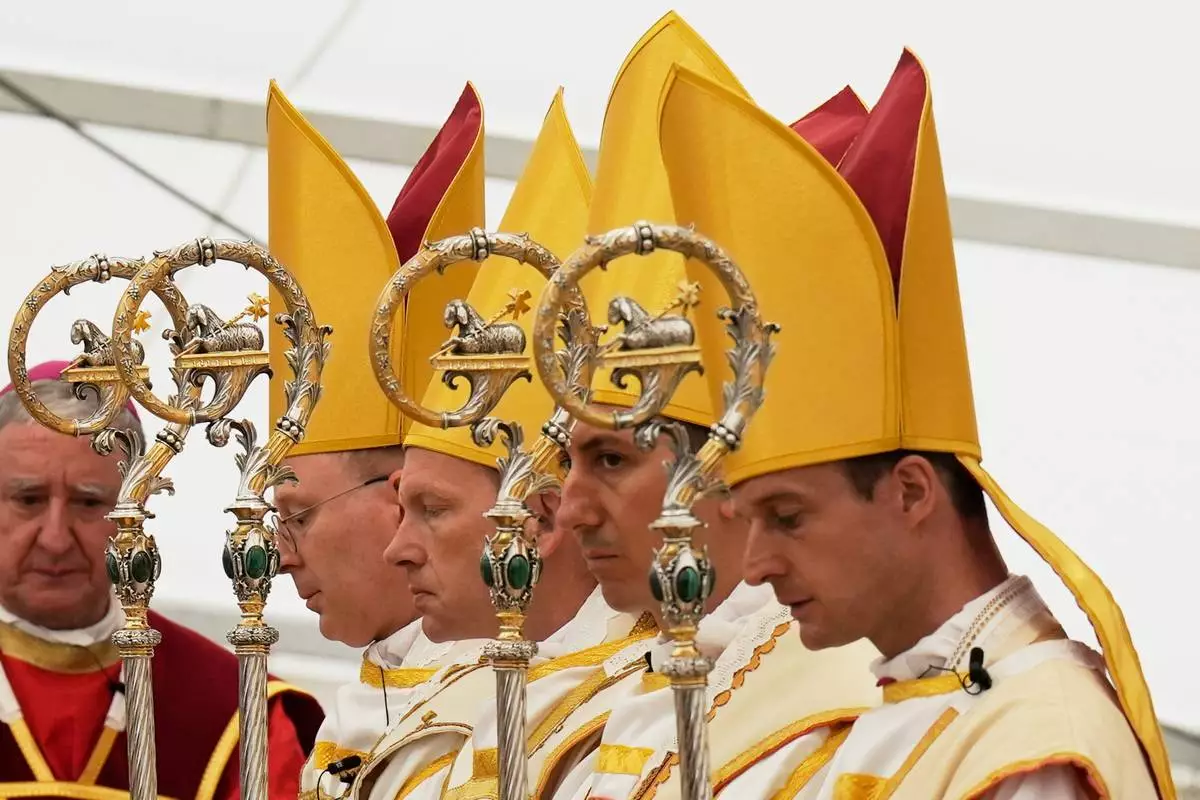
Newly consecrated Bishops, from left, Pascal Schreiber, Michael Goldade, Michel Poinsinet de Sivry and Marc Hanappier, wearing their miters and holding their pastoral staffs, pray at the end of their consecration ceremony in a tent set up outside the Society of St. Pius X seminary in Econe, Switzerland, Wednesday, July 1, 2026. (AP Photo/Baz Ratner)
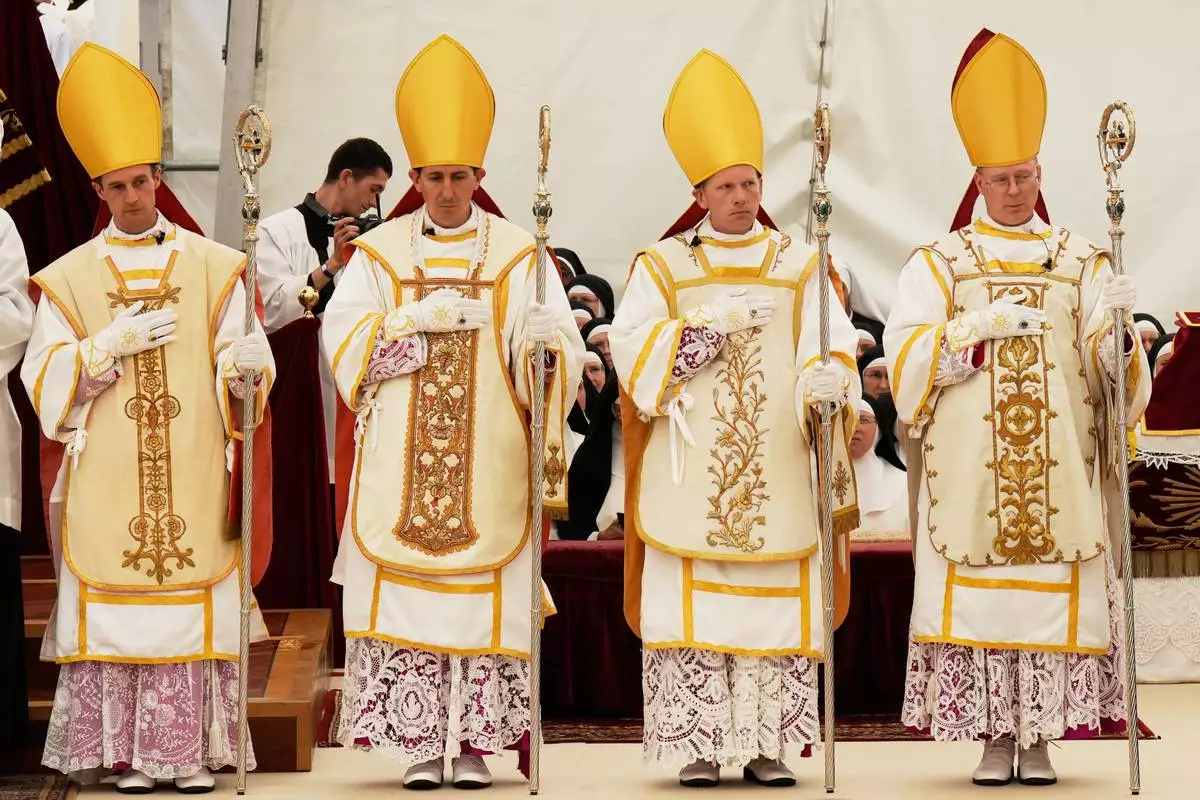
Newly consecrated Bishops, from left, Marc Hanappier, Michel Poinsinet de Sivry, Michael Goldade and Pascal Schreiber wearing their miters and holding their pastoral staffs, stand at the end of their consecration ceremony in a tent set up outside the Society of St. Pius X seminary in Econe, Switzerland, Wednesday, July 1, 2026. (AP Photo/Baz Ratner)