It's become one of the enduring scenes of the U.S. team during this World Cup: jubilant U.S. players joining tens of thousands of fans in singing John Denver's “Take Me Home, Country Roads” at the end of their matches.
Even coach Mauricio Pochettino, who was born in Argentina and lives in Spain, got in on the act after Wednesday's 2-0 victory over Bosnia-Herzegovina, belting out the words to Denver's anthem as he hugged his players and staff members.
Click to Gallery
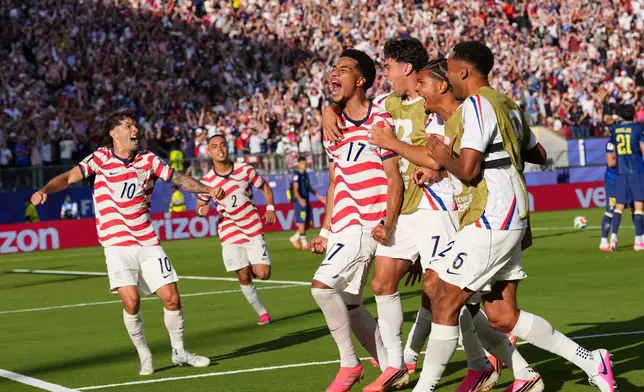
United States' Malik Tillman (17) celebrates with teammates after scoring on a free kick during the World Cup round of 32 soccer match between the United States and Bosnia in Santa Clara, Calif., near San Francisco, Wednesday, July 1, 2026. (AP Photo/Martin Meissner)
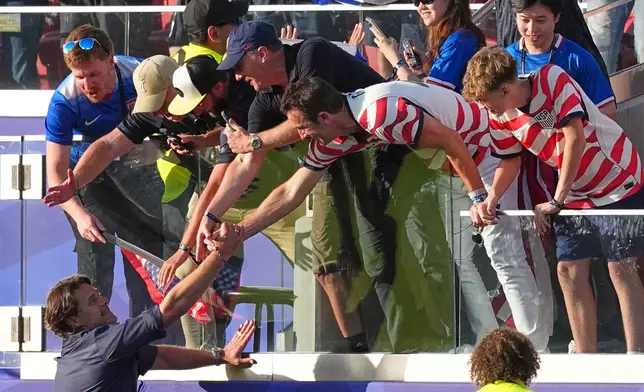
United States head coach Mauricio Pochettino, left, celebrates with supporters following the World Cup round of 32 soccer match between the United States and Bosnia in Santa Clara, Calif., near San Francisco, Wednesday, July 1, 2026. (AP Photo/Julio Cortez)
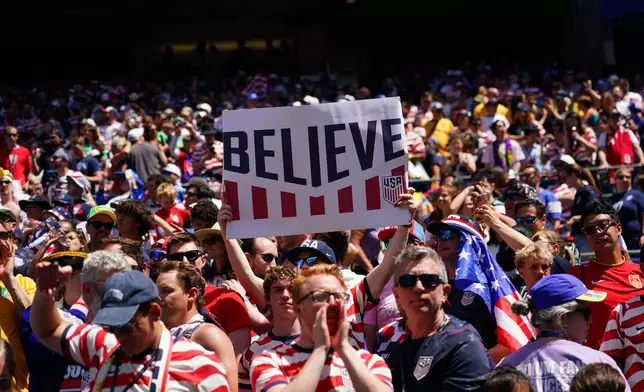
US fans react after the World Cup Group D soccer match between the United States and Australia in Seattle, Friday, June 19, 2026. (AP Photo/Ted S. Warren)

United States' Weston McKennie (8) celebrates after winning the World Cup Group D soccer match against Australia in Seattle, Friday, June 19, 2026. (AP Photo/Manu Fernandez)
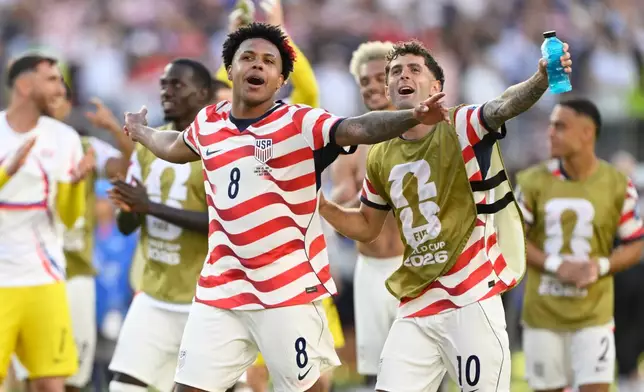
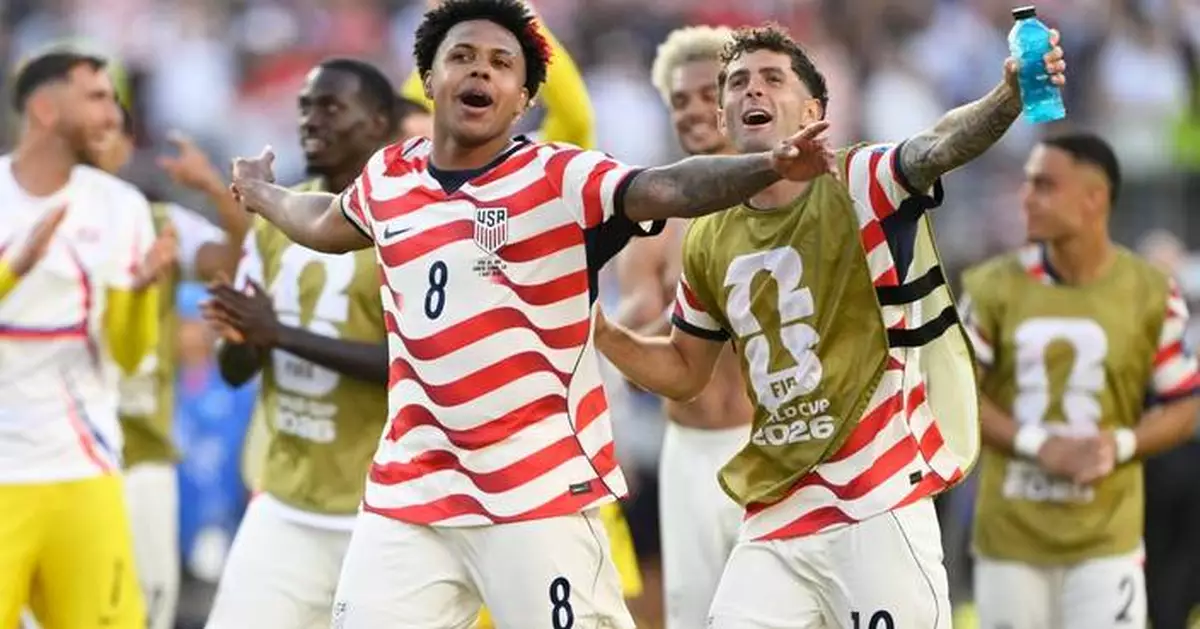
United States' Weston McKennie (8) and Christian Pulisic (10) celebrate winning the World Cup round of 32 soccer match between the United States and Bosnia in Santa Clara, Calif., near San Francisco, Wednesday, July 1, 2026. (AP Photo/Eakin Howard)
“Country Roads” cowriter Bill Danoff told The Associated Press that he's honored that the U.S. team has embraced the song, and that Denver, who died in a plane crash in 1997, would have relished watching the most recent match.
“It was such an exciting game — they were down a player with a red card, but they still won,” said Danoff, who has started to become more of a soccer fan in recent weeks, partially due to the “Country Roads” connection. “I thought, ‘Gee, I wish John was still here.’ John got super excited about stuff like that, and it would have been fun to watch that game with him.”
The John Denver estate told the AP that it is “thrilled” by the song’s latest revival at the World Cup, saying “Country Roads” has endured because its message transcends geography, and that its “simple, clear, and relatable” lyrics make it perfect for a sing-along.
“Everyone knows what ‘Take me home to the place I belong’ is about,” the estate said Thursday. “It’s not limited to West Virginia.”
Here’s how a song inspired by a Maryland drive became a World Cup anthem.
Despite the lyrics' heartfelt embrace of West Virginia, Danoff has said the inspiration for the song came from a drive he and his then-wife, cowriter Taffy Nivert, took along Maryland's winding Clopper Road to attend a family reunion in Gaithersburg, some 25 miles (40 kilometers) east of the West Virginia border.
“I just started thinking, country roads, I started thinking of me growing up in western New England and going on all these small roads,” Danoff told Washington's WRC-TV in 2020. “It didn’t have anything to do with Maryland or anyplace.”
At the time, Danoff hadn't spent considerable time in West Virginia. He was familiar, though, with Appalachian music broadcast from Wheeling, West Virginia's famous WWVA radio station, which he listened to while growing up in Springfield, Massachusetts. Danoff said he was also inspired by the West Virginia-born actor Chris Sarandon, as well as the West Virginian members of a commune who would frequently attend his gigs.
Danoff said he and Nivert were planning to try to sell the song to Johnny Cash, but when they played an unfinished version one night in their apartment for their friend John Denver, the singer-songwriter convinced them to let him record it instead. The song, released in 1971, turned into Denver's biggest hit and has been a mainstay for decades.
“I don’t know all of the ways that song must have touched people, but I’m grateful that I have somehow been able to say something that has meaning for others,” Denver wrote years later.
According to The Athletic, FIFA officials added “Country Roads” to its postgame playlist options in hopes of creating a shared moment between the U.S. team and its supporters.
It made its debut at the end of the U.S.'s second match as the players celebrated their 2-0 win over Australia in Seattle. The song was an immediate hit both inside the stadium and on social media, as fans embraced the scenes of U.S. players waving to fans as they sang the lyrics.
“You could feel the connection with the fans,” midfielder Weston McKennie told reporters after the match.
John Denver's song didn't get quite the same reception on June 25 at Los Angeles Stadium, as it came after a deflating, though insignificant, last-minute U.S. loss to Turkey.
But it came back in force Wednesday evening in Santa Clara, California, as the U.S. defeated Bosnia-Herzegovina to advance to the round of 16. Perhaps none were more enthusiastic than midfielders McKennie and Sebastian Berhalter, who swung their arms wildly as they wandered around the field while singing to the fans.
During matches not involving the U.S. team, the song has frequently been played during hydration breaks and has also been met with roaring approval from fans who, moments previously, had been booing the start of each hydration break.
It’s hardly the first time that “Country Roads,” has been used by sports fans. It has long been a mainstay at West Virginia University football games, where Mountaineer fans serenade the team after its home victories.
It's even found a home in Europe, where fans have been singing it during the NFL's annual visit to Germany since the first game in Munich in 2022. Fans there were used to singing the song during Oktoberfest celebrations.
And, in the English Premier League, Manchester United supporters years ago tweaked the words to sing about their own “home” — Old Trafford stadium.
While “Country Roads” is the U.S.'s unofficial anthem, the England national team during this tournament has similarly adopted Oasis' “Wonderwall.”
Standing in a line, arms around each other’s shoulders, the English players sang the 1995 hit after their 4-2 opening victory against Croatia, something that captain Harry Kane said was “one of my favorite ever moments in an England shirt.”
The team has been repeating the post-match tradition after each match since.
See more of AP’s World Cup coverage here
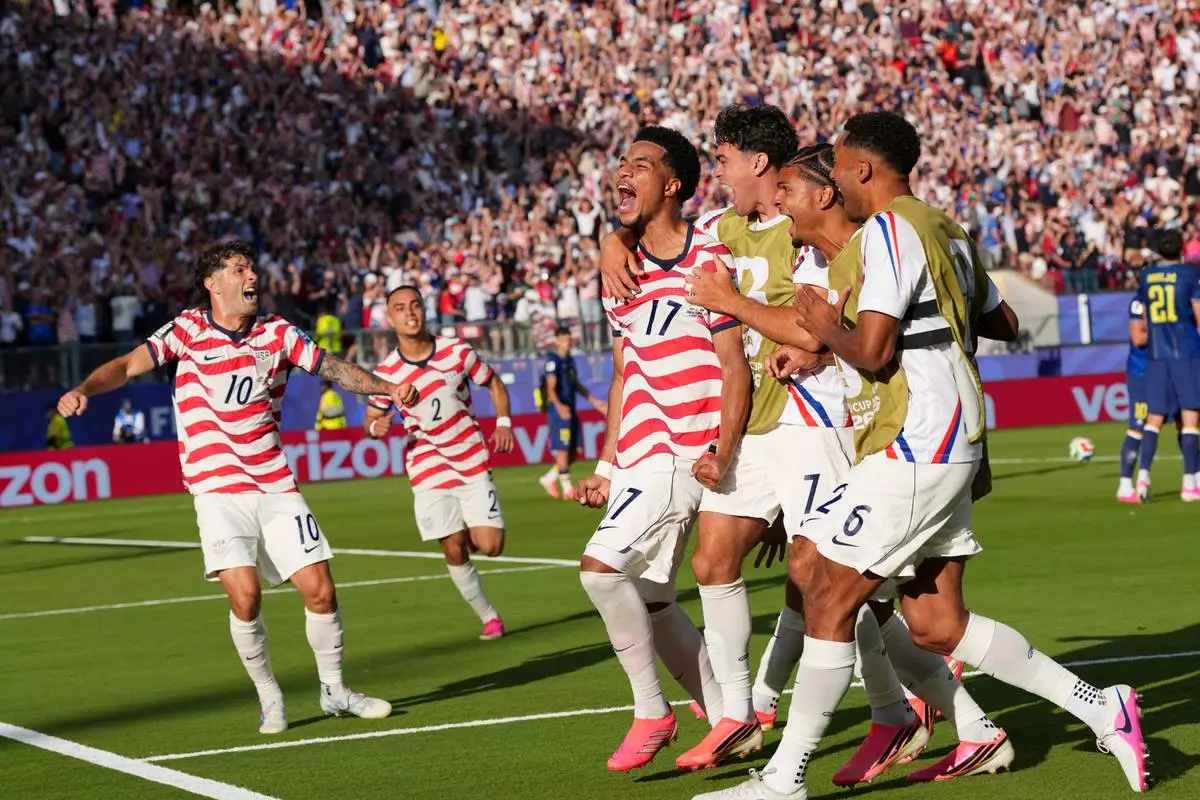
United States' Malik Tillman (17) celebrates with teammates after scoring on a free kick during the World Cup round of 32 soccer match between the United States and Bosnia in Santa Clara, Calif., near San Francisco, Wednesday, July 1, 2026. (AP Photo/Martin Meissner)
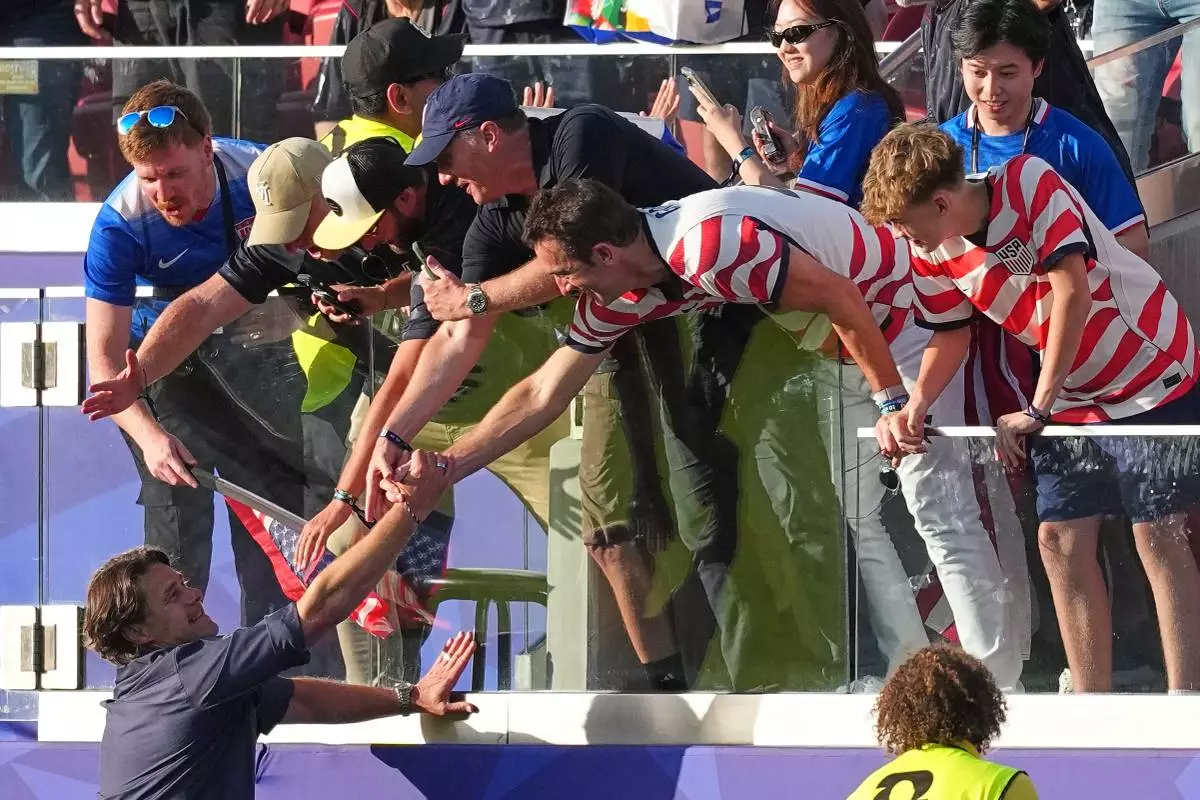
United States head coach Mauricio Pochettino, left, celebrates with supporters following the World Cup round of 32 soccer match between the United States and Bosnia in Santa Clara, Calif., near San Francisco, Wednesday, July 1, 2026. (AP Photo/Julio Cortez)
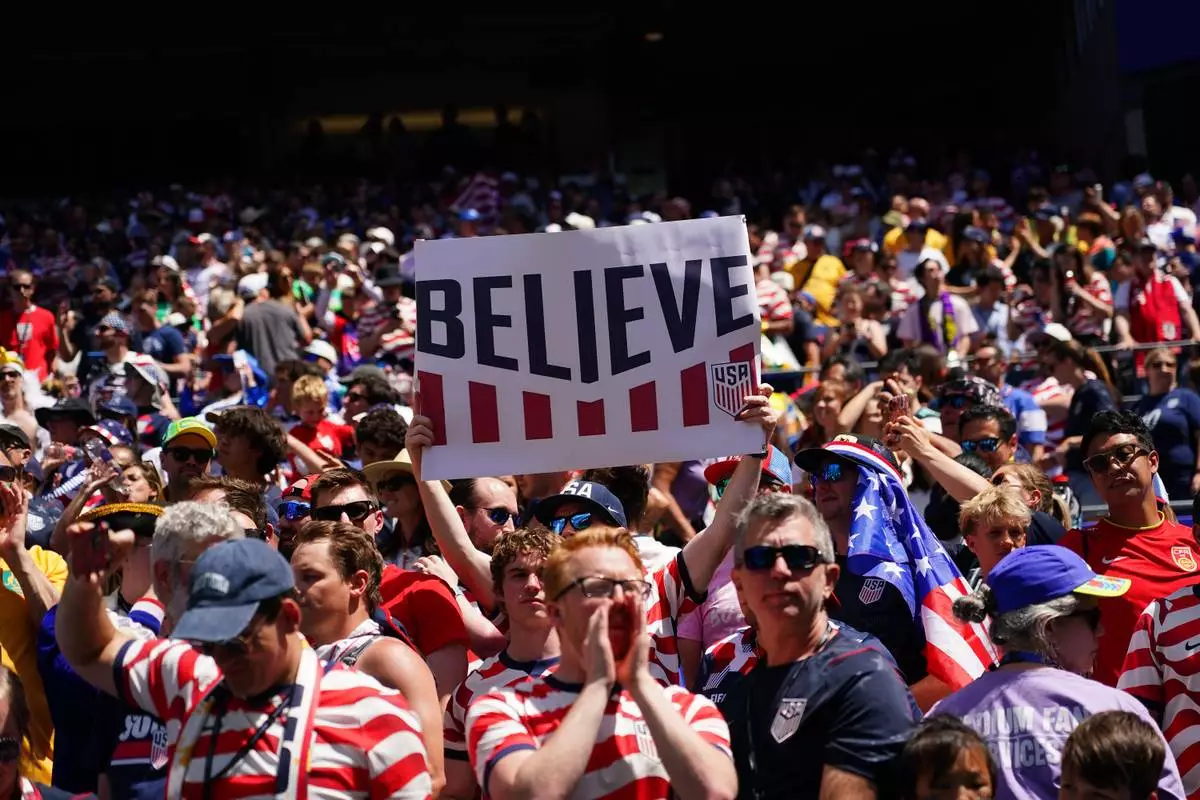
US fans react after the World Cup Group D soccer match between the United States and Australia in Seattle, Friday, June 19, 2026. (AP Photo/Ted S. Warren)

United States' Weston McKennie (8) celebrates after winning the World Cup Group D soccer match against Australia in Seattle, Friday, June 19, 2026. (AP Photo/Manu Fernandez)
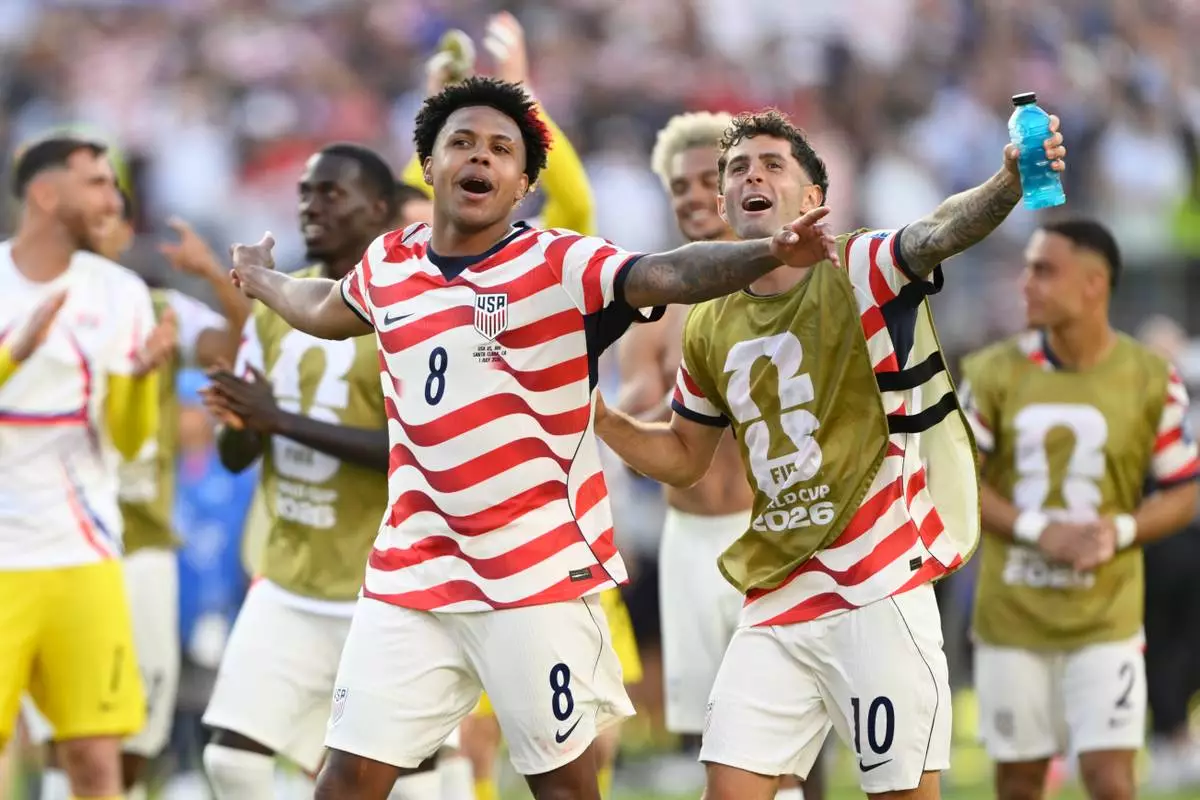
United States' Weston McKennie (8) and Christian Pulisic (10) celebrate winning the World Cup round of 32 soccer match between the United States and Bosnia in Santa Clara, Calif., near San Francisco, Wednesday, July 1, 2026. (AP Photo/Eakin Howard)