U.S. students are exploring giant panda conservation and Sichuan’s cultural heritage in Chengdu, southwest China, through the "PandaMaxxing" China-U.S. youth exchange program.
Jointly organized by China Media Group (CMG) and the U.S.-China Youth and Student Exchange Association, the program uses the iconic giant panda as a bridge to foster connections and mutual understanding between young people from the two countries.
At the Chengdu Research Base of Giant Panda Breeding, the students got an up-close look at giant pandas and took part in hands-on conservation activities, from preparing meals for pandas to learning about the daily work of protecting the beloved species.
"I'm honestly in awe of seeing the pandas. It's amazing, because I've only ever seen videos and photos of them. And it's actually just amazing to see them out in their natural habitat, walking around and doing their own thing with my own eyes. It's amazing, and I didn't know that pandas climb trees. So getting to see a panda in a tree was amazing," said U.S. student Natalie Rose Weiner.
For many participants, the visit challenged the common belief that giant pandas eat only bamboo, revealing a far more varied diet.
"I just learned that pandas ate human foods. I thought they only ate bamboo, and I think them too. They also thought like they only ate bamboo as like the primary food source. But they actually have like a mixture of like rice, soybeans, corn and wheat, which is really interesting," said U.S. student Kevin Jia.
Beyond wildlife conservation, the program emphasizes people-to-people exchange, bringing American and Chinese teenagers together for face-to-face conversations where they share stories and perspectives on the future.
"In some ways we're very different, in other ways we're very similar. So we can always come together and become friends. We can bond, even if it's bonding on different subjects. So it was very interesting and very inspiring," said U.S. student Ariel Jolie Duncan.
Ron Chow, co-chairman of the U.S.-China Youth and Student Exchange Association, said firsthand experience on the ground is vital for building lasting cross-cultural bonds.
"We just want the youth and students in the United States to have a better understanding of their counterparts in China. For them to have the opportunity to come here and experience themselves, it will make them have a better, clear understanding, and the friendships they have encountered here will last for a lifetime," he said.
The program also immerses participants in Sichuan’s living culture, with hands-on shadow puppetry and New Year woodblock painting, plus a visit to the ancient Sanxingdui site that offers a window into China’s long history and artistic traditions.
"I thought it's really cool that I got to make puppets, and we got to see pandas. I know that very few places, other than China, actually have a lot of pandas," said U.S. student Alexander James Presson.
"I thought it was really cool, and I loved all the details, especially on all the characters. I really like the way they were able to create a whole story with them," said U.S. student Jessie Michelle Baum, referring to the shadow puppetry activity.
Giant pandas have long served as a beloved cultural bridge linking China with the rest of the world. Today, they continue to bring young people from across the globe to experience China firsthand, turning curiosity into deeper mutual understanding and making people-to-people exchanges more vivid and meaningful.
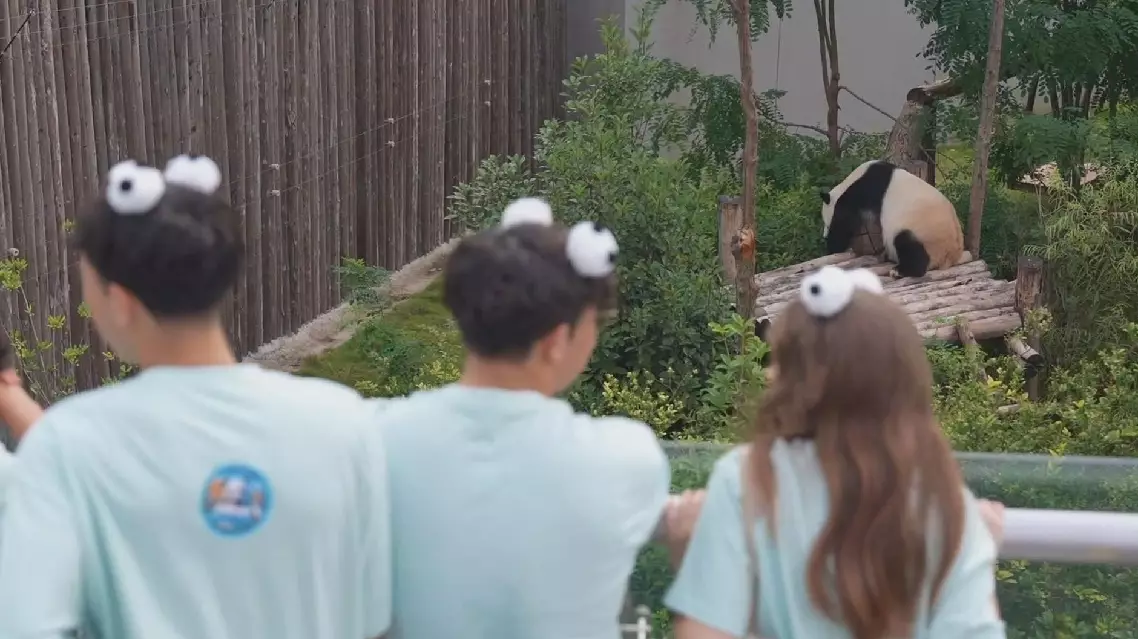
U.S. students explore panda conservation, cultural exchanges in southwest China