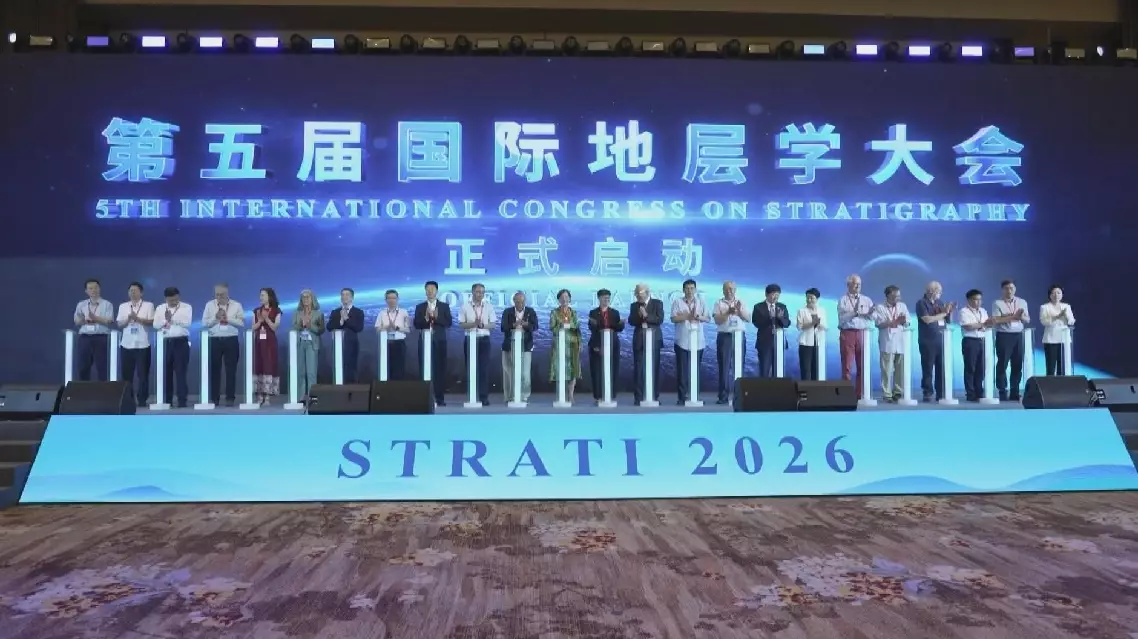
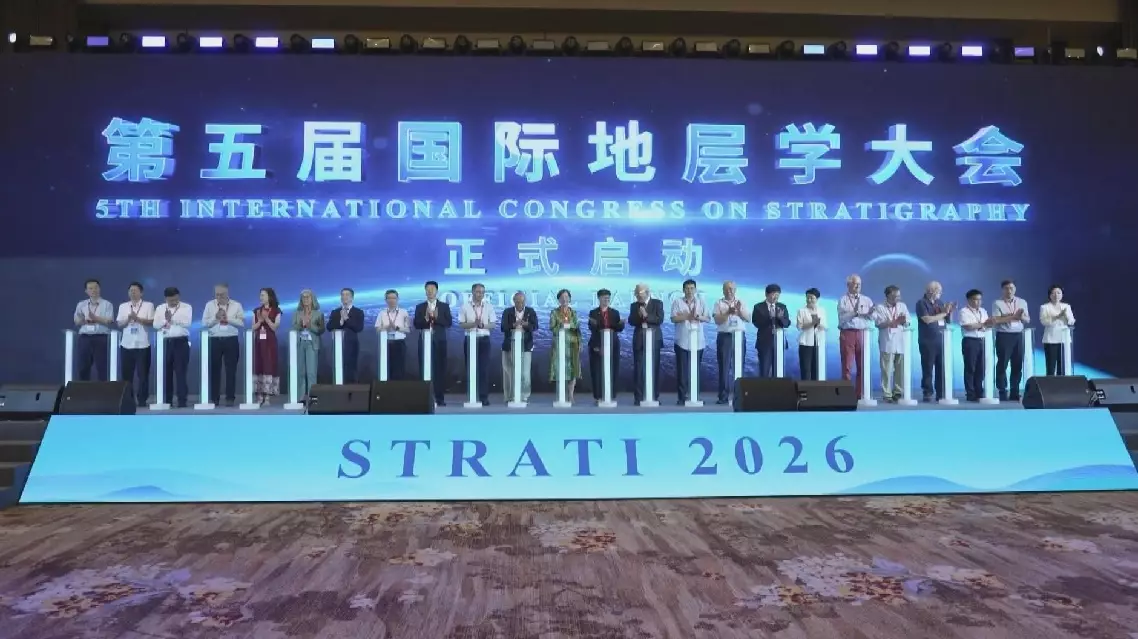
Chinese scientists unveiled a large AI model for stratigraphy, the first of its kind in the world, in Suzhou City, east China's Jiangsu Province, on Friday, providing a globally shared database for the 4.6 billion years of evolution history of the Earth.
The model was unveiled together with other new tools in the field such as intelligent global stratigraphic profile comparison system at the fifth International Congress on Stratigraphy, which is scheduled from June 28 to July 3.
Stratigraphy is a fundamental discipline for interpreting the evolutionary history of the Earth, and it can provide core scientific basis for human beings to understand the origin of lives, the distribution of resources, and the evolution of climate.
"We hope that with the timeline and global big data, all the geological records of the Earth's 4.6 billion years of history can be sorted according to a unified time standard. In the past, scientists (of different countries) did their own research, and made scattered geological records. So in an era of AI, Chinese scientists are actually leading the way now," said Shen Shuzhong, an academician of the Chinese Academy of Sciences and vice chair of the International Commission on Stratigraphy (ICS).
So far, China has discovered 11 Global Boundary Stratotype Sections and Points (GSSPs), ranking among the top in the world in terms of quantity.
The GSSPs are reference points on stratigraphic sections of rock which define the lower boundaries of stages on the International Chronostratigraphic Chart.
"Geological history has gone through several billion years, witnessing all kinds of events, such as the evolution of lives and climate, and mechanisms of various major geological events. What laws do the events follow? It is something that our modern Earth ecosystem needs to refer to," Shen said.
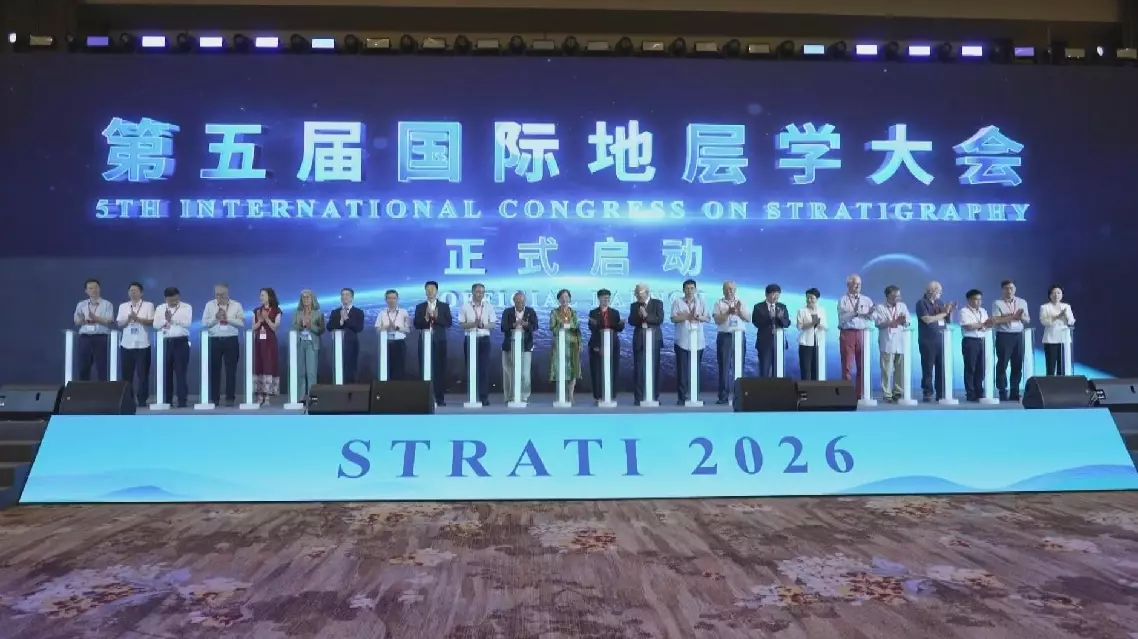
Chinese scientists unveil world's first large AI model for stratigraphy
Chinese scientists unveil world's first large AI model for stratigraphy
Chinese scientists unveil world's first large AI model for stratigraphy