The World Health Organization (WHO) said on Thursday that a clinical trial of two therapeutics had begun enrolling patients in the Democratic Republic of the Congo (DR Congo) to evaluate potential treatments for the Bundibugyo Ebola strain.
WHO Director-General Tedros Adhanom Ghebreyesus told a media briefing that the trial will evaluate the monoclonal antibody MBP134 and the antiviral drug remdesivir -- both alone and in combination -- to determine whether they can improve survival among patients diagnosed with Bundibugyo virus disease.
Patients enrolled will receive "comprehensive supportive care and close follow-up," Tedros said, adding that WHO is working to ensure access to the drugs should they prove safe and effective.
Meanwhile, Vasee Moorthy, acting lead for the Research and Development Blueprint in WHO's Office of the Chief Scientist, cautioned that it could take months and even go into next year to get the results, and more than 1,000 patients may need to be enrolled before a definitive answer emerges, or it could be earlier if there's a very high efficacy from the trial.
The trial came as the epidemic continues to expand, with an average of 38 new confirmed cases every day for the past two weeks.
According to the latest data released by the DR Congo government on Thursday, Ebola cases in the country had risen to 1,460, including 447 deaths.
A total of 595 patients were currently in isolation or hospitalized, while 213 patients had recovered. The rate of contact follow-up across the three affected provinces stood at 82.7 percent, the data showed.

WHO begins clinical trial to evaluate potential Ebola treatments in DR Congo
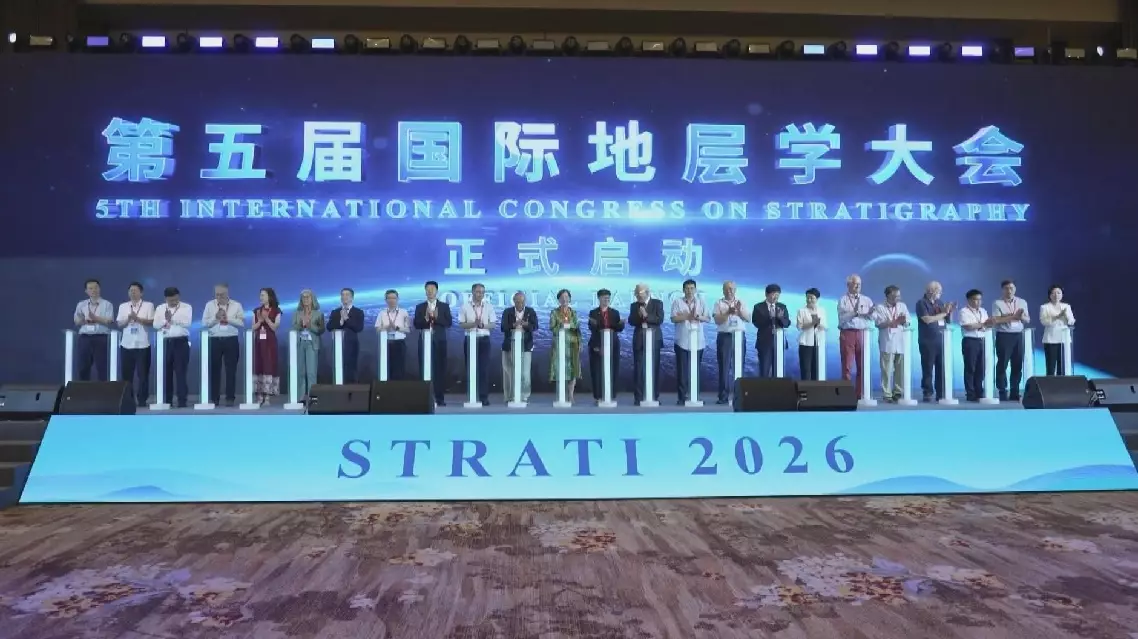
Chinese scientists unveiled a large AI model for stratigraphy, the first of its kind in the world, in Suzhou City, east China's Jiangsu Province, on Friday, providing a globally shared database for the 4.6 billion years of evolution history of the Earth.
The model was unveiled together with other new tools in the field such as intelligent global stratigraphic profile comparison system at the fifth International Congress on Stratigraphy, which is scheduled from June 28 to July 3.
Stratigraphy is a fundamental discipline for interpreting the evolutionary history of the Earth, and it can provide core scientific basis for human beings to understand the origin of lives, the distribution of resources, and the evolution of climate.
"We hope that with the timeline and global big data, all the geological records of the Earth's 4.6 billion years of history can be sorted according to a unified time standard. In the past, scientists (of different countries) did their own research, and made scattered geological records. So in an era of AI, Chinese scientists are actually leading the way now," said Shen Shuzhong, an academician of the Chinese Academy of Sciences and vice chair of the International Commission on Stratigraphy (ICS).
So far, China has discovered 11 Global Boundary Stratotype Sections and Points (GSSPs), ranking among the top in the world in terms of quantity.
The GSSPs are reference points on stratigraphic sections of rock which define the lower boundaries of stages on the International Chronostratigraphic Chart.
"Geological history has gone through several billion years, witnessing all kinds of events, such as the evolution of lives and climate, and mechanisms of various major geological events. What laws do the events follow? It is something that our modern Earth ecosystem needs to refer to," Shen said.
Chinese scientists unveil world's first large AI model for stratigraphy