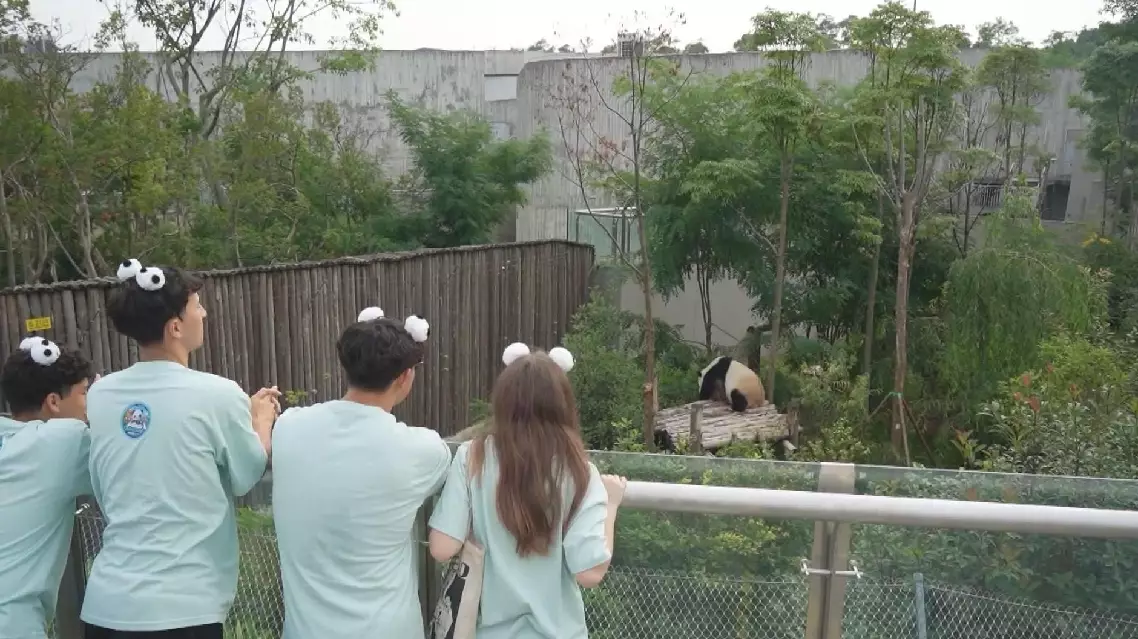
A group of about 20 students from Washington state explored giant panda conservation and cultural heritage in Chengdu, southwest China's Sichuan Province on Wednesday, as part of the "PandaMaxxing" China-U.S. youth exchange program.
Jointly organized by China Media Group (CMG) and the U.S.-China Youth and Student Exchange Association, the program uses the iconic giant panda as a bridge to foster connections and mutual understanding between young people from the two countries.
At the Chengdu Research Base of Giant Panda Breeding, the teens got an up-close look at giant pandas including superstar Hua Hua, who is known for her distinct appearance -- a round, rice ball-shaped body -- and gentle personality, and giant panda mothers and their cubs.
"I didn't realize how adorable they were in person and seeing them like all up in the trees and moving around eating, it was just amazing. And we got to see one of the baby pandas like annoying its mom and it was super cute getting to see how they interacted. It's genuinely one of the greatest things I've experienced," said Natalie Weiner, one of the U.S. students.
After observing the fluffy, black-and-white bears, the students took part in hands-on conservation activities, from preparing meals for pandas to learning about the daily work of protecting the beloved species. They also tried making panda-themed fans.
After visiting the research base, the teenagers went to a shadow puppetry arts museum to watch performances and tried making shadow puppets.
"So this is my little pup anime, it's a panda. And I also added like bright colors for his clothes, because I feel like that's his personality. The actual people who like did it like they were able to like bring something like this to life. And I thought that was like super cool. And I like wanna be able to learn how to do that," said Jessie Michelle Baum, one of the U.S. students.
The young people are scheduled to visit the legendary Sanxingdui Ruins site, which is believed to date back 4,500 to 3,000 years, and a museum of woodblock new year prints, among other destinations.
The U.S. students' stories during their stay in China are published on CMG-backed PandaPaws account on international social media platforms.
U.S. teens explore panda conservation, cultural exchanges in southwest China