Scholars at the World Peace Forum in Beijing have highlighted the rising strategic significance of middle powers, as these nations take on greater responsibilities in advancing cooperation, maintaining regional stability and shaping the future of global governance amid an increasingly fragmented international system.
As geopolitical competition continues to reshape the global landscape, participants at this year's forum noted that global influence is no longer concentrated exclusively in the hands of major powers. Instead, middle powers are gaining growing strategic weight, pursuing more independent foreign policies and forging flexible partnerships based on shared interests.
Robin Niblett, Warden of New College at the University of Oxford, described the core traits that define middle powers and their unique value to multilateral cooperation.
"We need, and this is where we get to the bit of, let's call the middle powers, those countries with sufficient agency, but who are deeply invested in cooperation and in institutional predictability, in the rule of law, to be able to be safe and to be successful," he said.
Yet some experts caution that as middle powers increasingly balance relations among major powers, the global landscape is growing more complex and less predictable. They argue that stronger multilateral institutions and broader inclusive participation will be essential to managing mounting geopolitical risks.
Clifford Kupchan, Chairman Emeritus of Eurasia Group and Senior Fellow at The Center for the National Interest, pointed to institutional innovation as a critical solution, calling for deeper engagement between existing security frameworks and middle power nations.
"New security forums or institutions in this multi-polar middle power system, I think, will be key. The middle powers have to build new institutions, and the interaction of these powers with the bipolar system that poses the greatest risk of war. So we need institutions. That's first. Secondly, I think the P5 (Permanent members of the United Nations Security Council) can really be activated. The P5 is the Security Council. Meet more often, meet regularly, not happenning now, invite the great middle powers of the Global South, the large ones to join," he said.
While major powers continue to dominate the dynamics of great power competition, scholars at the forum agree that middle powers are increasingly shaping international outcomes.
As governments worldwide adapt to a more uncertain international environment, how middle powers position themselves could play a defining role in the long-term trajectory of global governance.
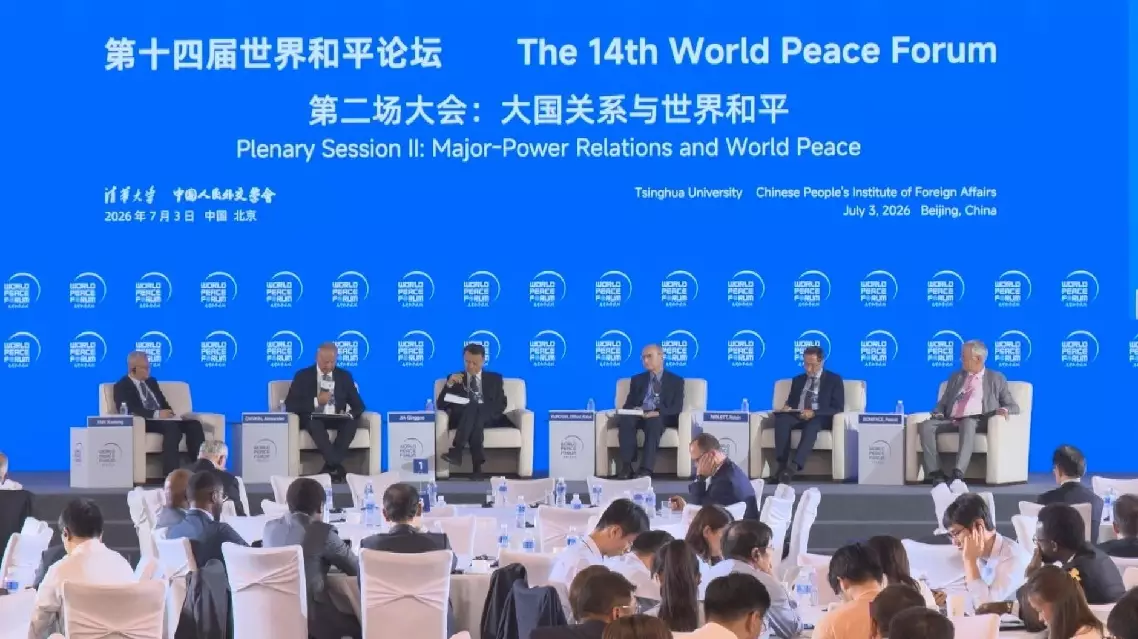
Scholars highlight growing role of middle powers in global governance at World Peace Forum