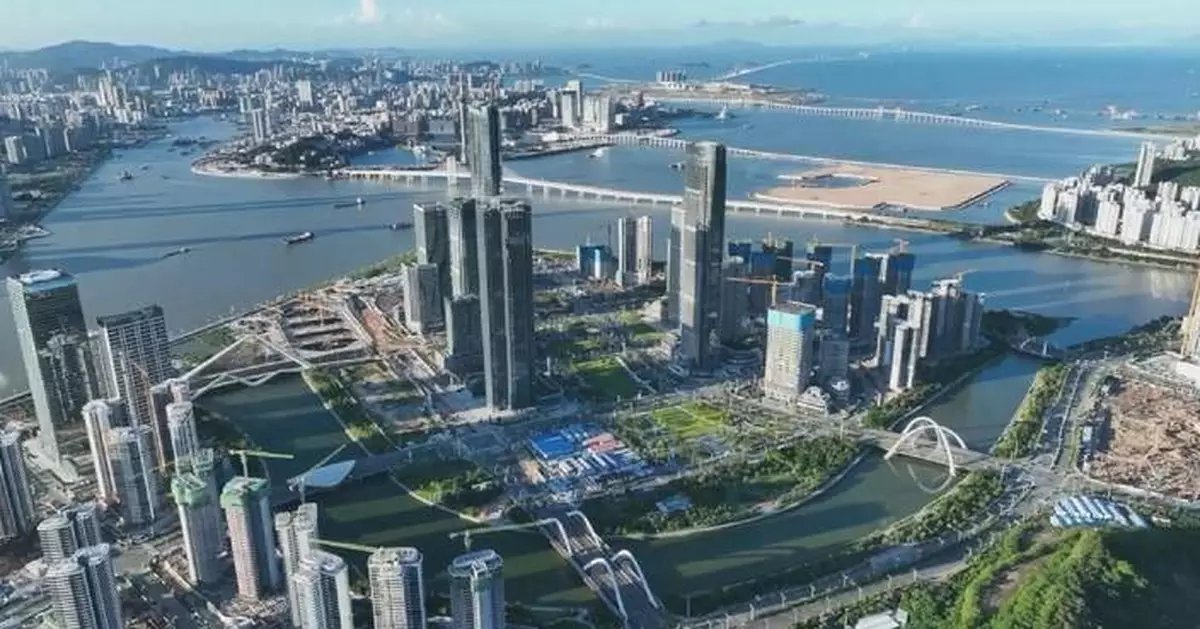
With deeper regional integration, the Guangdong-Hong Kong-Macao Greater Bay Area is emerging as a world-class hub for science and technology innovation. From research laboratories to production lines, innovation across the region is becoming increasingly connected, accelerating the journey from lab to market.
The Shenzhen-Hong Kong-Guangzhou innovation cluster topped the Global Innovation Index released by the World Intellectual Property Organization last year. Here, collaborative innovation is turning breakthrough ideas into reality faster than ever before.
In Guangzhou, CanSemi Technology has become the first company in the Greater Bay Area capable of mass-producing 12-inch wafers, marking a step forward in large-scale semiconductor manufacturing capacity in the region.
The company now holds more than 340 patents. Executives say the company's growth is closely tied to deep collaboration between industry, universities, and research institutes across the Greater Bay Area, forming an increasingly integrated innovation ecosystem.
"Before we came here, many universities in Guangdong had very limited semiconductor-related programs. As the industry developed, demand for talent increased, and universities adjusted their systems accordingly. This has helped build a stronger talent pipeline for companies like ours," said Wu Hao, assistant president of Guangzhou CanSemi Technology.
CanSemi has also partnered with the Hong Kong University of Science and Technology (HKUST) to jointly train microelectronics talent, strengthening cross-border cooperation in advanced manufacturing.
At the HKUST Guangzhou campus, innovation is embedded across research, education, and entrepreneurship.
Its technology transfer and commercialization center is now home to around 40 startups, generating tens of millions of yuan in output value.
"One Guangdong-Hong Kong joint project has developed a robot capable of fully autonomous spraying in unfinished indoor buildings. It has already been applied in more than 90 construction projects. Many high-quality research outcomes come from joint problem-solving between universities and enterprises," said Ma Jun, an assistant professor at Thrust of Robotics and Autonomous Systems HKUST (Guangzhou).
Beyond advanced manufacturing, the Greater Bay Area’s integrated innovation ecosystem is also enabling faster commercialization in creative and digital industries.
"At last year's National Games opening ceremony, we wanted robots to perform bronze bell music. We worked with a robotics team in Shenzhen, and they helped us realize it in a very short time. Going forward, we will continue integrating advanced AI technologies into our creative production," said Huang Peiling, general manager and chief director at Guangzhou Ruifeng Cultural Communication.
Today, the Greater Bay Area is home to more than 69,000 high-tech enterprises. As more research outcomes move from labs to commercial application, the region is accelerating toward its goal of becoming a global innovation and technology hub.
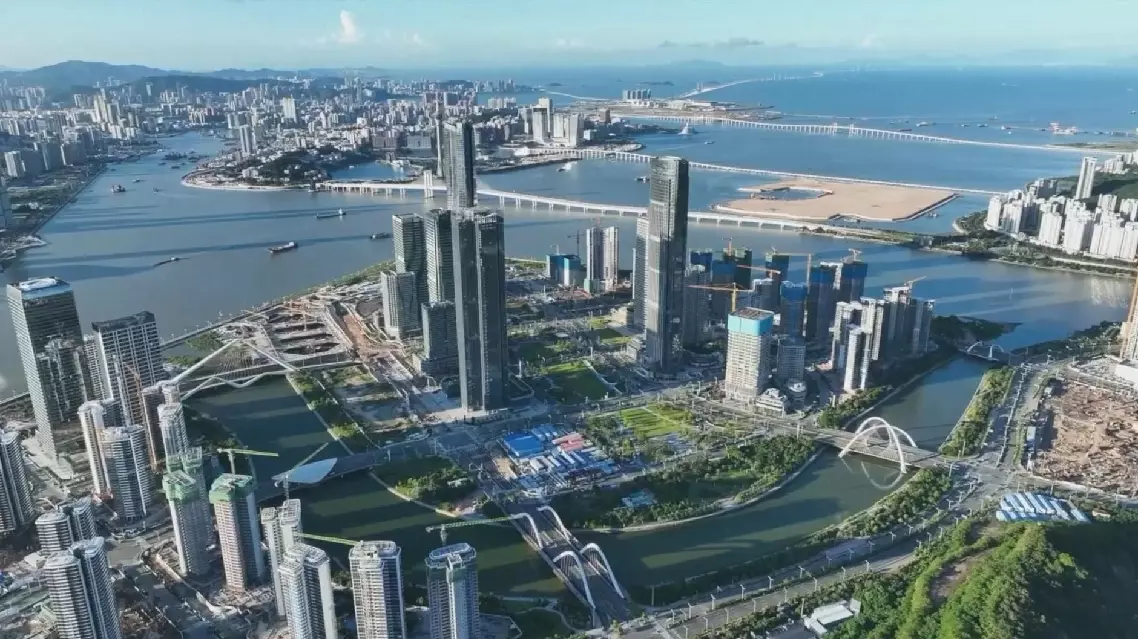
Greater Bay Area accelerates innovation from lab to market