Torrential rain and gale-force winds triggered by Typhoon Maysak battered Nanning, capital of south China's Guangxi Zhuang Autonomous Region over the weekend, forcing authorities to issue a red alert on Sunday as floodwaters submerged parts of the city.
In the city's Yongning District, downpours continued Sunday afternoon, with rainwater streaming off shop awnings. At one wet market, some stalls were covered with plastic sheeting to protect fruit and vegetables. Minor flooding was reported inside the market, with shopkeepers clearing water with brooms and mops. Despite the heavy rain, the market's operation remained largely stable.
As of Sunday noon, most parts of Nanning had experienced heavy to torrential rain, with some areas seeing extraordinary rainfall, accompanied by winds of Force 6 to 9 (wind speed 10.8-24.4 m/s). Nalou Town in Yongning District recorded the highest precipitation, with 257.1 mm of rain in 24 hours.
Meteorological authorities forecast moderate to heavy rain, with localized downpours, to continue in Nanning over the next two days.
China has a four-tier weather warning system, with red representing the most severe warning, followed by orange, yellow and blue.
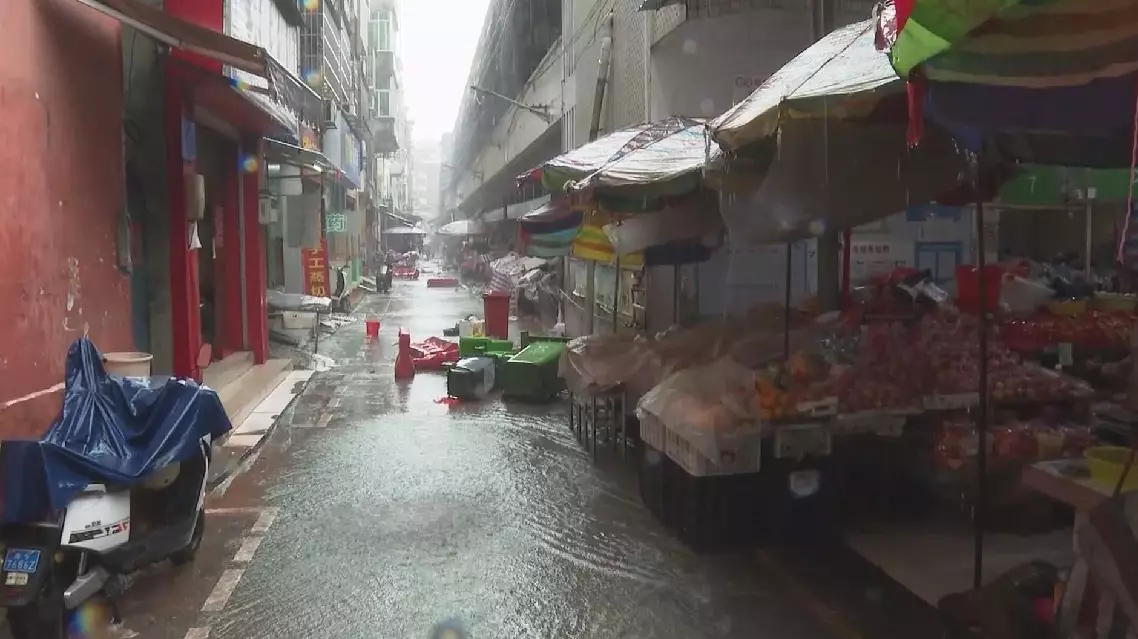
Typhoon Maysak triggers red alert for rainstorm in south China's Nanning
Chinese State Councilor Shen Yiqin and Russian Deputy Prime Minister Tatyana Golikova co-chaired the 27th session of the China-Russia Committee on Humanities Cooperation in St. Petersburg on Monday, vowing to deepen humanities cooperation.
Shen said Chinese President Xi Jinping and Russian President Vladimir Putin attended the opening ceremony of the China-Russia Years of Education in May and delivered speeches, demonstrating the high importance they attach to humanities cooperation.
Under the strategic guidance of the two heads of state, the two sides have continued to broaden the scope of people-to-people and cultural exchanges, explore innovative forms of cooperation and new areas of collaboration, achieving a series of new results, Shen said.
Noting that this year marks the 30th anniversary of the establishment of the China-Russia strategic partnership of coordination and the 25th anniversary of the signing of the China-Russia Treaty of Good-Neighborliness and Friendly Cooperation, Shen called on both sides to implement the consensus reached by the two heads of state.
She also called for advancing key projects under the framework of the China-Russia Years of Education, deepening humanities cooperation and strengthening bilateral and multilateral coordination to contribute to the development of the China-Russia comprehensive strategic partnership of coordination for a new era.
Golikova spoke highly of the achievements in Russia-China people-to-people and cultural exchanges, expressing Russia's readiness to work with China to continuously deepen and expand practical cooperation in various fields of humanities and write a new chapter in bilateral friendship.
During the meeting, Shen and Golikova witnessed the signing of cooperation documents in relevant fields.
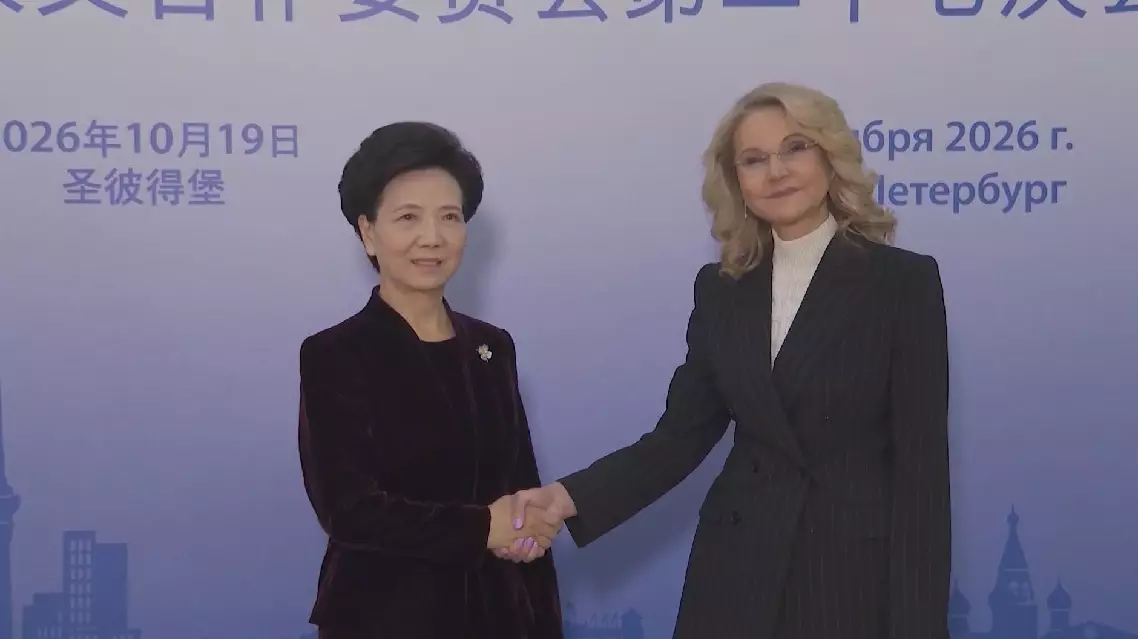
China, Russia vow to deepen humanities cooperation